
The bedrooms that photograph best, feel best to live in, and get pinned and saved most often are almost never the ones with the biggest budgets. They’re the ones where someone made considered, deliberate decisions about a small number of things — the bedding, the light, the color on the walls, the one piece of art above the bed — and left everything else alone. Restraint is the actual design skill here, and it costs nothing. The gap between a bedroom that looks styled and one that looks cluttered or unfinished is almost always a question of editing rather than spending.
These 19 ideas are built around that principle. Each one is a specific, actionable concept that delivers outsized visual impact relative to the effort and investment it requires — and most can be layered together without the room feeling busy. Whether you’re starting from scratch in a new rental, refreshing a room that’s been the same for a few years, or just looking for that one missing thing that will finally make the space feel pulled-together, there’s something here that will work. Start with one. Live with it for a week. Then add the next.
Neutral Linen Bedding as the Foundation
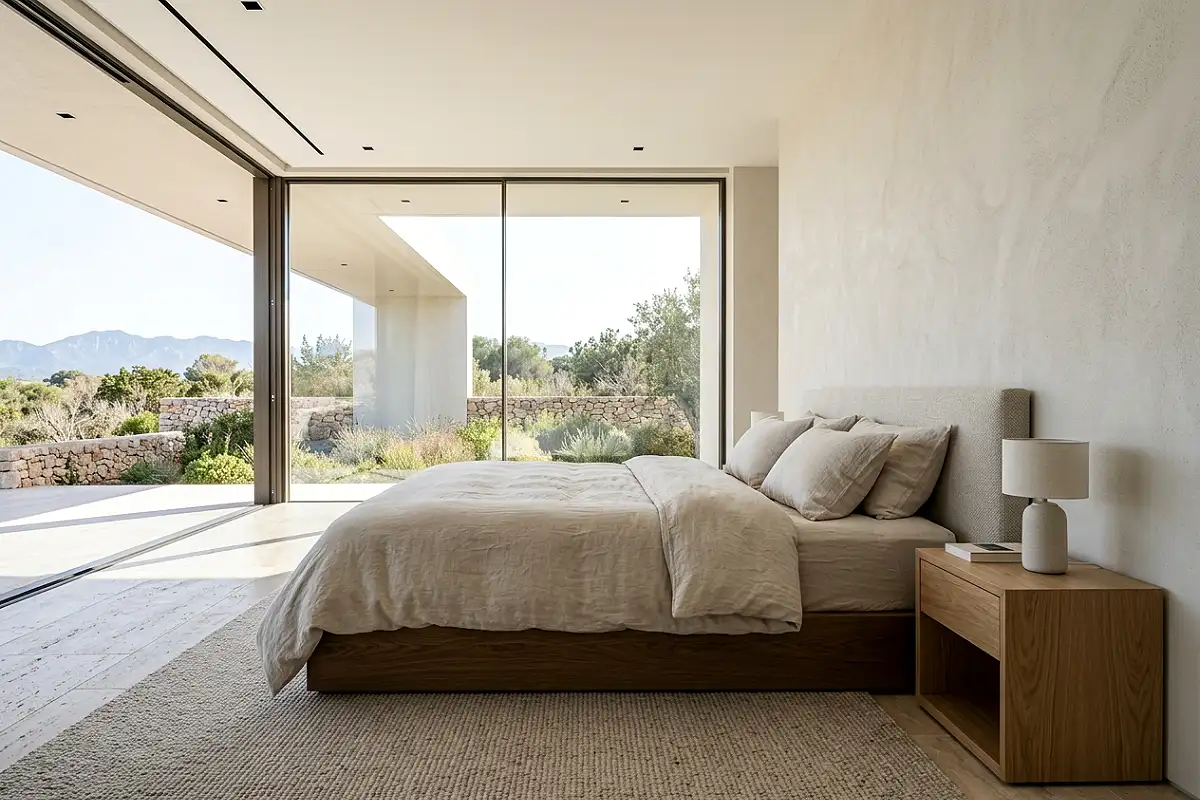
Every great simple bedroom starts with bedding that does one thing exceptionally well: it makes the bed look like the most inviting place in the room. Washed linen in warm white, oatmeal, natural, or warm greige accomplishes this reliably and affordably — it photographs beautifully, softens with every wash, and works with literally any wall color, furniture finish, or accent palette you layer on top of it. The key is to commit to a single neutral tone across your duvet cover, fitted sheet, and pillowcases, then introduce texture through the pillow arrangement rather than color. Two Euro shams, two standard shams, and one front accent pillow in a coordinating stripe or subtle texture is the formula that makes any bed look intentional without looking overdone. IKEA’s PUDERVIVA linen range and H&M Home’s washed linen series offer genuinely beautiful options at an accessible price point.
Pro Tip
Tumble-dry linen bedding with two wool dryer balls for 15 minutes after air-drying. It removes the stiffness and slight crunchiness of line-dried linen without the heat damage of a full machine dry cycle. The result is linen that drapes softly and looks effortlessly relaxed rather than freshly ironed or slightly rigid.
Single Large-Scale Art Print Above the Bed
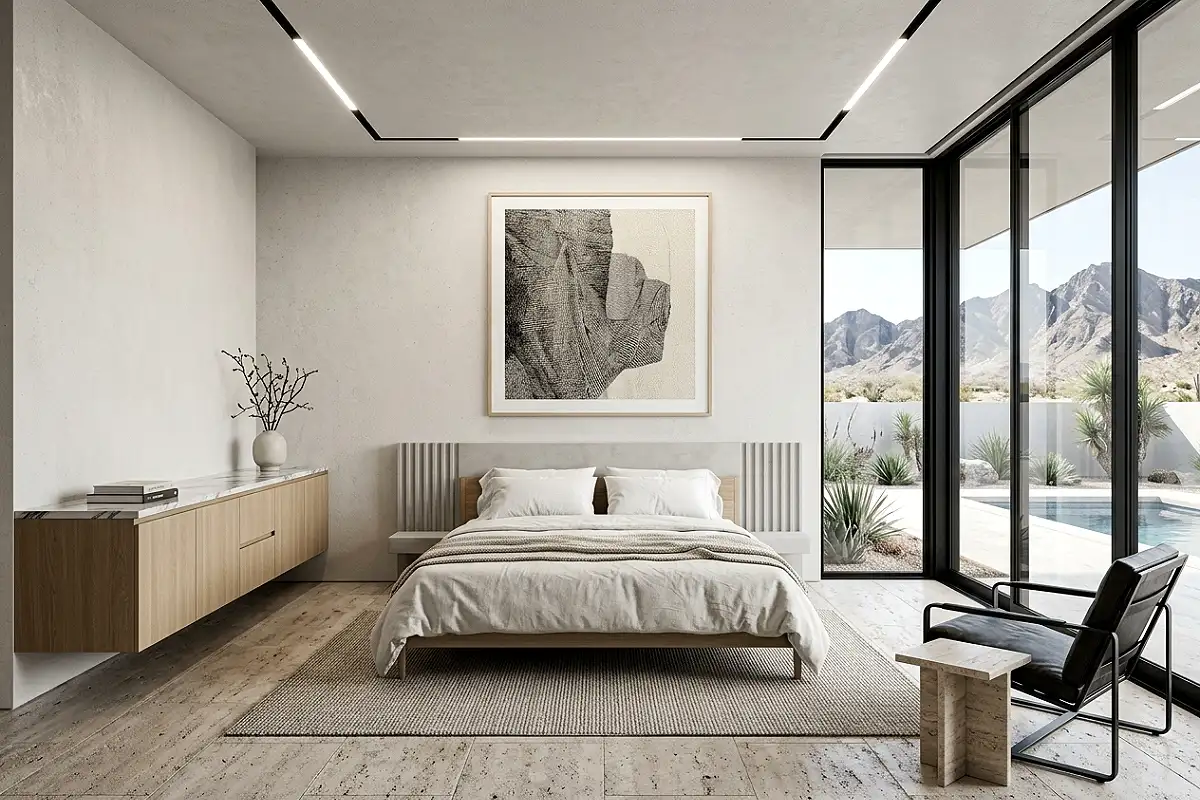
One oversized art print — at minimum 24 by 36 inches for a queen bed, larger for a king — centered above the headboard does more for a simple bedroom than an entire gallery wall of smaller pieces, because it removes all the decision-making and fussing that a collection of frames inevitably involves. The print itself should be simple: a large-scale abstract in neutral tones, a black-and-white architectural photograph, a minimal line drawing, or a single botanical illustration on a cream ground. The frame matters as much as the print — choose a thin gallery-style frame in natural oak, matte black, or slim brushed brass and use a mat that gives the image room to breathe. Society6, Desenio, and Minted all carry art prints that work beautifully at this scale without requiring a gallery budget.
Pro Tip
Hang your artwork so the center of the piece sits at 57 to 60 inches from the floor — the standard gallery hanging height — rather than at eye level when standing or at an arbitrary height above the headboard. This single calibration makes artwork look intentionally placed rather than approximately right.
Two-Tone Wall with a Painted Dado Line
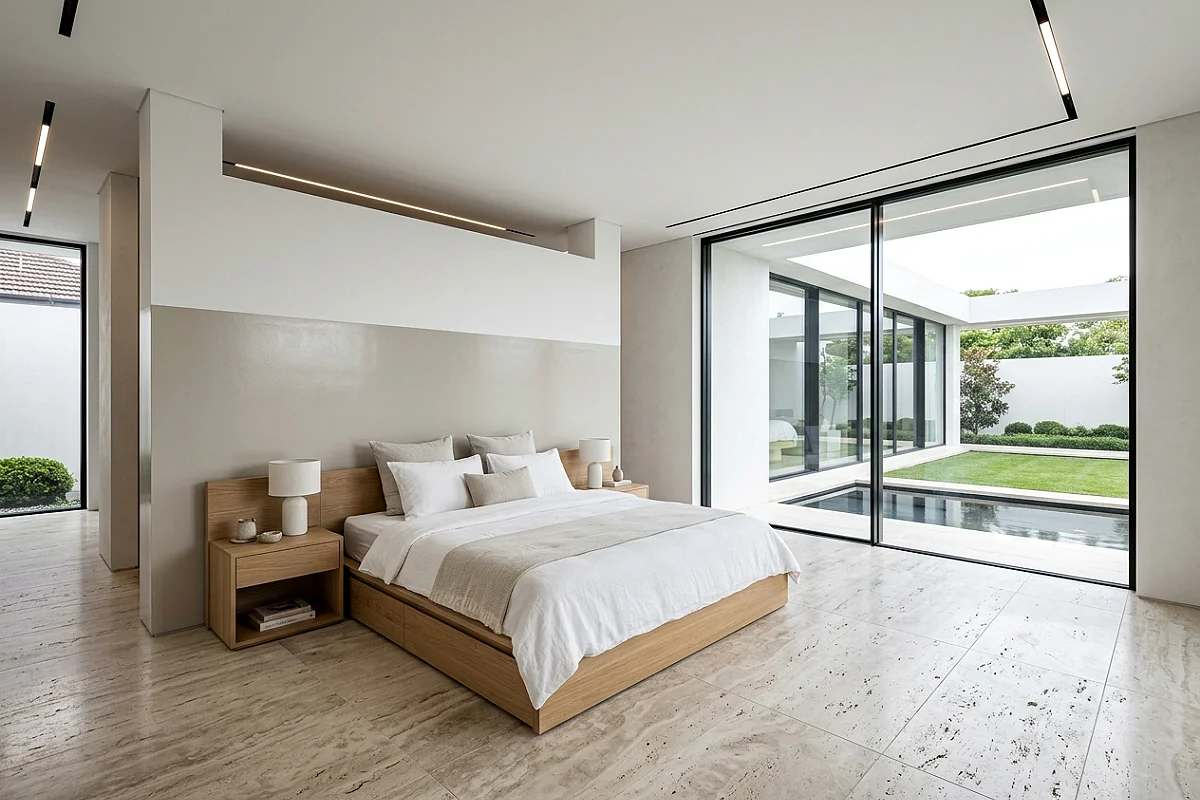
Painting just the lower portion of a bedroom wall — down to a horizontal line drawn at chair-rail height, roughly 32 to 36 inches from the floor — in a color slightly deeper or warmer than the upper wall creates a visual grounding effect that makes the whole room feel more architecturally considered without a single piece of molding or paneling required. Choose a warm greige or soft clay for the lower portion against a warm white upper wall, or a dusty sage lower portion against a pale ivory above. The contrast doesn’t need to be dramatic; a subtle tonal shift is more sophisticated than a sharp contrast and easier to live with over time. Use low-tack painter’s tape and a laser level to get the line perfectly crisp — it’s the only technical step that matters.
Pro Tip
Paint your lower section in an eggshell or satin finish and the upper section in matte. The slight sheen difference between the two surfaces creates a subtle architectural distinction that reads as an intentional material change — similar to the effect of wainscoting — without requiring any actual millwork.
Warm-Toned Bulbs Throughout the Room
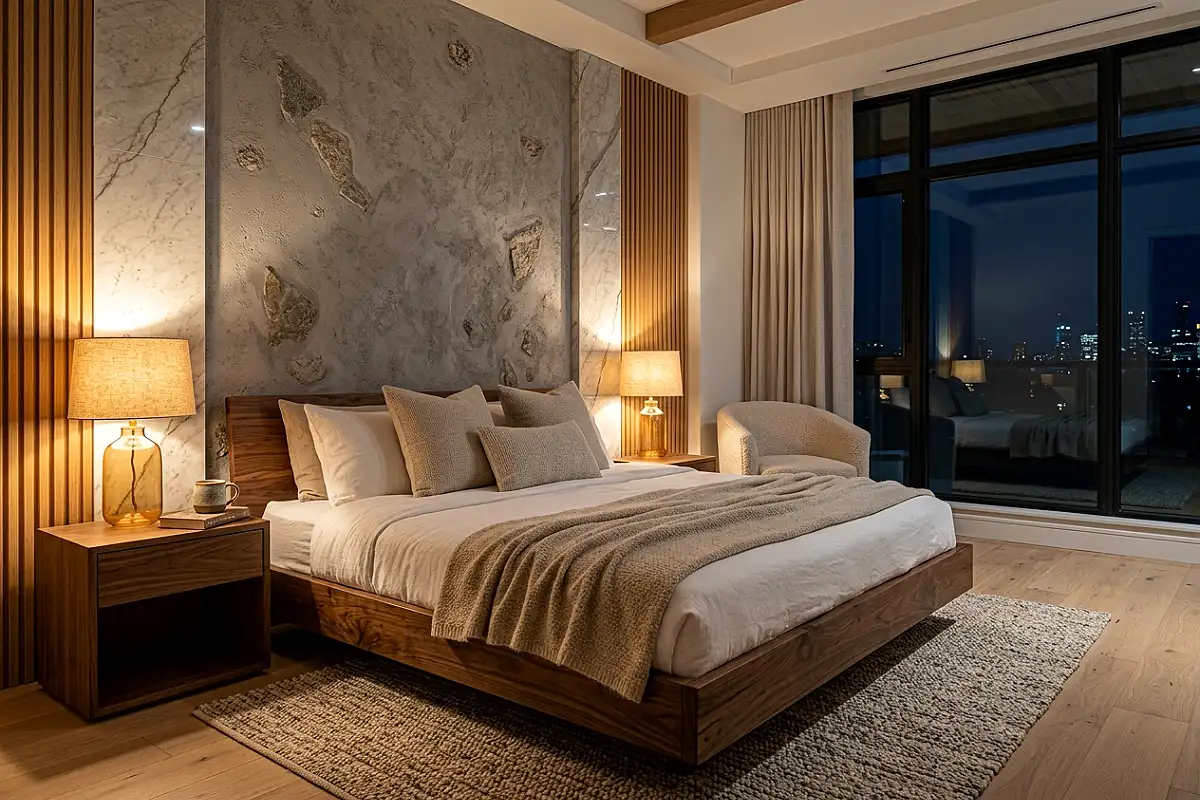
The fastest, cheapest, and most impactful single change available to any bedroom is replacing every light bulb with a 2200K warm amber option. The difference in atmosphere between a standard 4000K cool-white bulb and a 2200K amber one is the difference between a hospital corridor and a candlelit room — genuinely that dramatic. This is especially true in bedrooms with warm wall colors, natural wood furniture, or linen textiles, all of which absorb and reflect warm light in a way that cool white light simply cannot activate. Philips’ Hue White Ambiance range allows full color temperature control from an app, which is worth the investment if you use the room for multiple activities. For a simpler solution, GE’s Vintage Edison series in an ST19 bulb at 2200K costs under $10 for a two-pack and requires no smart home setup whatsoever.
Pro Tip
Add a simple plug-in dimmer adapter to any lamp cord — they cost around $10 online and require no electrical work. The ability to lower lamp brightness from 100% to 20% transforms a reading lamp into an ambient mood light, and that flexibility is what makes a single lamp serve the whole evening rather than needing multiple fixtures.
Matching Nightstands for Visual Symmetry
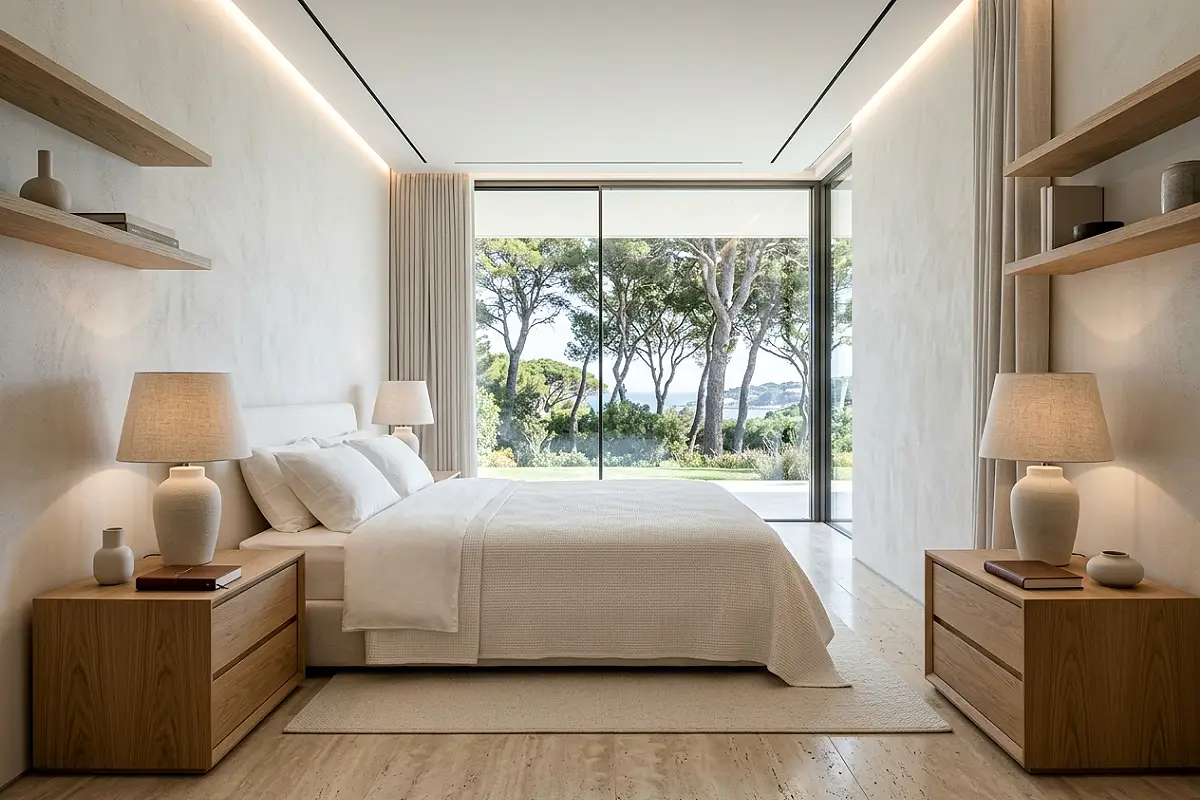
In a simple, well-edited bedroom, symmetry on either side of the bed is one of the most reliable tools for making the space look finished and intentional. Matching nightstands — even inexpensive ones — flank the bed with a visual balance that grounds the entire room. They don’t need to be expensive: IKEA’s HEMNES nightstand in a painted or stained finish, or the KNARREVIK in black, both work well and are widely available. What matters is that both sides of the bed carry the same weight visually. Match the lamps on each side too — same base, same shade — and the room immediately reads as designed rather than assembled. Save any deliberate asymmetry for the styling on top of each nightstand, where small variations in the arrangement add personality without disrupting the room’s overall sense of calm.
Pro Tip
Your nightstand height should sit within 2 to 3 inches of your mattress top. A nightstand that’s noticeably lower than the mattress looks undersized; one that’s higher than the mattress creates an awkward visual step. When in doubt, measure before you buy — it’s a detail that’s obvious once you notice it and impossible to unsee.
A Single Accent Color Repeated Three Times
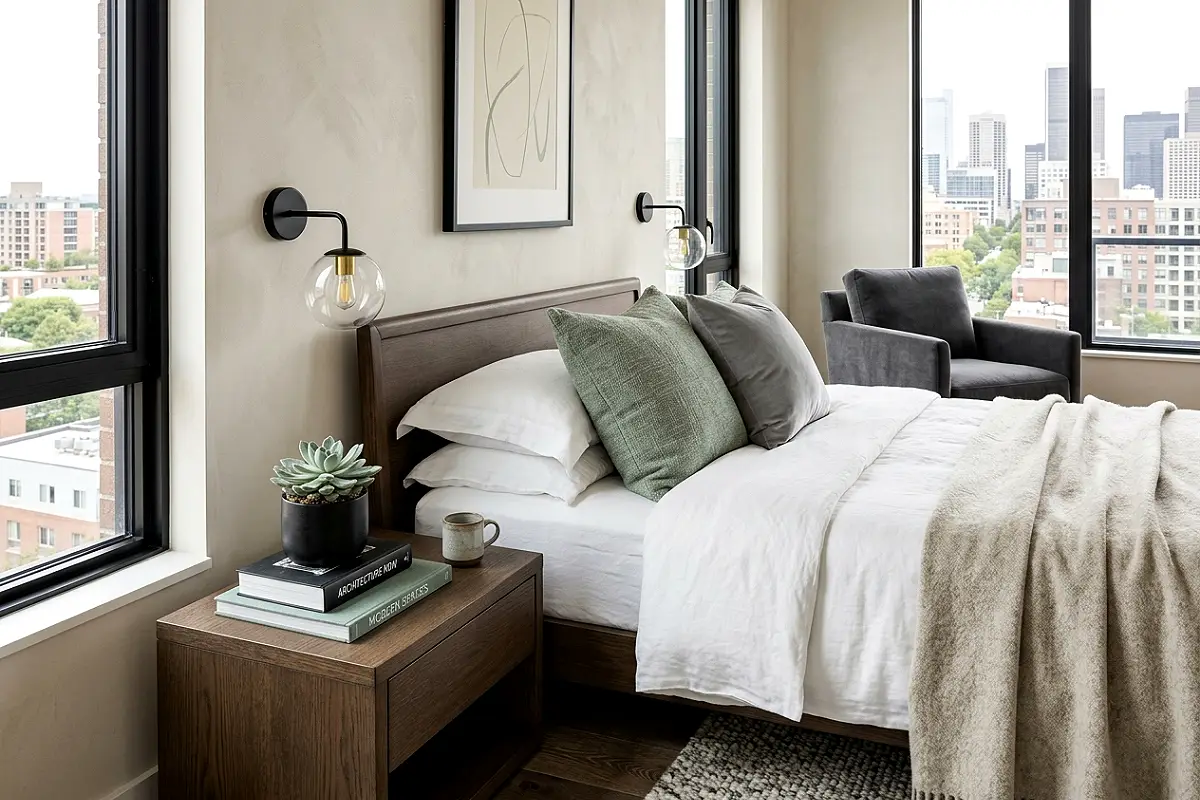
The simplest way to make a room feel designed rather than random is the rule of three: choose one accent color and repeat it in at least three places throughout the room. Dusty sage in a throw pillow, a small potted plant, and the spine of a book on the nightstand. Warm terracotta in a ceramic vase, a pillow cover, and a candle holder. The color doesn’t need to be prominent anywhere — it just needs to appear in three or more distinct locations so the eye registers it as intentional rather than accidental. This one principle, applied to any bedroom regardless of its current state, creates a sense of cohesion and curation that most rooms achieve only after expensive, coordinated shopping trips. You can usually do it by editing what you already own.
Pro Tip
Choose your accent color from something already in the room — a natural material, the tone of the wood in your furniture, the undertone of your wall paint — rather than introducing an entirely new hue. This keeps the accent feeling like a discovery rather than an addition, and it’s virtually impossible for it to clash with the existing palette.
Floating Shelves Instead of a Bulky Bookcase
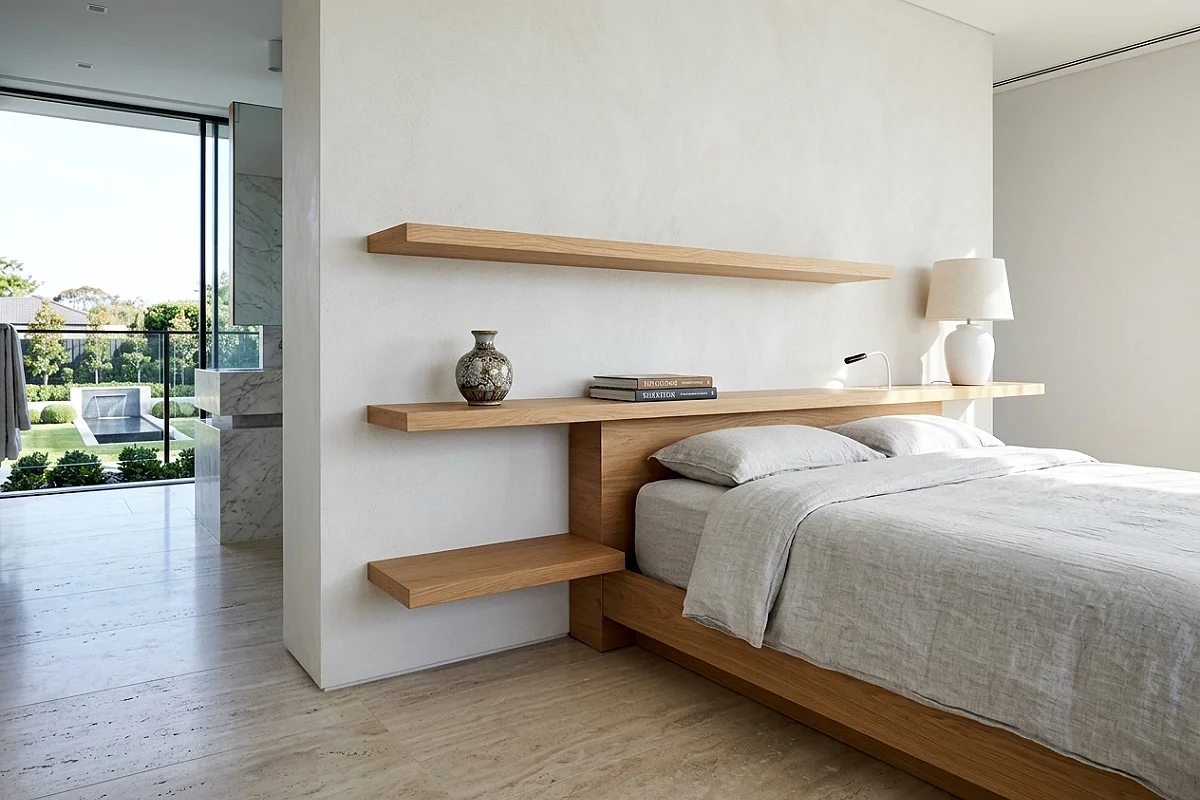
Two or three floating shelves mounted at staggered heights on a blank wall beside or opposite the bed add storage, display space, and visual interest without the floor footprint or visual weight of a freestanding bookcase. In a simple bedroom, the styling on the shelves matters more than the shelves themselves: limit each shelf to five or six objects maximum — a small plant, two or three books arranged at different angles, one ceramic or stone object, and one small framed photo or print. Natural wood shelves in oak or walnut float beautifully against warm white or greige walls. For a budget option, IKEA’s LACK shelf in a wood-tone finish is functional and completely unobtrusive. For a more substantial look, a solid oak floating shelf from a local lumber mill or Etsy woodworker reads as genuinely architectural.
Pro Tip
Mount your top shelf at or just above eye level when standing, and space additional shelves 10 to 12 inches below. Shelves mounted too high require tilting your head to see them; too low and they compete with the furniture below. The sweet spot makes the shelves feel like an extension of the room rather than an addition to it.
Textured Throw Blanket Draped Over the Bed
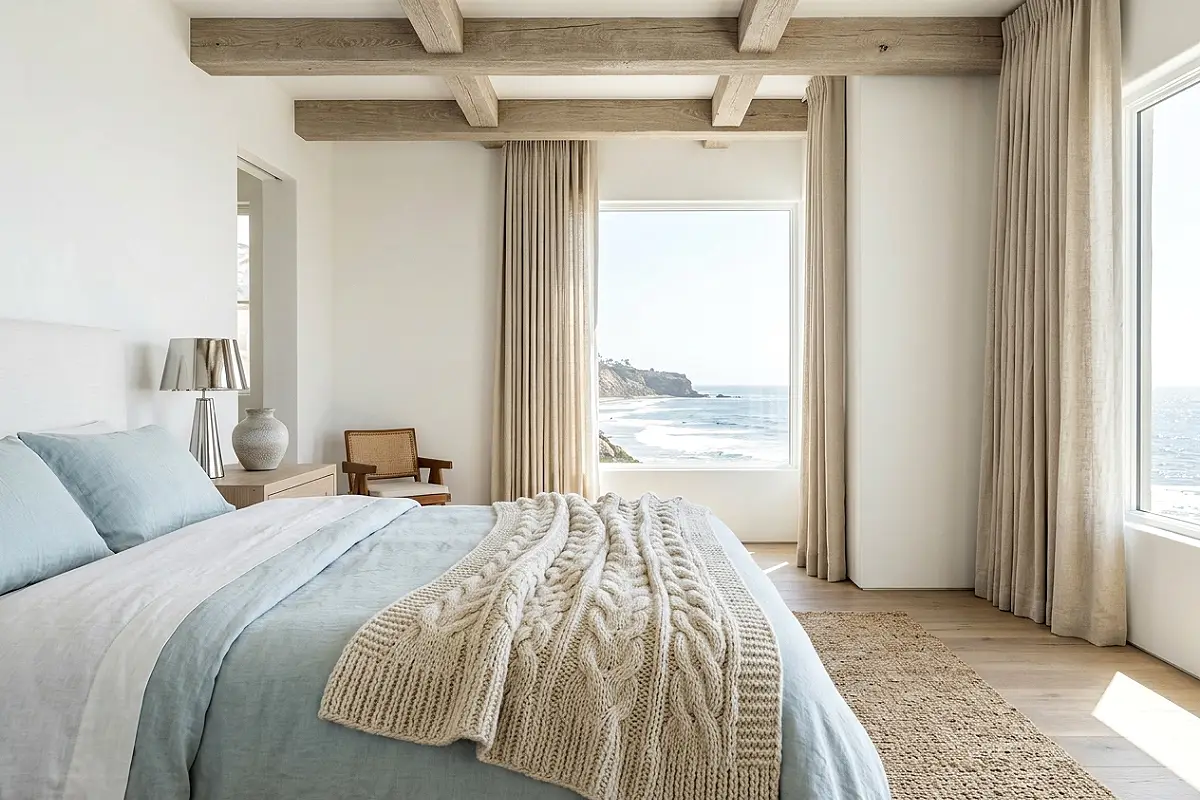
A single well-chosen throw blanket draped casually across the foot of the bed — or across one corner, pulled slightly off-center — is one of the lowest-effort, highest-return styling moves available in a bedroom. The texture is the point: a chunky ribbed knit in warm cream, a waffle-weave cotton in soft sage, a lightweight open-weave wool in warm oatmeal, or a tightly woven herringbone in warm grey. The throw adds a layer of visual depth and material warmth that a flat duvet alone simply can’t provide. It also signals that the room is inhabited and used rather than staged — which is the quality that separates a room that feels warm from one that feels like a showroom. Amazon’s Bedsure brand consistently delivers good texture at an honest price; Bole Road Textiles makes extraordinarily beautiful artisan throws worth every dollar more.
Pro Tip
After placing your throw, grab it in the middle and give it one gentle shake, then let it fall naturally. This creates soft, organic folds that look effortlessly placed. Drapes arranged by hand tend to look deliberately styled; the shake-and-drop method looks like someone actually used the throw and left it behind.
Swapped Hardware on Existing Furniture
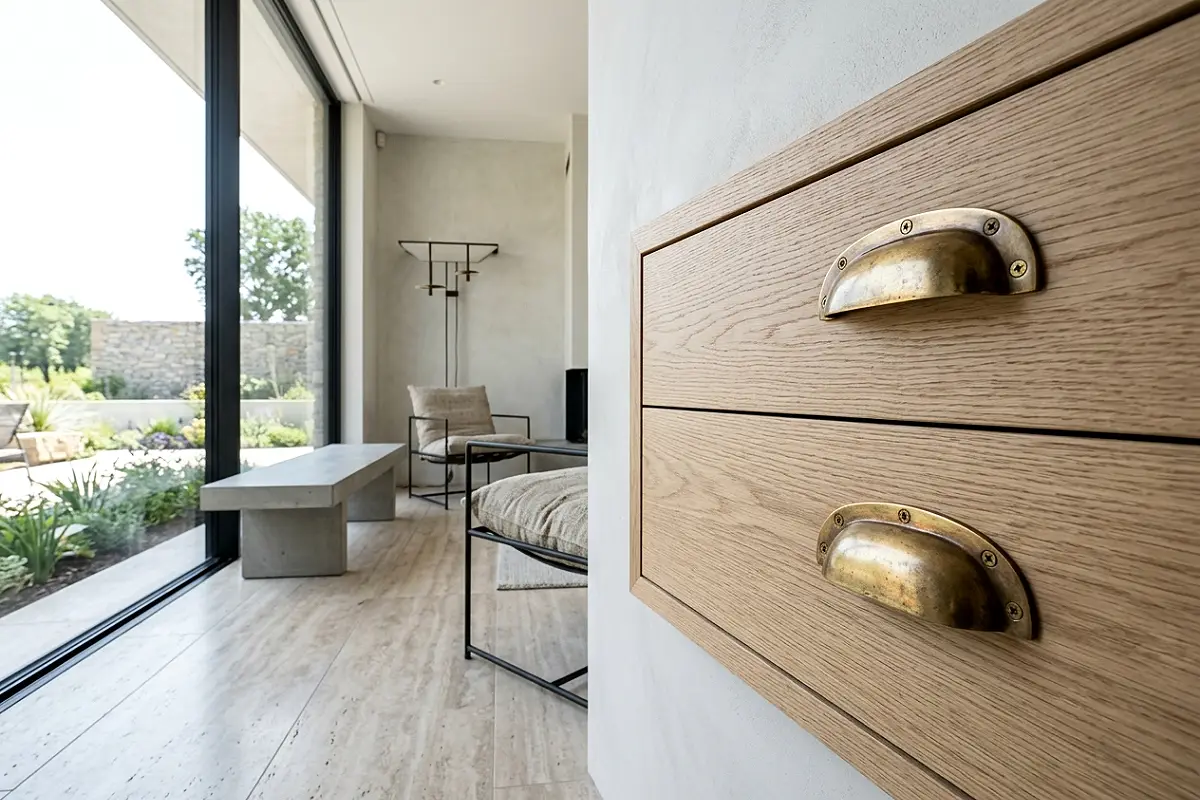
Replacing the drawer pulls and knobs on a dresser, nightstand, or wardrobe is one of the few bedroom upgrades where the before-and-after difference is genuinely disproportionate to the effort and cost. Standard flat-bar or round-knob hardware from mass-market furniture reads as generic regardless of the piece it’s on; replace it with unlacquered brass cup pulls, hand-thrown ceramic knobs in a matte glaze, slim brushed-gold bar handles, or hand-cast iron pulls with a slight aged finish, and the same piece of furniture immediately looks like something you chose rather than something you settled for. Most IKEA and flat-pack furniture uses standard 32mm or 64mm hole spacing, which means replacement hardware is universally available and can be swapped in under twenty minutes with a standard screwdriver.
Pro Tip
Before ordering replacement hardware, measure the center-to-center distance between the screw holes on your existing pulls — not just the pull length. Ordering hardware with a different hole spacing than your furniture means drilling new holes, which adds complexity. Stick to the same spacing and the swap is a true fifteen-minute project.
A Low Tray on the Dresser Top
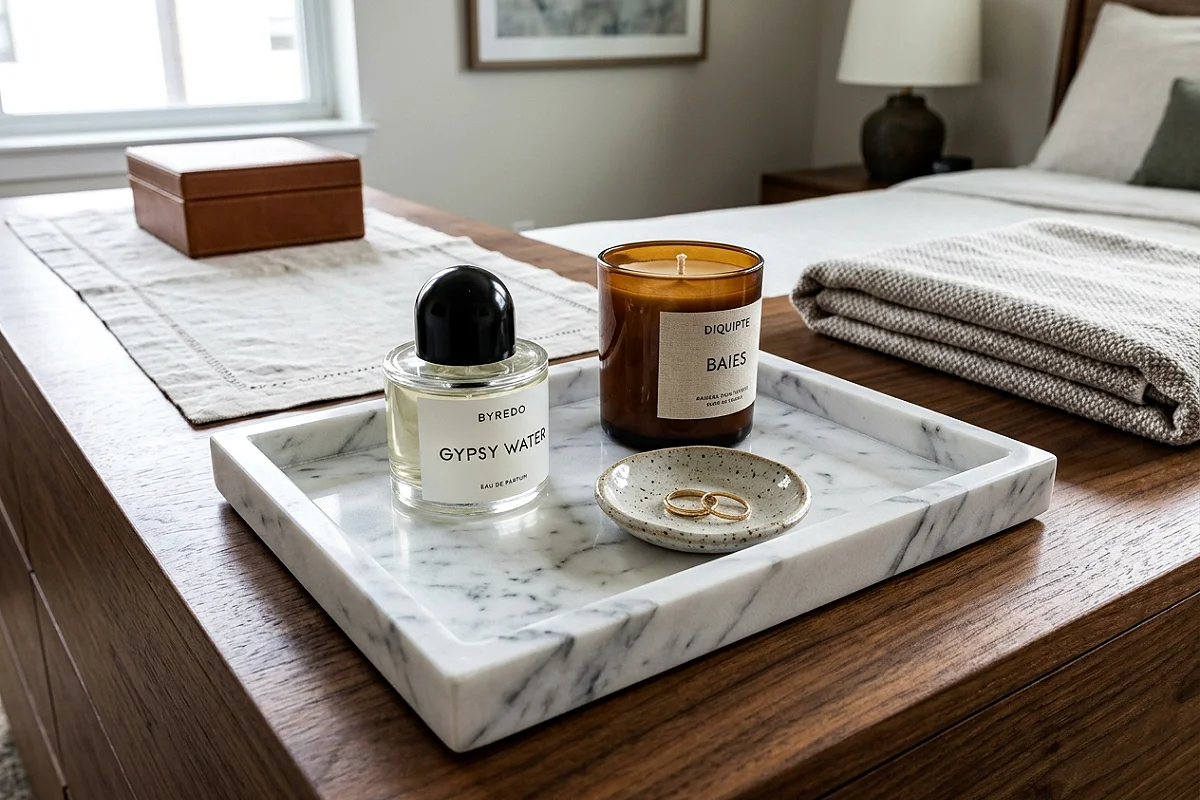
A simple wooden, marble, or lacquered tray placed on top of the dresser does one thing that has an outsized effect on how organized and intentional the whole room feels: it turns a collection of disparate objects into a single visual unit. Perfume bottles, a small candle, a jewelry dish, a few loose items that would otherwise drift across the surface — corralled onto a tray, they become a deliberate vignette rather than accumulated clutter. The tray itself contributes to the design: a raw wood oval tray reads as warm and organic; a white marble rectangle reads as clean and elegant; a black lacquer rectangle reads as graphic and modern. Choose one that aligns with the room’s overall material language and use it as the anchor for every styling decision on that surface.
Pro Tip
Leave at least 20 to 30 percent of the tray surface visibly empty. A completely filled tray looks like storage; a tray with breathing room looks like styling. The empty space is doing as much design work as the objects on it.
One Potted Plant in a Quality Ceramic Pot
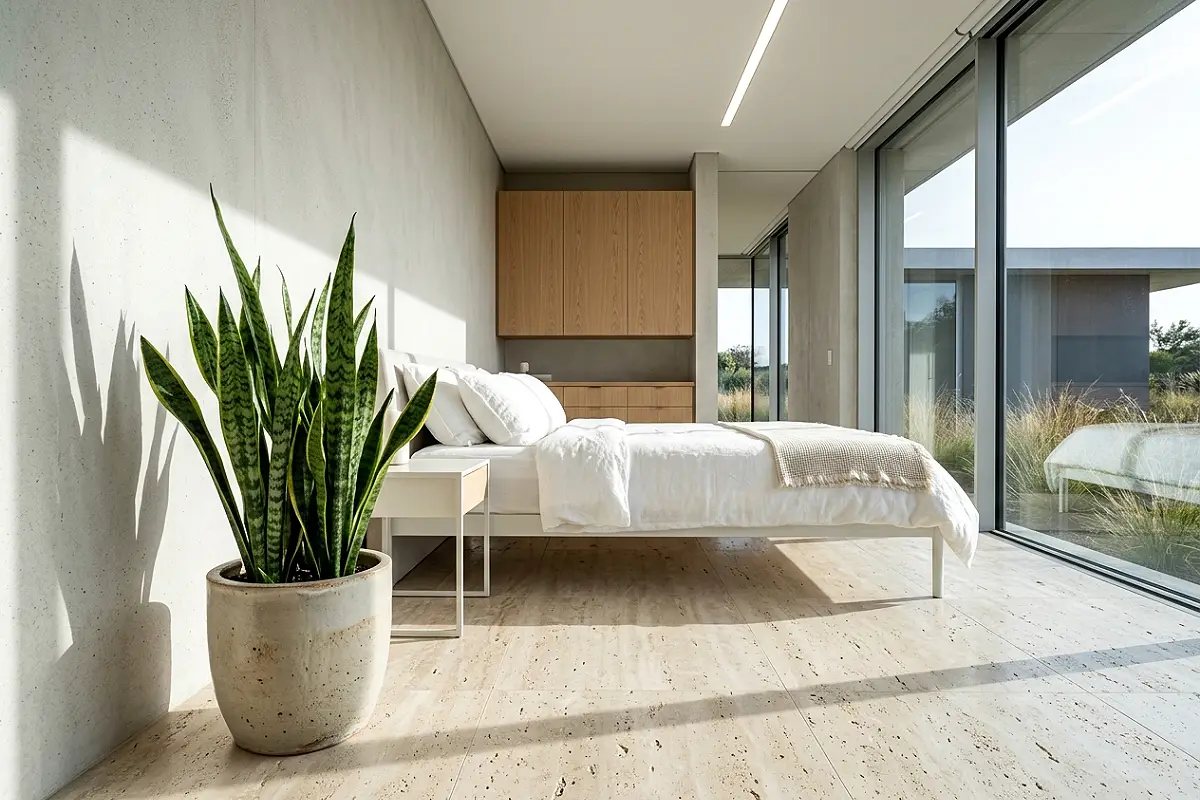
A single healthy plant in a well-chosen pot does more for a simple bedroom than a shelf of faux botanicals or a collection of small plants in mismatched nursery containers. The plant itself matters: choose something with a strong silhouette and a manageable care requirement for a bedroom — a sculptural snake plant, a trailing golden pothos in a hanging ceramic, a small olive tree in a terracotta pot, or a wide-leafed monstera as a statement floor plant in a corner. The pot is as important as the plant: a hand-thrown matte ceramic in a warm sandy glaze, a simple terracotta with a natural rim, or a woven seagrass basket sleeve transforms even the most unremarkable plant into a design object. One beautiful plant, properly potted and cared for, outperforms a dozen neglected ones every time.
Pro Tip
Choose a pot that’s only one size larger than the plant’s current nursery container. An oversized pot holds excess moisture around the roots and leads to root rot in most houseplants — the most common reason a bedroom plant dies within a few months of being repotted for aesthetic purposes.
Curtains Hung at Ceiling Height
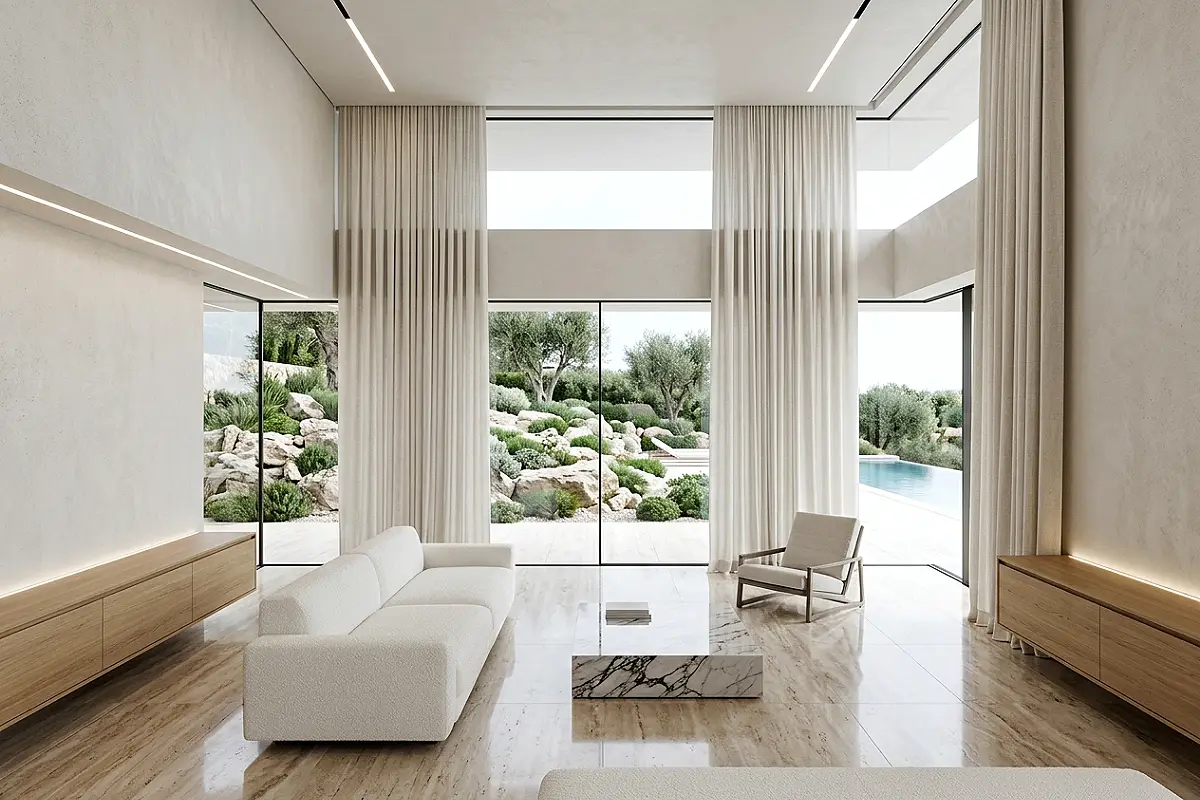
Hanging curtain rods at ceiling height — or as close to the ceiling as possible — rather than just above the window frame is the single most impactful window treatment adjustment available in any bedroom, and it costs nothing if you already have curtains. The same panels that look ordinary when hung at standard window height look dramatic, intentional, and expensive when hung from the ceiling, because the uninterrupted vertical line from ceiling to floor reads as architectural rather than decorative. If your current curtain panels aren’t long enough to reach the floor from ceiling height, most fabric retailers sell basic linen or cotton yardage that can be hemmed into simple panels for a fraction of the cost of ready-made curtains in a longer length.
Pro Tip
Extend your curtain rod at least 8 to 12 inches beyond the window frame on each side. When open, the panels stack entirely off the glass, keeping the full window visible and making both the window and the curtains look larger. Curtains that barely clear the window frame look narrow and undersized regardless of their length.
A Mirror That Earns Its Wall Space
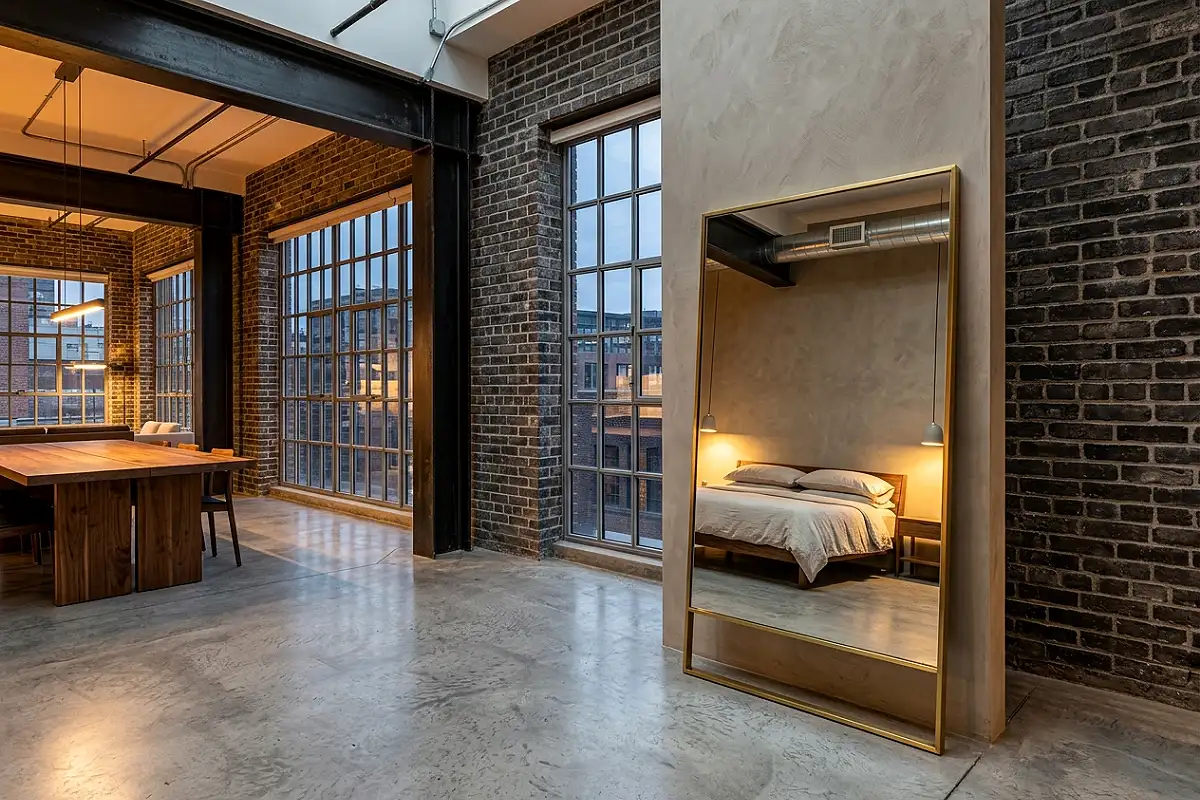
Most bedrooms have a mirror that was put there out of necessity rather than design intent. Replacing it — or repositioning it — with a mirror chosen for both function and visual contribution changes everything. A full-length mirror leaned against the wall in a natural wood or slim brass frame photographs beautifully and adds depth to the room by reflecting the light and the opposing wall. A round mirror with a rattan or iron frame above the dresser brings shape variety to a room full of rectangles. An arched mirror with a thin black or gold frame beside the window bounces natural light deeper into the room while contributing a clean architectural line. Any of these reads as a considered design decision rather than a practical afterthought.
Pro Tip
Position a full-length leaning mirror at a slight forward angle — propped against the wall with the bottom edge pushed out 4 to 6 inches from the baseboard. This makes the reflection more flattering as a dressing mirror and prevents the mirror from reading as flat against the wall, which reduces its sense of depth in the room.
Decluttered Surfaces with Three-Object Rule
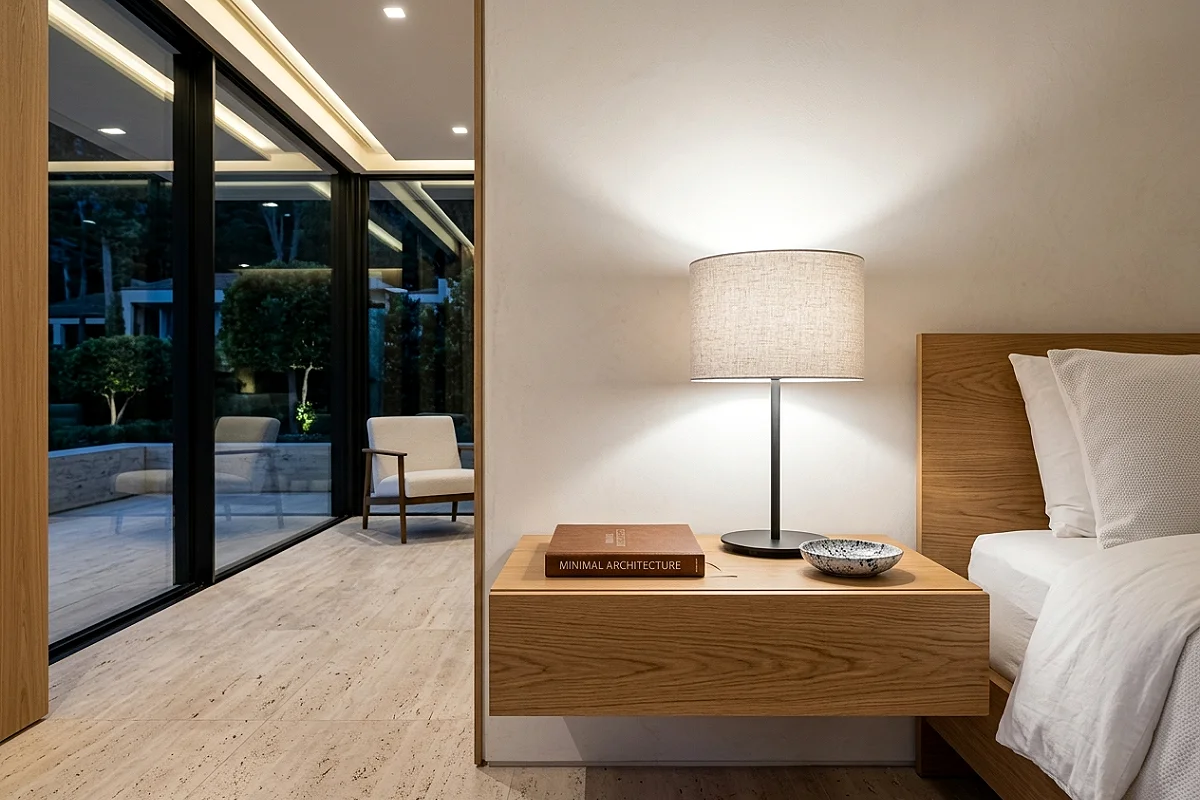
The most common reason a bedroom fails to feel calm and designed is too many objects on too many surfaces — and the solution is not buying better objects, it’s buying fewer. The three-object rule is a practical starting point: limit every surface in the bedroom to no more than three distinct objects, each one chosen intentionally for its visual contribution. A nightstand with a lamp, a small ceramic, and one book looks styled. A nightstand with a lamp, three books, a water glass, a phone, two hair ties, a lip balm, and a candle looks like a nightstand. This is not about minimalism as an aesthetic — it’s about editing, which is a discipline rather than a style preference. Apply it to every surface simultaneously and the room transforms in an afternoon without a single purchase.
Pro Tip
Clear every surface in the room completely — remove everything — before putting anything back. Starting from empty forces genuinely intentional decisions about each object; editing an existing arrangement tends to result in removing the obvious clutter while leaving everything else exactly as it was.
Woven Rug to Anchor the Bed
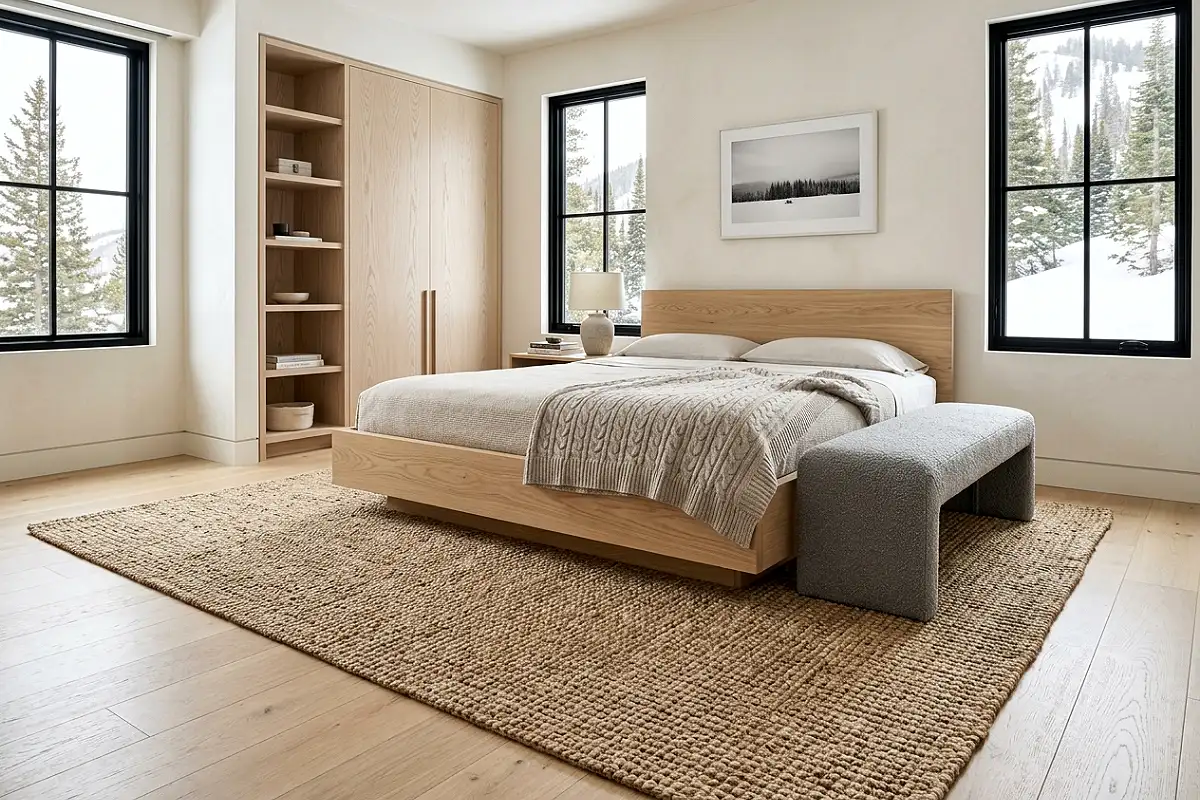
A rug under the bed — sized correctly so that it extends 18 to 24 inches beyond the sides and foot of the bed frame — grounds the entire room in a way that bare floors, however beautiful, simply can’t. In a simple bedroom, the rug should be the visual anchor, not the statement: a low-pile woven cotton or jute in a natural tone, a flat-weave wool in a subtle stripe, or a solid sisal in warm natural — all work as the foundation layer around which other materials can be built. The texture of a woven natural-fiber rug adds warmth underfoot and visual interest without introducing pattern competition. For a clean, affordable option, IKEA’s TIPHEDE cotton rug punches well above its price point; Ruggable’s washable flatweave range offers a practical alternative for high-use rooms.
Pro Tip
Always use a non-slip rug pad under a bedroom rug — not just for safety, but because a pad adds a cushioned, springy quality underfoot that makes the rug feel substantially more expensive than it is. A $40 rug on a good pad feels better than a $200 rug without one.
Simple Linen Headboard in a Neutral Tone
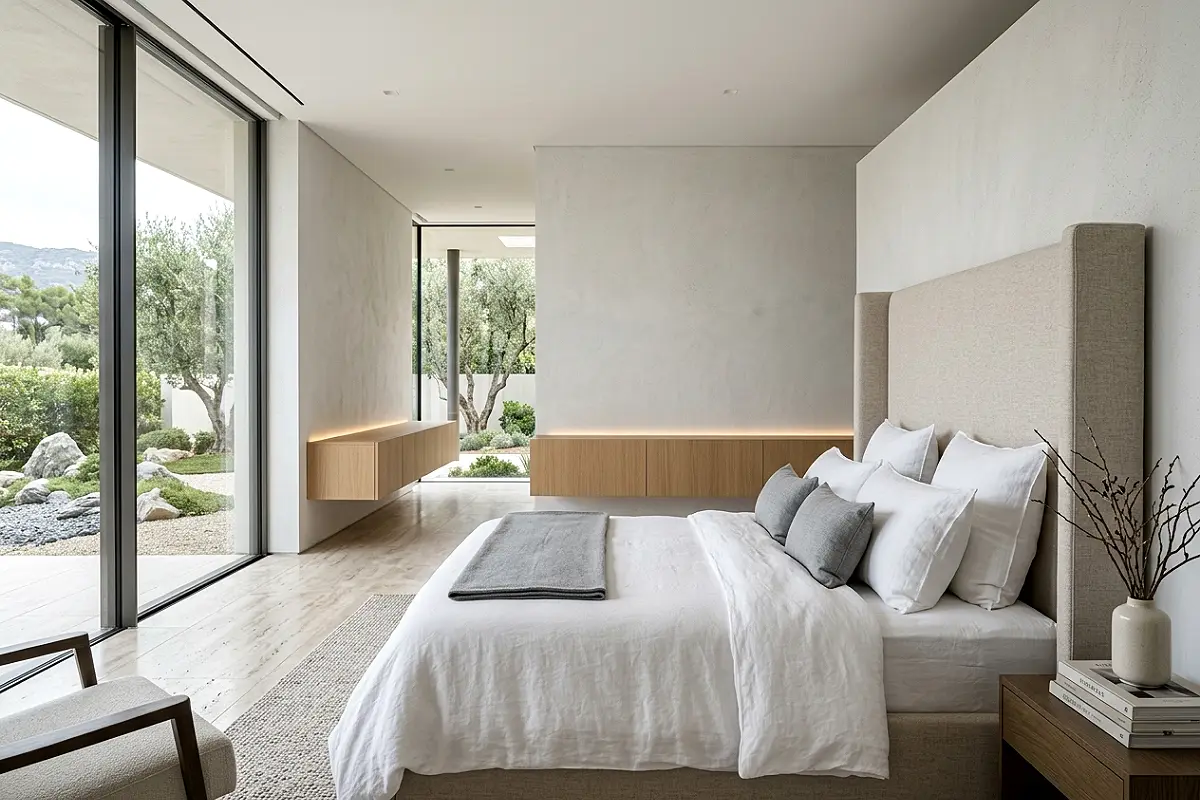
A bed without a headboard almost always looks unfinished, and a simple upholstered linen headboard in a warm neutral — oatmeal, warm white, natural, or warm greige — is the most versatile and design-forward solution available at virtually any budget. The linen fabric contributes warmth and texture without introducing color or pattern that could clash with future changes to the bedding or wall color; it’s the piece that makes every other update easier. A simple panel headboard in a linen or linen-blend upholstery, wall-mounted or attached to the bed frame, reads as quietly considered in a way that both budget and expensive versions achieve equally well. Wayfair, Article, and Zinus all carry clean-lined upholstered options that look far more expensive than their price tags suggest.
Pro Tip
Mount a wall-attached headboard so the top edge sits at a minimum of 24 inches above the top of your mattress. A headboard that just clears the pillows looks undersized; one with real height above the pillow stack looks genuinely architectural and gives the bed a sense of presence that no amount of bedding can replicate.
A Candle in a Quality Vessel as Nightstand Art
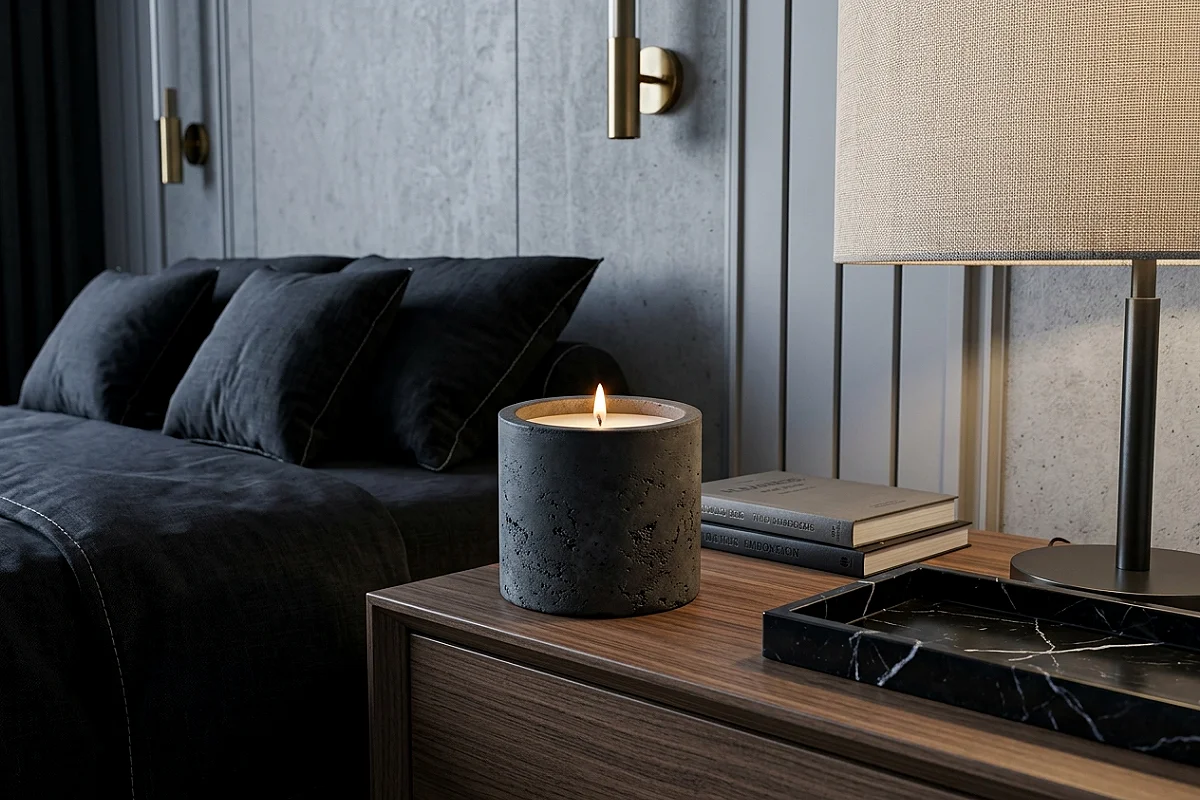
A single well-chosen candle on the nightstand or dresser occupies a curious space between functional object and design piece — it’s one of the few things you can place in a bedroom that is simultaneously decorative, sensory, and useful. The vessel is what makes it a design object: a wide-mouth concrete vessel with a matte surface, a heavy ribbed glass jar in an amber or smoke tone, a hand-thrown ceramic in a warm earthy glaze. The candle doesn’t need to be expensive — the vessel is doing most of the visual work. Light it in the evening and the bedroom gains warmth and scent in one move. Unlit, it contributes material texture and a considered quality to the nightstand composition that no other single object delivers quite as efficiently.
Pro Tip
When a candle burns down, clean out the vessel with boiling water to remove residual wax, then repurpose it as a bud vase, a pen holder, or a small plant pot. A beautiful candle vessel has a second and third life that makes the initial investment much easier to justify.
Cohesive Book Spine Arrangement on Open Shelves
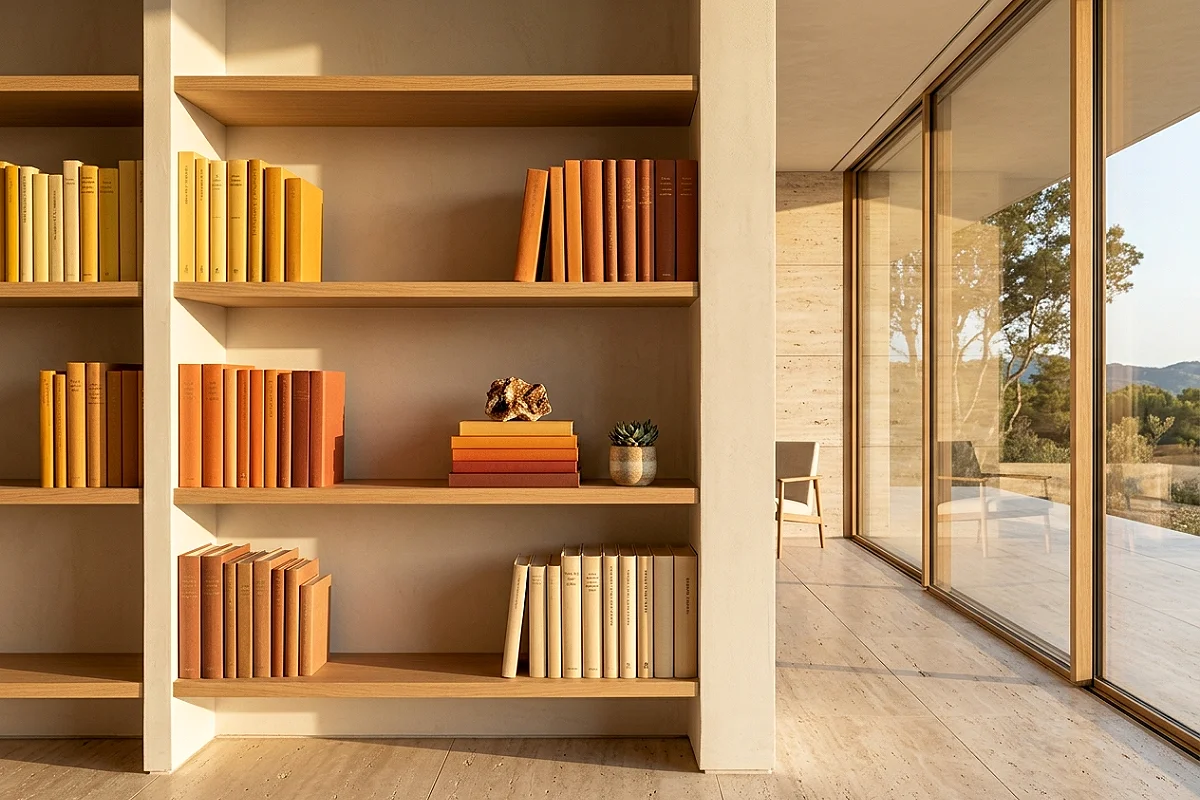
Books on open shelves in a bedroom are one of the most personal and characterful design elements available — but only when they’re arranged with some intention. The approach that works best in a simple, styled bedroom is to organize books loosely by spine color, grouping warm tones together and cool tones in a separate cluster, rather than by author or title. This creates a naturally tonal, gradient-like quality along the shelf that reads as visually coherent without feeling rigidly organized. Leave a few horizontal stacks among the upright books, and place one small object — a tiny ceramic, a stone, a single dried stem — on top of each horizontal stack to break the uniformity. It takes about twenty minutes and costs nothing.
Pro Tip
Remove the dust jackets from hardcover books before shelving them. The raw cloth or board covers underneath are almost universally more beautiful than the printed jackets — quieter, more textural, and far more conducive to a cohesive shelf arrangement than the commercial typography of most jacket designs.
A Window Seat Moment with Floor Cushions
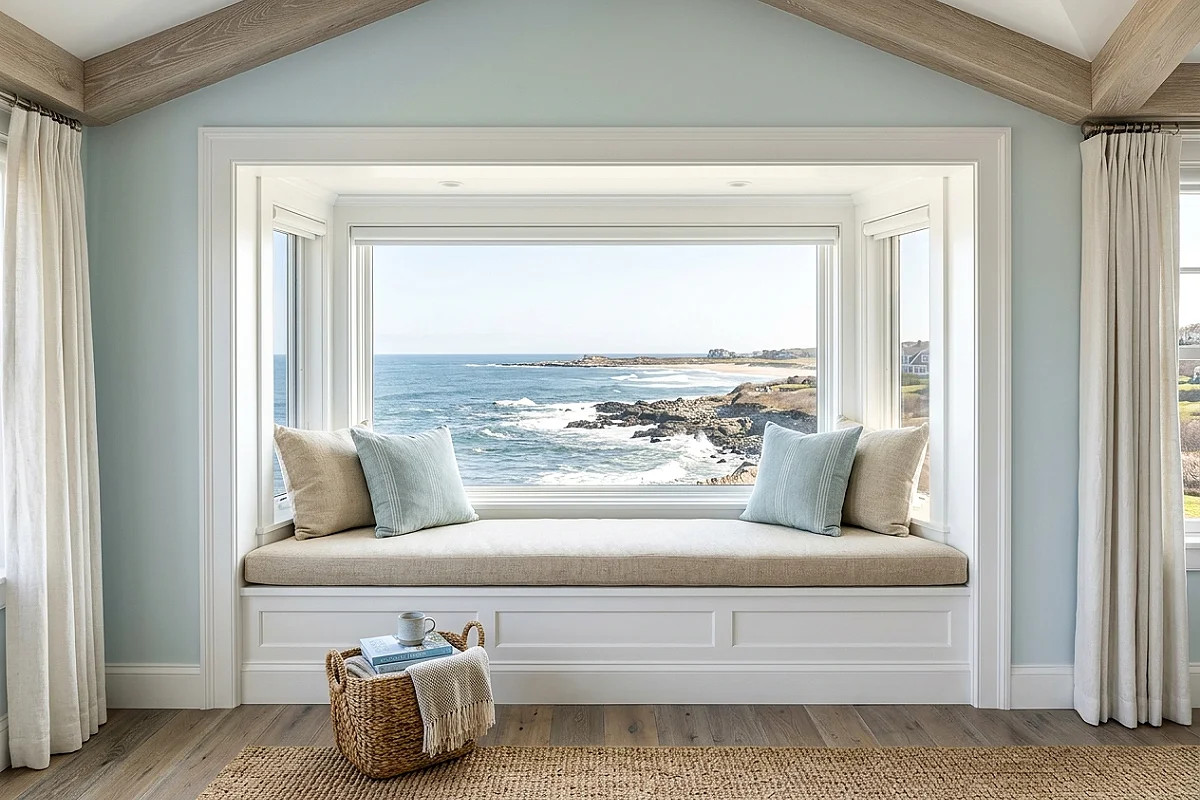
If your bedroom has a window with even a modest sill depth — or a radiator cover below the window that creates a low, flat surface — a floor cushion or a fitted bench cushion in a durable linen or canvas fabric turns it into a genuine seating moment that adds both function and warmth to the room without taking any additional floor space. Add two or three scatter cushions in coordinating textures, a small woven basket beside it for blankets, and a low side table or a stack of books, and the window seat becomes the most photographable corner of the room. In rooms where no built-in sill or radiator cover exists, a low wooden platform bench placed below the window achieves the same effect with the addition of one piece of furniture.
Pro Tip
Use an outdoor or indoor-outdoor fabric for a window seat cushion rather than standard upholstery fabric. The same sunlight that makes a window seat appealing fades standard fabric in months; outdoor fabric handles UV exposure, is typically wipeable, and now comes in linen-like textures that look indistinguishable from interior upholstery at normal viewing distance.
Frequently Asked Questions
How do I make my bedroom look more expensive on a budget?
The highest-impact changes are almost always the cheapest: replace your light bulbs with warm 2200K options, swap out furniture hardware for brass or ceramic alternatives, hang your curtains at ceiling height instead of window height, and declutter every surface down to three objects or fewer. These four changes cost under $50 in total and are responsible for the majority of the visual difference between a room that reads as expensive and one that doesn’t.
What is the easiest way to make a plain bedroom feel more styled?
Start with the bed — it takes up the most visual space in the room and delivers the most return on effort. Add one or two Euro shams behind your standard pillows, layer a textured throw across the foot of the bed, and make sure your duvet cover and pillowcases are in a consistent neutral tone. A properly made bed with layered pillows and a throw makes the entire room feel styled regardless of what else is happening in it.
What wall color makes a simple bedroom look elegant?
Warm neutrals consistently outperform cool ones in a simple bedroom context: warm white with a slight cream or yellow undertone, soft greige, warm oatmeal, and pale clay all create a sense of warmth and depth that cool greys and stark whites can’t replicate. If you want a color rather than a neutral, warm sage, dusty blue-grey, and muted terracotta all read as quietly elegant without demanding that everything else in the room revolve around them.
How do I style a bedroom with minimal furniture?
In a room with minimal furniture, the quality and styling of each individual piece matters more, not less. Invest in one genuinely good-looking bed frame and headboard, two matching nightstands with matching lamps, and a rug that extends well beyond the sides of the bed. Then use the walls deliberately — one large piece of art above the bed, floating shelves on one other wall — to provide visual interest without adding floor-level furniture. A minimal room well-styled reads as intentional and sophisticated; the same room unstyled reads as incomplete.
What are the best affordable brands for simple bedroom decor?
For bedding: IKEA’s PUDERVIVA linen range and H&M Home’s washed linen series deliver genuine quality at honest prices. For furniture: Article, Wayfair’s AllModern line, and Zinus offer clean-lined pieces that photograph and live well above their price point. For art prints: Desenio, Society6, and Minted carry affordable large-format options. For small accessories and ceramics: H&M Home, TJ Maxx, and HomeGoods consistently stock pieces that compete visually with boutique pricing. The common thread is restraint — any of these sources works when you buy fewer, better things from them rather than filling a cart.
How many throw pillows should a bed have?
For a queen bed: two Euro shams (26×26 inches), two standard shams matching your pillowcases, and one or two front accent pillows is the formula that works in virtually every context — substantial enough to look styled, simple enough to make and remake without frustration. For a king: add one more Euro sham or a lumbar pillow at the front. More than six pillows on a standard bed starts to look like a display rather than something you actually sleep in, which is its own kind of design failure.
A bedroom that looks simple and styled is the result of subtracting as much as adding — and the subtracting is often the more rewarding half of the work.