
19 Bedroom Sitting Area Ideas with Comfortable Accent Pieces
A bedroom sitting area is one of those quietly indulgent things that transforms how a room actually feels to live in. It shifts the space from somewhere you only sleep to somewhere you genuinely want to spend an afternoon — curled up with a book, sipping coffee before the day properly starts, or simply sitting somewhere that isn’t the bed. When it’s done well, it doesn’t look like an addition. It looks like the room was always designed this way.
The good news is that you don’t need a grand primary suite or a sprawling floor plan to pull it off. A thoughtfully chosen chair, the right side table, and a few carefully layered accent pieces can establish a sitting area in even the most compact bedroom. These 19 ideas cover every room size, aesthetic, and budget — each one a fully realized concept you can adapt to your own space.
The Wingback Reading Throne
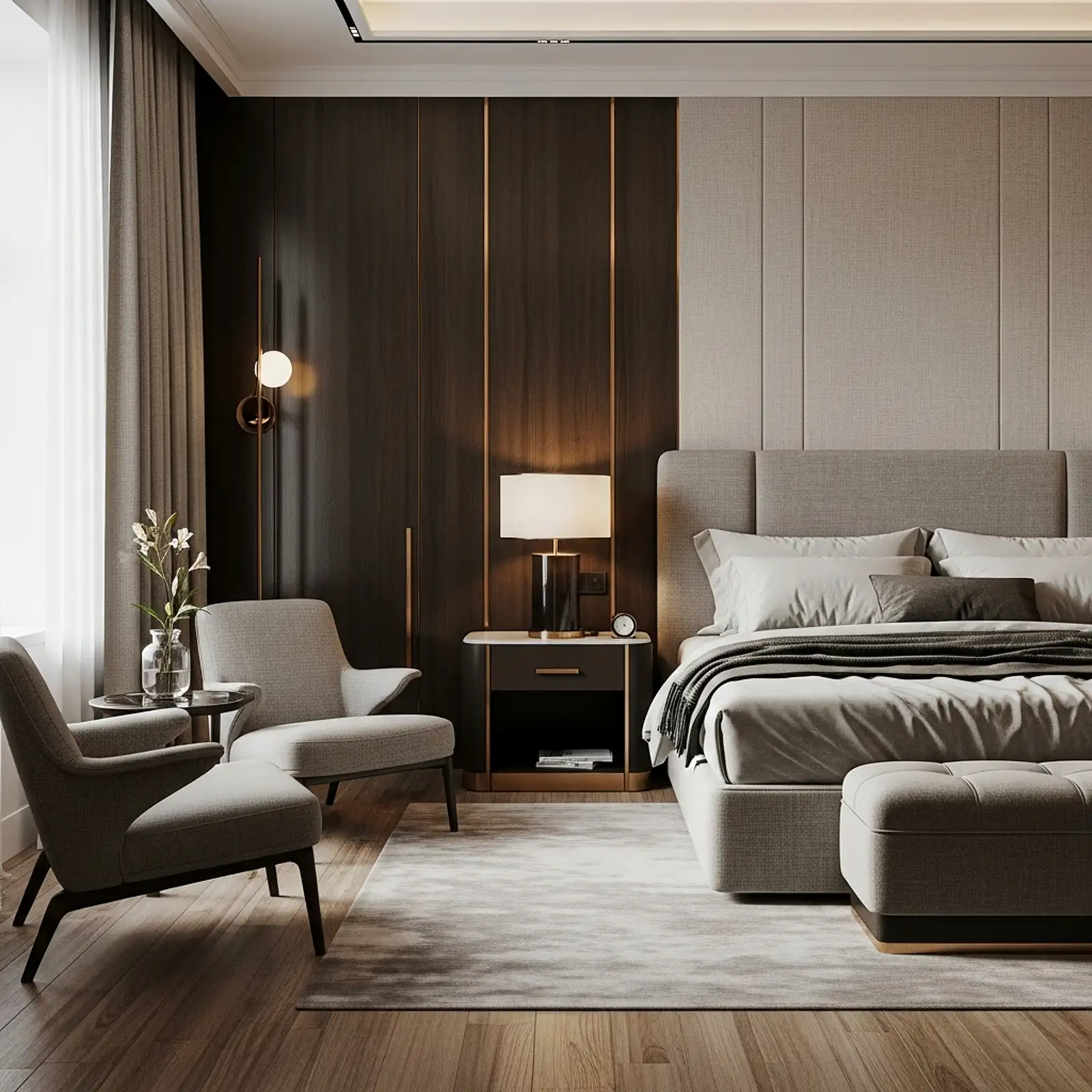
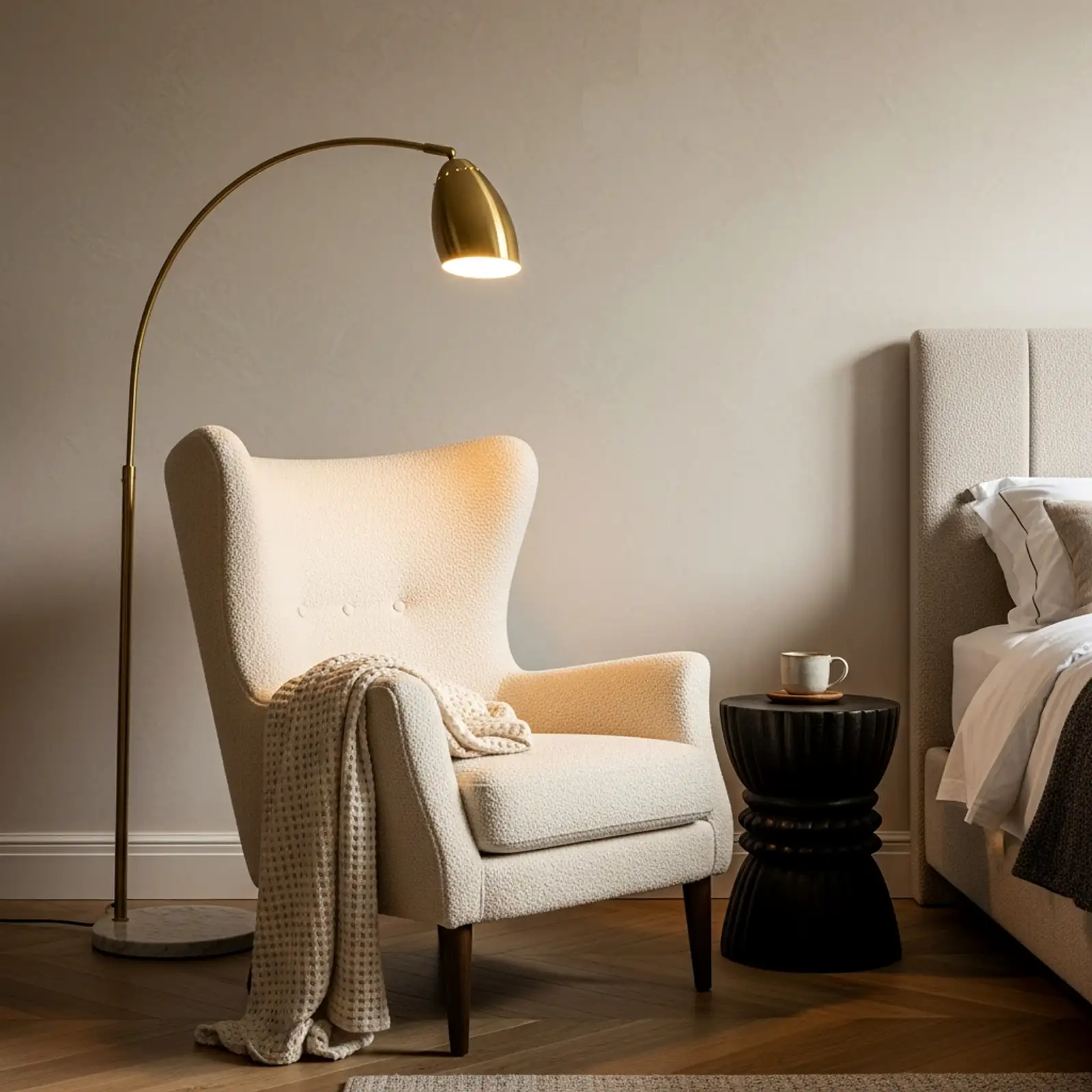
There is something undeniably commanding about a wingback chair placed in a bedroom corner — the high back, the enveloping sides, the sense that this particular spot in the room exists solely for the pleasure of sitting. Choose an upholstered wingback in a fabric that has genuine texture to it: a nubby boucle in warm cream, a velvet in dusty plum, or a herringbone wool in forest green. Position it at an angle rather than flush against the wall, which immediately signals intention — this chair is a destination, not an afterthought. Place a slim, tall arc floor lamp directly behind it so the light pools downward exactly where you need it for reading. A small drum-shaped side table at arm’s reach completes the setup, ideally in a contrasting material like hammered brass or a dark, turned wood that adds depth against the chair’s upholstery. Pile the chair with a single substantial throw — a waffle-weave cotton or a cashmere blend — left deliberately draped rather than folded, because the lived-in quality is exactly the point. The CB2 Gwyneth Wingback is a beautifully proportioned option at an accessible price; for a genuine heirloom piece, an antique wingback reupholstered in your chosen fabric is hard to beat.
Pro Tip
Turn the chair at a 30 to 45-degree angle rather than pointing it straight at the wall or perfectly parallel to the bed. That diagonal placement gives the corner a sense of movement and keeps the sitting area from feeling like it was simply pushed out of the way.
Chaise Longue at the Foot of the Bed
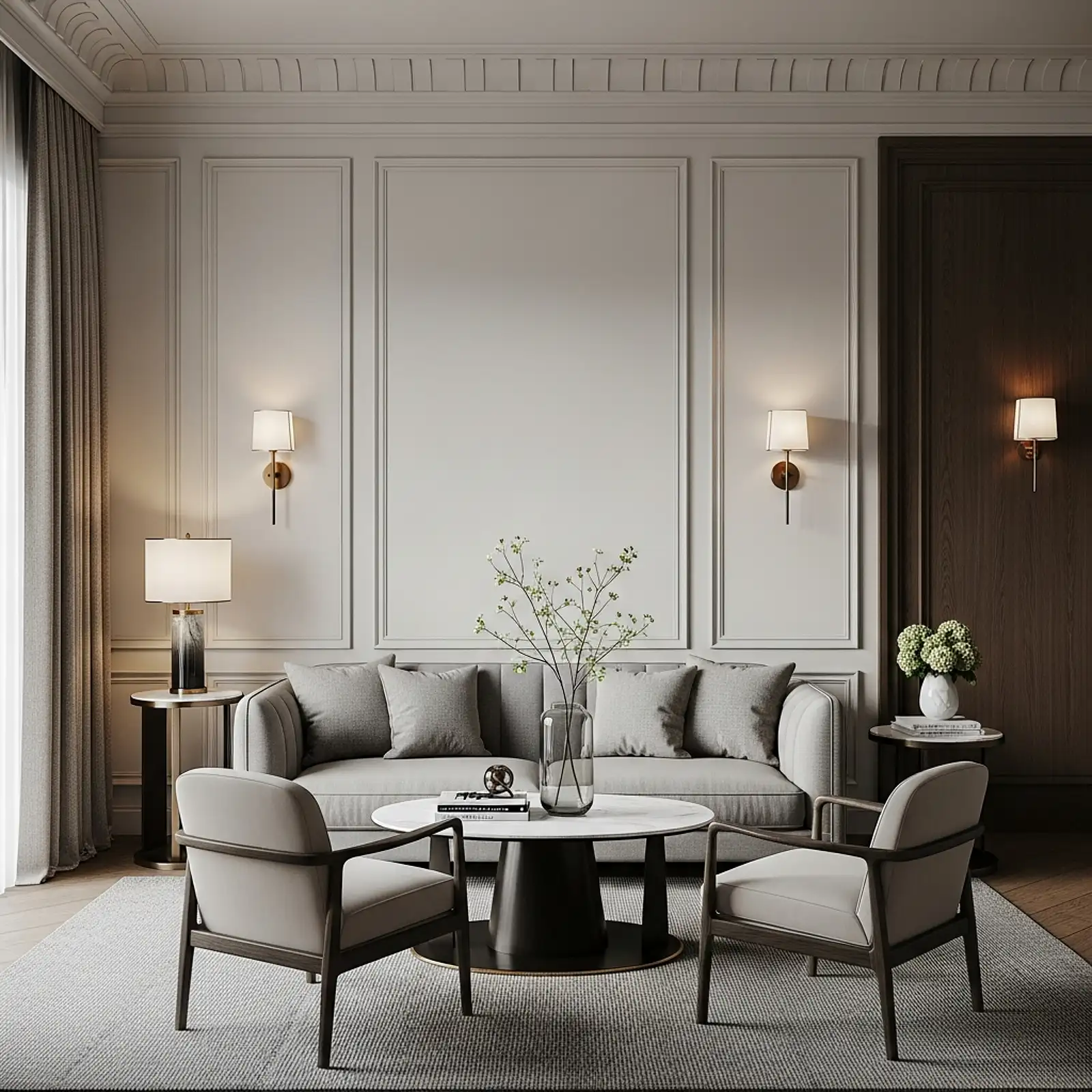
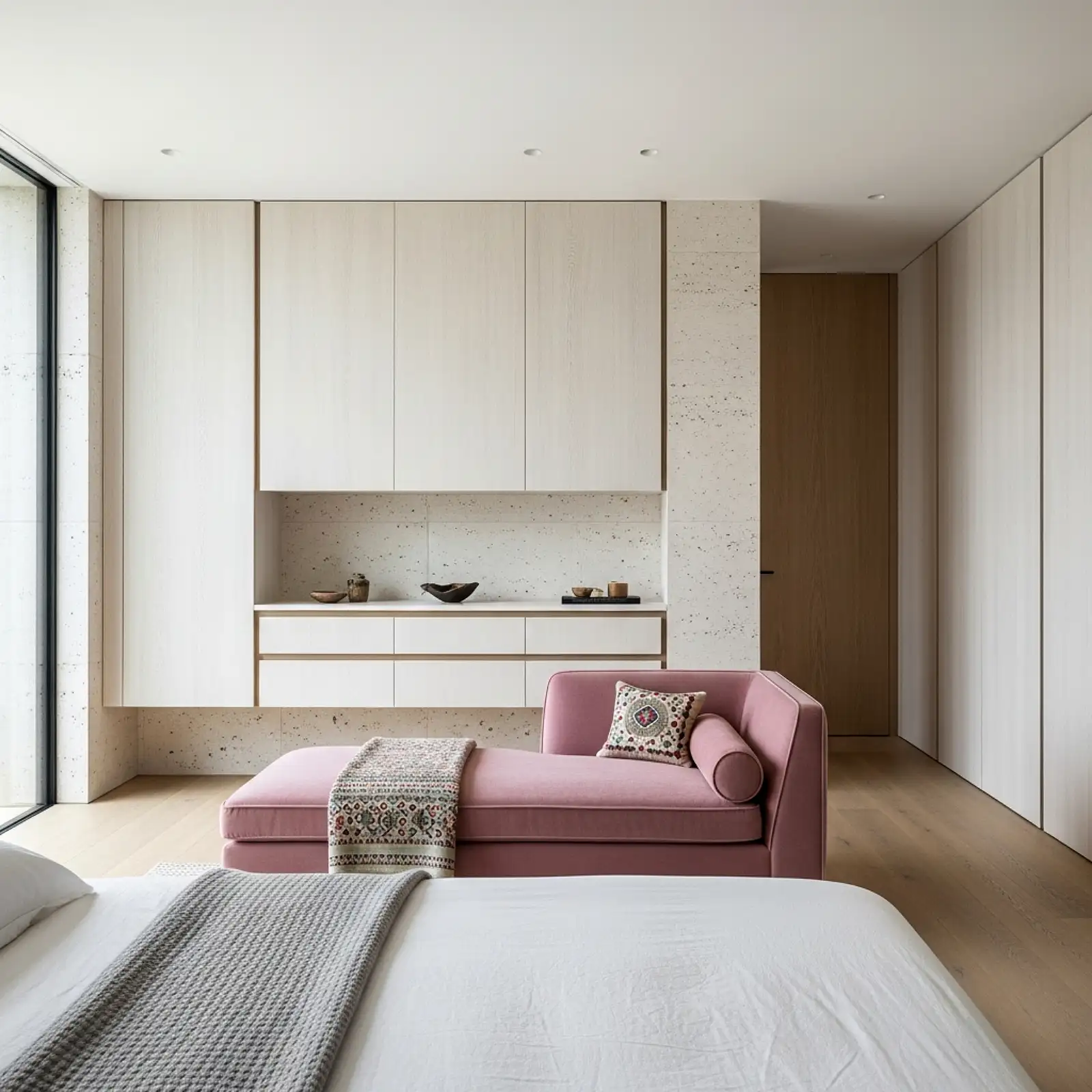
A chaise longue at the foot of the bed is one of the oldest hotel-suite tricks in the book, and it works just as beautifully in a private bedroom. The genius of the placement is that it doesn’t require a separate corner or a dedicated zone — it borrows the visual weight of the bed itself and extends it, making the entire foot-of-bed wall feel considered and complete. Choose a chaise with clean, low-slung lines: a slightly curved back, tapered legs in walnut or brushed gold, upholstered in a performance linen or a tightly woven velvet that will hold its shape through years of afternoon lounging. The color should either echo the bedding — pulled from a throw or a pillow shade — or provide a deliberate contrast that grounds the foot of the bed. A dusty rose chaise against ivory linen bedding has a quietly romantic quality; a deep teal chaise against white bedding feels crisp and resort-like. Keep one end styled with a small cushion and a folded throw; leave the other end clear to actually lie on, because a chaise that’s too decorated to use has missed the entire point.
Pro Tip
Measure the distance between the foot of your bed and the opposite wall before committing to a chaise. You need at least 36 inches of clear walking space between the chaise and the bed — anything less and the room will feel blocked rather than furnished.
Bay Window Bench Conversation Corner
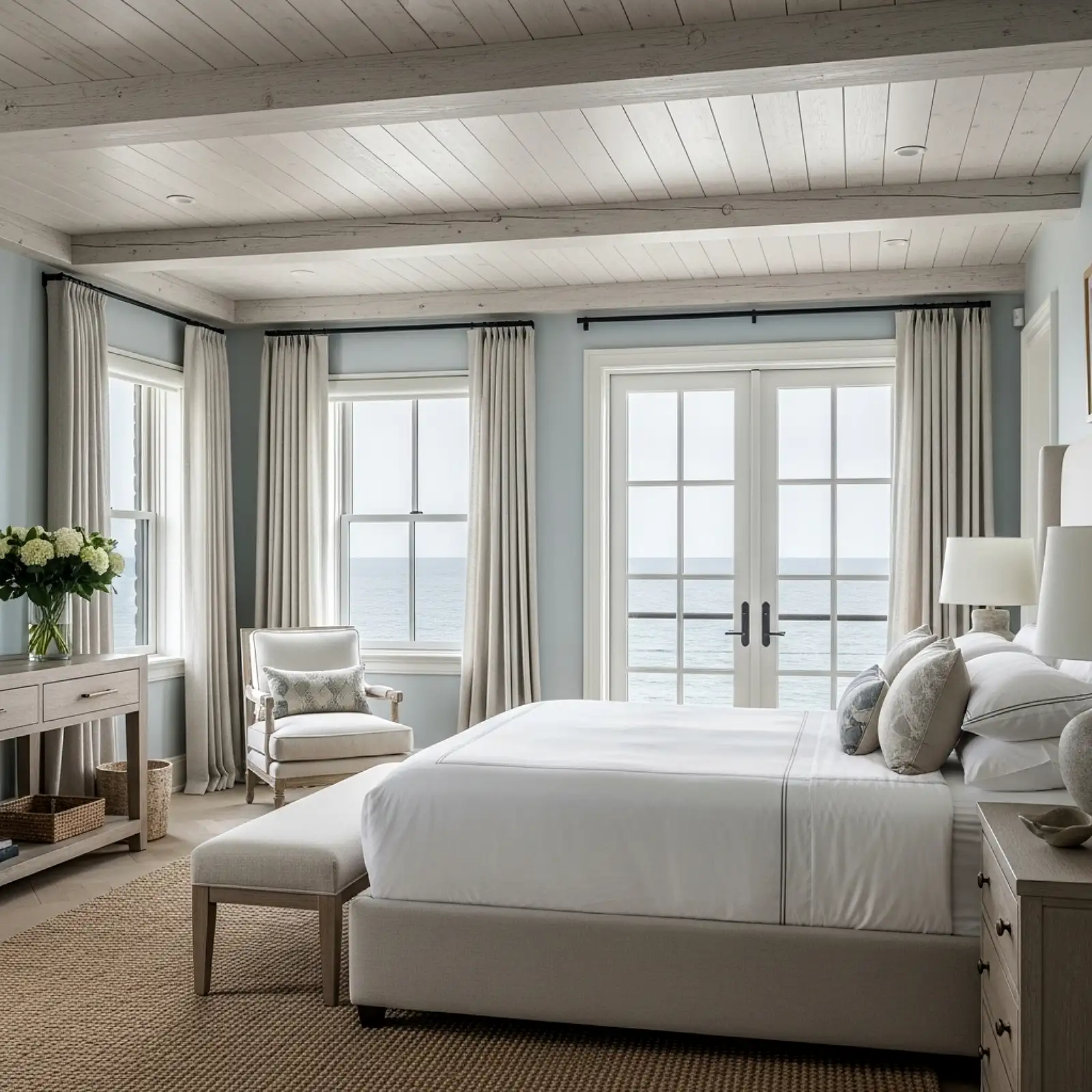
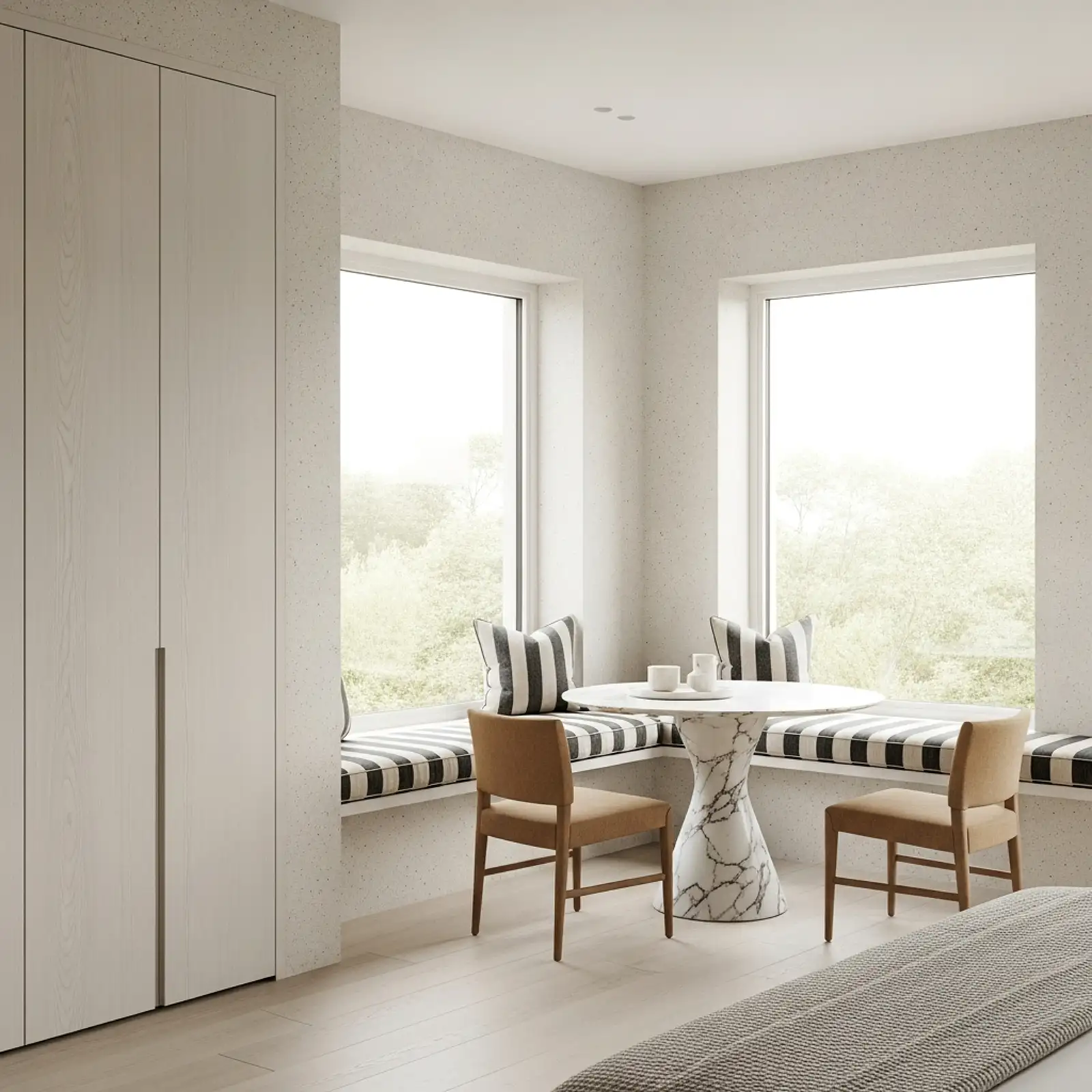
A bay window is one of the finest gifts a bedroom can offer, and too many people fill it with nothing more than a curtain panel and good intentions. The right approach is to build or buy a fitted cushioned bench that runs the full width of the bay, then flank it with two small armchairs or stools angled inward to form a conversation grouping. The window light does everything here — it’s soft, directional, and shifts through the day in a way that makes the corner feel alive at any hour. Upholster the bench cushion in a durable, sun-resistant fabric: a woven stripe, a performance canvas in warm sand, or a ticking linen in black and cream all hold up beautifully in strong natural light. Add a small round table in the center — a pedestal base in white marble or a rattan side table — to complete the grouping. This setup works as a morning coffee spot, a reading nook, a quiet place to take a call, or simply somewhere to sit and watch the world outside. It makes the bedroom feel genuinely bigger by drawing the eye toward the window and anchoring the architecture.
Pro Tip
Build storage into the bench base — a lift-up lid or drawers along the front — to store extra blankets, seasonal pillows, or books. In a bedroom, hidden storage is always worth the investment, and a bay bench is one of the most natural places to include it.
Pair of Petite Slipper Chairs
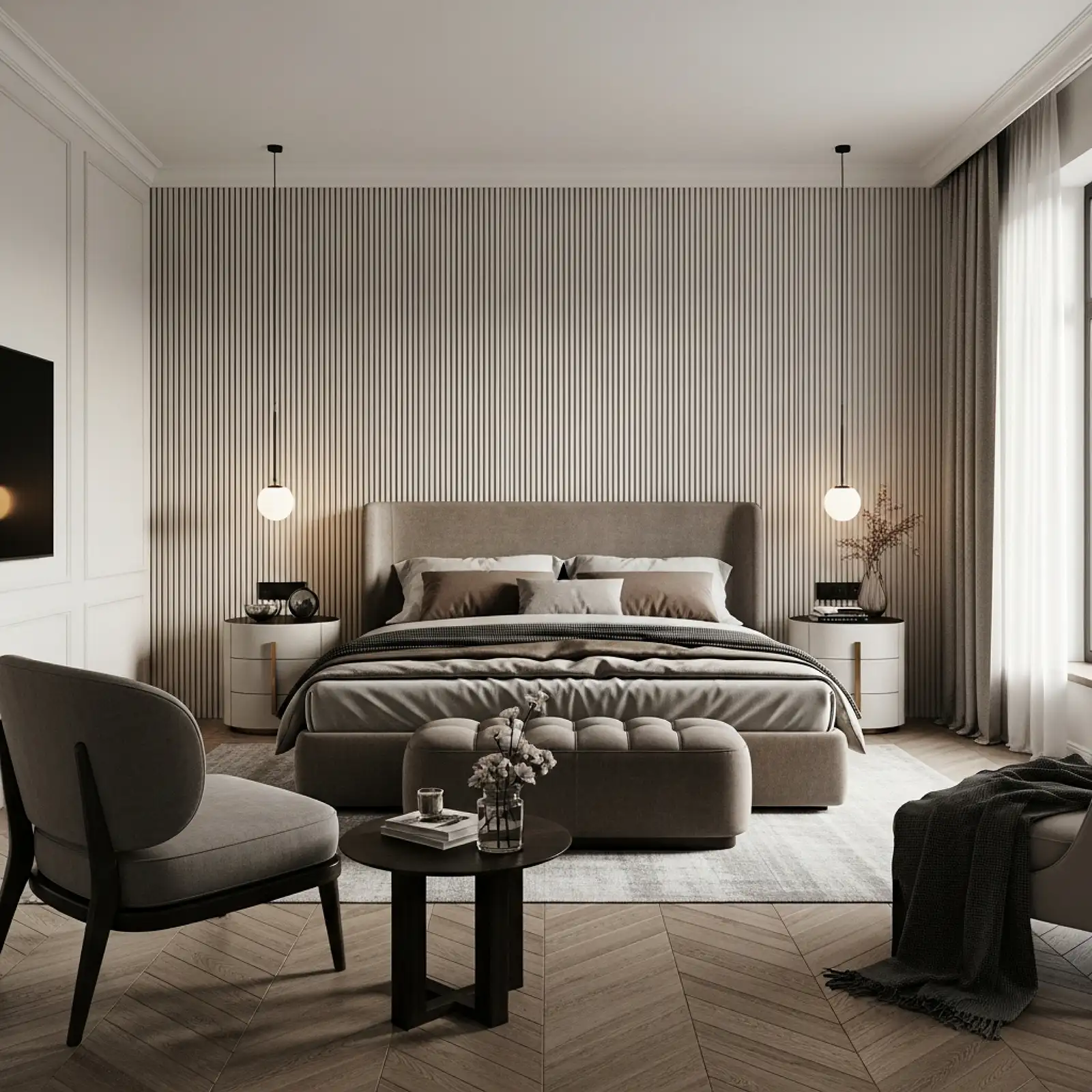
Two small slipper chairs facing each other across a shared ottoman create an instant sitting area without demanding much floor space at all. Slipper chairs — those armless, low-slung seats with a compact footprint that originated as dressing room furniture — are genuinely ideal for bedrooms because they’re proportioned for intimate, domestic spaces rather than large living rooms. Choose a matching pair in an upholstery that introduces pattern into a room that might otherwise be relying on texture alone: a small-scale floral in muted terracotta and cream, a geometric jacquard in charcoal and sand, or a painterly abstract print in two or three of the room’s existing accent colors. Float them just far enough apart that an ottoman or a low tray table fits neatly between them. A large, square upholstered ottoman in a solid complementary tone ties the grouping together and gives both chairs a surface for books, cups, and feet. The entire arrangement can fit in a space as small as 6 × 6 feet, making it one of the most space-efficient sitting area configurations available.
Pro Tip
Resist the temptation to match the slipper chairs identically to the bedding or the curtains. Let them stand slightly apart in tone — one shade deeper, or in a complementary rather than matching fabric — so the sitting area has its own identity within the room.
Rattan and Linen Tropical Retreat
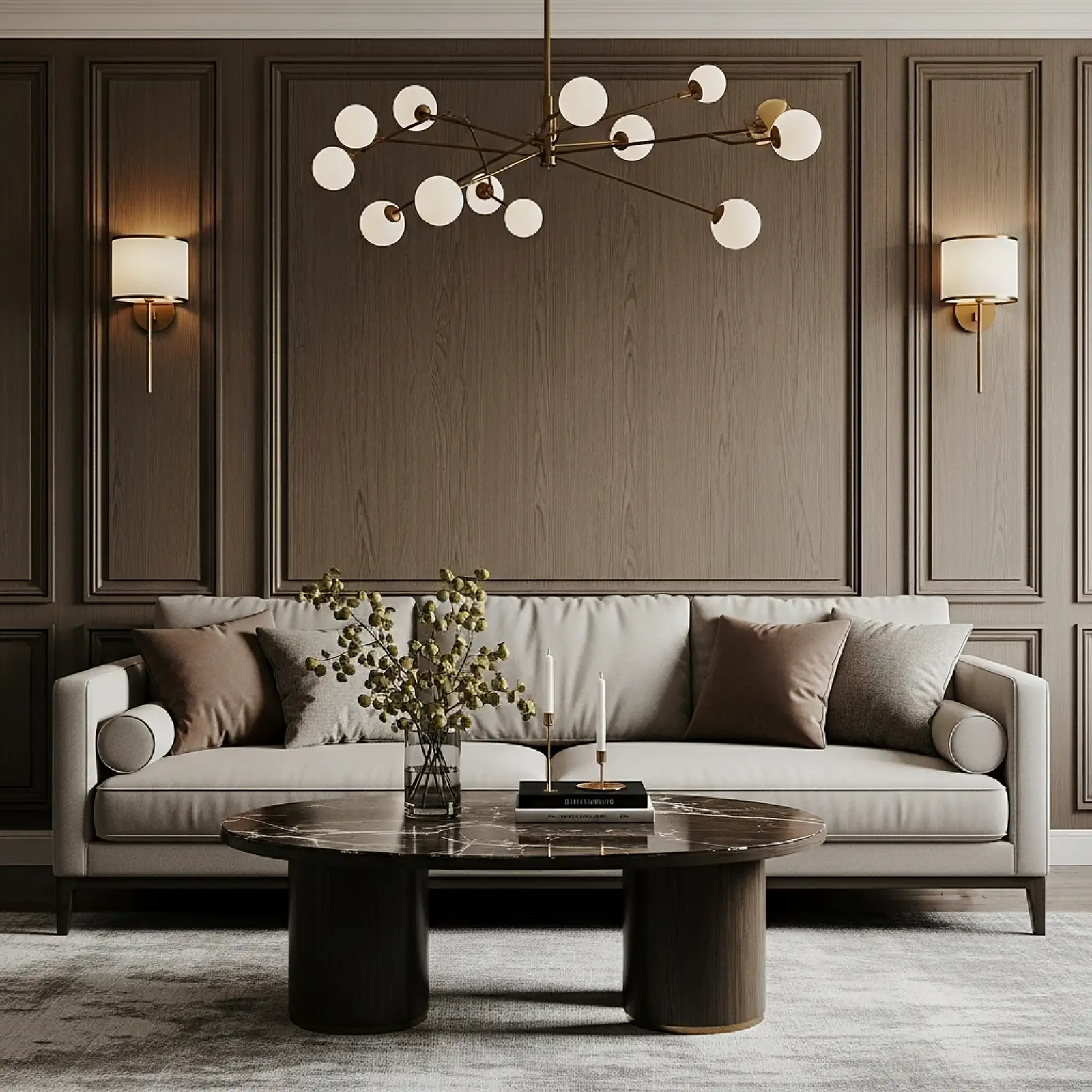
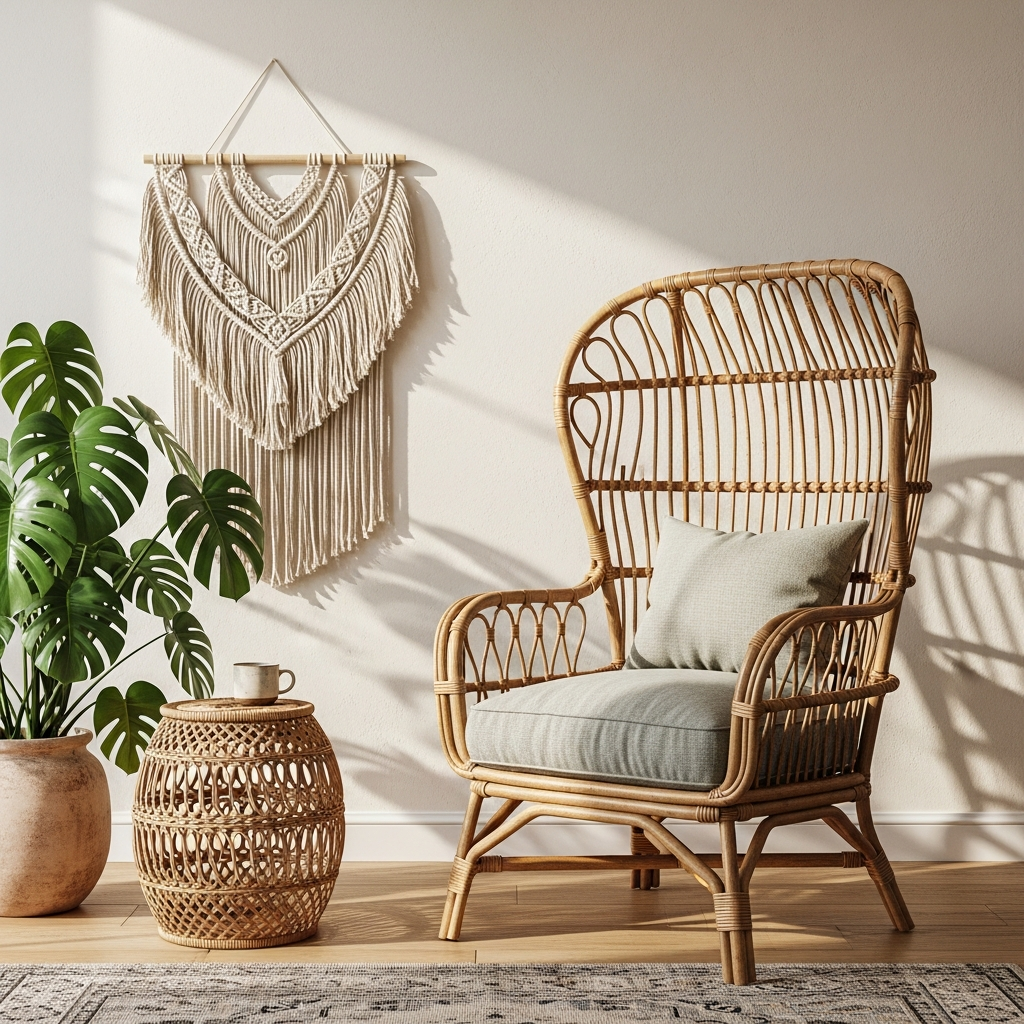
A sitting area built around natural rattan furniture and linen upholstery brings a warm, unhurried quality to a bedroom that no other material combination quite replicates. The key piece is a rattan armchair with a high, rounded back — the kind that holds its shape over decades and improves with age — paired with a rattan side table of a different weave or profile so the two pieces feel collected rather than matched. Upholster the chair seat in a loose-weave linen in undyed natural, dusty sage, or the palest terracotta; add a lumbar cushion in the same or a tonal stripe for lower-back support and a considered layer of color. Overhead, a woven rattan pendant light in a dome or lantern shape reinforces the material story without adding visual weight. Complete the vignette with a large-leaf potted plant — a monstera, a fiddle-leaf fig, or a bird of paradise — placed just behind or beside the chair to introduce real organic height. This look travels beautifully between coastal, bohemian, and tropical modern bedrooms without feeling themed or heavy-handed.
Pro Tip
Mix at least two different rattan weave patterns — perhaps a tight, smooth weave on the chair frame and a looser, more rustic weave on the side table — to keep the look layered and artisan rather than like a matching set from a catalog.
Jewel-Toned Velvet Lounge Vignette
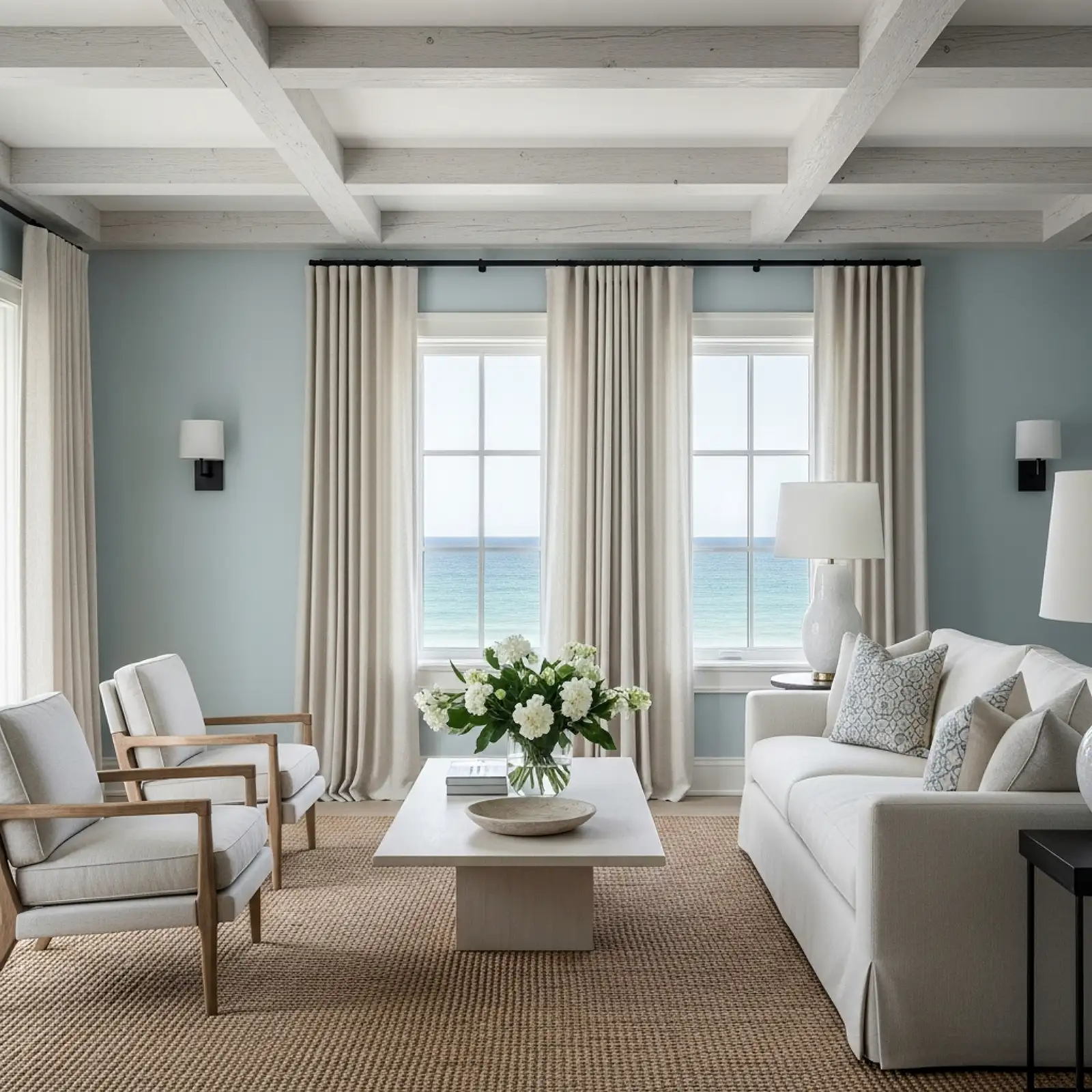
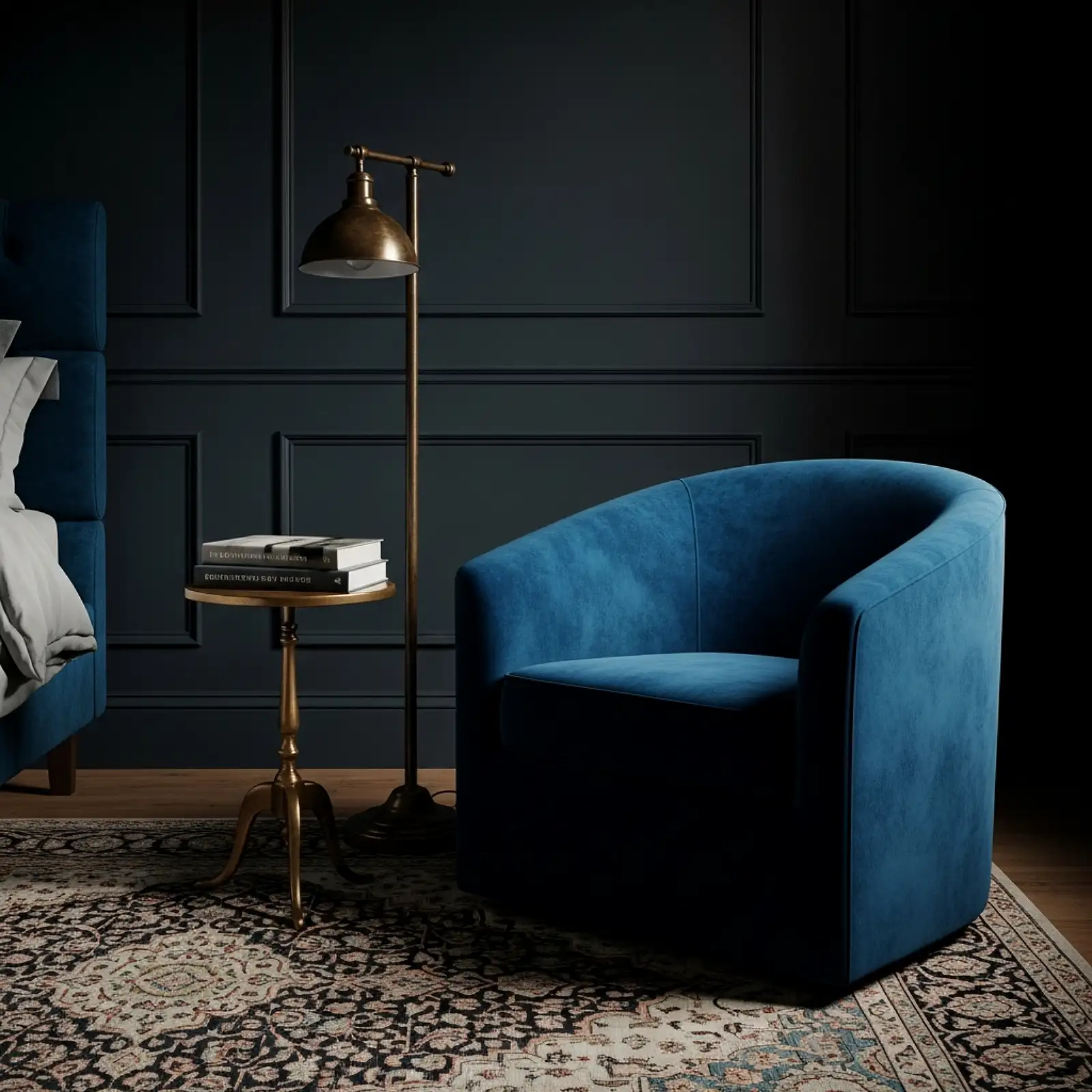
Velvet in a rich, saturated tone — sapphire blue, deep emerald, burnt amber, or aubergine — has an almost theatrical ability to turn a bedroom corner into something that feels genuinely luxurious. Start with a single velvet armchair in your chosen jewel tone: a tub chair, a curved barrel chair, or a low-slung club chair, all of which carry velvet exceptionally well. Set it on a small area rug — a worn Persian in complementary tones, or a solid wool dhurrie in a neutral that lets the chair be the star. Add a brass side table (the slender, three-legged variety reads as elegant rather than corporate) and a tall, slender candlestick floor lamp in aged brass or antique bronze for warm, low lighting. Stack two or three hardcover art books on the side table with a small sculptural object or a single bud vase on top. The wall above the chair can hold a single large art print, a textured plaster relief, or an oversized vintage mirror in a gilded frame — all work beautifully against the drama of the velvet below. The Anthropologie Mina Swivel Chair in velvet makes this achievable at a mid-range budget.
Pro Tip
Velvet shows directional light differently depending on how you sit in or approach the chair — that changing sheen is part of its beauty. Position the chair so the primary light source (window or lamp) hits it from the side rather than head-on, to best showcase the fabric’s natural depth and luminosity.
Curved Sofa Alcove
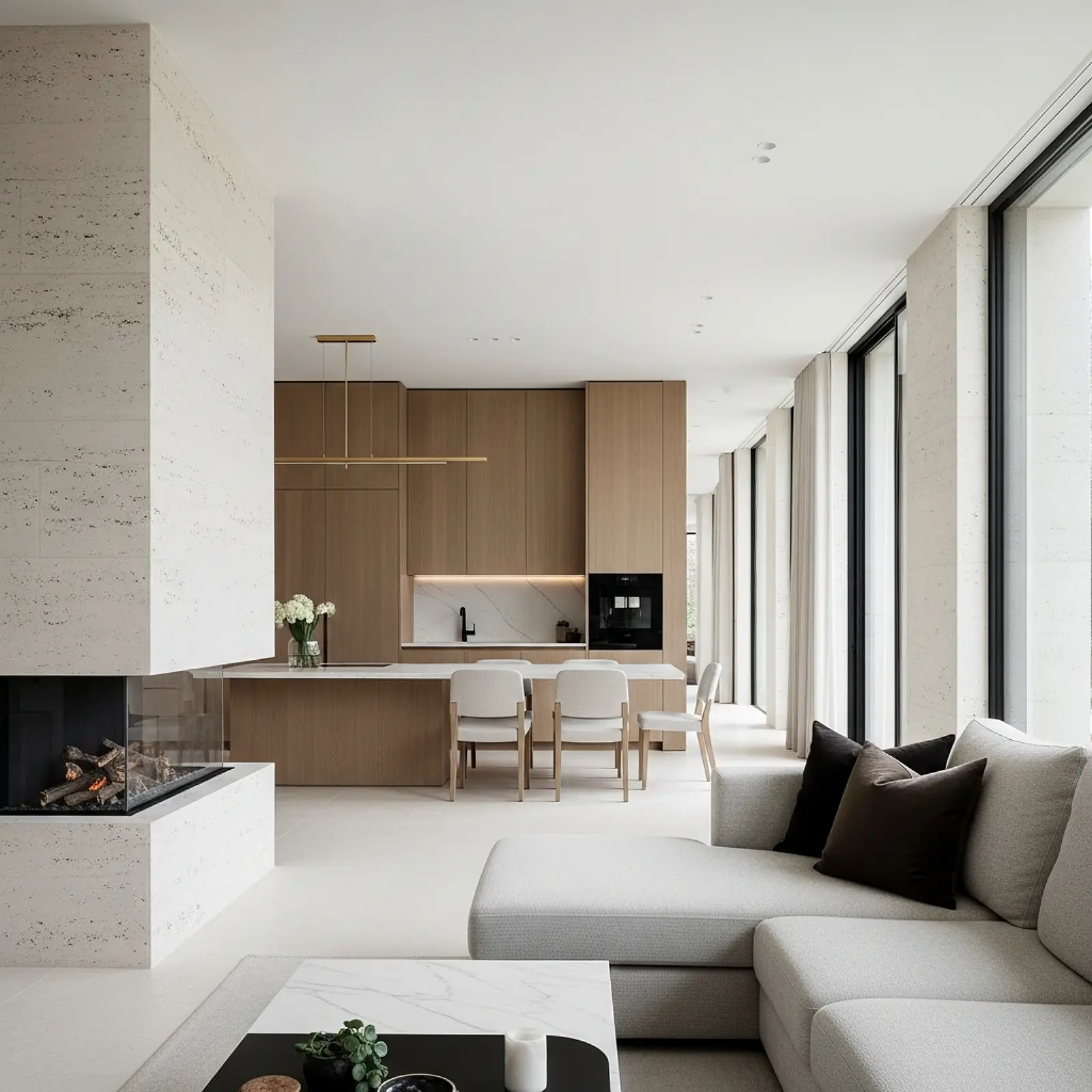
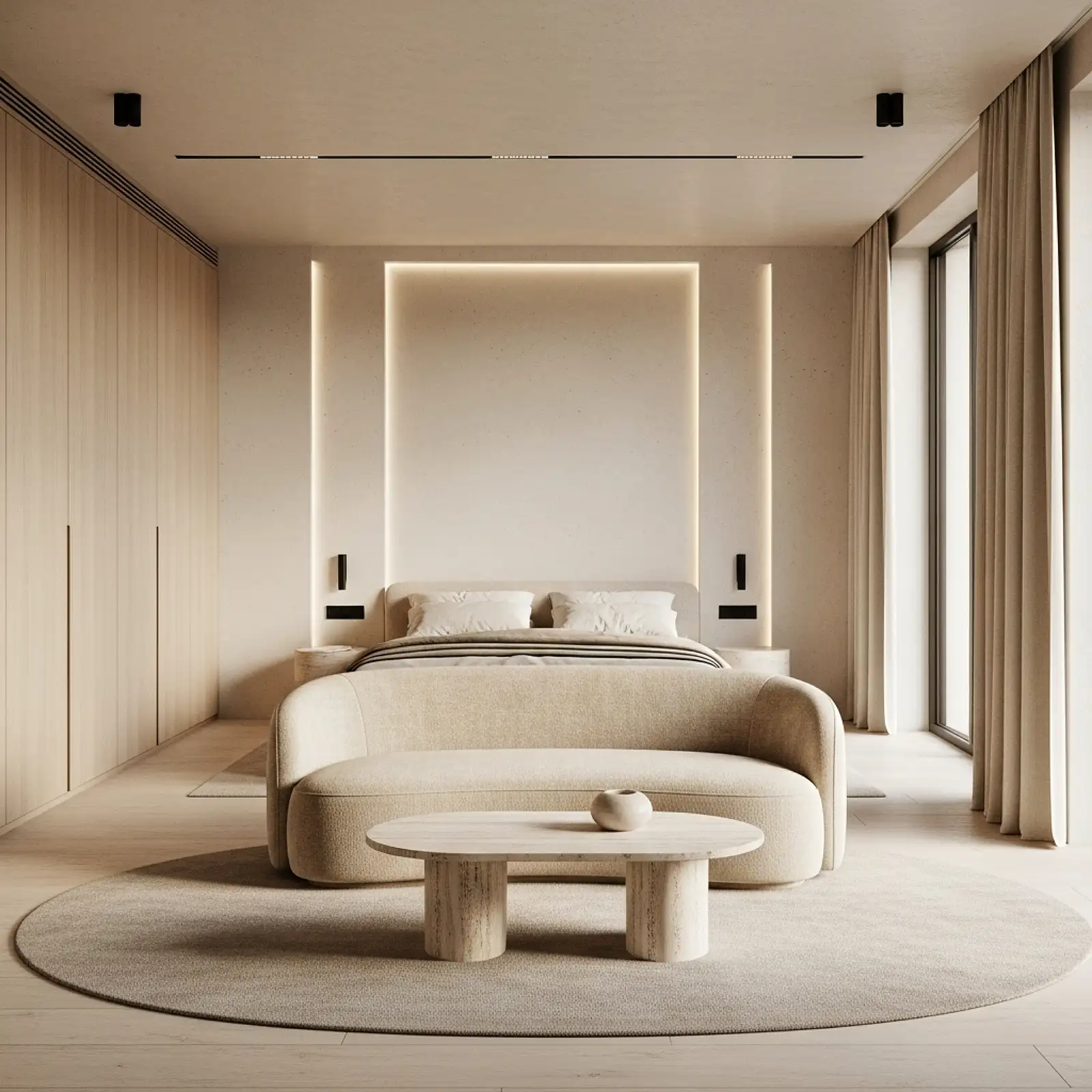
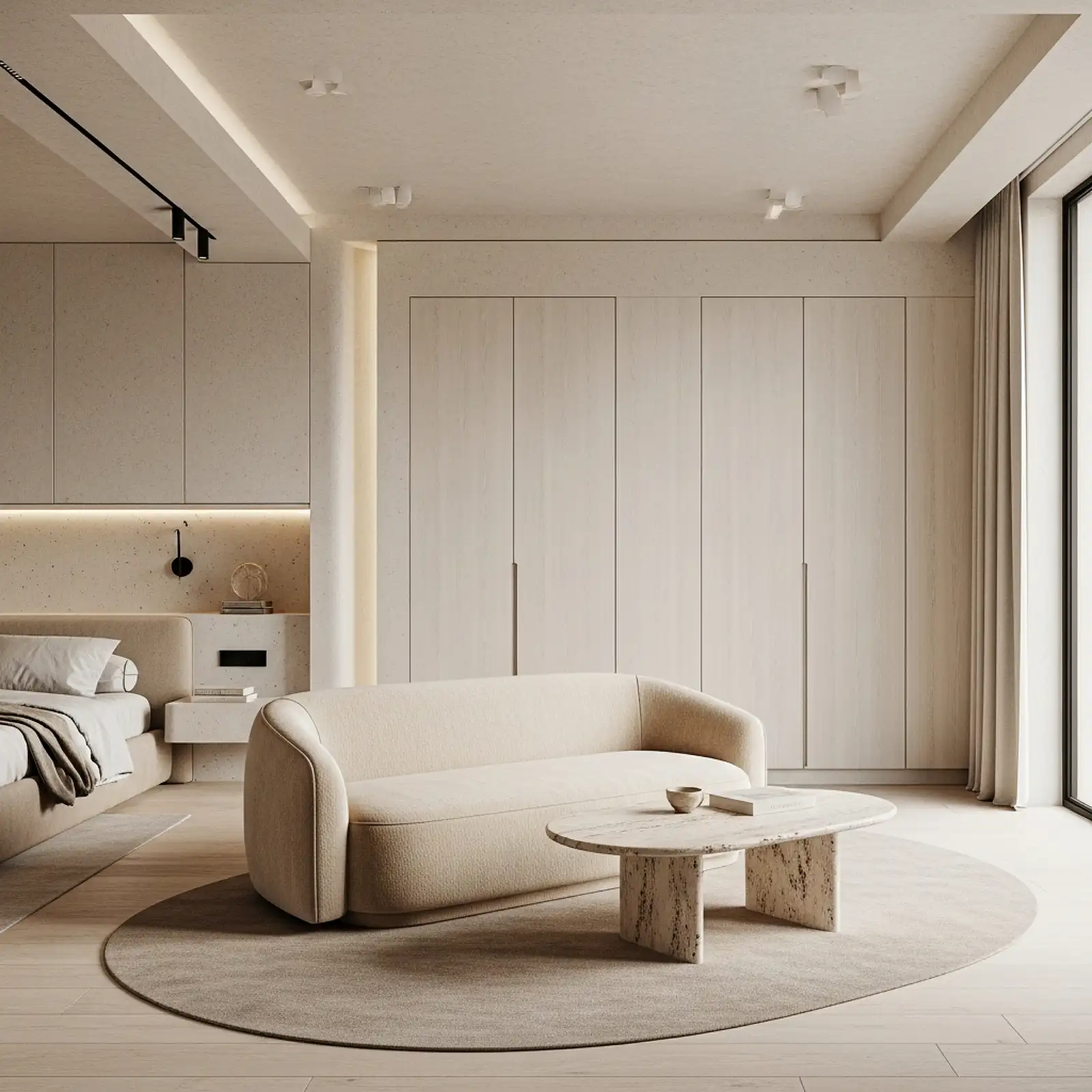
If the bedroom is large enough, a small curved two-seater sofa — the kind with a gently bowed back and rounded arms that suggest embrace rather than formality — creates a sitting area that feels genuinely different from anything a pair of chairs can offer. The curve is everything: it creates a sense of enclosure and intimacy without adding architectural walls, making the sofa grouping feel like its own self-contained room. Choose a compact curved sofa in the 60–72 inch range in a fabric that complements the bedroom without competing with it — a sandy boucle, a soft mushroom velvet, or an oatmeal performance fabric all integrate beautifully. Float the sofa on a rug pulled several inches beyond its base on all sides, and orient it toward a small media console or a coffee table setup rather than toward the bed, so the sightlines emphasize the sitting area as its own zone. A pair of small cushions in contrasting textures — a silk-mix embroidered cover beside a chunky knit — add dimension without visual noise. The West Elm Andes Curved Sofa is one of the best-proportioned options for a bedroom scale.
Pro Tip
A curved sofa needs a round or oval coffee table in front of it — a rectangular table breaks the organic flow of the silhouette. A travertine oval, a rattan tray table on legs, or a solid marble round are all excellent choices that match the sofa’s sculptural quality.
Window Seat Reading Nook with Cushioned Depth
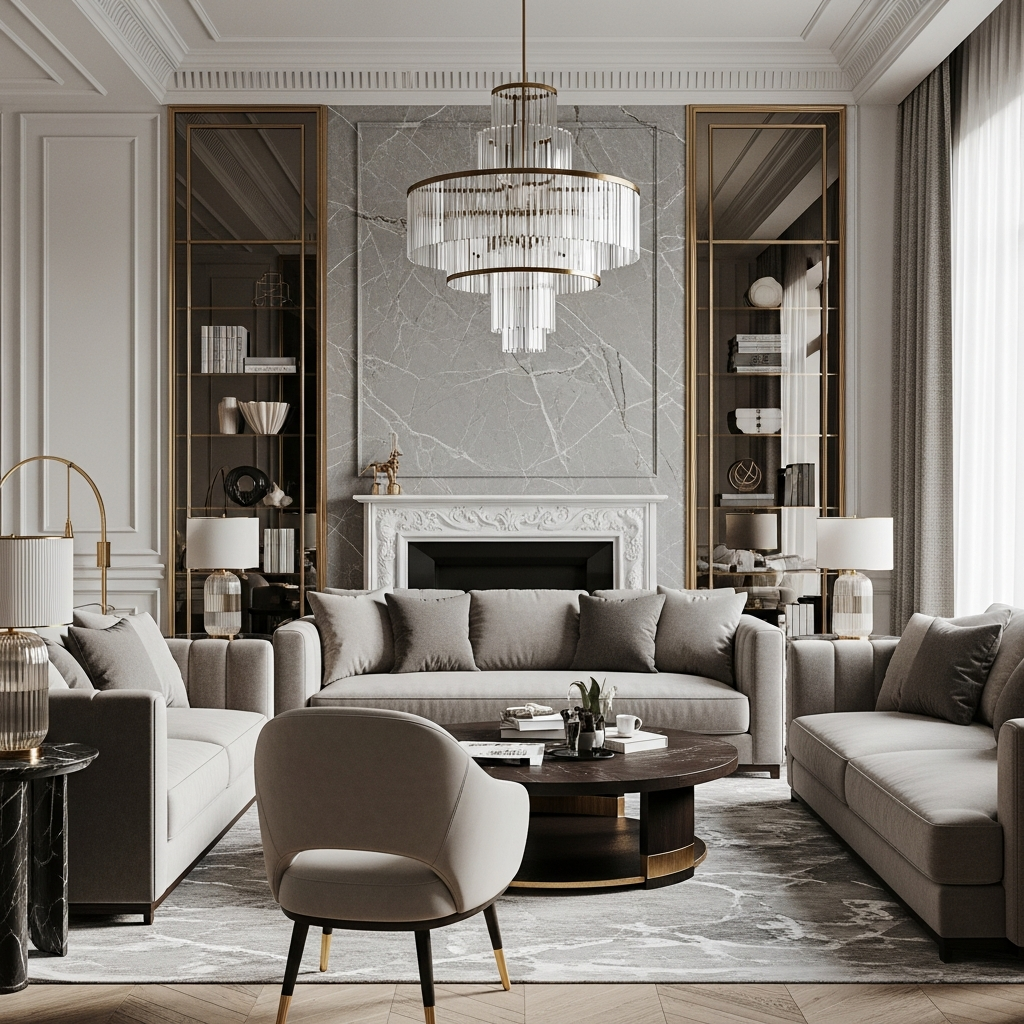
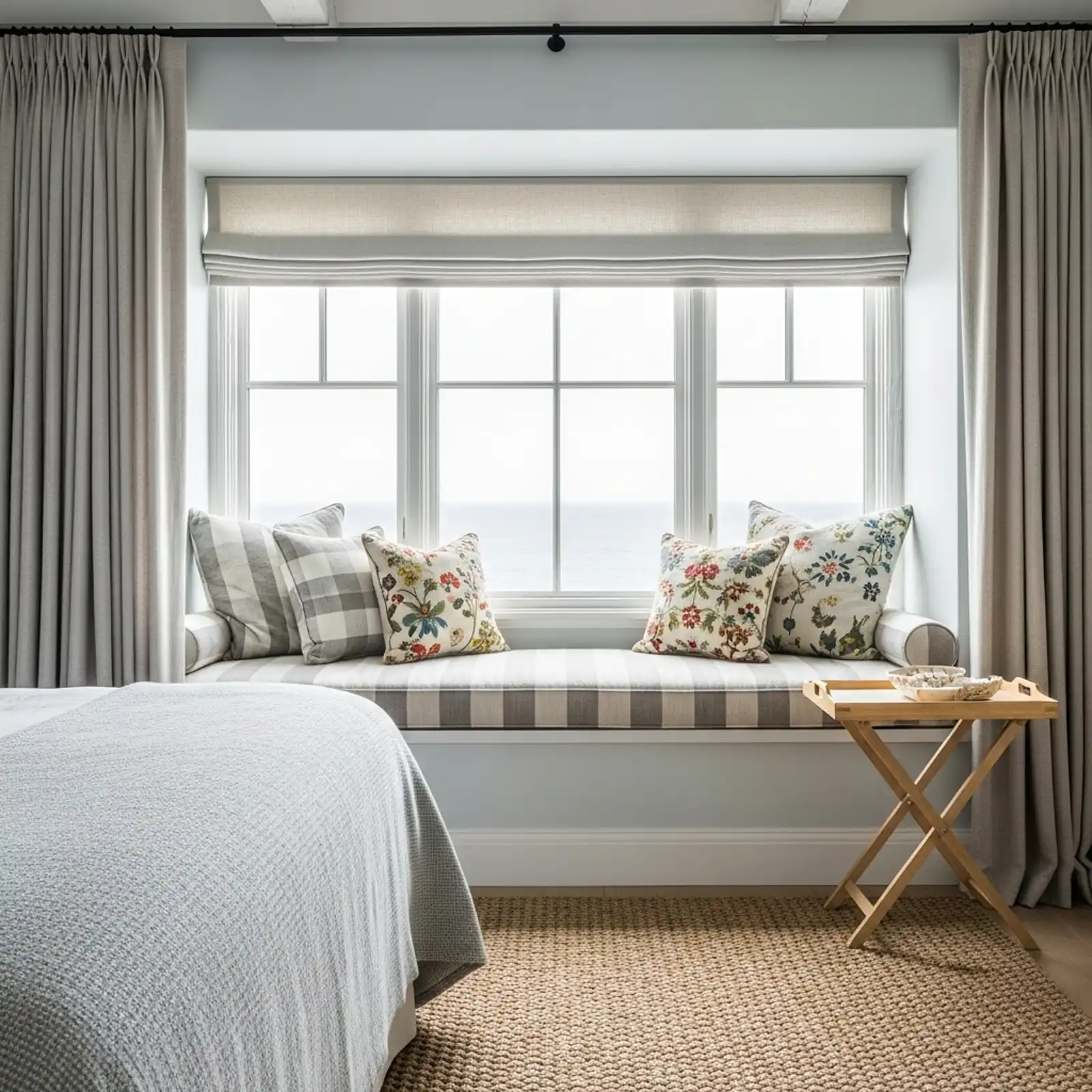
A built-in window seat — or a convincingly built-looking freestanding bench placed beneath a window — with a deep, well-cushioned seat and a tall stack of pillows behind it is one of the most universally beloved bedroom additions for a reason: it turns the least-used spot in most bedrooms (the wall beneath the window) into the most desired one. The cushion depth is critical: aim for at least 22–24 inches so you can genuinely sit sideways with your legs extended, back against the wall or the pillow stack. Choose a cushion fabric in a durable but beautiful textile — a wide-stripe outdoor linen, a thick cotton canvas, or a woven jacquard — and have it made with a zipper cover so it’s removable for washing. Layer the back of the seat with four to six cushions of varying sizes in coordinating but not identical fabrics: a floral, a solid, a subtle check, and a chunky knit all living together in the same color family. A small folding tray table that can be pulled over the seat is more practical than a fixed side table here, because it allows the window seat to serve multiple purposes — a reading spot, a morning perch, an afternoon napping surface.
Pro Tip
Fill the cushion with a high-density foam core wrapped in a layer of Dacron fiberfill. The foam gives structure and support; the Dacron wrapping gives that slightly rounded, plush appearance that makes a window seat look genuinely inviting rather than flat and utilitarian.
Mid-Century Modern Lounge Corner
The mid-century modern aesthetic is arguably the most enduring framework for a bedroom sitting area because its proportions — low, wide, deliberately horizontal — translate so naturally to a domestic, intimate scale. Anchor the sitting area with an Eames-era or Eames-inspired lounge chair: a molded plywood shell on a swivel base, an upholstered bucket chair on tapered walnut legs, or a classic low-slung profile in aniline leather. The leather version ages with exceptional beauty — the Eames Lounge Chair and Ottoman is the gold standard, though well-made replicas in genuine leather exist at a fraction of the cost. Pair it with a walnut side table on hairpin legs and a floor lamp with a conical or dome shade in spun aluminum or brass. The rug beneath the arrangement should be low-pile or flat-weave in a graphic but muted pattern — a subtle abstract, a tonal geometric, or a solid wool in warm charcoal. Keep the surrounding walls relatively unadorned: one large-scale abstract print in warm earthy tones is all this look needs. Restraint is the discipline that makes mid-century rooms actually feel sophisticated.
Pro Tip
In a mid-century sitting area, every piece should have visible legs — no furniture that sits directly on the floor. That negative space beneath each piece keeps the room feeling light and airy, which is foundational to the aesthetic’s visual language.
Fireplace Flanking Seating
A bedroom with a fireplace — even a non-working decorative one — is the natural anchor for a sitting area that feels genuinely residential and considered. The classic treatment is to place two matching armchairs on either side of the fireplace, angled slightly inward to face each other across a small hearth rug. But the version I find more interesting involves an asymmetric approach: one substantial armchair on one side, and on the other, a lower accent piece — a pouffe, a small upholstered bench, or a stacked arrangement of large floor cushions — that creates variety in height and visual texture. The chairs should be in fabrics that respond to the warmth of a fire: cognac leather, aged rust velvet, a warm caramel tweed. A pair of wall sconces mounted on either side of the chimney breast replace the need for floor lamps and keep the visual field around the fireplace clean. The mantelpiece becomes the room’s natural styling surface — a large mirror, a cluster of candles in varying heights, and a single piece of ceramics are more than enough. This sitting area works in both grand old homes and renovated apartments with faux period fireplaces.
Pro Tip
Place a large round or octagonal hearth rug — not a rectangular one — between the chairs in front of the fireplace. The circular form echoes the warmth of the fire’s visual pull and softens the formality of the symmetrical chair placement beautifully.
Hammock Chair Boho Corner
A macramé or woven cotton hammock chair suspended from a ceiling hook brings a playful, genuinely relaxed quality to a bedroom sitting area that a conventional armchair simply cannot replicate. The movement — that gentle swing when you settle in — makes it one of the most instinctively comforting seats you can have in a room. Choose a hammock chair with a sturdy woven cotton or chunky macramé construction in natural, cream, or bleached white; avoid heavily dyed versions that will clash with the bedroom’s color story. The chair needs a very large, generously stuffed floor cushion placed directly below it — both for occasional overflow seating and to visually anchor the hanging piece to the floor so it doesn’t read as floating furniture. Surround the corner with complementary bohemian layers: a large jute or kilim rug, a ceramic table lamp with a rattan shade on a low drum table, a cluster of plants in varying heights and pot textures on the floor nearby. The ceiling mount must be into a joist or a structural beam — not drywall — so always locate the structural support first and anchor directly into it before hanging anything that will bear weight.
Pro Tip
Hang the chair at a height where the bottom of the seat sits around 18 inches from the floor when unoccupied — low enough to get in and out of comfortably, high enough to swing freely without the floor cushion underneath acting as a brake.
Built-In Banquette Nook
A built-in banquette — a continuous upholstered bench set into a corner or recess of the bedroom — gives a sitting area the quality of something that has always been there, which is the highest compliment a piece of bedroom furniture can receive. The L-shaped or U-shaped configuration means two or three people can sit comfortably, which transforms the bedroom into a place where guests might actually settle rather than perching awkwardly on the edge of the bed. Build the banquette at standard bench height — around 18 inches from the floor — with a seat depth of at least 20 inches for real comfort, and upholster in a tightly woven fabric that will withstand regular use without pilling or sagging: a performance velvet, an indoor-outdoor linen, or a leather for the most durable option. Add a low rectangular table in the center — a live-edge slab on low legs, a lacquered tray table, or a stone-topped drum — and hang an overhead pendant rather than relying on floor or table lamps, since the built-in nature of the banquette leaves little room for lamp placement. Scatter cushions in varied sizes and coordinating fabrics complete the look without cluttering the surface.
Pro Tip
Include a drawer or lift-up lid in the base of each banquette section — even shallow drawers add meaningful storage in a bedroom and make the built-in piece genuinely earn its place rather than just looking beautiful.
Terrazzo-Accented Modern Sitting Spot
A sitting area built around terrazzo as the connecting accent material creates a look that feels simultaneously current and timeless — a rare combination in interior design. Start with a contemporary accent chair in a solid, clean-lined silhouette: a rounded tub shape or a low, wide barrel in a smooth boucle or matte cotton in warm white, dove grey, or a pale blush. Then introduce terrazzo as the accent surface: a terrazzo side table in pink, sage, or black matrix with white aggregate sits beautifully beside the chair, and a small terrazzo tray on the table — used to corral a candle, a pair of rings, a small succulent in a clay pot — reinforces the material without overdoing it. The rug beneath should be a flat-weave wool in a solid warm neutral so the terrazzo reads clearly as the design accent rather than competing with a patterned floor covering. Add a slim brass arc lamp arching from behind the chair, and keep the surrounding wall bare except for one or two floating shelves in pale oak holding a small curated selection of books and objects. Modern, clean, and specifically itself.
Pro Tip
Pull your terrazzo’s dominant aggregate color into at least one textile in the sitting area — a cushion, a throw, or even the chair upholstery — to tie the material to the rest of the room rather than leaving it to read as an isolated decorative statement.
Draped Canopy Chair Corner
Suspending a fabric canopy from the ceiling above a single armchair or chaise creates a sitting area of almost fairy-tale intimacy — the kind of corner you’d choose every time over a fully furnished living room. The canopy doesn’t need to be a complex installation: a simple ring or rod mounted to the ceiling with a generously gathered length of sheer linen, silk organza, or lightweight cotton voile draped over it and allowed to puddle slightly at the floor creates exactly the enveloping effect you’re after. Choose a fabric in white, ivory, or the palest champagne — sheers work because they diffuse light rather than blocking it, maintaining the luminous quality of the corner even when the chair is enclosed. The chair itself should be substantial: a rounded armchair, a low chaise, or an oversized reading chair with a large enough seat to curl up in properly. Add a small carved wood or gilded side table within reach, a brass candlestick lamp, and a pile of cushions in silk, embroidered cotton, and velvet. The effect is opulent, personal, and entirely distinct from anything else in most bedrooms.
Pro Tip
Gather the canopy fabric at the ceiling in a tight knot rather than spreading it immediately — the tighter and higher the gather, the more dramatically the fabric falls. Letting the ends brush the floor by an inch or two creates a sense of theatrical height even in a room with standard 9-foot ceilings.
Moody Dark Academia Reading Corner
A dark, book-lined sitting area in a bedroom has a particular kind of intellectual coziness that is deeply appealing — the visual equivalent of a library fireplace, warm amber light, and a glass of wine on a November evening. Paint the corner’s walls (or all the walls, if you’re committed) in a deep, rich tone: ink navy, hunter green, charcoal brown, or a near-black plum. Against that dark ground, the furniture should be substantial and textured: a leather club chair in whiskey tan or tobacco brown, or a deep armchair in a worn velvet in oxblood or bottle green. Floor-to-ceiling bookshelves on the adjacent wall — even simple floating shelves in a dark stained wood — filled with a mix of genuinely read books and small collected objects, make the corner feel curated and inhabited. A small antique or vintage writing desk pulled up to one side adds to the scholarly atmosphere without requiring a dedicated office zone. Lighting is critical: a brass banker’s lamp on the desk, a warm-toned floor lamp beside the chair, and absolutely no overhead light in this zone after dark — it kills the mood entirely.
Pro Tip
Arrange books on the shelves spine-out but intersperse them with objects — a small globe, a stack of journals, a ceramic inkwell, a botanical specimen in a glass dome — at irregular intervals. Books alone can read as wallpaper; objects broken into the shelves give them a story.
Moroccan-Inspired Floor Seating Lounge
A floor-level sitting area inspired by Moroccan interior traditions has a warmth and visual richness that’s unlike anything you can achieve with conventional furniture. The foundation is a large kilim or Berber rug in warm, earthy tones — rust, saffron, deep wine, natural cream — laid flat as the primary surface and anchor. On top of it, arrange a collection of large floor cushions and a low Moroccan leather pouf or two: the kind in hand-stitched geometric patterns in faded gold, dusty burgundy, or deep teal. These are the seats. Against the wall, lean a stack of three or four large rectangular floor pillows to serve as a backrest — bolster-style cushions in embroidered cotton or woven wool work perfectly. Keep a small, low brass tray table in the center — the engraved Moroccan style, lacquered in black or painted in cobalt and gold — to hold tea glasses, books, or a small diffuser. The surrounding walls benefit from textured plaster in warm sand, a lantern-style pendant or two overhead, and maybe a single arched niche with candles inside. This sitting area turns a bedroom floor into a destination.
Pro Tip
Moroccan floor seating works best when you overcommit to the number of cushions — twice as many as you think you need. A floor area that looks overstuffed in daylight becomes perfectly inviting the moment it’s evening and the lanterns are lit, because the textiles absorb light and soften beautifully.
Accent Chair and Plant Sanctuary
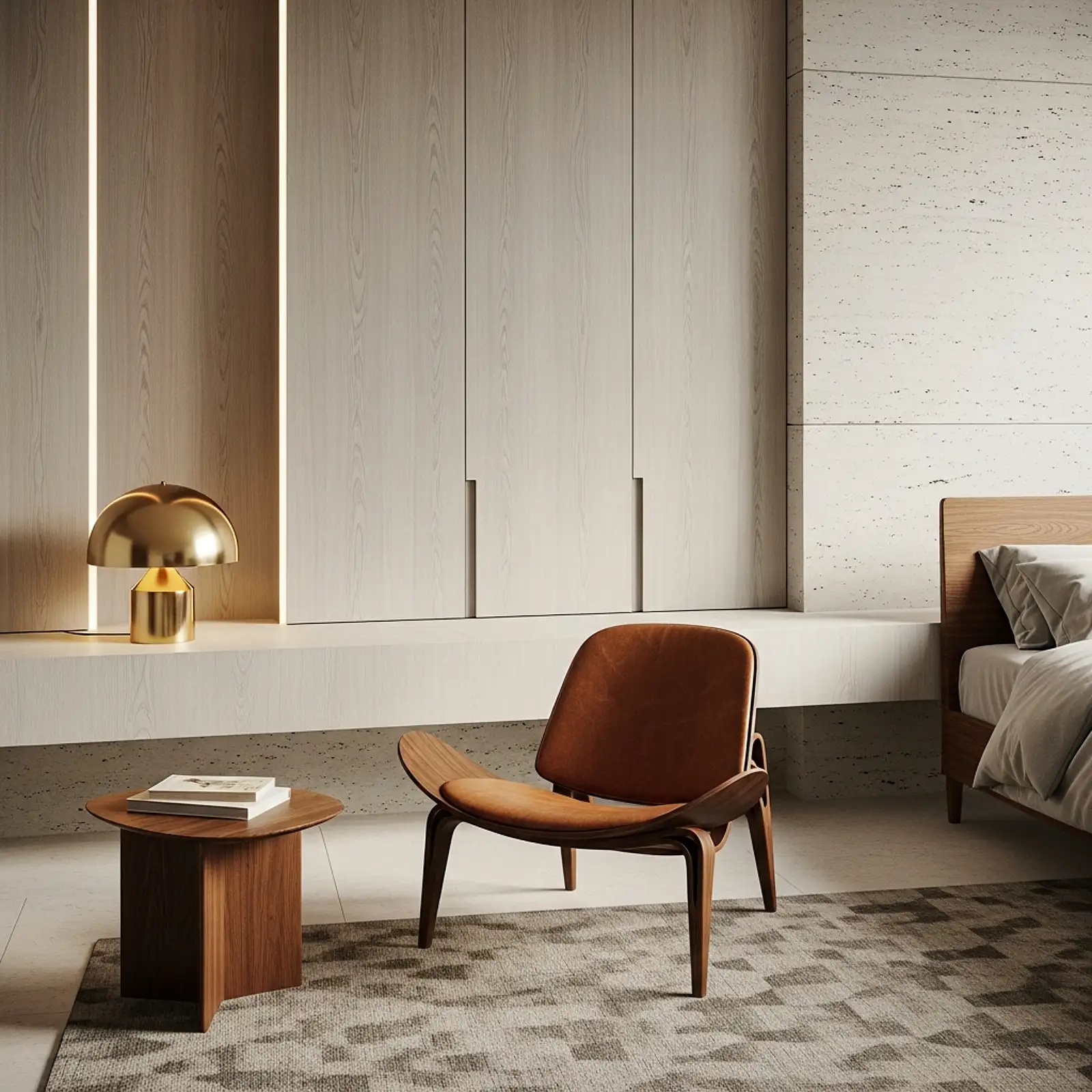
Some bedroom sitting areas are as much about greenery as they are about seating — and this concept leans into that fully, creating a living corner where one beautifully chosen chair is surrounded by an intentional collection of plants that transforms the bedroom into something closer to a private garden. Choose a chair in a material that responds well to organic company: a rattan or wicker armchair, a simple linen-upholstered tub chair in clay or sage, or a low canvas director’s chair in warm natural cotton. Then build the plant composition deliberately around it: a tall fiddle-leaf fig or olive tree directly behind and slightly to one side for height, a sprawling pothos or philodendron on a plant stand to the other side at mid-height, and several small pots in terracotta and ceramic clustered on the floor at varying levels. A wooden plant stand ladder or a set of graduated stone stools can help achieve that layered height without crowding the floor. A simple rattan or wicker side table — low and unobtrusive — sits within arm’s reach for a mug or a book. The overall effect is of a personal greenhouse corner, warm and alive in a way that no other sitting area concept quite matches.
Pro Tip
Group plants in odd numbers and vary pot materials dramatically — glazed ceramic beside raw terracotta beside a woven basket planter — to create the look of a thoughtfully built collection rather than a home goods display. The variety in vessels is what makes the arrangement feel personal.
Scandi Minimalist Hygge Corner
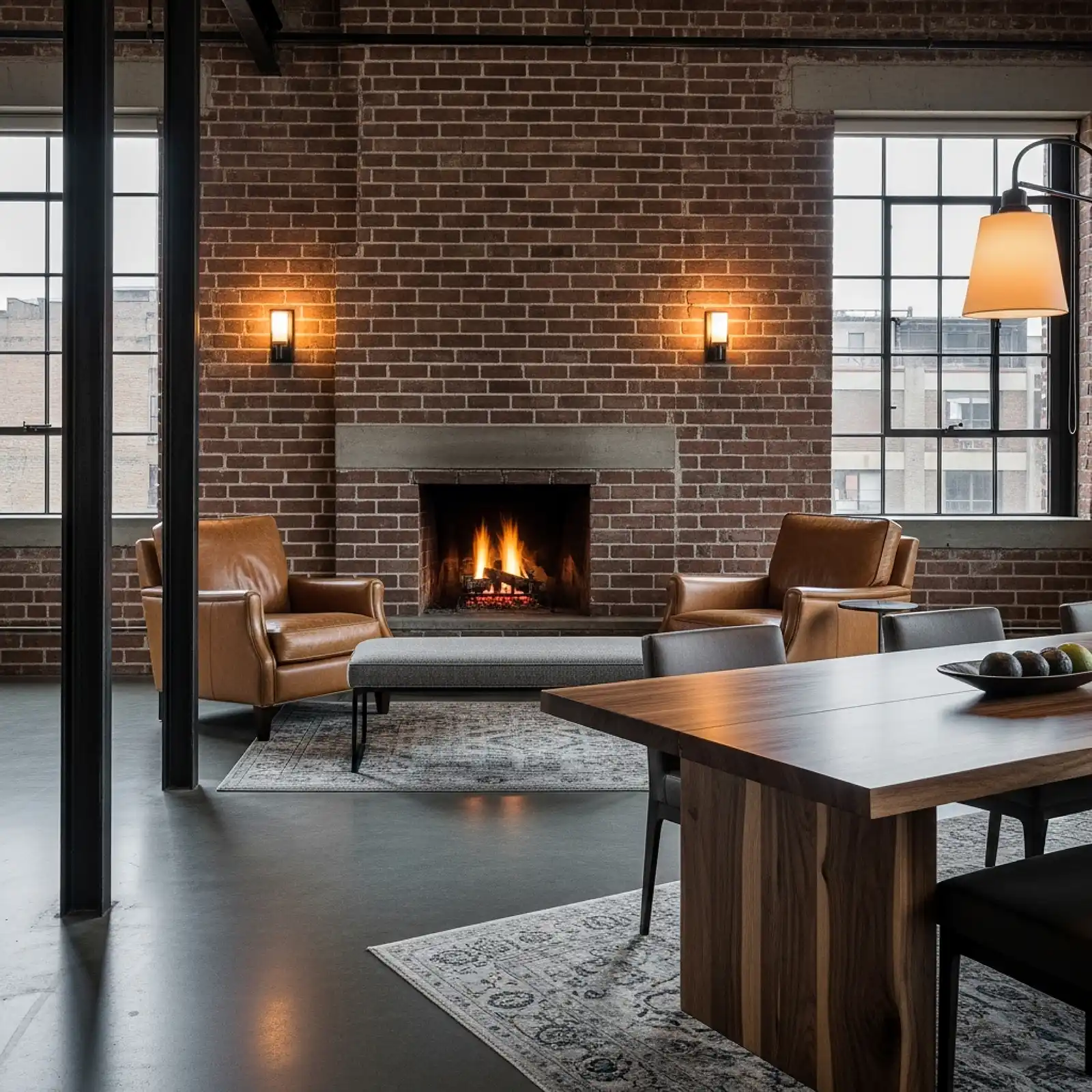
The Danish concept of hygge — a quality of coziness and convivial warmth — translates beautifully into a bedroom sitting area when the right restraint is applied. This isn’t about minimalism in the cold, empty sense; it’s about warmth achieved through texture and material rather than through accumulated objects. Choose a single generous armchair or a low loveseat in a natural, undyed wool or thick cotton fleece in oatmeal, warm grey, or the palest ash. Place it on a sheepskin rug or a thick wool flatweave in natural ivory or pale sand. The side table should be in light wood — pale birch, ash, or whitewashed pine — at exactly the right height to rest an elbow on without stretching. A single large ceramic mug, a beeswax candle in a simple holder, and a cloth-covered book on the side table are the only accessories required. The floor lamp should be low-profile and warm: a concrete base with a linen drum shade, or a natural wood tripod with a jute shade, positioned to throw the gentlest amber light possible. Blankets — at least two, genuinely good ones — should be accessible, folded loosely nearby.
Pro Tip
The hygge sitting area lives or dies by its throw blanket. Invest in one genuinely excellent blanket — a merino wool or cashmere-cotton blend in a natural tone — and leave it artfully draped over one arm of the chair rather than folded. The visible quality of that single textile elevates the entire corner.
Vintage Curio and Velvet Collector’s Corner
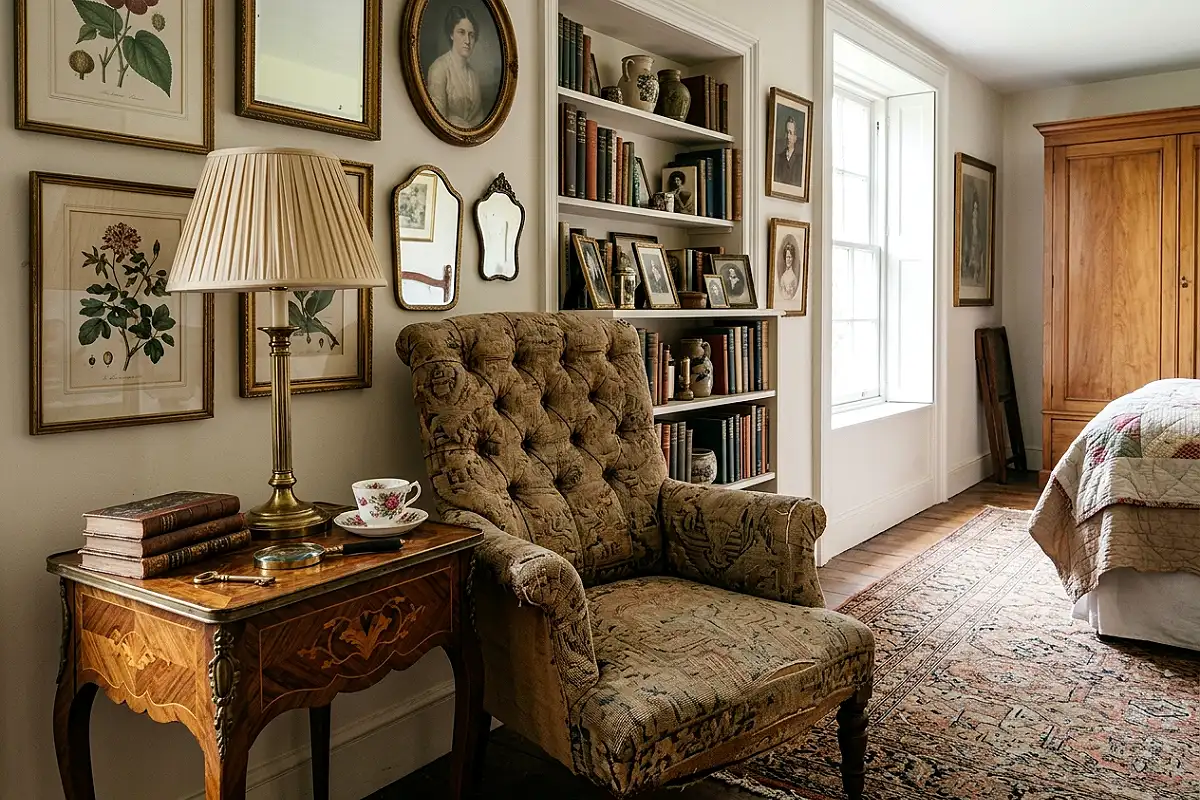
For the bedroom that’s more cabinet of curiosities than spa retreat, a sitting area built around a collector’s aesthetic — one that celebrates the gathered, the inherited, the found — has a richness and personality that no amount of matching furniture can replicate. Start with an armchair that has genuine character: a Victorian button-back in a faded tapestry fabric, a French bergère with gilded legs, or a mid-century club chair in worn leather with visible patina. Around it, arrange pieces that each have their own story: a small inlaid wood side table from a flea market, an ornate floor lamp with a fringe shade, a stack of cloth-bound books with faded spines, a glass cabinet or open étagère displaying a personal collection — pressed botanicals, vintage ceramic figures, old perfume bottles, travel mementos. The wall behind the chair can hold a salon-style arrangement of mismatched frames: small oil paintings alongside botanical prints, a vintage map, and a tarnished mirror. Nothing matches, but everything belongs — because the collector’s aesthetic is governed by personal meaning rather than visual system. This is the most individual sitting area on this list, and by design, the most impossible to replicate exactly.
Pro Tip
A collector’s corner can easily tip from curated into cluttered. The discipline is in the editing: once a quarter, remove one item from the arrangement. Constraint is what keeps eclectic from becoming chaotic — the best collections always have something that didn’t make the final cut.
Frequently Asked Questions
How much space do I need for a bedroom sitting area?A functional sitting area can work in as little as a 5 × 5 foot zone — enough for a compact armchair, a small side table, and a floor lamp with clearance to move around comfortably. Pair of slipper chairs with an ottoman between them require a 6 × 7 foot footprint minimum. If the room doesn’t have that to spare, a single well-chosen chair in a corner is always preferable to no sitting area at all.
What kind of chair is best for a bedroom sitting area?The best chair for a bedroom sitting area depends on how you’ll use it. For reading, a wingback or high-backed armchair with good lumbar support is ideal. For lounging, a low-slung club chair or chaise provides the most comfort. For smaller spaces, a slipper chair’s armless, compact profile maximizes seating without bulk. The most important factor is that the chair is genuinely comfortable — bedroom furniture should prioritize relaxation above everything else.
How do I make a bedroom sitting area feel separate from the sleeping zone?A rug is the single most effective tool for visually defining the sitting area as its own zone within the room. Position a rug beneath the seating arrangement so it grounds the grouping and marks the boundary between the sitting and sleeping areas. A difference in lighting — warm lamp light in the sitting zone versus overhead or bedside lighting in the sleeping zone — reinforces that separation further. A room divider, bookcase, or curtain panel can provide physical separation if you want something more architectural.
What accent pieces make a bedroom sitting area feel complete?The non-negotiable trio is a side table, a light source, and a textile. The side table (at arm’s-rest height) gives you a surface for a drink, a book, or a lamp. The light source — a floor lamp, a table lamp, or a wall sconce — creates the warm, intimate lighting that makes a sitting area feel genuinely inviting rather than an extension of the overhead-lit bedroom. The textile — a throw blanket draped over the chair, a cushion on the seat — adds softness and signals that the chair is meant to be used, not observed.
Should the bedroom sitting area match the rest of the bedroom furniture?Not necessarily — and often, deliberately not matching creates a more interesting and layered room. The sitting area should share the room’s overall color palette and feel cohesive in tone, but its materials, era, and style can differ from the bed and nightstands. A mid-century chair in a traditionally styled bedroom, or a carved antique armchair in a contemporary room, creates the kind of considered contrast that makes a space feel genuinely designed rather than catalog-assembled.
What rug size should I use under a bedroom sitting area?For a single chair and side table, a 4 × 6 foot rug is typically sufficient. For a pair of chairs or a small sofa arrangement, go to at least 5 × 8 — all the legs of the seating should sit on or very close to the rug’s edge. A rug that’s too small will make the sitting area look like it’s floating rather than anchored, which is the most common sizing mistake in bedroom seating arrangements.