
15 Luxury Kids Room Ideas for an Elegant & Dreamy Retreat
There’s a misconception in children’s design that luxury and play can’t share a room — that a space elegant enough for a boutique hotel must be too precious for a child’s life. Having styled enough of both to know better, I can tell you the opposite is true: children notice luxury before anyone gives them a word for it. They notice when a bed canopy is silk instead of polyester. They notice when the nightlight is crystal instead of plastic. A luxury kids’ room isn’t about price tags or about building a museum; it’s about the details adults recognize — real materials, layered light, upholstered surfaces, a chandelier with a little more sparkle than the hallway — delivered at a child’s scale, in a room where toy trucks still belong on the rug. The room stays elegant because its bones are considered; it stays dreamy because its details are a little more magical than ordinary.
This piece collects fifteen of those details. A silk canopy crown bed, a chandelier scaled for a little world, a marble vanity at child height, a gilded star ceiling, a banquette built for stories — each idea is a designer move most people assume belongs in adult rooms, translated down into a child’s universe. None of them demand a palace budget: several cost less than a single piece of children’s furniture you’d replace within a year anyway. What they all demand is intention — the belief that the room a child sleeps in deserves the same considered details we’d spend a weekend choosing for ourselves.
Silk-Canopy Crown Bed
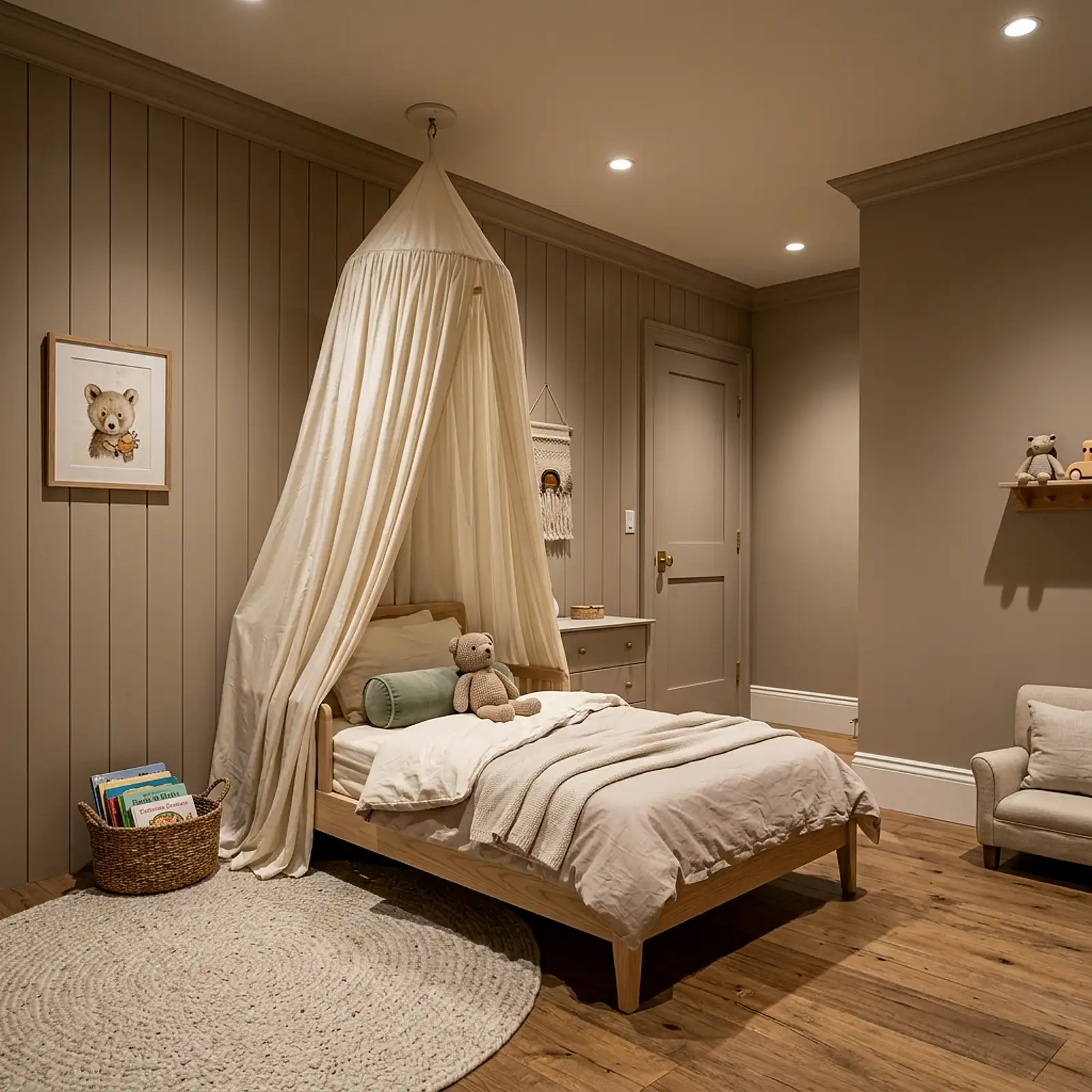
The room’s centerpiece, worthy of its name: a bed crowned with a canopy of real silk — gathered at a ceiling ring or hung from a discreet frame — so the bed becomes the room’s throne and the child its ruler. Silk gives the canopy what polyester never can: weight, depth, and a soft sheen that moves like water when the door opens. Choose silk in a single calm color (ivory, blush, or pale sage), let the panels pool slightly on the floor at the bed’s head for that gathered-curtain richness, and anchor the ceiling ring into a joist — a canopy carries silk’s real weight, and it must never depend on drywall. The bed photographs like a fairytale and performs like the most important furniture in the room, because for a child, it is.
Pro Tip
Leave the canopy open on the bed’s foot side rather than boxing it in completely — an enclosed canopy reads as a tent, while three draped sides with one open face reads as a crown, and it keeps the bed’s foot clear for climbing in and out.
Crystal Chandelier at Child Scale
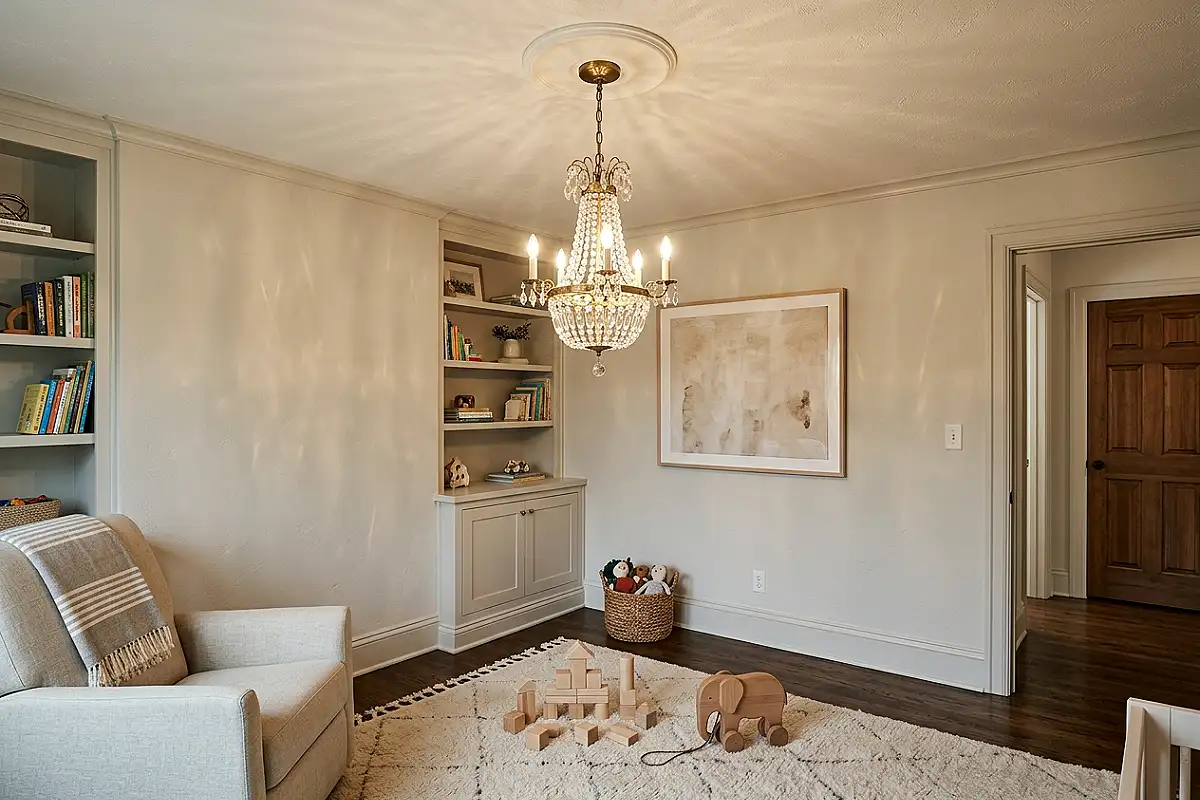
The room’s sparkle, taken seriously: a genuine crystal chandelier — not a plastic toy version — chosen at a smaller scale and hung where a child can safely live beneath it, its prisms catching afternoon sun and scattering tiny rainbows across the ceiling. A real chandelier gives the luxury room its one unfakeable detail: children look up at real crystal the way adults look at art, and no reproduction has ever fooled a six-year-old. Choose a chandelier with a modest drop (a child’s room rarely needs more than sixteen inches below the ceiling plate), prefer LED-compatible wiring for cool-running light, and place it centrally over the play area or foot of the bed — never directly above the headboard where a child lies beneath glass. The rainbows it throws at four o’clock become the room’s most reliable magic trick.
Pro Tip
Have an electrician hardwire the chandelier and confirm the ceiling box is rated for its full weight — most residential ceiling boxes carry forty pounds, and a crystal fixture on a plastic junction box is the one shortcut a luxury room can never afford.
Upholstered Wall Paneling

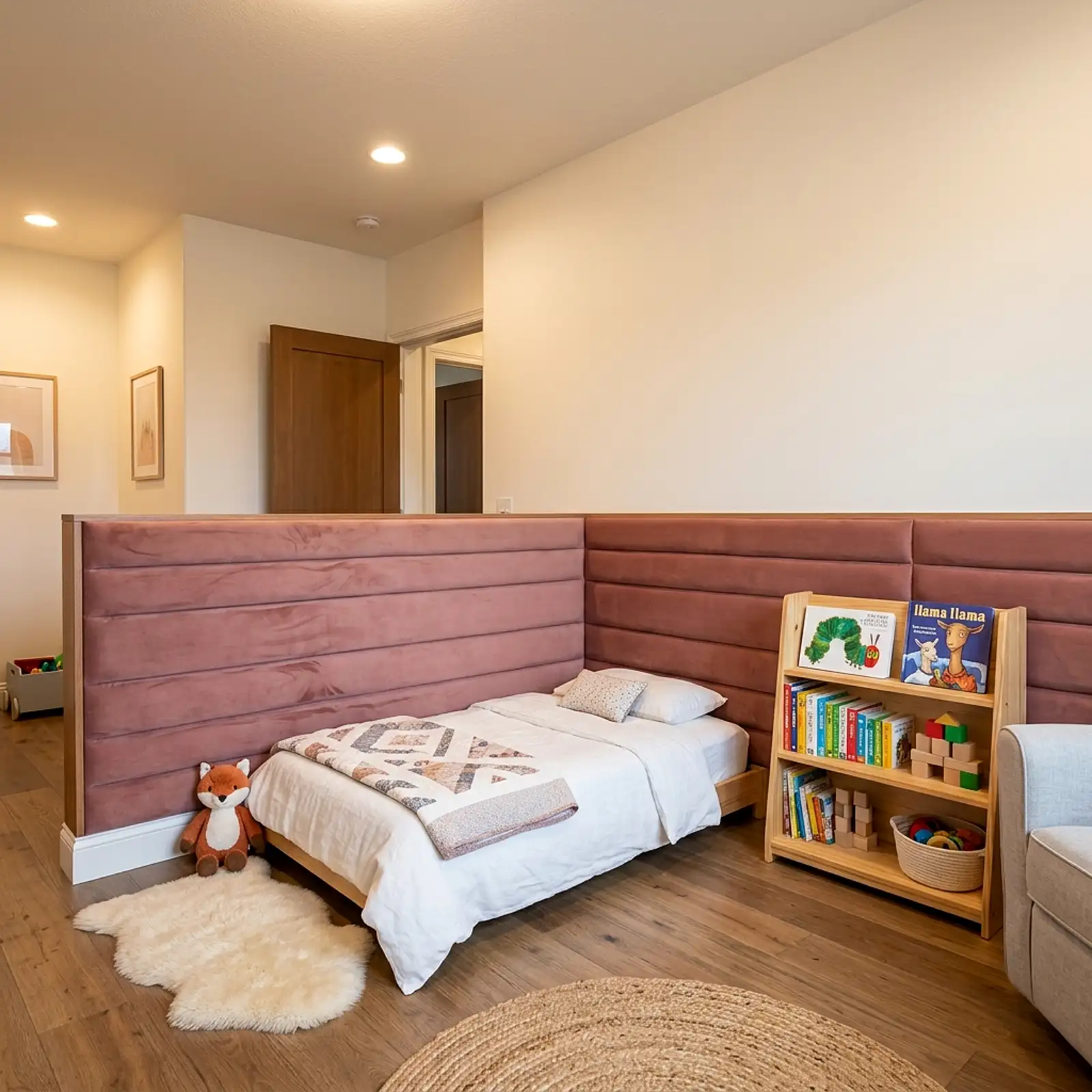
The wall you can lean against: the headboard wall — or the room’s reading wall — dressed in upholstered panels, channel-tufted fabric in velvet or linen, padded softly enough to be a backrest and finished like the wall of a first-class cabin. Upholstered paneling gives the luxury room its most tactile architecture: walls stop being painted surfaces and become furniture, and the child’s world gets a soft edge adults would pay for in a hotel. Choose panels in a stain-resistant performance velvet, run the channel tufting vertically (vertical channels make ceilings feel taller and read cleaner in photographs), and cap the panels with a wood or brass rail at their top edge — the finish line is what separates professional work from a craft-project look. Children sleep against it, read against it, and one day lean their head against it the way they did when they were small.
Pro Tip
Order performance velvet with a marine-grade back or built-in stain shield — children’s walls carry juice, crayon, and bedtime stories, and a performance fabric with a proper backing survives all three while ordinary velvet memorizes every spill.
Child-Scale Marble Vanity
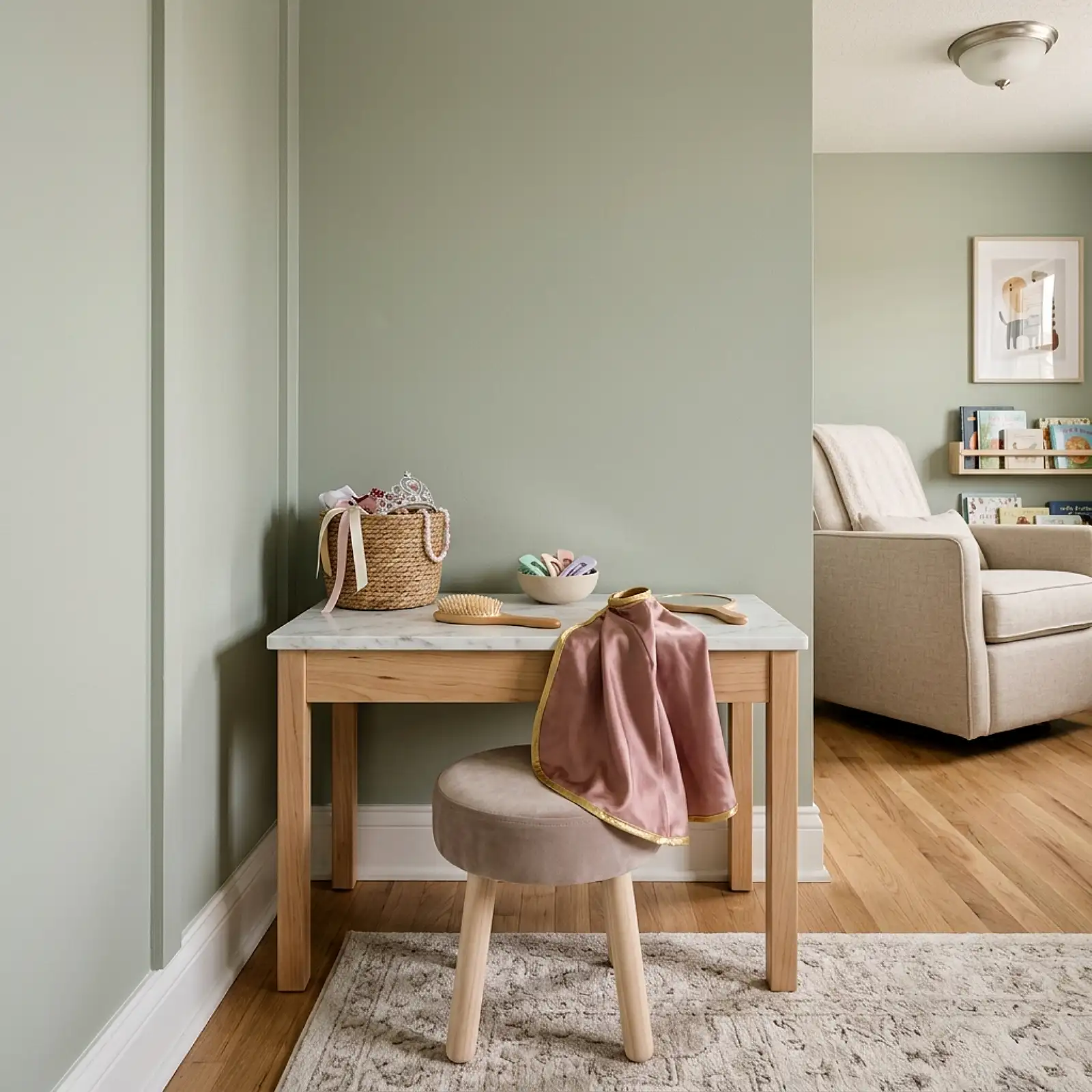
The dressing table, miniaturized like a dollhouse built for a real person: a small vanity topped with genuine marble or marble-look stone, its drawer holding a child’s treasures — ribbons, a first necklace, hair clips in a small tray — at exactly the height her elbows reach. A marble vanity gives the luxury room its most grown-up corner: children take seriously whatever furniture treats them seriously, and a vanity at child height becomes a ritual station, not a toy. Choose the marble in a soft white with grey veining (dramatic black veining reads busy at small scale), keep the stool upholstered and washable, and place it where morning light falls naturally — vanity rituals belong in daylight. The drawer’s treasures become the room’s quiet story: the collection a child is building at six will still be there at sixteen, differently arranged.
Pro Tip
Seal the marble top with a penetrating sealer on day one — marble is porous and a single dropped juice cup or nail-polish cap will etch into it permanently; a sealed top wipes clean for years and stays white instead of learning stains.
Gilded Ceiling Medallion
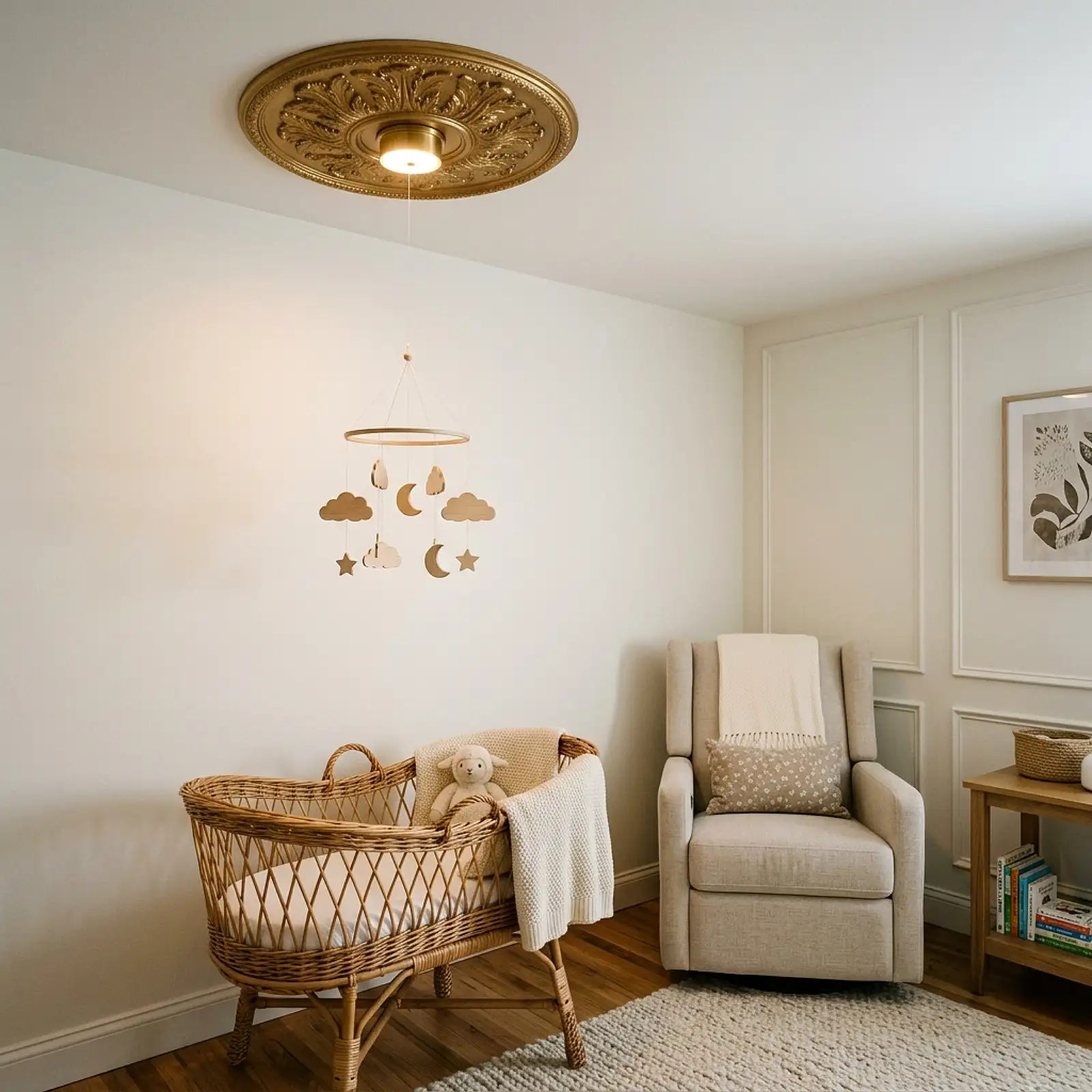
The ceiling’s jewelry: a plaster ceiling medallion around the light fixture, painted or gilded in soft gold, so the room’s overhead moment looks like it arrived with the building — the detail old European apartments have and new construction forgot. A medallion gives the luxury room its most effortless elegance: it costs little, installs in an afternoon, and makes a simple flush fixture look intentional and grand. Choose a medallion in lightweight polyurethane rather than real plaster (it weighs almost nothing and cuts with a knife), paint it in flat metallic gold or a tone slightly darker than the ceiling for depth, and size it generously — a medallion half the width people expect reads right; a timid one reads like a coaster. The fixture’s light bounces off the gold ring all evening, and the ceiling stops being blank.
Pro Tip
Cut the medallion’s center opening slightly smaller than the fixture canopy, then trim as you fit — a perfect pre-cut hole is nearly impossible to achieve, while a slightly tight opening lets you scribe the exact shape on the ceiling and hide the seam behind the canopy’s edge.
Velvet Reading Banquette
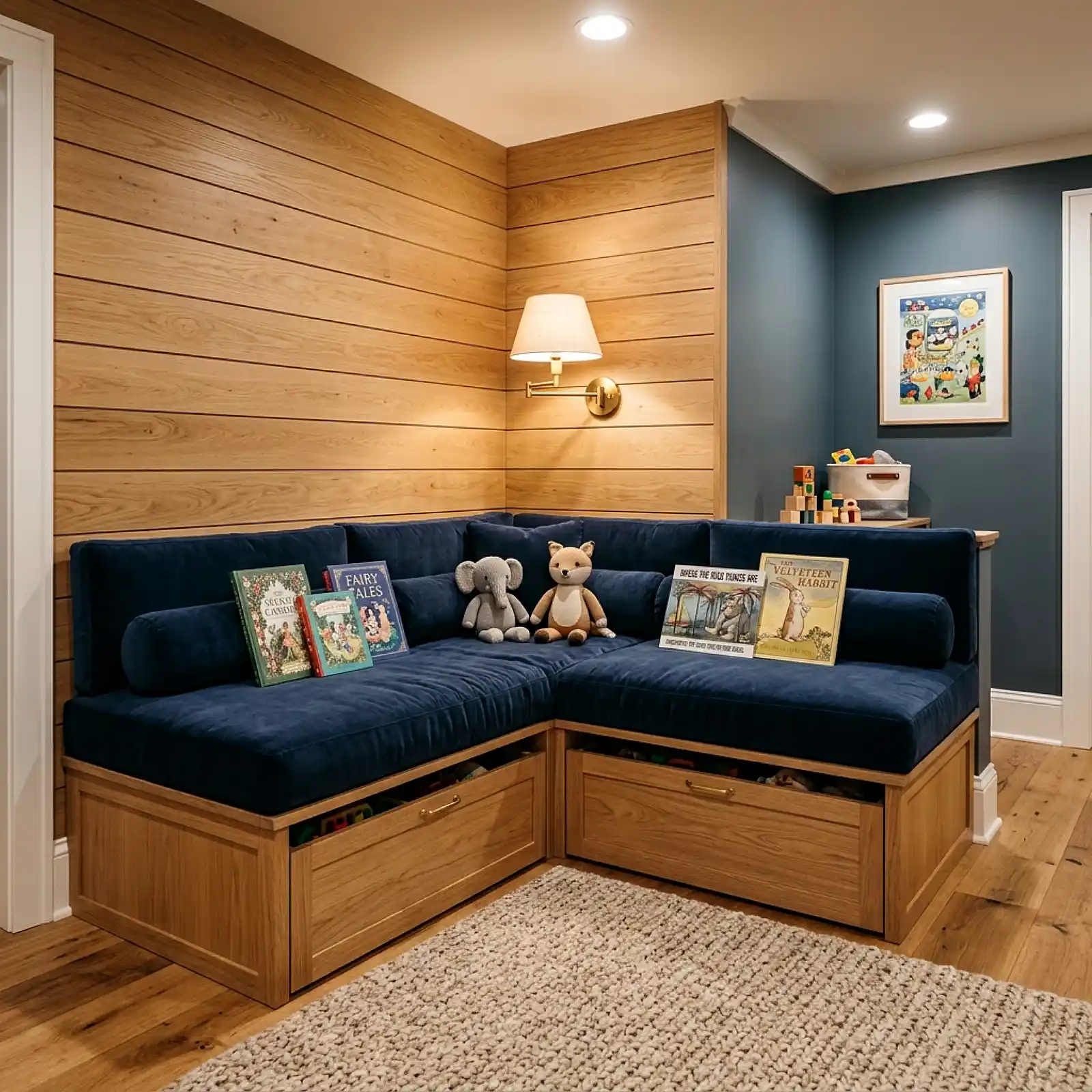
The reading nook, promoted to furniture: a built-in or bench-style banquette under the window, upholstered in deep velvet with cushions sized for a child’s back, a row of pillows against the wall, and a hidden storage lid where books live. A banquette gives the luxury room its most livable corner: unlike a beanbag or floor cushion that collapses, a banquette has structure — arms, a back, a proper seat — and it reads as architecture the way only built-in furniture can. Choose a bench depth of fifteen inches (children’s backs need less depth than adults’, and excess depth reads as sofa), line the storage lid interior with washable laminate, and fix the cushions with tie-backs or Velcro strips so the room stays composed after every reading marathon. The banquette becomes the room’s quiet center: the place for bedtime chapters, rainy afternoons, and someday, a teenager reading with her knees up.
Pro Tip
Mount safety hardware stops on the window above a banquette — children climb on banquette seating to look outside, and openable windows above a climbable bench need restrictors or locks before the bench is finished, not after the first afternoon.
Monogrammed Linen Bedding
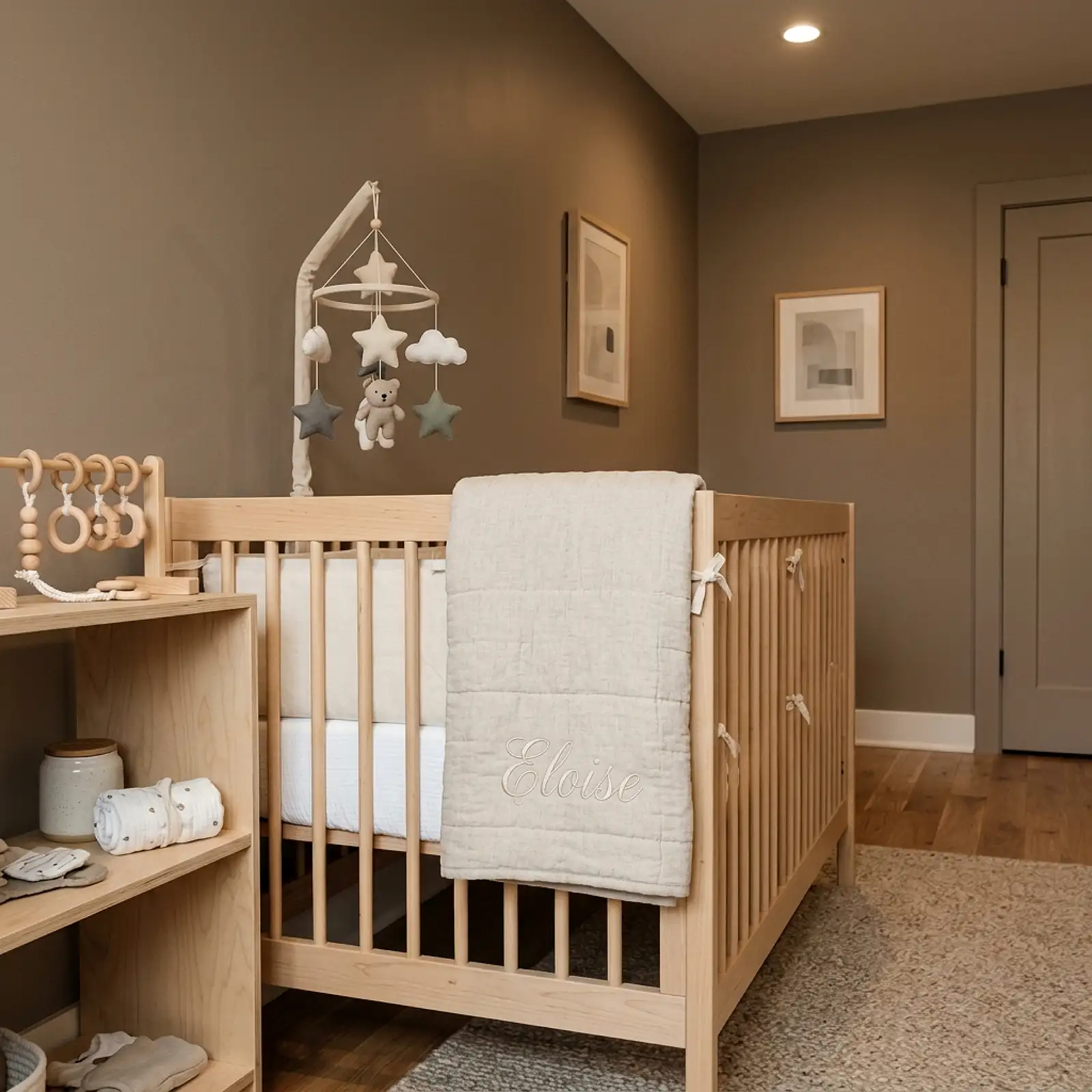
The bed dressed like a small hotel suite: crisp linen or cotton-sateen bedding in calm tones, finished with a monogram — the child’s initial embroidered at the foot of the duvet or on the pillow’s hem — like the linens of places where someone remembered your name. Monogrammed bedding gives the luxury room its most personal elegance: it says the room belongs to one specific child, not a category, and no amount of themed bedding has ever said that. Choose a simple serif or block-letter monogram in a tone-on-tone thread (white-on-white, cream-on-cream — loud monograms look like luggage), have it embroidered by a professional service rather than heat-transfer (embroidery survives fifty washes; transfers survive five), and keep the bedding’s base palette calm so the monogram remains the only feature. The child whose name is on the duvet treats it differently — linen with a name on it is never just laundry.
Pro Tip
Wash monogrammed linen in cold water and press while still slightly damp — linen wrinkles as it dries, and embroidery stitched over crisp fibers stays raised and beautiful, while heat-dried linen presses the monogram flat into the weave.
Embroidered Sheer Curtains
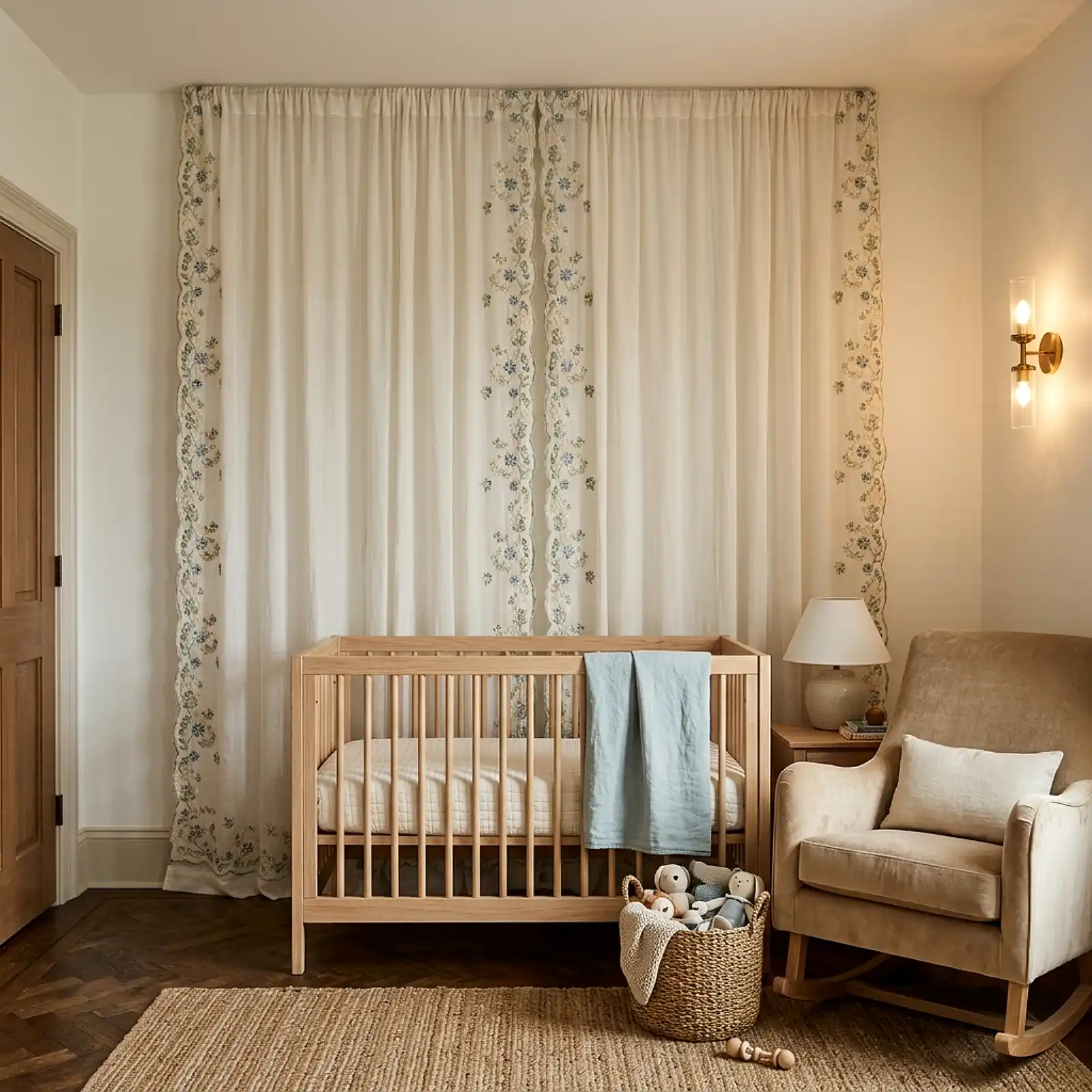
The window dressed in embroidery: floor-length sheer curtains with delicate embroidered borders — tiny flowers, stars, or a scalloped hem — that soften every photon of daylight into something gentler, while their borders catch the sun like lace on water. Embroidered sheers give the luxury room its softest light: the room never goes dark, yet nothing in it is ever harsh, and the embroidery adds the hand-finished detail that cheap curtains pretend to have. Choose sheers with the embroidery woven or embroidered into the fabric (printed “embroidery” reads flat and dies in side light), hang the curtains from ceiling to floor on a discreet track — puddling the extra inch or two at the floor is what makes them read as luxury — and keep the embroidery at the hem and leading edge only. The curtains turn the room’s daylight into the kind of light photographers rent equipment for.
Pro Tip
Use cordless sheer curtains or tie them up with a tassel tieback — any corded window treatment within a child’s reach is a strangulation risk that safety standards take seriously, and cordless hardware now comes in finishes that match any luxury scheme.
Bedside Sconces at Child Height
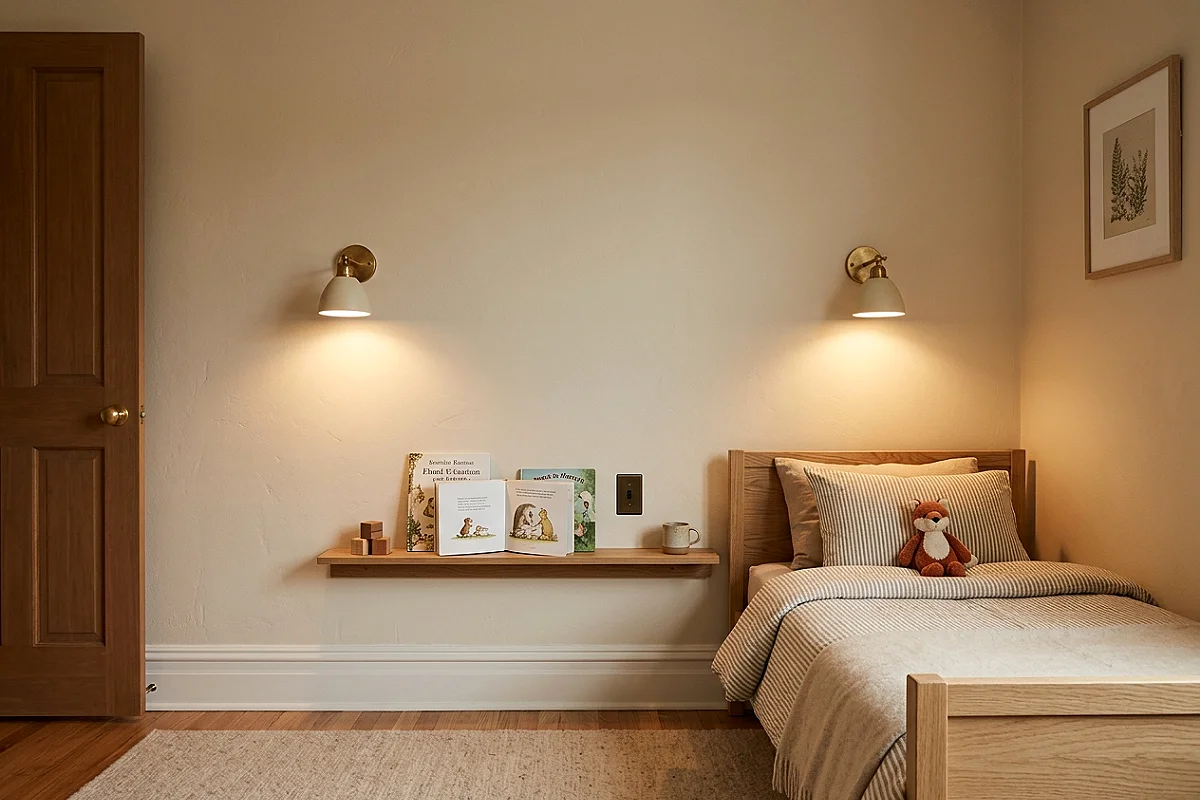
The reading light, built like a hotel’s: wall sconces mounted at a child’s bedside — small, elegant, in brass or soft ceramic — switched at the bed’s edge so the child controls her own evening light without fumbling for a lamp in the dark. Sconces give the luxury room its most practical elegance: bedside lighting stops being a lamp the child knocks over and becomes a fixed, safe, grown-up feature — and reading by a wall light at bedtime is a ritual children adopt instantly. Mount the sconces at roughly the height of a child’s seated shoulder with the shade above eye level (light should fall on the book, never the eyes), wire them to a wall switch or smart bulb rather than pull chains (chains are small-finger territory), and choose warm 2700K bulbs that make the room drowsy by design. The sconces look designed because they are — permanent, safe, and exactly where the reading hand reaches.
Pro Tip
Position each sconce’s switch within a small child’s seated reach on the bed — a light a child controls independently turns bedtime resistance into bedtime ritual, and the autonomy is worth more to the household than any amount of elegance.
Silk Scarf Gallery in Frames
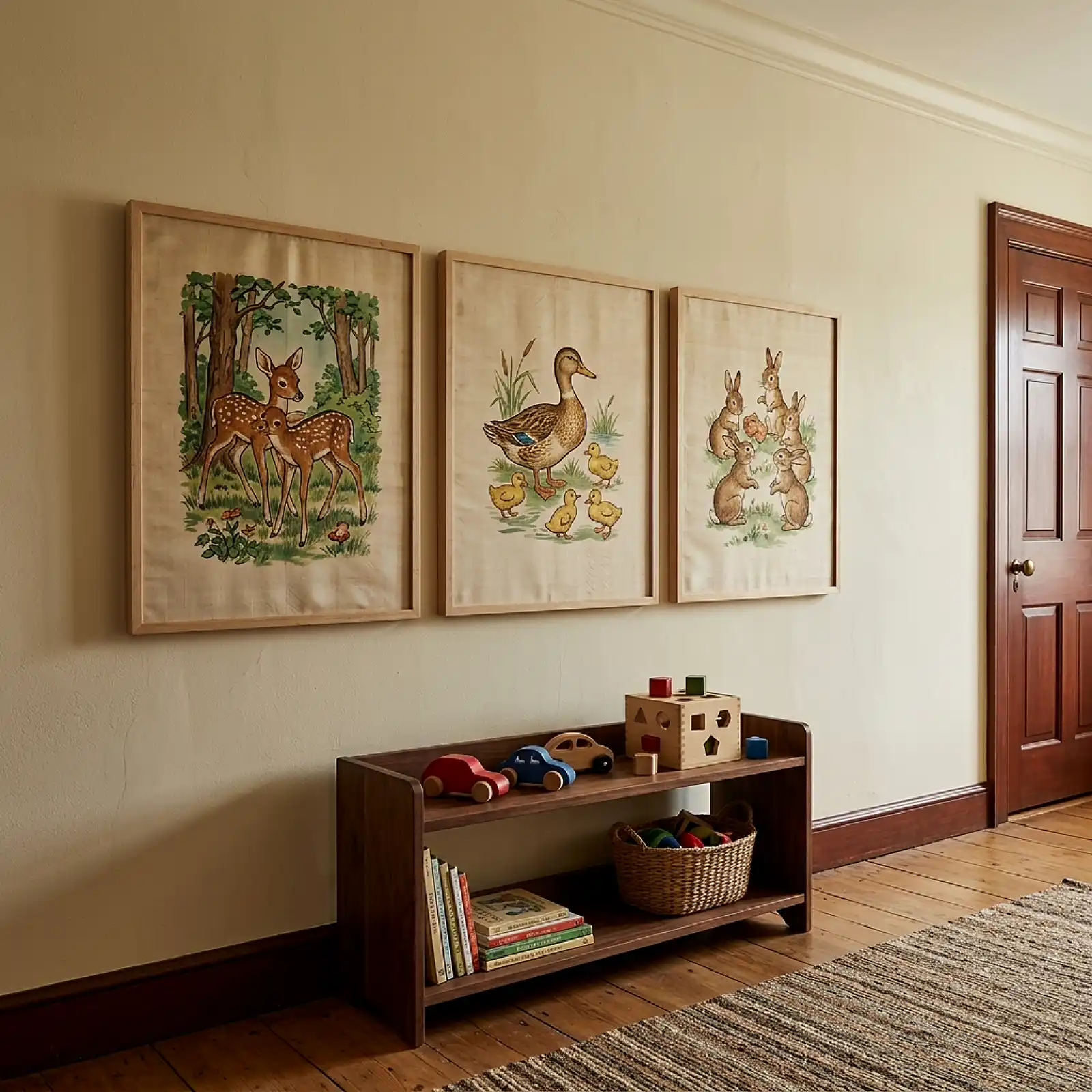
The wall’s quiet art: a row of genuine silk scarves — vintage florals, hand-painted prints, designer patterns — stretched and framed like paintings, their colors brighter than any print and their fabric giving each frame a soft, textile depth no canvas has. Framed scarves give the luxury room its most affordable gallery: real designer and vintage scarves cost a fraction of framed art, their colors are extraordinary, and the collection tells a story adults understand immediately. Frame each scarf behind UV-filtering glass with acid-free backing (silk fades and degrades under direct light and ordinary cardboard), stretch them over acid-free mount boards so the fabric lies flat and taut, and hang the row in a line at a child’s height — the art is for the child’s walls, not just visitors’. Someday the frames come down and the scarves go back around shoulders; nothing about the display wastes what’s inside it.
Pro Tip
Never pin or glue scarves directly to the backing board — pin holes become permanent in silk, and adhesives stain it irreversibly; instead, use a fabric-stretch frame where the silk is held by gentle tension at the edges, fully reversible forever.
Illuminated Glass-Front Wardrobe
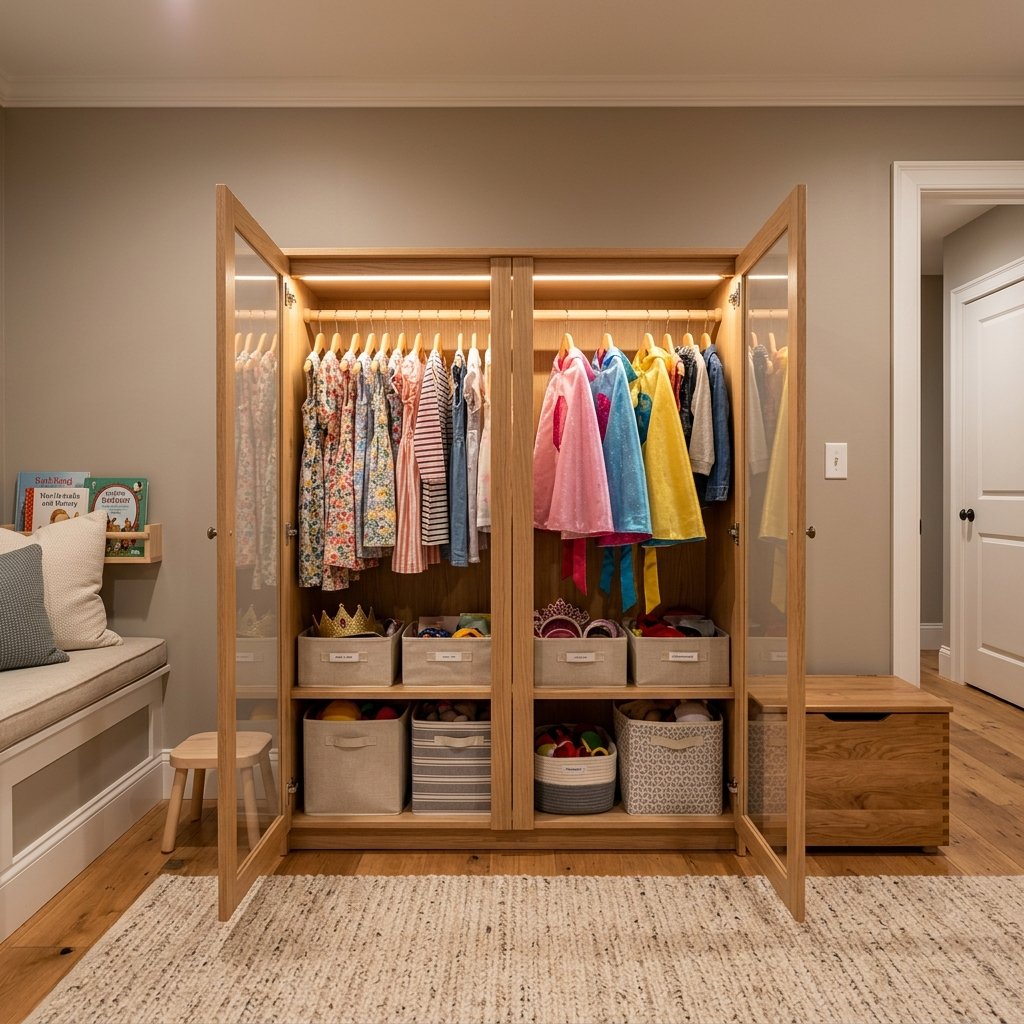
The closet, dressed like a boutique’s display case: a wardrobe with glass doors and a softly lit interior — small LED strips along the shelves, clothes and treasures visible through the glass like merchandise in the world’s most personal shop. A lit wardrobe gives the luxury room its most hotel-like feature: the child sees her own collection — dresses, capes, shoes, treasures — presented rather than hidden, and choosing what to wear becomes a daily browsing ritual. Choose the wardrobe with tempered glass doors (children’s rooms get doors slammed, and tempered glass is the only kind that fails safely), fit the lighting with a door-contact switch so the interior glows only when opened, and keep the interior shelves styled — folded things stacked by color, treasures grouped like a display. The wardrobe quietly teaches a child that her things are worth looking at, which is the whole philosophy of the luxury room.
Pro Tip
Secure the wardrobe’s full height to the wall with a stud anchor before adding glass and lighting — tall storage units are the top category of children’s furniture tip-over injuries, and no display case is worth a moment of physics being unkind.
Hand-Painted Keepsake Trunk
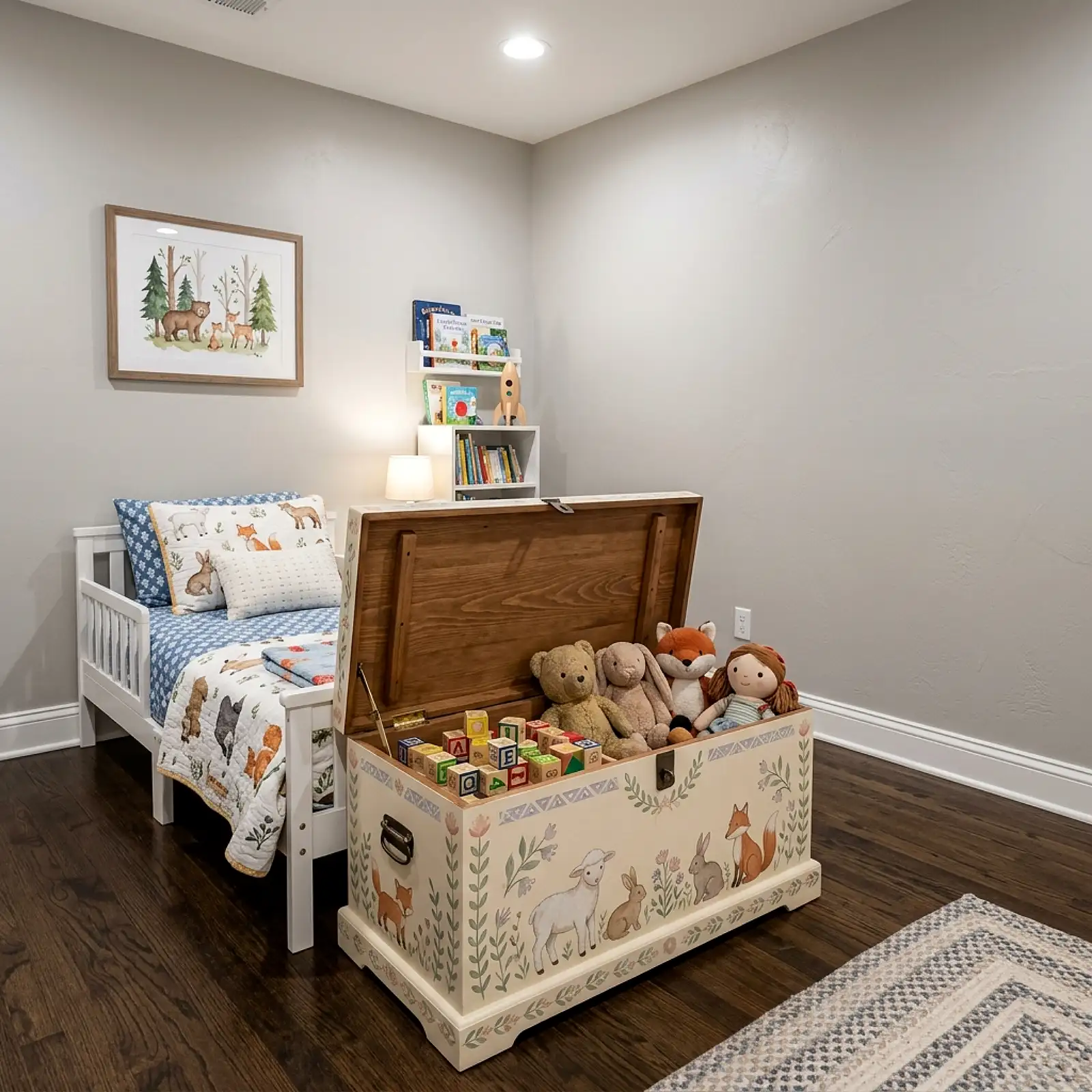
The room’s small treasure chest: a wooden trunk or chest painted by hand — florals, constellations, or a child’s own coat of “arms” designed with her — serving as toy storage, a foot-of-the-bed bench, and the container every small treasure gets carried in someday. A painted trunk gives the luxury room its heirloom piece: the one object that leaves the childhood home still in one piece, still carrying paint, still carrying the story of who painted what. Commission a local sign painter or folk artist rather than buying pre-painted (hand-painted commissions cost modestly and arrive with a name in the script), choose a trunk with a proper safety hinge that holds the lid open (unassisted lids are finger-crushers) and air vents if the trunk will hold anything organic, and place it where the child actually reaches it. Trunks like this travel with families for generations; this one starts with a six-year-old.
Pro Tip
Ask the painter to seal the artwork with a matte clear coat — children’s trunks get climbed on, scribbled near, and dragged, and a matte protective topcoat keeps hand-painted artwork from rubbing away at the edges where small hands touch it most.
Mini Library Ladder to Bookshelf
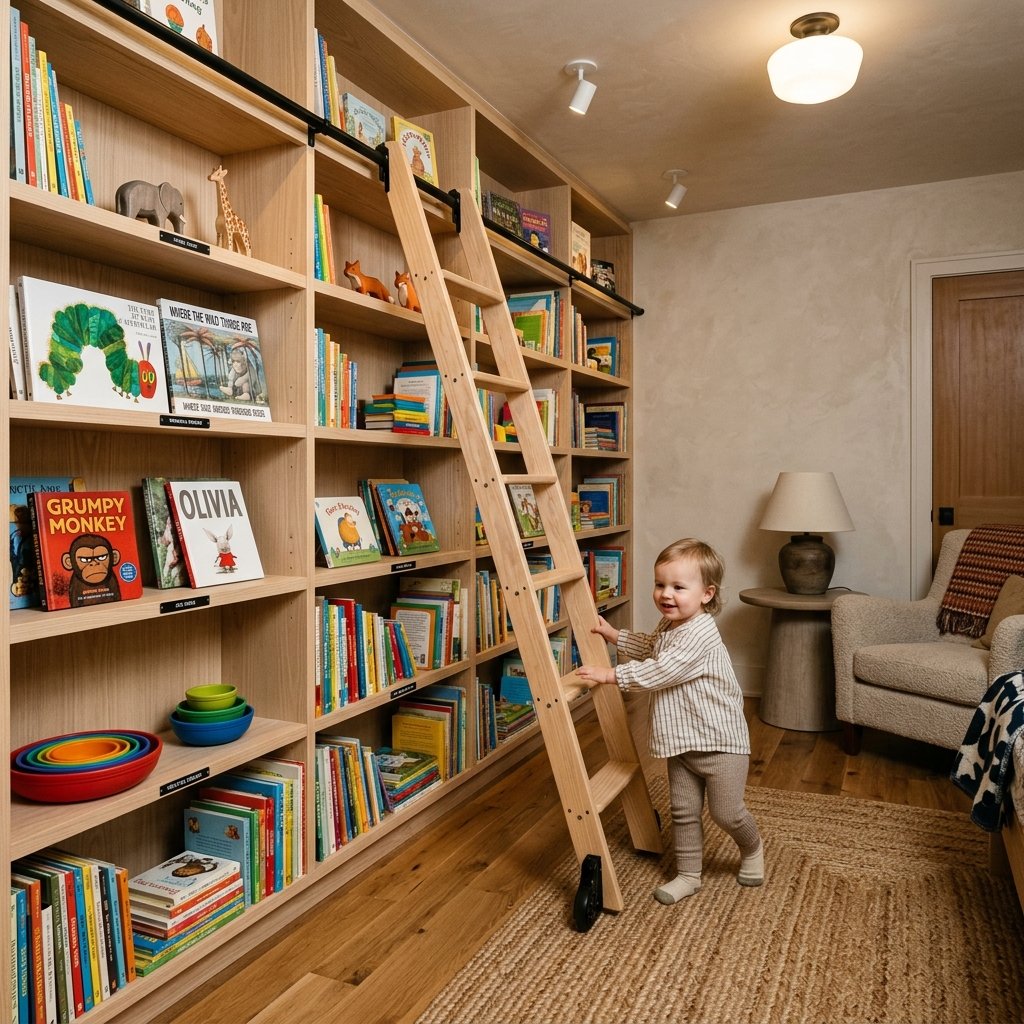
The bookshelf’s little ladder: a real wooden library ladder — scaled to a child’s world, complete with a sliding rail mounted to the bookshelf’s top — so reaching the highest shelf becomes an event, and the books’ top row stops being decoration. A library ladder gives the luxury room its most beloved detail: it turns bookshelves from furniture into a small library, and children treat climbable ladders with the reverence adults reserve for fireman’s poles. Mount the ladder’s rail into wall studs along the bookshelf’s full length (a ladder rail on anchors alone is physics waiting to disappoint), choose rungs spaced for a child’s step — about eight inches apart — and install a small lip at each shelf’s edge on the ladder’s side so climbing feet don’t catch on book spines. The ladder’s shadow at the bookshelf photographs like a scene from somewhere elegant; its use photographs like childhood itself.
Pro Tip
Set the ladder on a bookshelf no taller than the child can reach from its highest rung with feet on the second-to-top step — a library ladder’s discipline is that the topmost shelf it serves should never require standing on the topmost rung, where balance fails.
Gilded Botanical Wallpaper Wall
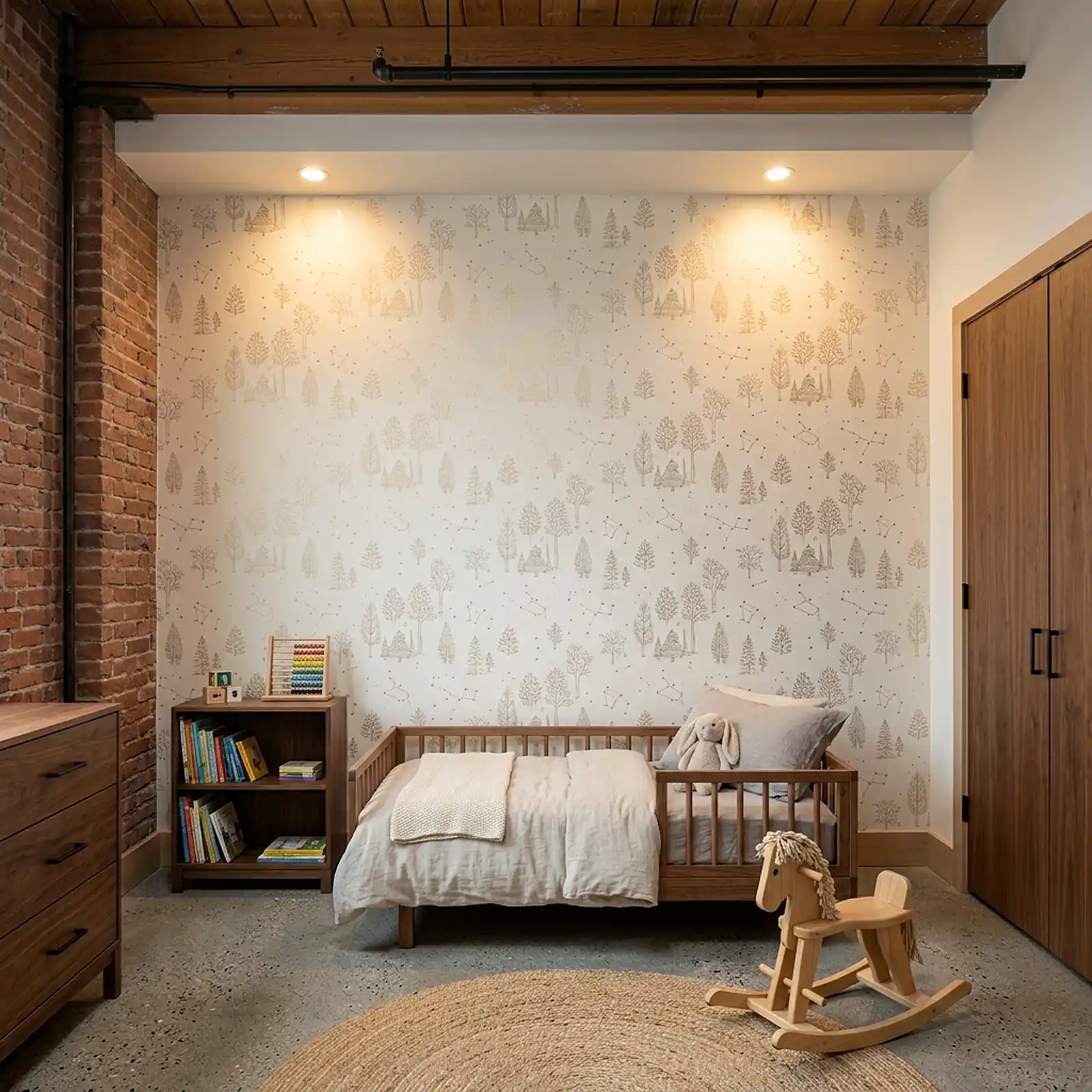
The room’s one wall, wearing gold: botanical wallpaper with gold-leaf accents — leaves gilded in real metallic foil, vines climbing against deep green or soft ivory — chosen for a single feature wall, the one the bed faces. Gilded wallpaper gives the luxury room its most opulent surface: metallic leaf catches lamplight the way no printed gold ever can, and the wall becomes the room’s jeweler. Choose genuine foil-accented wallpaper over printed metallic (foiled wallpaper costs more per roll and is unmistakable in side light), apply it to one wall only — luxury papers lose their power when they surround a room — and hang it so the gold botanicals rise behind the bed’s headboard where evening light finds them. The wall photographs like a private club; children grow up assuming gilded leaves are simply what bedrooms have.
Pro Tip
Buy one full roll extra and from the same dye lot — foiled wallpapers are produced in small batches, and a feature wall that runs short mid-pattern with a replacement roll from a later batch will show the mismatch at its seams forever.
Brass Door Plaque with the Child’s Name
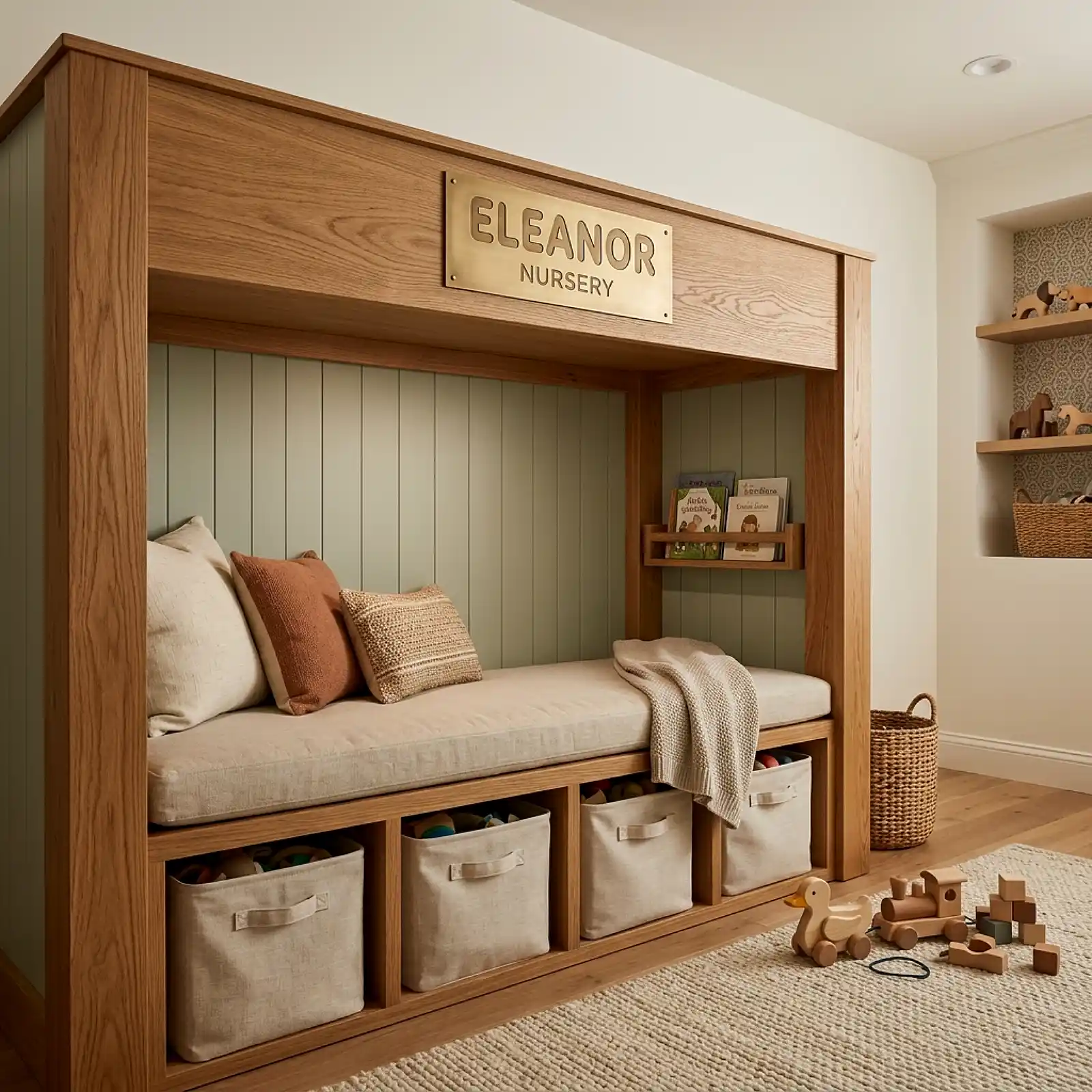
The room’s entrance, formally announced: a brass name plaque beside the bedroom door — the child’s name in elegant engraved letters on polished or brushed brass — the same small gesture hotels reserve for their finest rooms. A name plaque gives the luxury room its most formal detail: it marks the door as belonging to a specific person, and the small ritual of the plaque — visitors knocking, a child polishing it, siblings treating the room as officially someone’s — builds a quiet sense of ownership that no furniture achieves. Choose solid brass over brass-plate (plate wears through to base metal at exactly the edges children touch), have the name engraved rather than printed, and mount it at adult eye height — the plaque is a signal for the house, not a toy for the child. It costs almost nothing, takes an afternoon, and remains after the room’s last owner has grown.
Pro Tip
Mount the plaque with two screws into the door casing rather than adhesive — hallway doors get opened hard and often, and adhesive-mounted plaques arrive on the floor within a season, while two small screws keep the brass exactly where the knock belongs.
Fifteen Details, One Dreamy Room
A luxury kids’ room isn’t built from money; it’s built from the decision that a child’s world deserves real details — silk over polyester, crystal over plastic, a name engraved instead of printed. The canopy, the chandelier, the gilded wall, the little ladder to the big bookshelf: each detail is a small argument that this room matters, made in materials the child will feel and the adult will recognize. Choose three or four of these that fit your room and your life, and let them be the spine of something both elegant and thoroughly, wonderfully lived-in.
Frequently Asked Questions
Can I create a luxury kids’ room without a luxury budget?
Absolutely — luxury is mostly about materials and details, not square footage or price. A gilded medallion, an embroidered scarf gallery, a brass name plaque, and monogrammed bedding each cost under what a single themed toy set does, and together they out-elegant most big-ticket purchases in the room.
Won’t an elegant room feel too precious for a child to actually use?
Not when the luxury is in the fixed details — the wall, the light, the curtains — rather than in fragile objects. Everything a child touches should be durable (performance velvet, washable linen, tempered glass), and the room stays both elegant and entirely survivable.
How do I make a dreamy room that isn’t a pink princess theme?
Luxury is theme-proof by design. Calm palettes — ivory, sage, blush, gold, and soft grey — carry all the dreaminess through materials instead of color: silk, crystal, gilding, and layered light create the dream without a single cartoon crown.
Is a chandelier safe in a child’s room with a low ceiling?
Yes — choose a flush or semi-flush crystal fixture with a short drop, keep it positioned over the play area or foot of the bed rather than directly above the headboard, and confirm the ceiling box is weight-rated. Hardwire everything; never hang crystal from a plastic junction box.
Will these ideas work for toddlers as well as older children?
Most adapt beautifully: the banquette, sconces, wardrobe, trunk, and library ladder suit toddlers with added safety hardware (window restrictors, anchoring, cordless treatments), while the chandelier and vanity are best saved for children old enough to be steady near glass and stone.
How do I keep a luxury kids’ room feeling relevant as the child grows?
Invest luxury in the permanent bones — wall paneling, wallpaper, sconces, medallions, name plaque — and let the flexible pieces (bedding, trunks, scarves, banquette cushions) evolve with the child. The bones stay elegant from age four to sixteen; only the accessories ever need replacing.