16 Clever Shoe Organization Ideas Every Girl Needs
Over the door pockets, slanted shelves and clear boxes can hold a whole collection in a few square feet. A little planning stops sandals, heels and boots from piling up by the door.
The 16 ideas below give sizes, weight limits and care notes, with a table of shelf heights at the end.
Over the Door Shoe Pockets
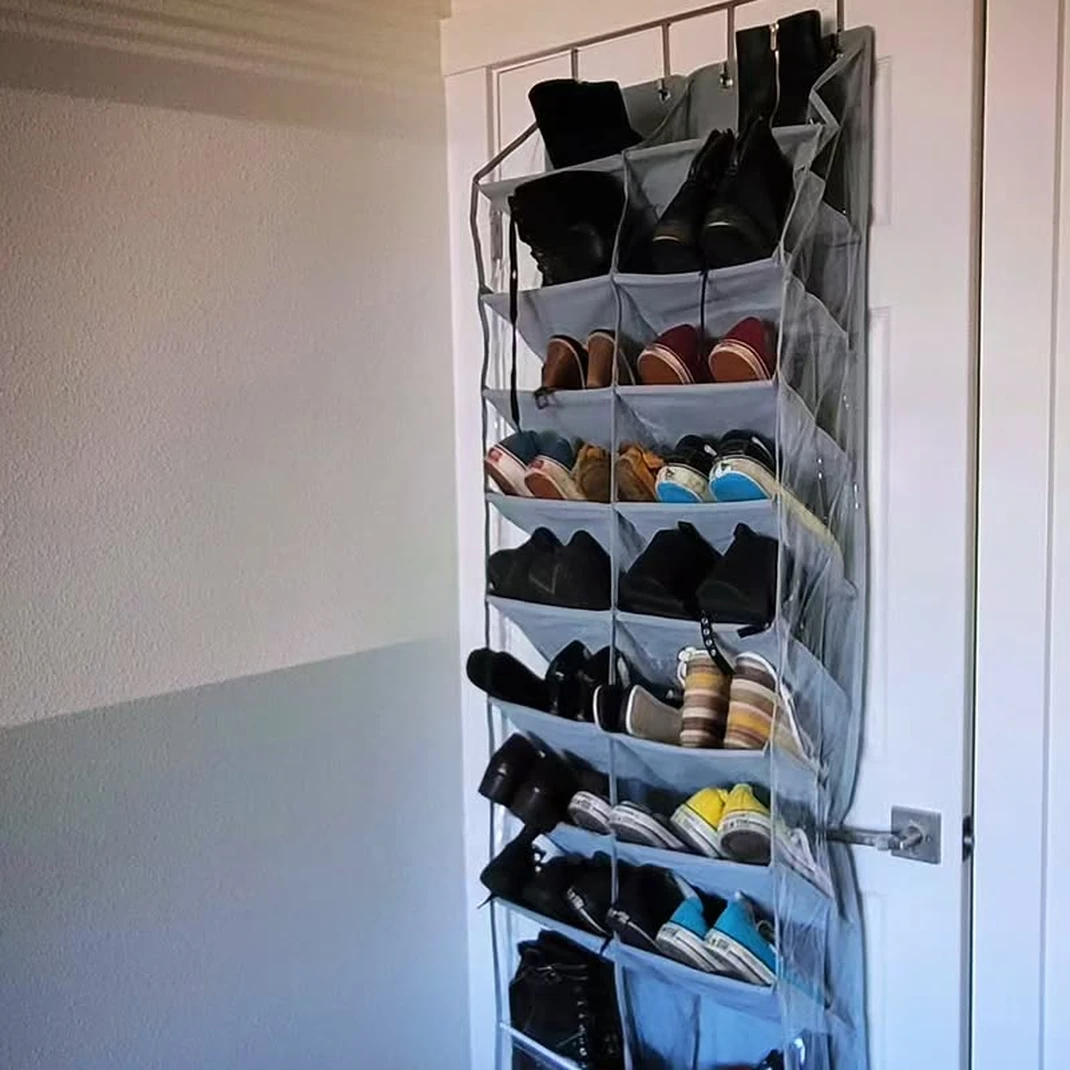
An over the door organizer with 12 pockets holds a dozen pairs of flats, sneakers and sandals in the space of a closet door. Check the door thickness first, because most hooks fit doors of about 1 3/8 to 1 3/4 inches. Read the weight limit on the label, which is often 30 to 40 pounds, and keep heavy boots out of it.
Fill the pockets with one pair each and put daily shoes at eye level. Make sure the door still closes without rubbing. Wipe the pockets monthly, since dust gathers in clear plastic.
Tiered Rack by the Front Door
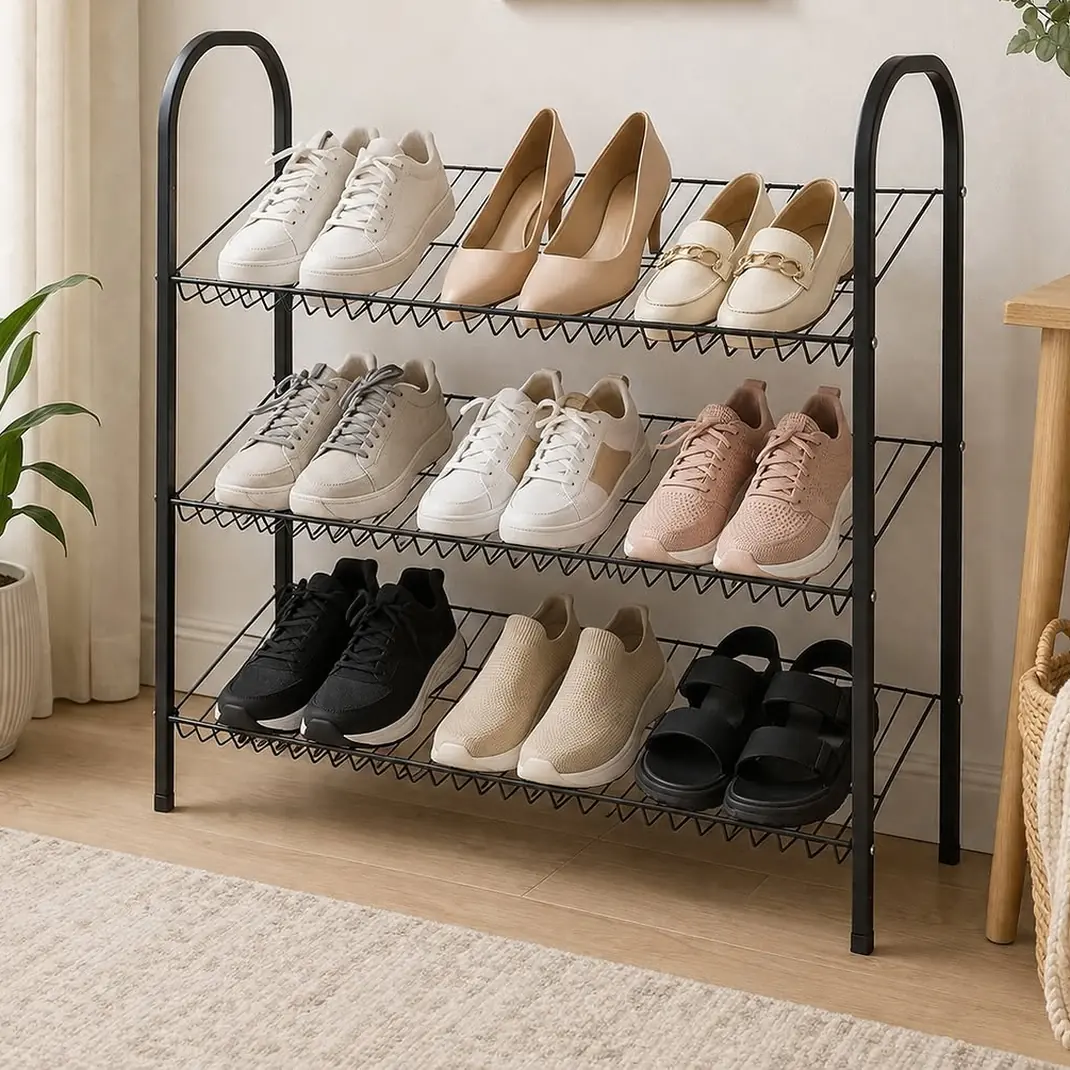
A rack of three tiers keeps nine pairs of everyday shoes off the floor. Choose a model about 28 inches wide and 12 inches deep, which fits most hallways, and place it beside the door where shoes come off. Put sneakers on the top tier and sandals on the lowest.
Slatted shelves let dirt fall through, so set a tray or mat beneath. Clear walkways by keeping the rack against the wall.
Rotate pairs weekly so you do not leave the same few on top. Wipe wet shoes before placing them to prevent water stains.
Clear Stackable Shoe Boxes
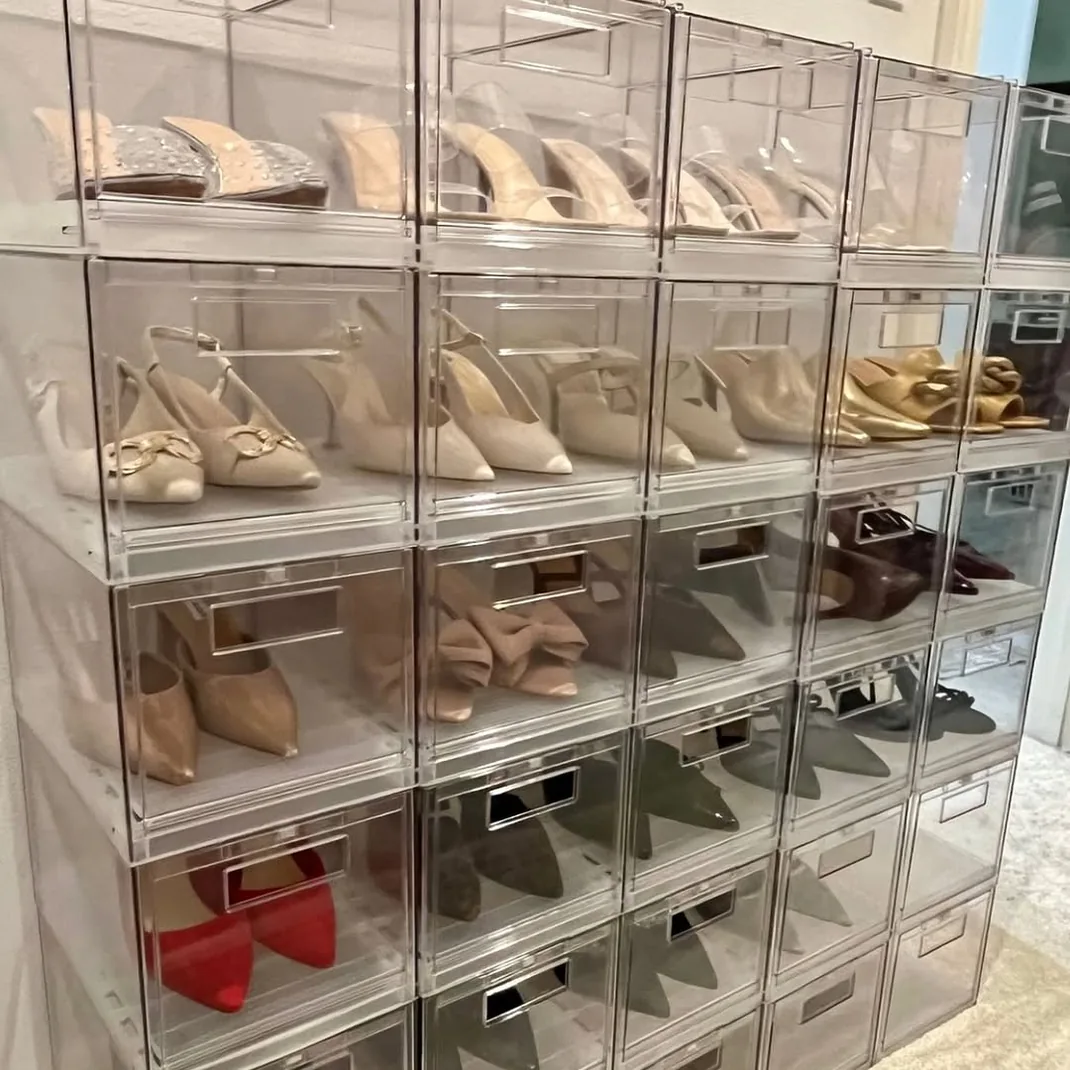
Clear boxes protect shoes from dust and let you see each pair at a glance. A standard box measures about 13 by 9 by 5 inches and fits flats and sandals, while taller boots need a box of 16 inches or more. Stack no more than three high on a shelf, and place the heaviest at the bottom.
Choose boxes with a drop front door so the stack stays intact when you take a pair out. Add a label with the shoe type, or tape a photo to the front. Wipe the boxes twice a year to keep them clear.
Slanted Closet Shelves
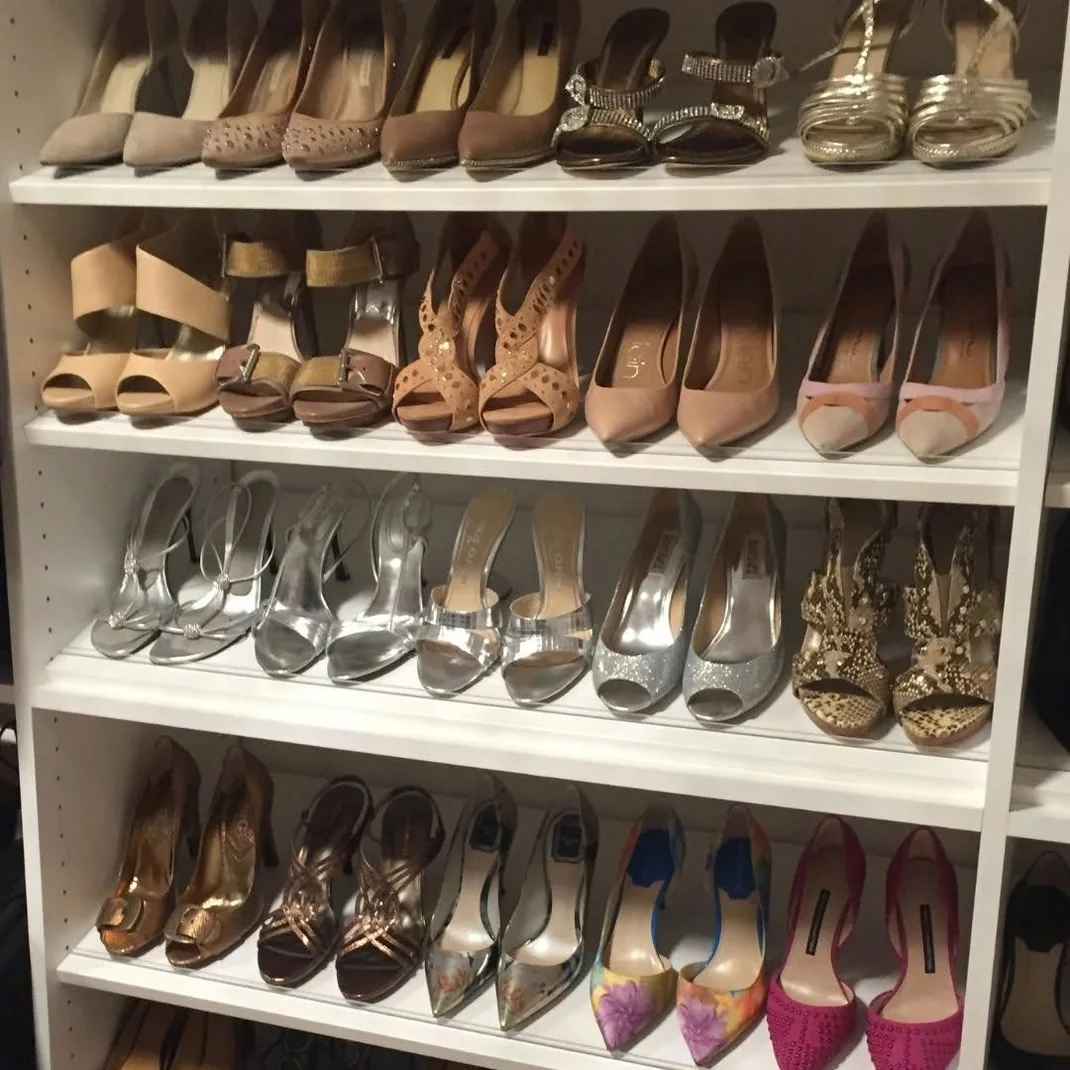
Angled shelves tilt shoes toward you, so every pair is visible and takes less depth. Buy a slanted shelf unit with a lip at the front, or add shelf risers of 3 inches to a flat shelf. A unit 36 inches wide holds about 12 pairs on three shelves.
Leave 8 inches between shelves for heels and 5 inches for flats. Secure tall units to the wall with an anti tip strap, because a loaded shelf can fall forward.
Keep heavier shoes at the lowest shelf. Dust the lip weekly, as grit collects there.
Narrow Wall Cabinet
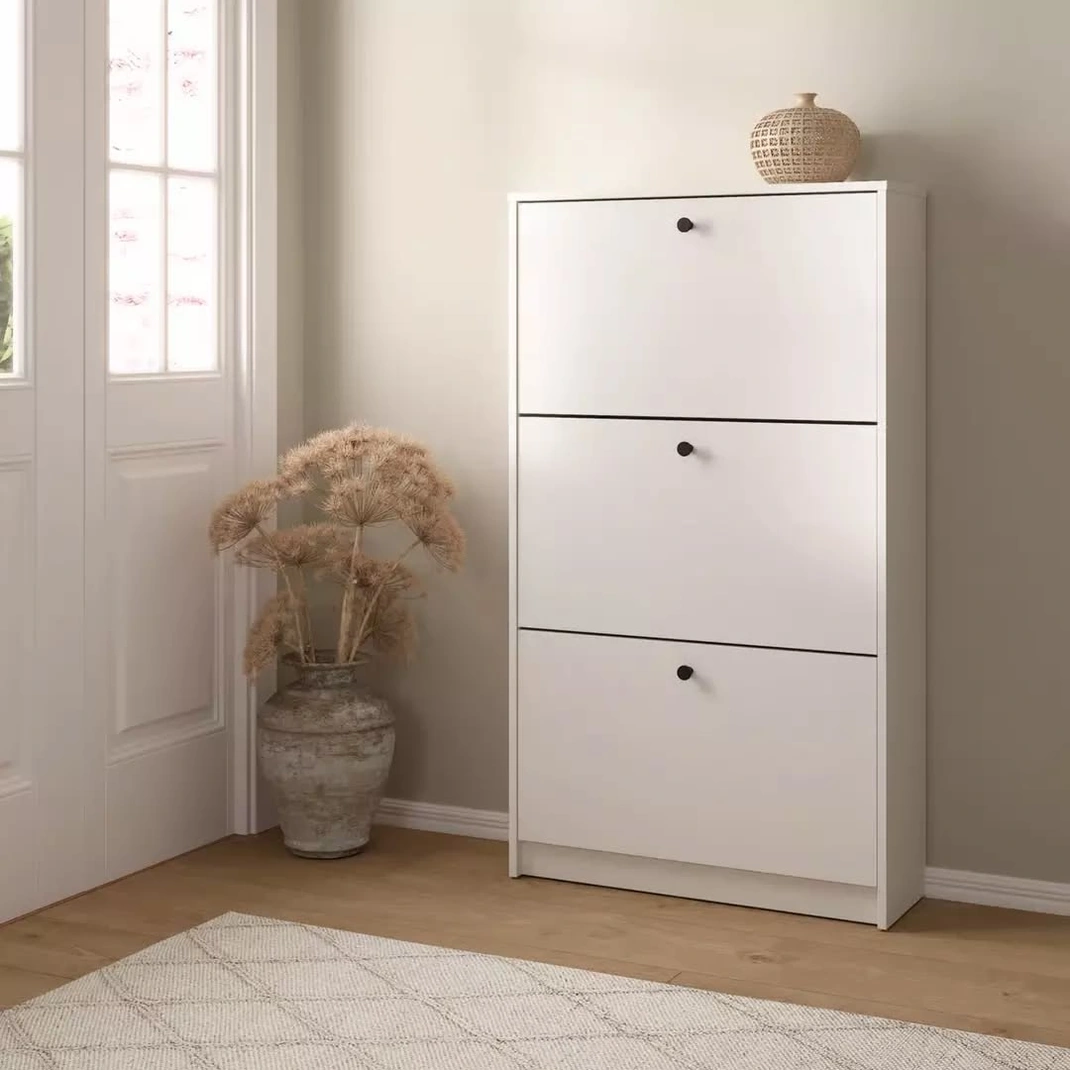
A narrow cabinet with tilting doors hides a lot of shoes in 6 inches of depth. Choose a unit about 24 inches wide and 50 inches tall with three drawers, each holding around 6 pairs. Mount it against a wall with the strap or screws the maker provides, since tall cabinets can tip when the drawers open.
Place daily shoes in the top drawer. Airflow matters, so choose a design with vents or leave a gap at the back. Do not put damp shoes inside, because moisture builds up in a closed cabinet.
Entry Bench with Cubbies

A bench gives a seat for putting on shoes and storage beneath it. Choose a height near 18 inches and a width of 36 to 48 inches, with three open cubbies below. Each cubby can hold two or three pairs.
Add a cushion on top and a basket for socks, gloves and shoe polish. Put wet shoes on a mat before sliding them in. Check the bench holds at least 250 pounds, as people sit heavily while pulling on boots.
Place it near the door, and keep the aisle in front at least 36 inches wide. Pair the bench with the layouts in smart entryway mudroom ideas for a complete drop zone.
Hanging Canvas Shelves
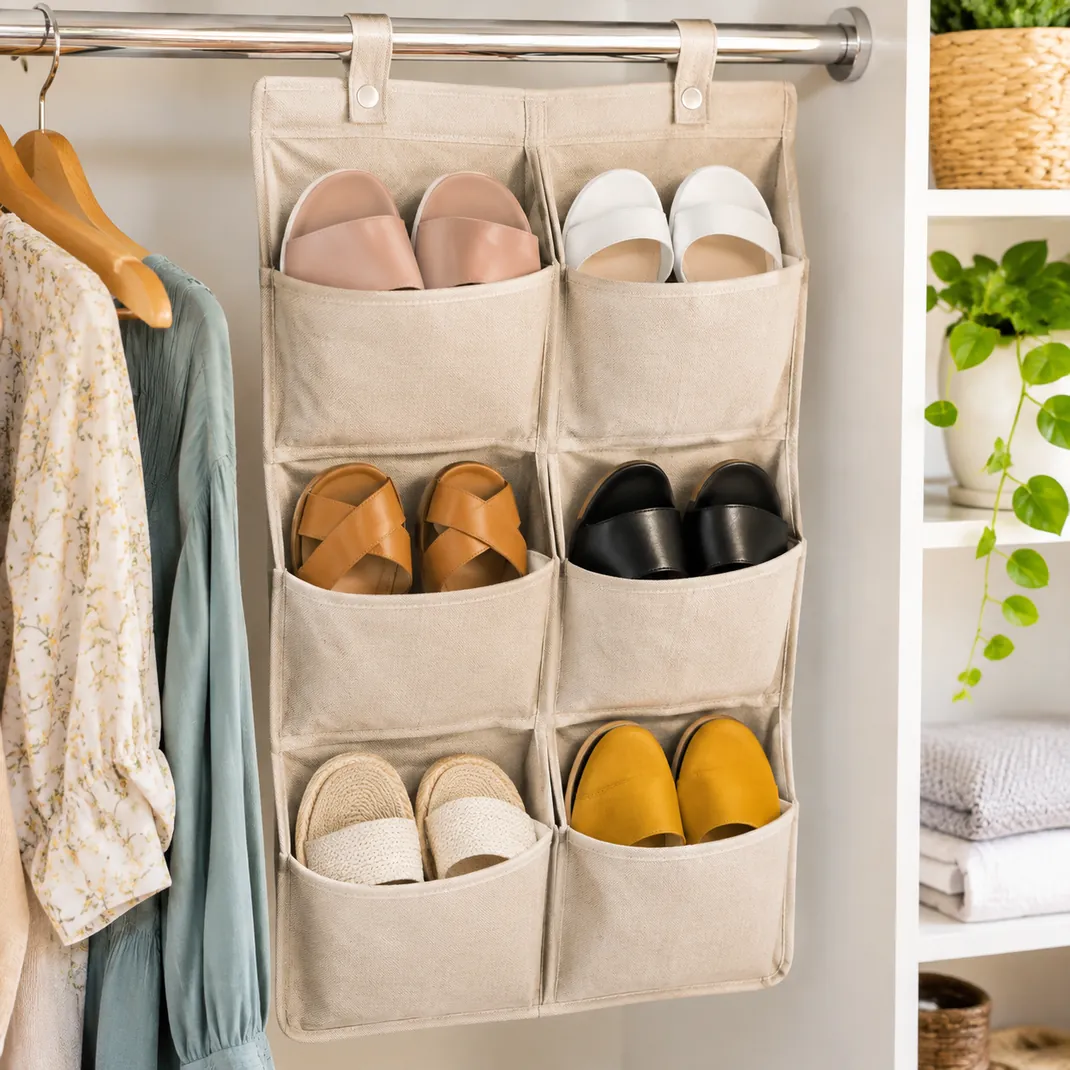
Hanging canvas shelves hang from a closet rod and add six compartments without drilling. Pick a model about 12 inches wide and 30 inches long, and slide it over the rod. Fill each compartment with one or two pairs of flats or sandals.
The canvas sags with weight, so keep heavy leather shoes and boots out. Place it at the end of the rod, away from clothes that could snag.
Brush off the canvas each season. Replace it if the seams loosen, since a falling shelf can damage shoes below.
Boot Shapers and Rod Hanging

Tall boots slump and crease when they fall over. Insert shapers or rolled magazines into each shaft, which is typically 14 to 16 inches tall, and keep boots upright on a shelf 16 inches high. Alternatively, clip the top edge to a hanger with boot clips and hang them from the rod.
Avoid clips on delicate suede, which can mark. Keep boots away from radiators, because heat cracks leather.
Wipe off salt and dirt before storing them. Leave a gap of 2 inches between pairs so air circulates and the material stays dry.
Under Bed Shoe Drawer
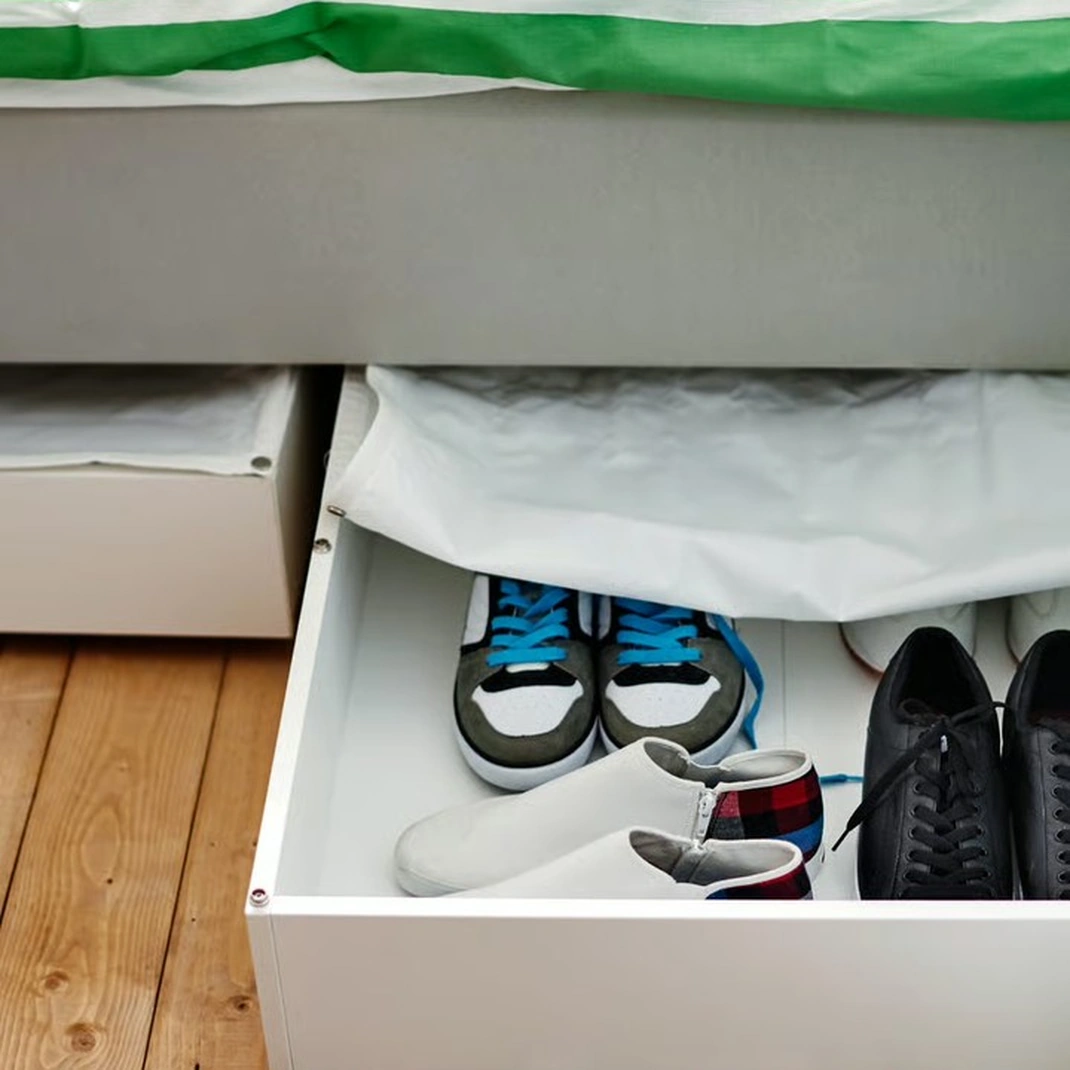
Measure the gap beneath the bed first, because many frames leave only 6 to 9 inches. Choose a flat drawer or box with wheels and a lid. Dividers hold 6 to 8 pairs.
Store flats, sandals and sneakers here, since they fit the low height. Slide the box out on a hard floor or add felt pads on carpet. Keep heavy boots elsewhere.
Vacuum around the box monthly. Small bedrooms and dorm rooms benefit from the space savers in dorm essentials for girls.
Display Ledge for Favorite Heels

A wall ledge turns favorite heels into decor. Mount acrylic or wooden shelves 5 to 6 inches deep, 30 inches long and about 12 inches apart, into studs or with heavy anchors rated for the load. Place one pair per 10 inches, with the toe pointing outward.
Keep this for shoes you wear less often, because dust settles on open displays. Avoid direct sun, which fades leather and satin.
A lip on the front edge stops pairs sliding off. Dust the shelf with a dry cloth each week.
Cube Organizer Grid
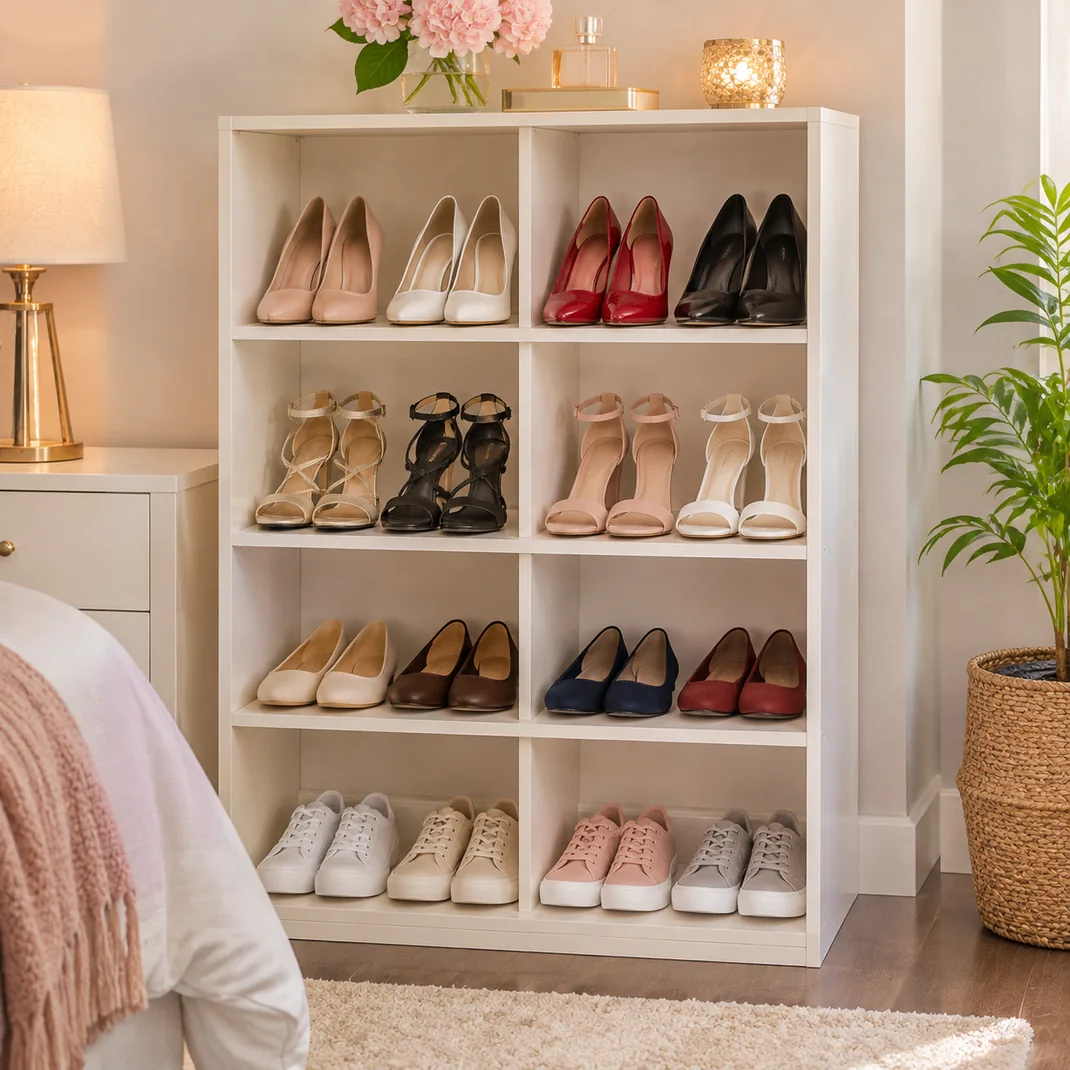
A cube organizer of 2 by 4 squares holds about 16 pairs in a neat grid. Each cube measures roughly 13 inches square, which suits sneakers, flats and short boots. Place the unit on a flat floor and secure it to the wall with a strap, since tall units can tip.
Put daily shoes in the middle row at hand height. Add fabric bins in the top cubes for socks and polish.
Keep boots on a separate shelf, as their shafts are too tall. Wipe the cubes down each season to keep dust off.
Seasonal Rotation Boxes
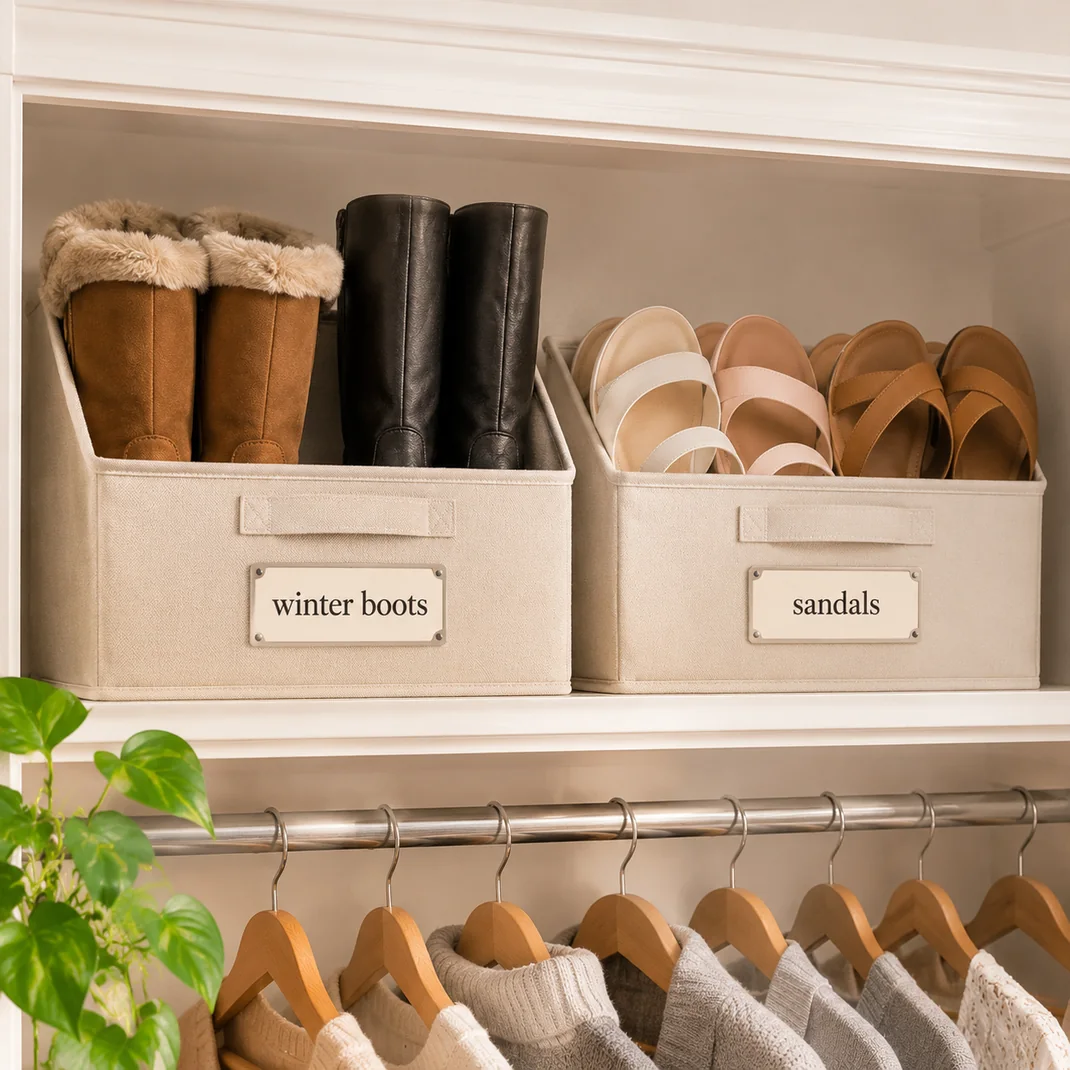
Rotating shoes by season frees prime closet space. Store off season pairs in labeled boxes on a high shelf or under the bed. Clean each pair before packing, let it dry fully and stuff the toes with tissue to hold the shape.
Add a small silica gel packet to each box, keeping it away from children and pets. Avoid attics and garages, where heat and humidity damage leather.
Check the boxes midseason for mildew. Swap the boxes twice a year, in spring and autumn, so the right shoes stay within reach.
Dust Bags for Special Shoes

Soft cotton bags protect party shoes, satin pumps and delicate sandals. Slip each pair into its own bag, tie the drawstring and label the bag with a tag. Breathable fabric lets air through, while plastic can trap moisture and cause sticking.
Store them on a shelf, away from direct sun and sources of heat. Wash the bags once a year on a gentle cycle.
Hang a dried lavender sachet near them for a light scent. Bags of 12 by 16 inches fit most pairs.
Wet Shoe Drying Tray
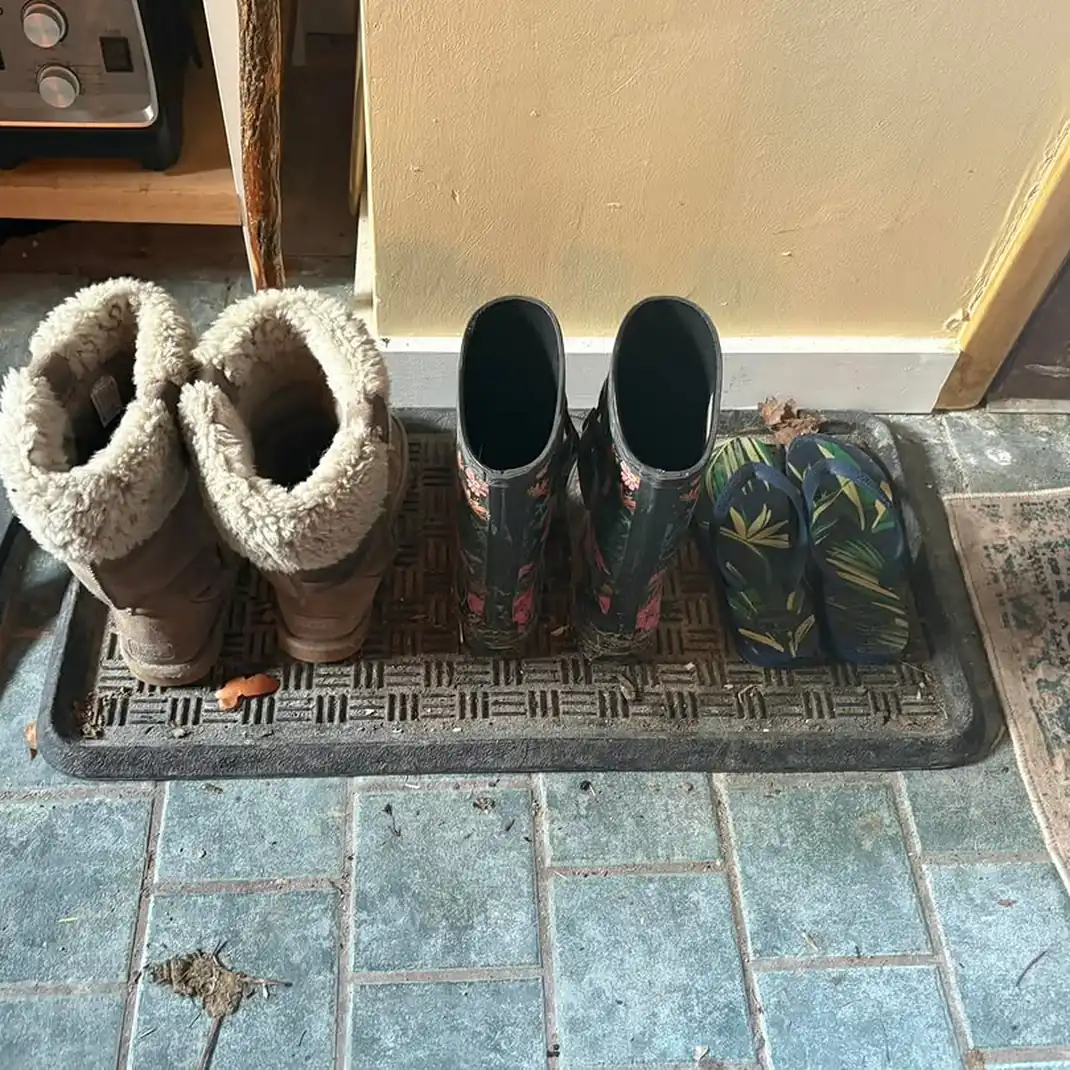
A raised tray catches water and mud and protects the floor. Choose a rubber or plastic tray about 30 by 15 inches with a lip of 1 inch, and place it beside the door. Set wet shoes on it to drip dry, with laces loosened and tongues pulled forward.
Stuff toes with newspaper to absorb moisture, and replace it after an hour. Keep shoes away from heaters, since heat can crack leather and soften glue.
Wipe the tray weekly, and rinse it in the bathtub when it gets muddy. This habit protects the rest of the shoe storage.
Tension Rod Heel Rack
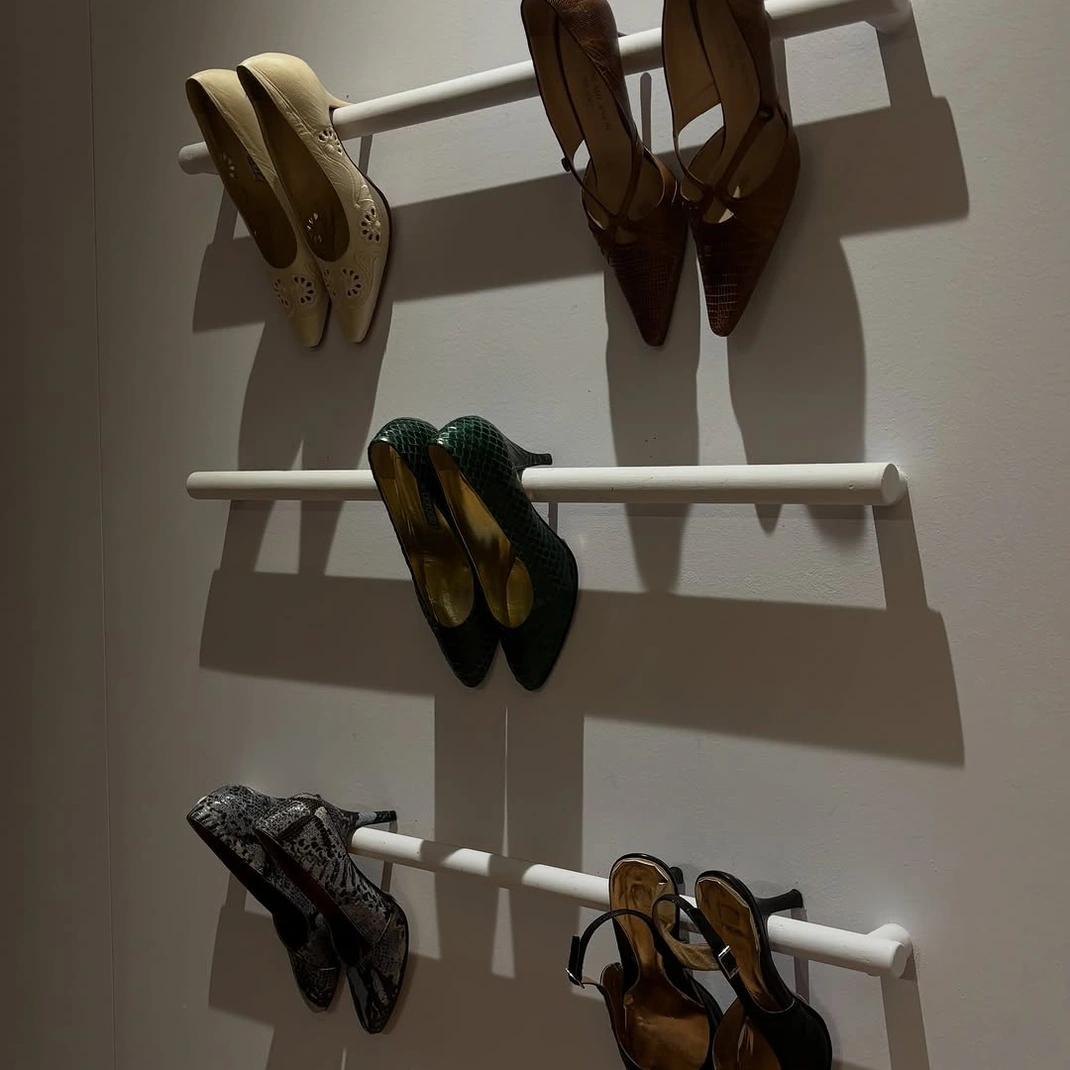
A tension rod across a closet corner holds heels by their back edge. Fit a rod rated for at least 20 pounds between two walls about 3 inches off the floor. Hang pairs by the heel, with the toes pointing down.
This works for heels and wedges, but not for flat shoes or sandals with thin straps. Test the rod by pressing down before loading it.
Leave space between pairs for air. Check the tension monthly, because rods slip when walls expand and contract.
Label and Photo System
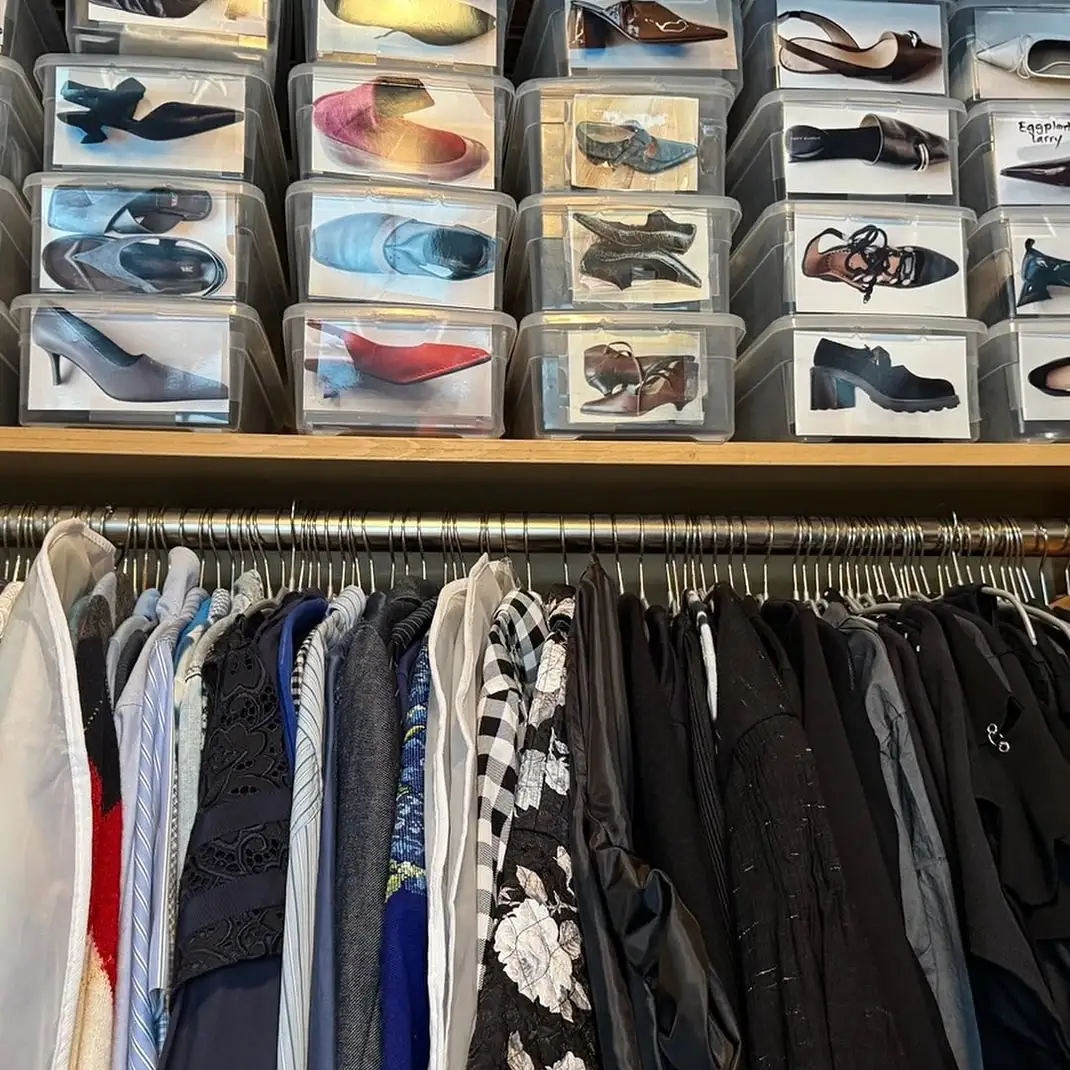
A photo on each box saves opening every one. Take a clear picture of each pair, print it at about 3 by 4 inches and tape it to the front of the box. Add a label with the color and type, such as black ankle boots.
Sort boxes by type on the shelves, with flats on one level and heels on another. Update the photos when you add new shoes. Keep a spare label for gift boxes.
This system also helps when packing for a trip. Print the photos at about 2 by 3 inches so they fit on the box end.
Shelf Height by Shoe Type
This table gives a simple clearance guide when you set shelf heights in a closet or rack.
| Shoe Type | Shelf Clearance | Storage Note |
|---|---|---|
| Flats and sandals | 5 inches | Pockets or slanted shelves |
| Sneakers | 6 inches | Boxes or cubbies |
| Heels | 8 inches | Ledges or tension rod |
| Ankle boots | 12 inches | Cubbies or open shelves |
| Tall boots | 16 inches | Upright with shapers |
Measure your own tallest pair before buying shelves, since styles vary.