12 Cute Kids Room Decor Ideas They’ll Love
There’s a particular kind of children’s room that makes grown adults want to move in — the kind where every corner looks like it was put together with love, where a pom-pom garland meets a ruffled pillow and a storybook shelf, and where the sweetness never tips into chaos. The secret professionals know: cute is not kitsch. A room becomes kitsch when every surface shouts; it becomes cute when a handful of tender details sit quietly inside a calm frame. Handmade warmth, gentle pastels, soft textures — the room’s job is to feel the way a lullaby sounds: sweet, safe, and made on purpose.
Everything on this list follows that same logic. Choose a soft base — warm white walls, light wood, one pastel family — and let the cuteness come in through details: a garland, a ruffled duvet, a hammock full of plush friends, a wall of watercolor animals. Twenty-two ideas below, and each one earns its sweetness twice: it charms the child who lives there, and it photographs like the most loving room on the internet. Keep the base calm, pile on the details you love, and the room will feel exactly the way you want your child’s childhood to feel.
Wooden Rainbow Arch Shelf
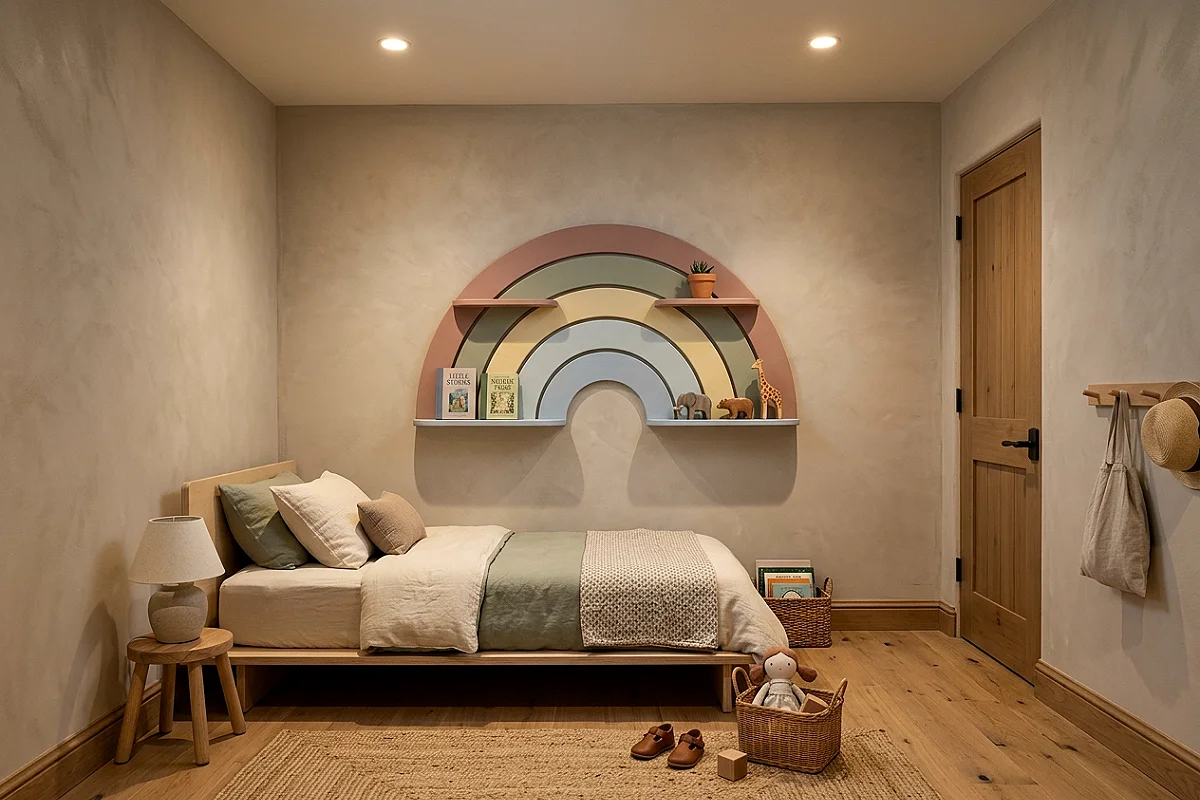
The shelf every cute room has borrowed from every other: a wooden rainbow — layered arches in soft pastel tones — mounted on the wall, its shelves holding small plants, mini books, and treasured figurines. The rainbow arch works because it’s both sculpture and storage: the arches themselves are the decoration, and the ledges inside them quietly do a job. Choose the rainbow in muted pastels (dusty rose, sage, butter, powder blue — saturated rainbow colors read as a party store), keep its shelves lightly dressed rather than full, and position it where the afternoon light catches it. It’s the single most recognizable cute-room object for a reason: it makes the wall smile.
Pro Tip
Mount the rainbow with two or more brackets matched to its back rail — pastel plywood rainbows are sold with decorative hardware that often isn’t load-rated, and a rainbow holding books needs real anchors, not the included string hook.
Pom-Pom Garland Across the Wall
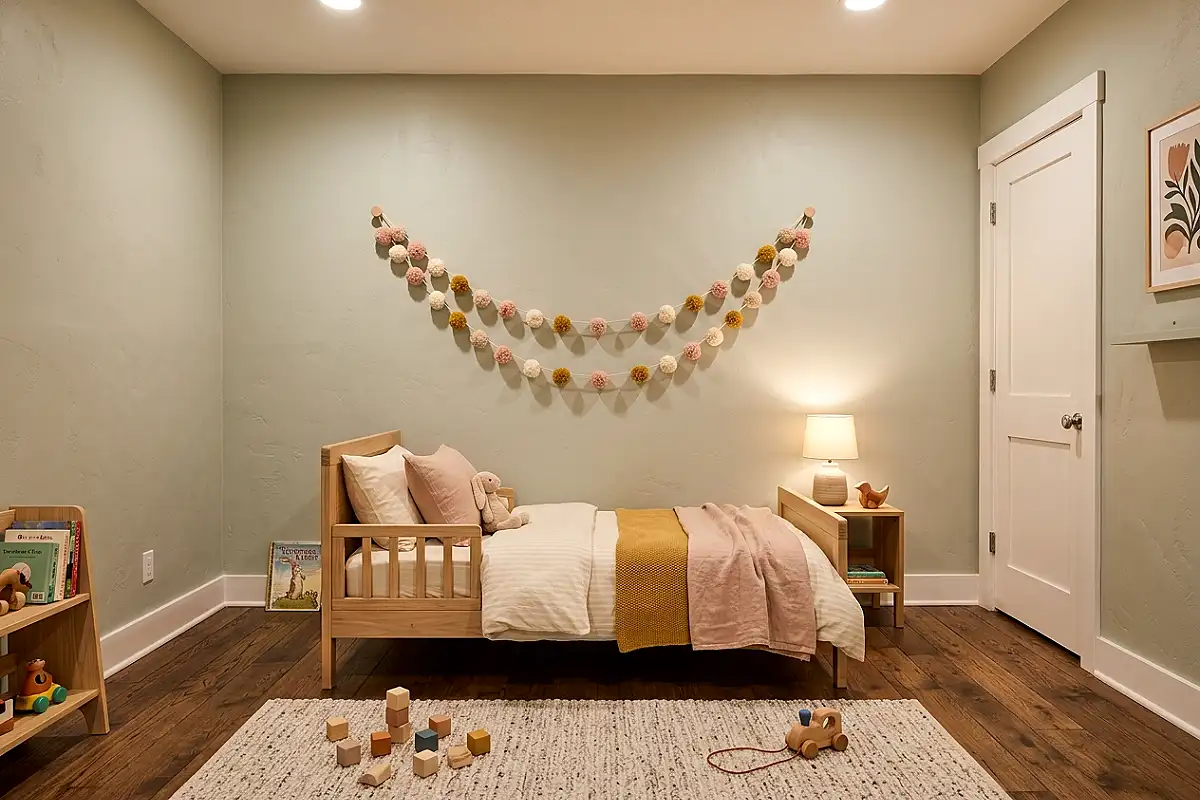
The party string that never comes down: a garland of soft pom-poms — cotton or felt balls in the room’s two or three pastel tones — draped once along the top of the wall or twice above the bed. Pom-pom garland delivers instant celebration energy with total calm: the balls are round, matte, and gentle, so the wall reads as sweet rather than loud. Choose garland made of real cotton (felt balls that shed are always fake wool blends), space it in an easy wave rather than pulled taut — a slight sag is what makes it handmade — and pair it with a plain wall so the garland is the one sweet voice in the room.
Pro Tip
Hang garland with clear command hooks at both ends and one in the middle — adhesive hooks leave walls undamaged for renters, and the middle anchor stops long garlands from swinging into curious little hands.
Ruffled Gingham Bedding
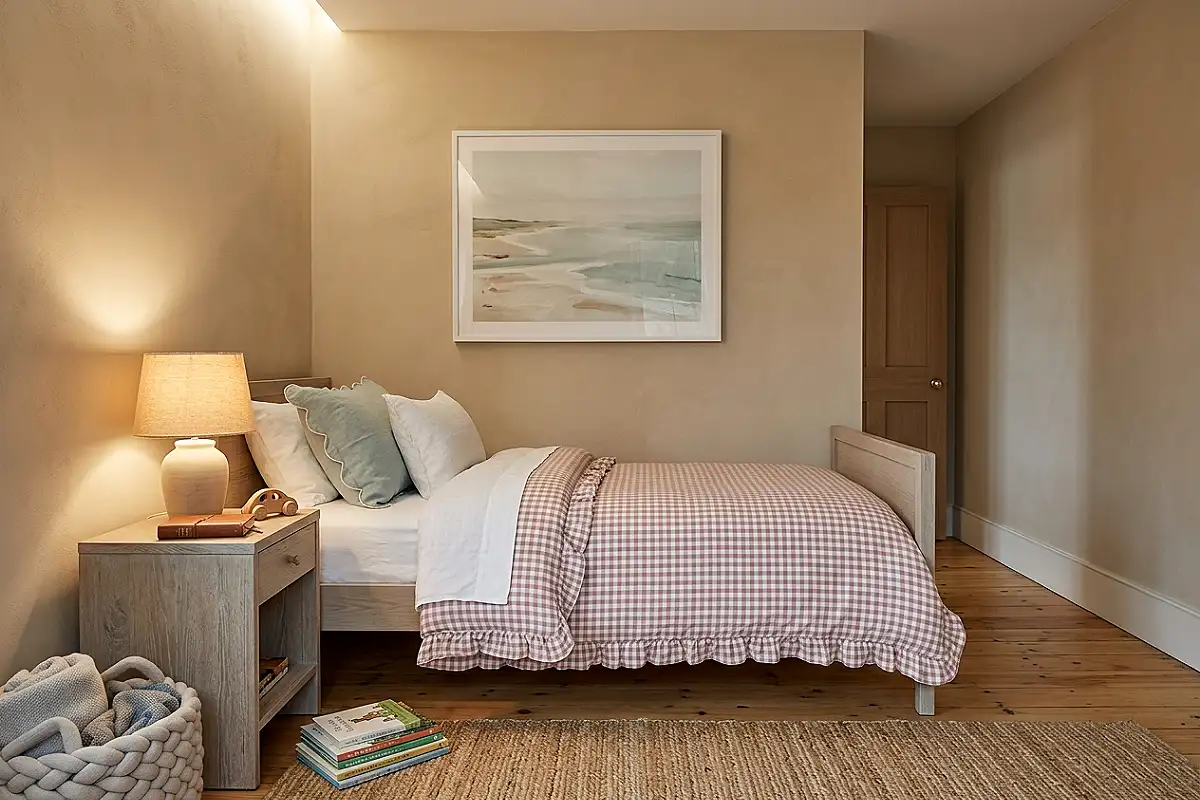
The bed that looks like a picnic at a garden party: a gingham duvet in a soft pastel check, finished with a stitched ruffle along its edges, layered over white sheets with a scalloped pillow or two. Gingham brings the cuteness; the ruffle brings the romance; and because the palette stays pastel-on-white, the bed reads as charming rather than fussy. Choose gingham with a small check (oversized checks read as tablecloth), and make sure the duvet cover washes flat — ruffled bedding that puckers after washing loses half its charm. It’s the textile that defines the cute room’s whole personality: cozy, country, made with love.
Pro Tip
Fasten the duvet cover’s buttons fully before washing — open-corner duvets tangle ruffles into the insert mid-cycle, and buttoned corners let the whole set tumble flat, keeping both check and ruffle aligned wash after wash.
Plush Toy Hammock Corner
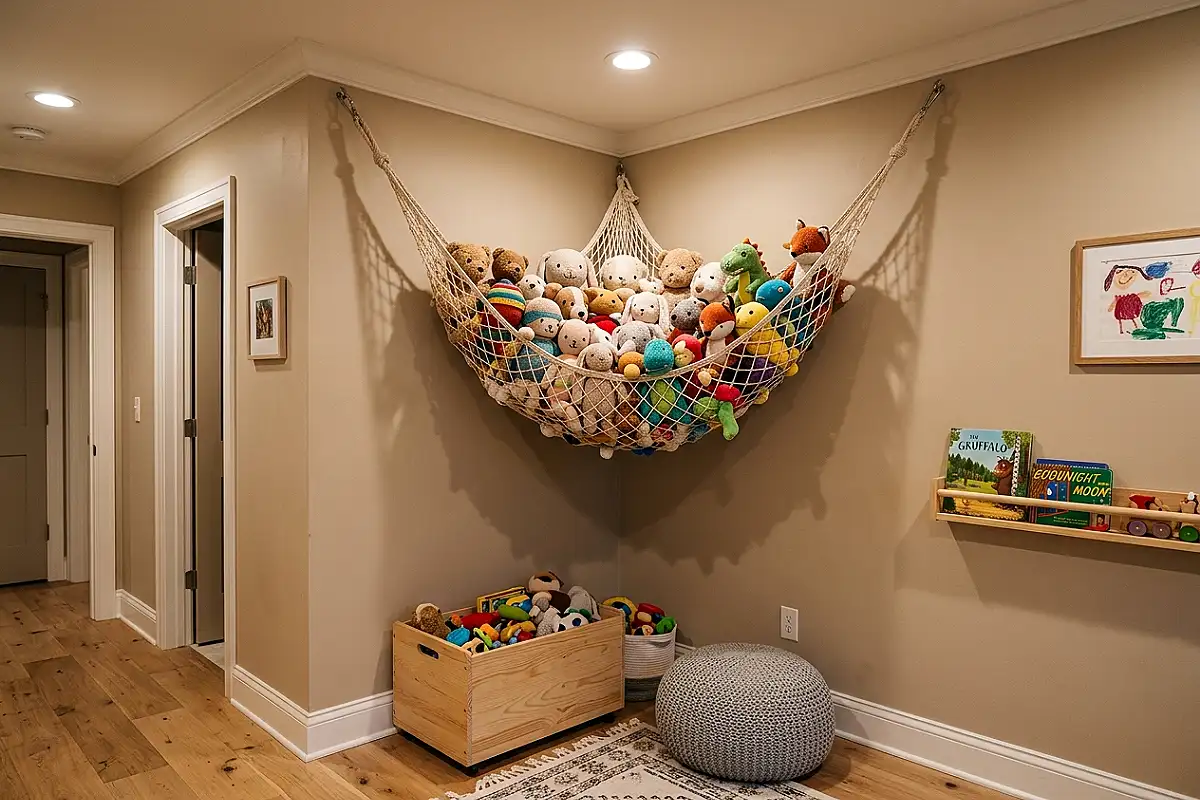
The display every stuffed-animal collector dreams of: a woven net hammock stretched into one corner of the ceiling, its mesh cradling the entire plush population in one suspended pile. The hammock turns the room’s biggest clutter problem — the army of stuffed friends — into its sweetest feature: a floating cloud of faces the child can see, hug, and choose from. Choose a hammock with a fine mesh (wide netting lets small plush limbs poke through) and mount it with ceiling hooks into a joist, never just the drywall. Corners carry the hammock’s tension naturally, which is why the corner placement is the only placement that holds.
Pro Tip
Anchor the hammock into ceiling joists with proper screw hooks — a hammock holding twenty stuffed animals plus the dynamic load of a child grabbing one is real weight, and drywall anchors surrender to that load silently, one night, without warning.
Watercolor Animal Wall
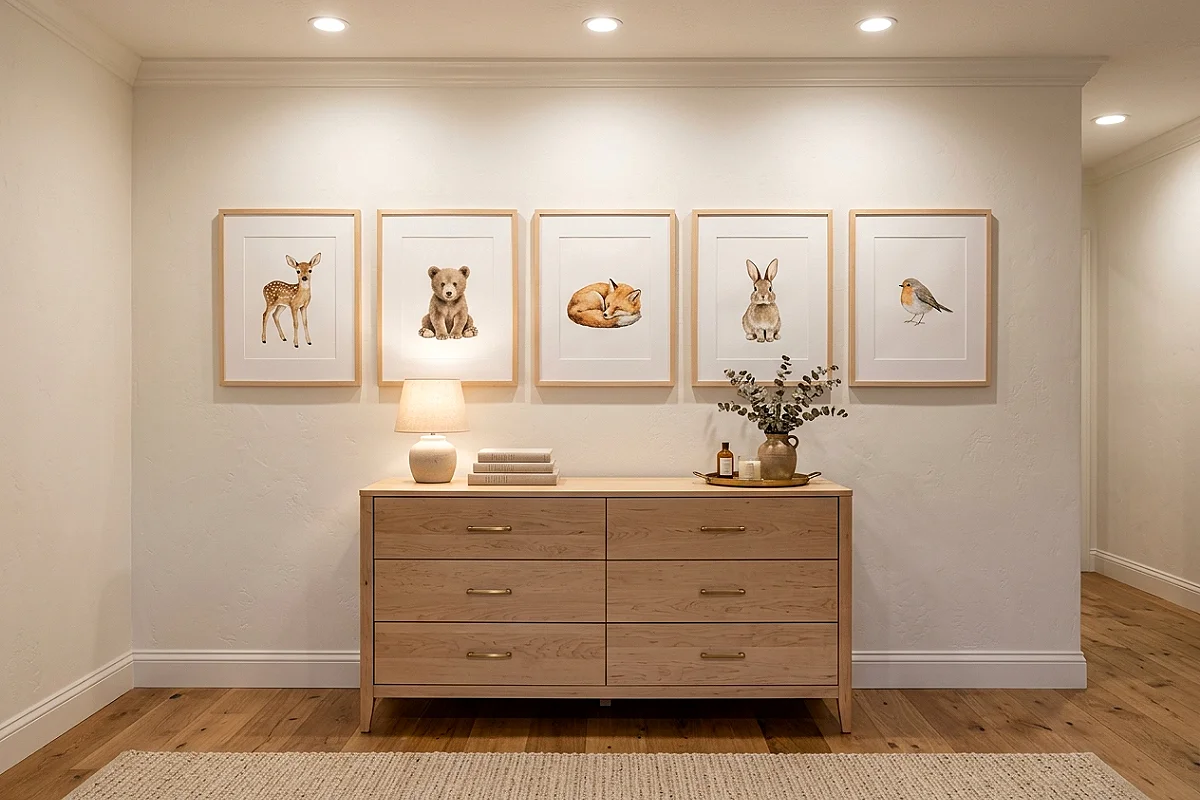
The art set that started a thousand Pinterest boards: a row of soft watercolor animal prints — a woodland deer, a sleepy fox, a little bear — in matching thin frames, hung in a gentle line above the bed or dresser. Watercolor animals carry the storybook feeling at zero noise: washed pastel tones, gentle brush edges, and subjects children genuinely love. Choose prints with generous white margins and frame them identically (same frame, same size — the uniformity is what makes five cute prints read as design rather than scatter), and pick the animals once and commit: a fox, a rabbit, a deer, a bird, a bear is the classic set that never dates.
Pro Tip
Print watercolor art on matte photo paper, not glossy — glossy sheets throw glare under nursery lighting and flatten the watercolor’s soft edges, while matte paper keeps the wash’s delicate gradient looking hand-painted.
Wooden Animal Peg Rack
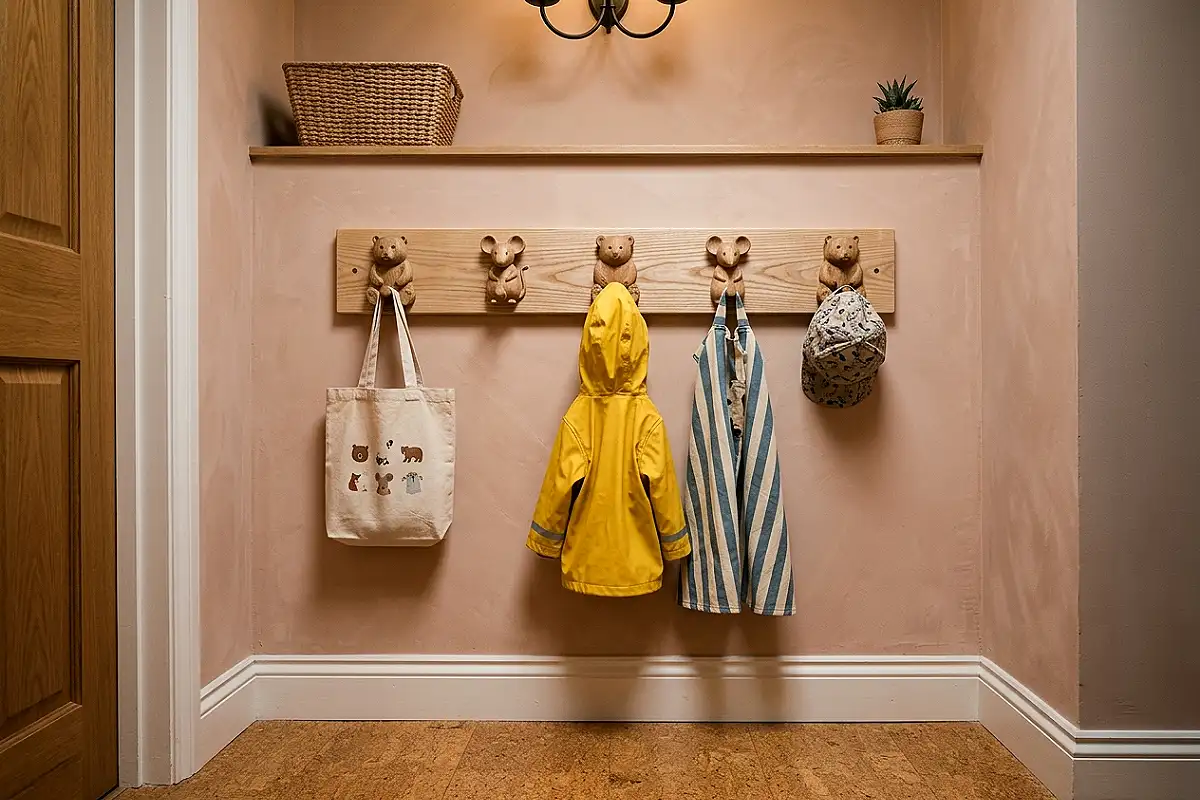
The hooks that make hanging things adorable: a wall rack of wooden animal-shaped pegs — little mice, birds, and bears — where jackets, bags, towel, and tomorrow’s outfit all hang at the child’s height. Animal pegs transform the room’s most boring chore-zone into its sweetest wall: the child hangs their coat on a wooden mouse, and suddenly tidying is a game. Choose pegs carved from solid wood with smooth sanding (splinter-free is non-negotiable near small hands), mount them in a loose horizontal line beside the door, and let the animals’ natural wood tone match the room’s other timber. It’s the smallest object on this list and one of the highest-delight-per-inch.
Pro Tip
Mount animal pegs into studs with two screws per peg, or across a horizontal cleat — little animal pegs carry coats and backpacks daily, and side-load forces snap single-screw pegs at their base within a season of use.
Whimsy Mushroom Lamp
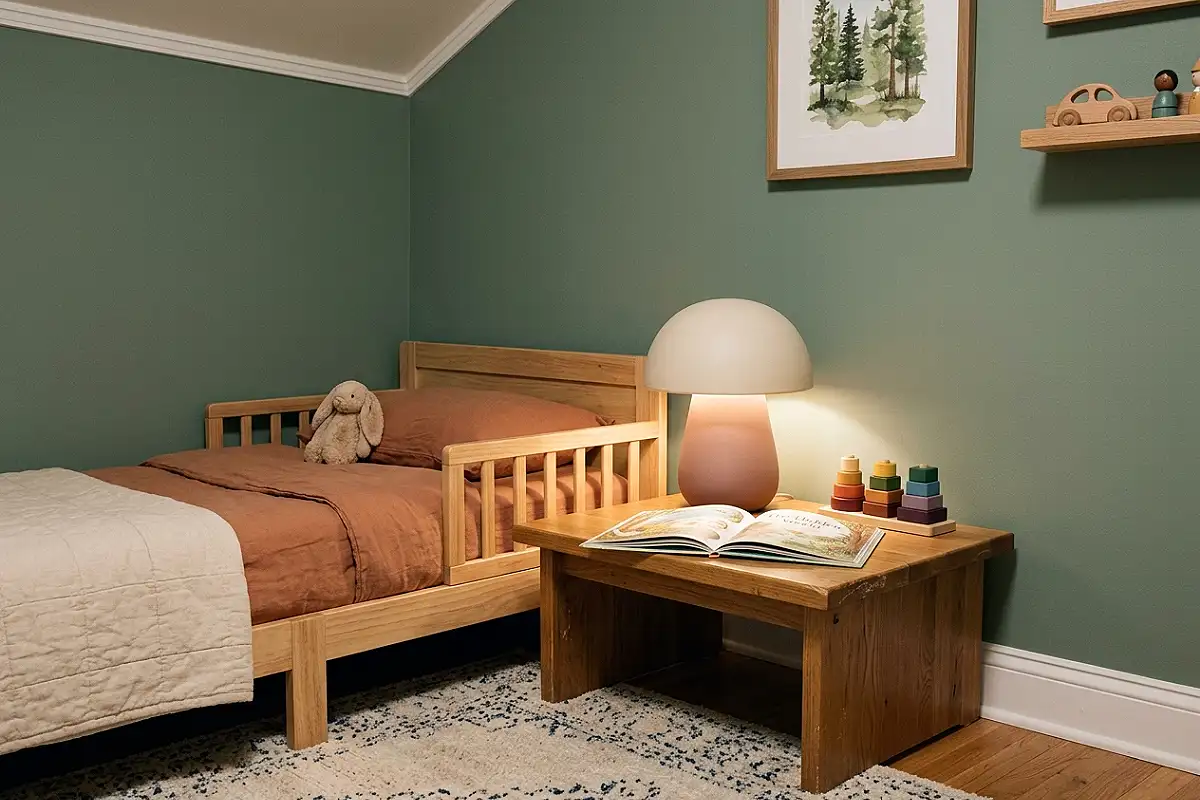
The lamp that makes the room giggle: a table lamp shaped like a forest mushroom — a rounded ceramic or metal cap over a slim stem, in cream and one pastel accent — glowing softly on the nightstand or dresser. Mushroom lamps carry a full storybook world in one object: the child sees a mushroom, the designer sees a perfect small-scale silhouette, and both are right. Choose the mushroom in a matte finish (glossy reads as plastic toy), pair it with a warm low-wattage bulb, and let it be the room’s one obvious toy among otherwise styled objects — that single sweet object among calm furniture is exactly what makes the room feel loving rather than themed.
Pro Tip
Keep the mushroom lamp’s cord tucked behind furniture with a cord cover — curiosity and dangling cords are childhood’s oldest collision, and a fixed cord channel turns the lamp from hazard into heirloom.
Nursery Rhyme Print Set
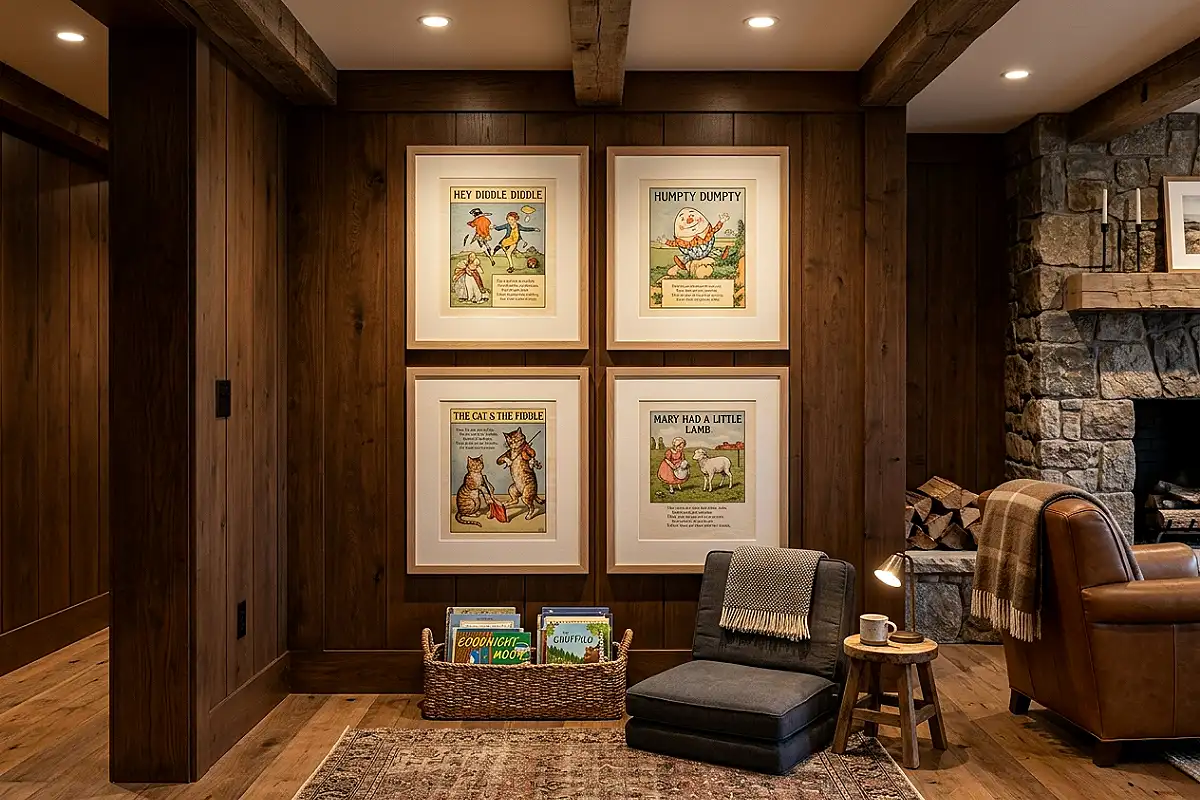
The literary wall: a set of vintage-style nursery rhyme posters — Hey Diddle Diddle, Twinkle Twinkle, the quiet rhymes — in soft illustrated editions, framed and hung in a small gallery near the reading corner. Nursery rhyme prints do something sweet no generic art achieves: they put the room’s stories on the walls, and every framed rhyme becomes a bedtime invitation. Choose illustrated editions in muted tones (modern pastel reprints of the classics exist in dozens of sets), frame the whole set identically, and arrange them in a tight square or row near where you actually read — the proximity is the point. By the time the child can read, the wall has quietly taught them half their library.
Pro Tip
Use UV-filtering glass on nursery rhyme prints hung where daylight hits — storybook illustrations fade fastest in morning sun, and UV glass keeps the rhymes’ pastel tones from washing out over childhood.
Paper Flower Wall
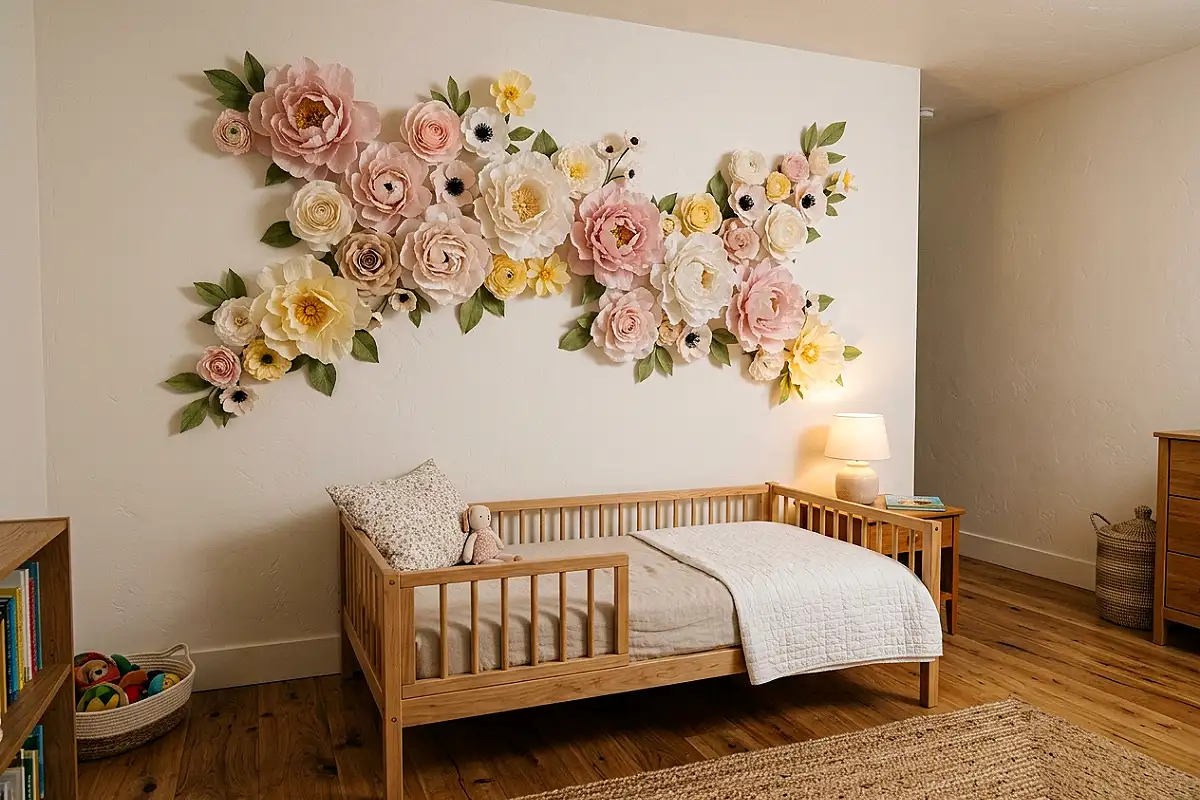
The handmade wall that stops every visitor: oversized paper flowers — layered tissue blooms in blush, cream, and butter — arranged across one wall or clustered in one corner like a garden that grew indoors. Paper flowers deliver maximum tenderness for minimum money, and their handmade irregularity is the charm: no two blooms match, and the wall looks like it grew rather than was decorated. Build them yourself (the technique is simple: layered tissue circles pinched at the center) or buy a premade arrangement and add handmade ones to it — the mix always reads better. Hang them at varying sizes, let one trail toward the bed, and the room gets its storybook moment.
Pro Tip
Fluff tissue blooms outdoors or over a sheet before hanging — tissue paper shedding is guaranteed, and pre-fluffing away from the room means the flower wall arrives dust-free instead of sprinkling confetti onto bedding for a week.
Felt Letter Garland
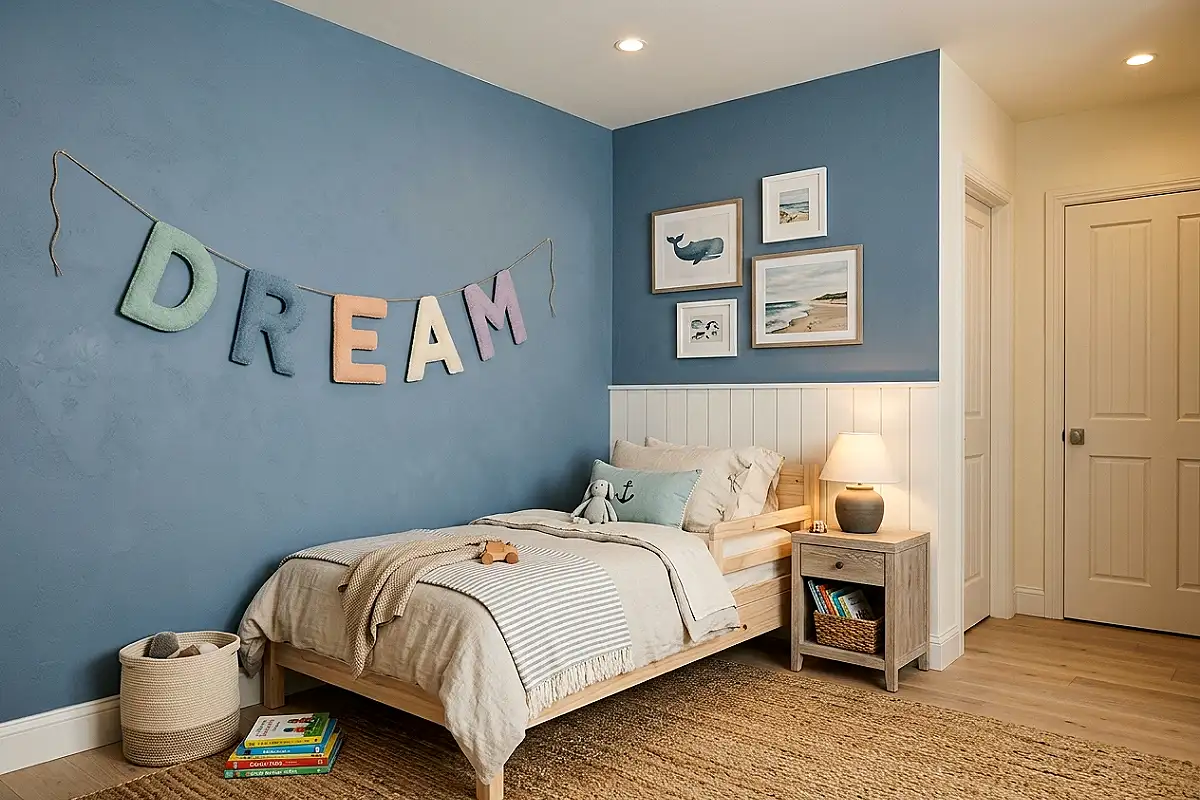
The wall spelling exactly what the room is about: a felt banner of letters — a name, “LOVE,” “DREAM BIG” — in soft pastel felt with contrasting stitching, strung across the wall above the bed. Letter garlands personalize the room in the sweetest possible fabric: felt letters are soft to the touch, gently dimensional, and handmade-looking by nature. Choose letters about six inches tall (smaller reads as clutter, larger reads as signage), string them on natural twine with a slight catenary curve, and match the felt tones to the room’s pastels so the message feels sewn into the decor rather than taped onto it. It’s the room’s greeting card, permanent.
Pro Tip
Cut a paper template of the letter spacing before threading felt — felt garlands droop unevenly when letters crowd, and a paper dry-run on the floor guarantees even spacing before any felt meets needle.
Toy Car Display Strips
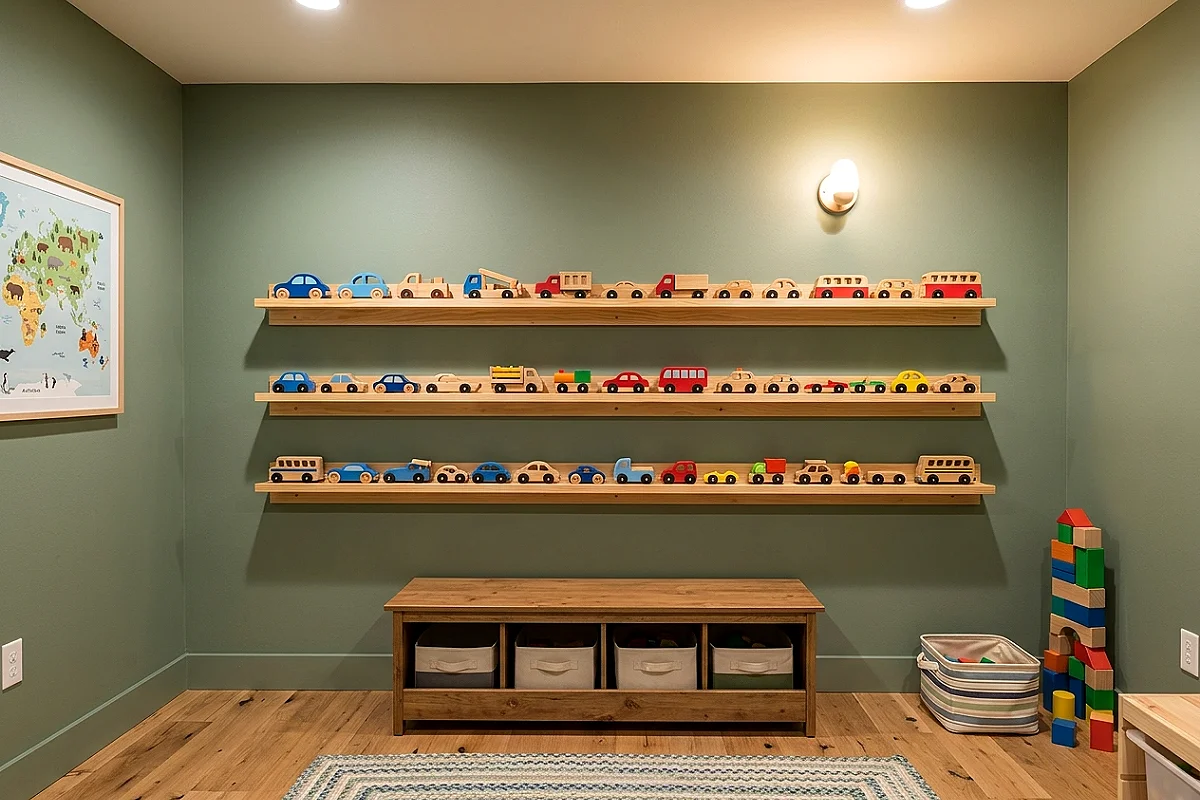
The wall that turns a car collection into an exhibit: slim wooden ledge strips mounted along the wall, holding the child’s toy car fleet in neat racing rows — every car visible, every car reachable, zero floor clutter. Car shelves give the cute room its boyish-sweet moment: the organized fleet reads as a tiny museum, and children treat displayed collections with surprising respect. Mount two or three strips in parallel (parallel rows turn fifty cars into an installation), keep ledge depth to a car and a half, and paint the strip fronts in the room’s pastel so the display feels styled rather than shelved. The cars become the room’s color collection — and what collection is cuter than fifty tiny cars?
Pro Tip
Add a half-inch front lip to each display strip — toy cars are grabbed, not gently lifted, and a lip stops the enthusiastic grab that sends a favorite car skittering off a shelf and under the bed forever.
Dollhouse on Display
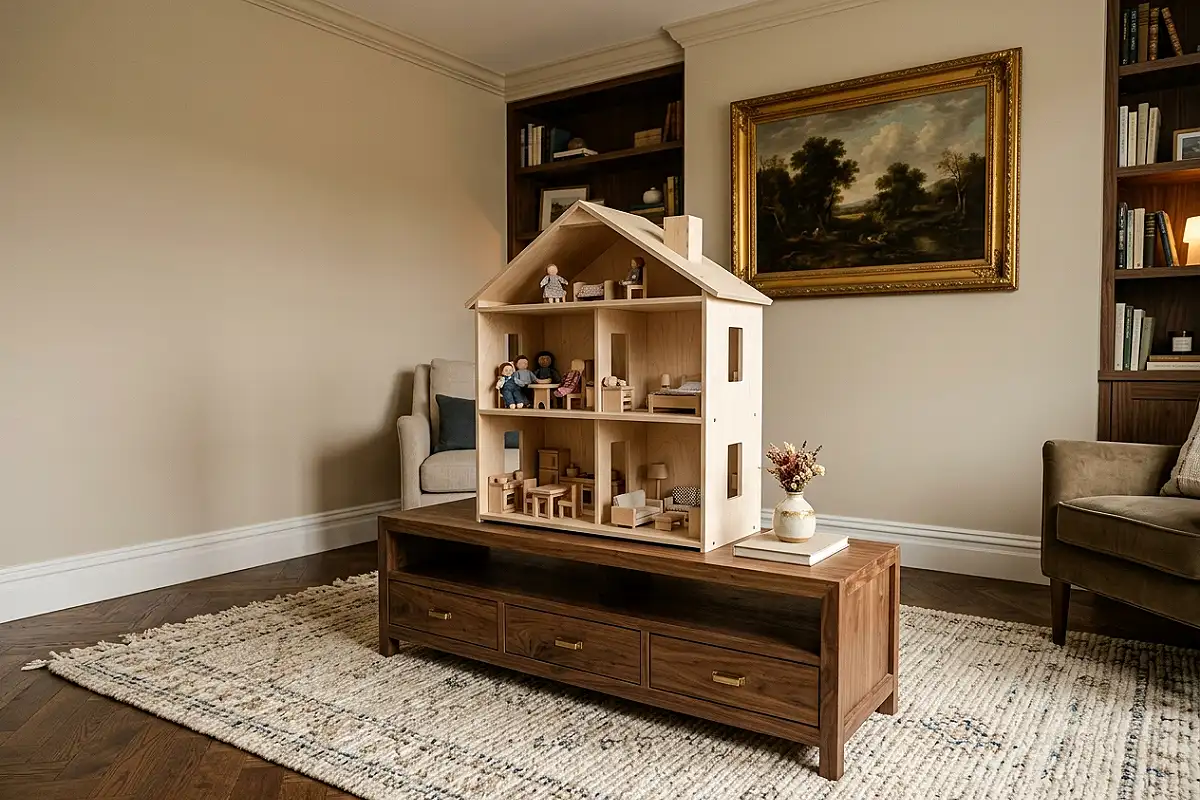
The heirloom-in-progress: a beautiful wooden dollhouse — a little two-story with working doors — placed on a sturdy shelf or stand where it’s both toy and furniture centerpiece. Dollhouses are the cute room’s ultimate object: they’re a room inside the room, a daily play world, and a piece the family keeps forever. Choose the dollhouse in natural wood with simple detailing (elaborate Victorian kitsch fights a styled room; clean wooden lines complement it), set it where daylight reaches its little windows, and let the child furnish it gradually — each new miniature a small event. Photographed by afternoon light, a wooden dollhouse on a shelf is the single most charming still-life a kids’ room offers.
Pro Tip
Dust dollhouse interiors with a soft makeup brush — tiny rooms collect dust in corners vacuum tips can’t reach, and a soft brush clears the miniature furniture without launching the miniature lamps onto the floor.
Twenty-Two Details, One Beloved Room
The through-line of every idea above: sweetness in small doses, inside a calm frame. A room with a ruffled duvet, one garland, a plush hammock, and a wall of watercolor animals is the room children ask to stay in — not because it’s loud, but because every corner feels chosen with love. Keep the base quiet, let the details speak softly, and the room will stay cute long after trends move on: handmade warmth never goes out of style.
Frequently Asked Questions
How do I keep a cute kids’ room from looking cluttered?
Work from a calm base — soft neutral walls, light wood, uncluttered floor — and add cute in layers of details, never surfaces. The rule of three: pick three sweet statements (a garland, one textile moment, one display wall) and let everything else stay quiet. Cute details multiply charm; cute surfaces multiply noise.
What colors work best for a cute kids’ room?
Muted pastels layered on warm white: blush pink, butter yellow, sage green, powder blue, and cream. The trick is choosing pastels with a touch of grey in them — dusty versions of each color read as styled, while saturated candy versions read as a party store. One pastel family per room keeps everything harmonious.
What ages are cute room ideas suitable for?
Roughly two through nine — the sweet spot where storybook details genuinely delight. Most elements (watercolor art, garlands, plush hammocks, train tables) grow out gracefully by swapping bedding and wall art as the child ages, while furniture pieces like dollhouses and tea sets often last a generation.
Can I do a cute kids’ room on a budget?
Cute rooms are among the most budget-friendly to style: paper flowers, felt garlands, printed art, and glow decals cost very little and deliver enormous charm. Save real budget for the pieces that carry daily use — the bedding, the dollhouse, the train table — and DIY the wall details, which are also the most Pinterest-worthy.
Do cute room ideas work for boys’ rooms?
Absolutely — cuteness is about warmth and story, not pink. Swap the palette to sage, butter, and sky blue, and choose subjects boys love: watercolor dinosaurs, train displays, car collections, mushroom lamps in forest greens. The details work identically; only the color story changes.
How do I keep cute textiles clean in a kids’ room?
Choose washable at the moment of purchase: cotton gingham with removable covers, acrylic jars instead of glass, and felt pieces that shake clean rather than wash. Machine-wash ruffled bedding inside pillowcase-style covers on cool cycles, and keep one spare set of the room’s signature textiles so a juice incident never breaks the look.