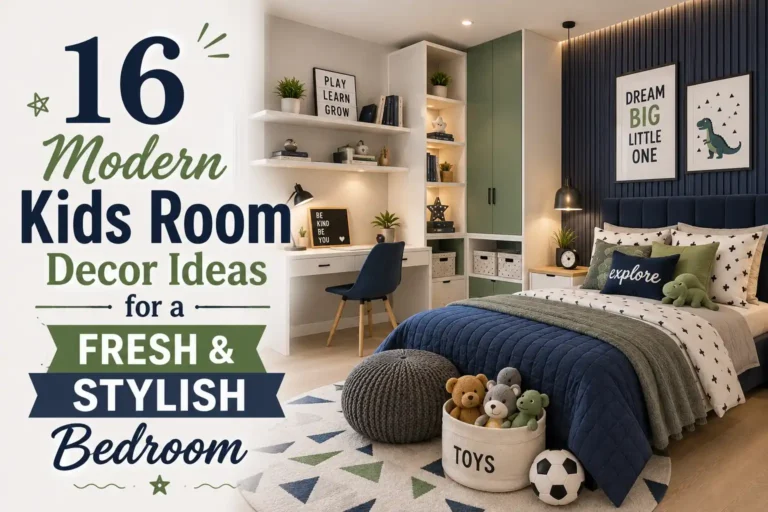
20 Kids Room Decor Ideas for a Fun & Stylish Space
There’s a myth in kids’ rooms that fun and stylish are opposites — that a playful room must be a carnival of licensed characters, and a stylish room must be a beige showroom with an off-limits sign. The truth, as any designer with children will tell you, is that the best kids’ rooms borrow from the adult playbook: calm bones, honest materials, good lighting — and then they let the child’s world explode inside that frame. A room with a beautiful canvas canopy over a simple white bed is instantly playful and instantly timeless. A room wallpapered head to toe in cartoon trucks is both things at six and nothing at ten.
The formula this list follows is simple: seventy percent grown-up bones, thirty percent kid magic. The bones — the paint, the bed, the storage, the lighting — are chosen to last a decade. The magic — the teepee, the mural, the cloud light, the floor cushions — is where childhood gets to live. When your child outgrows the magic, you swap the magic, and the room grows with them. These twenty ideas cover every corner of that formula, from the walls to the last toy bin.
Two-Tone Painted Walls
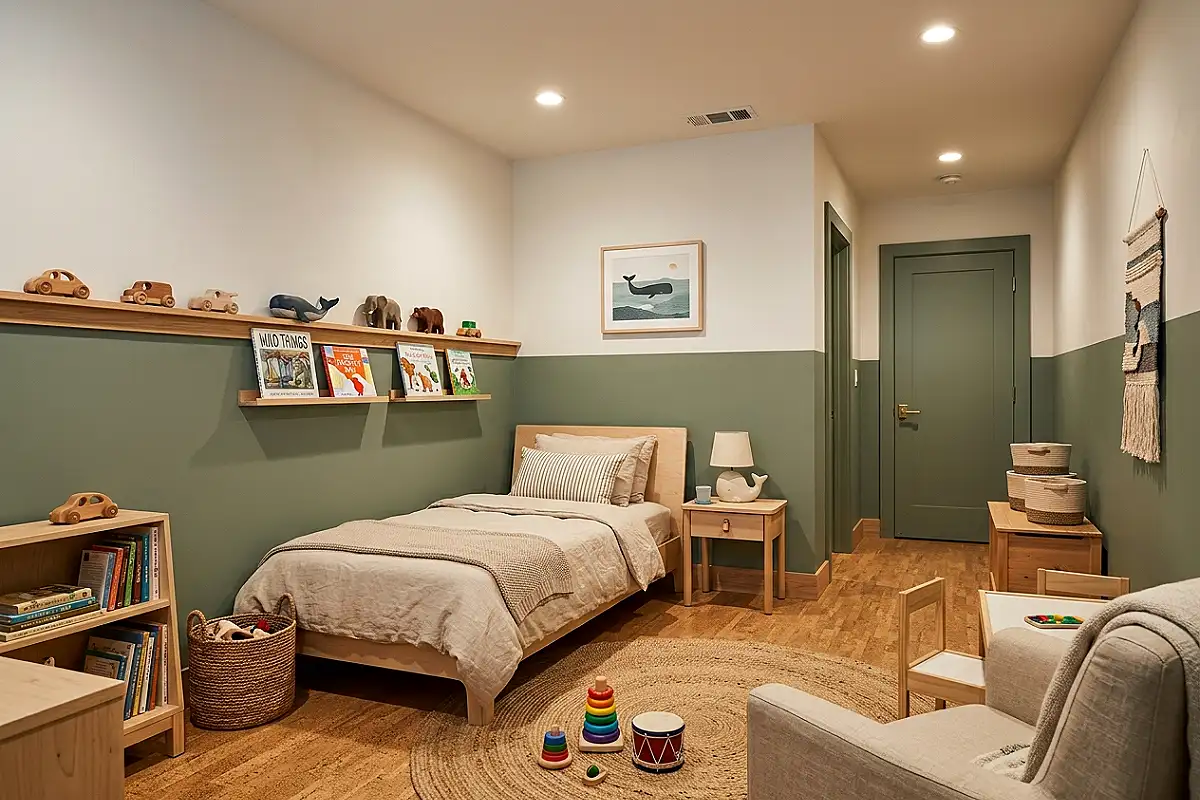
The paint trick that makes kids’ rooms both playful and polished: a horizontal color band across the lower half of each wall — a cheerful dusty blue, sage, or terracotta — with soft white above the band’s crisp line. The band lands at roughly chair-rail height, which psychologically anchors the room at the child’s level, and the white above keeps the ceiling bright and the room feeling airy. The band hides scuffs (the zone toddlers touch most), and the whole scheme survives the transition to a teenager: lower the furniture, change the band’s color, done. Choose a washable eggshell for the band — matte shows marker handprints within a week.
Pro Tip
Tape the band’s top line with painter’s tape over fully cured lower paint — painting a band means two passes at one seam, and fresh-paint edges pull at tape; a two-day wait between coats keeps the line razor-straight.
House-Frame Bed
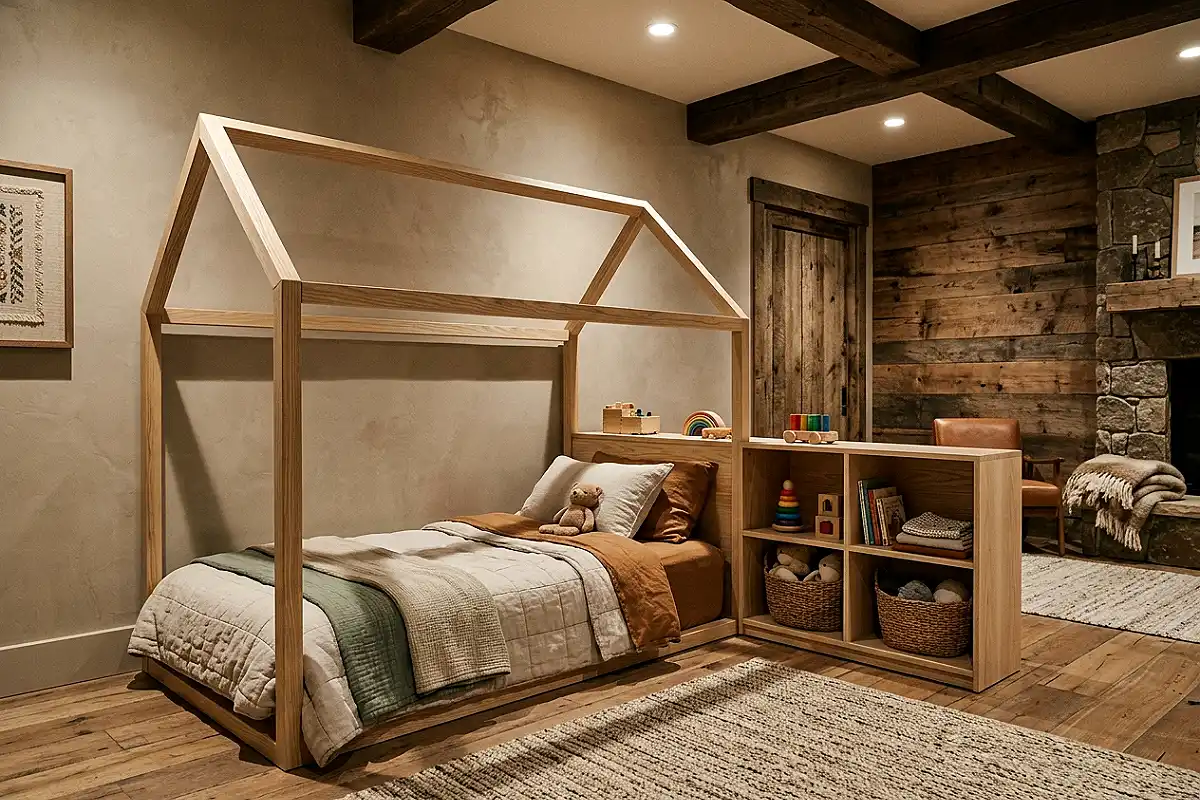
The bed that turns sleep into storytime: a low platform bed under a simple house-shaped frame — peaked roof line in natural wood, no walls, just the silhouette of a tiny house. Children climb into a house-frame bed differently than into a bed; they enter their own little home, and the frame becomes a stage for draped fabric, string lights, and cushions. Choose the frame in unfinished oak or birch (natural wood wears a childhood gracefully; painted frames chip), keep the bedding simple white so the frame reads as the star, and watch the bed stay relevant from toddler to tween — the frame grows up as the child does.
Pro Tip
Anchor the frame to the wall or floor plate with its provided hardware — house frames are climbed, not just slept in, and a climbed frame that isn’t anchored is a tipped frame waiting to happen.
Floor Teepee Corner
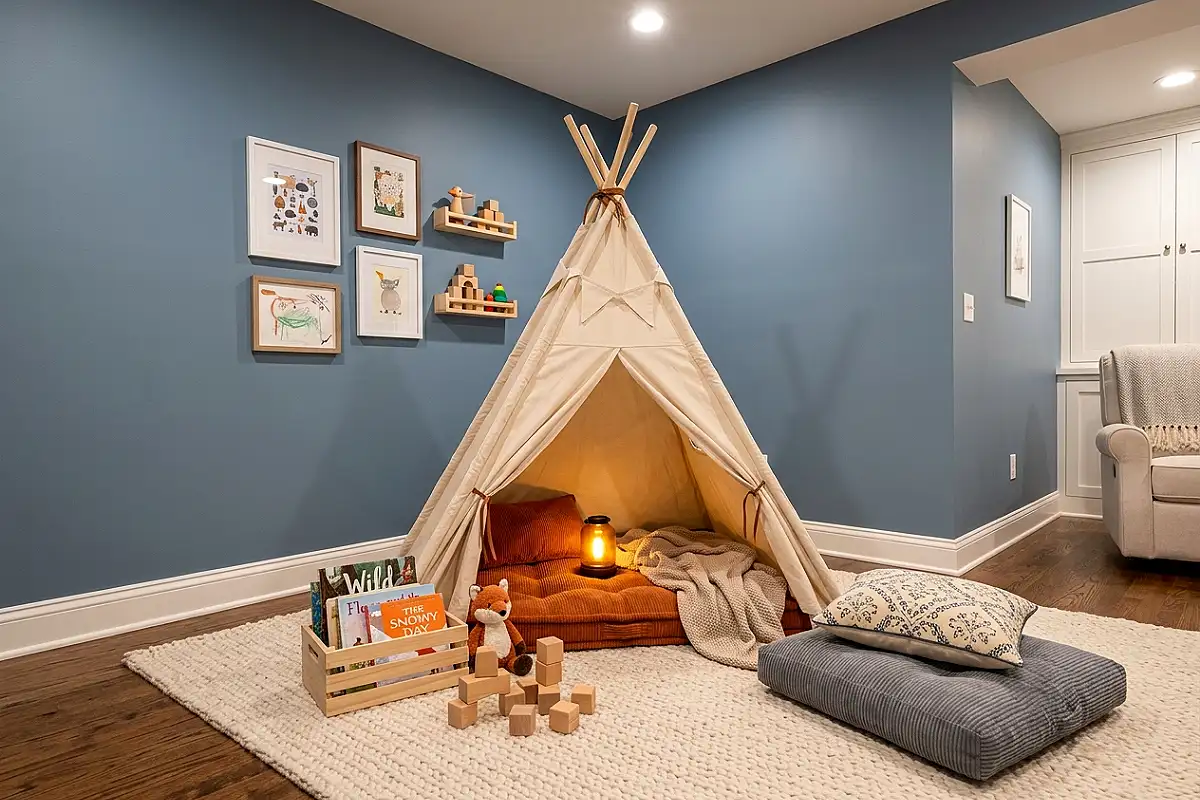
The classic that never fails: a cotton canvas teepee in the room’s corner, propped open with a floor cushion and a small lantern inside, becomes the child’s private hideaway — the one spot in the house that belongs only to them. Choose cotton canvas in white or natural (heavy enough to hold its shape, breathable, washable), skip the polyester versions that collapse by afternoon, and style the teepee with a string of battery fairy lights inside for reading. The teepee’s genius is scale: at floor level, it gives a small person their own architecture, and it photographs as the single most charming corner in the house.
Pro Tip
Only use battery-operated fairy lights inside a teepee — any light that runs hot or plugs in near fabric, cushions, and a sleepy child is a fire risk, and battery sets make the lantern glow safely for months per charge.
Pegboard Toy Wall
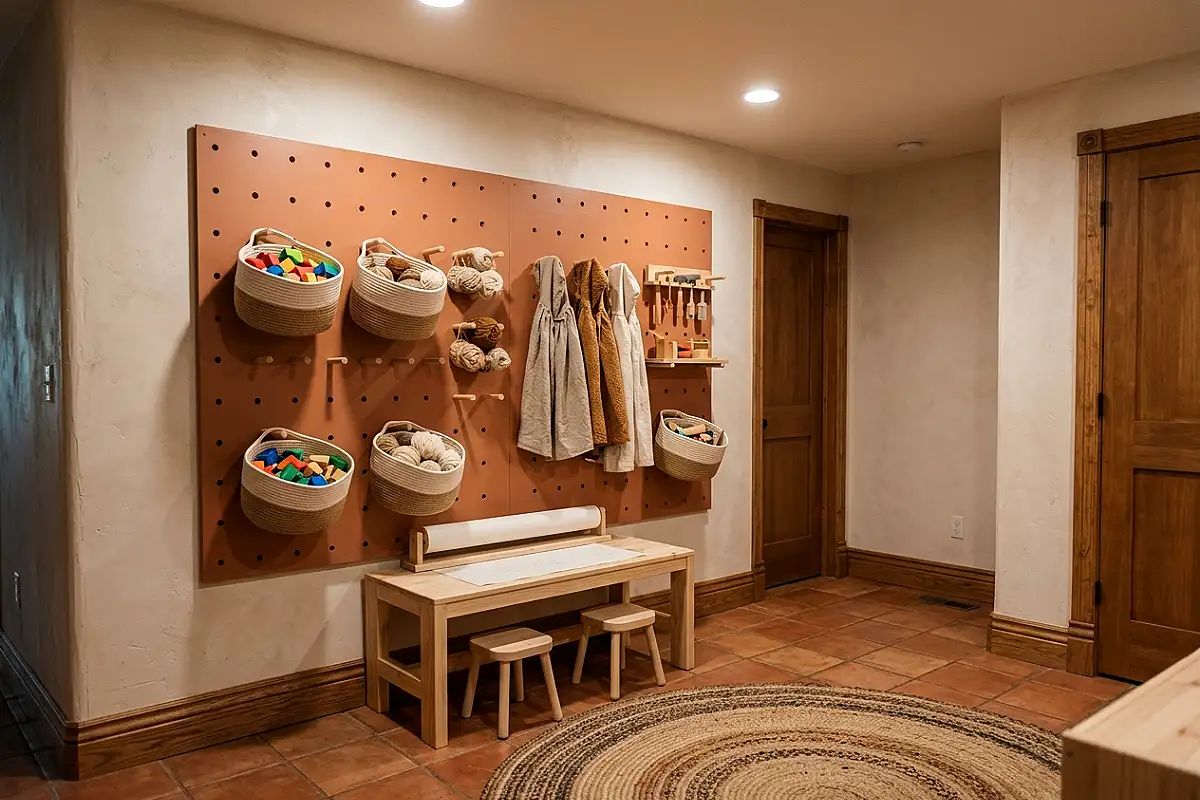
The organizer’s dream: a pegboard panel painted in the room’s accent color, fitted with pegs and small hooks that hold toy baskets, jump ropes, art supplies, and dress-up hats in plain sight. Pegboards turn the messiest category — small loose toys — into a grid the child can manage: everything has a hook, and every hook is at the child’s own height, which makes tidying a game of return rather than a chore. Mount the board above a low shelf (the shelf catches what the hooks don’t hold), and paint the board a tone that makes the toys pop against it — a sage board makes bright plastic toys look intentional.
Pro Tip
Screw pegboards into wall studs or use toggle anchors, never drywall plugs alone — a pegboard loaded with toys carries real weight, and toys are dropped onto hooks daily, which adds dynamic load no wall plug handles for long.
Peg Rail Book Display
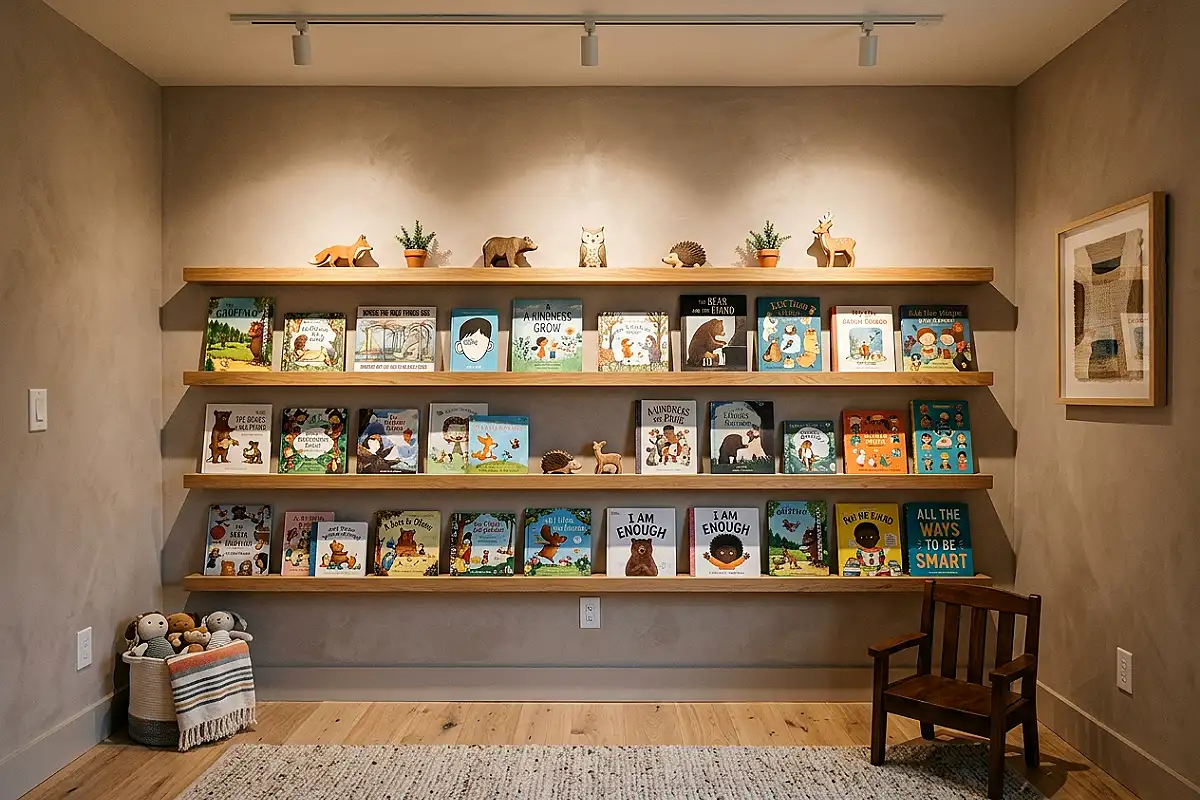
The display every child’s book collection deserves: a horizontal oak peg rail mounted along the wall, its wooden pegs holding books forward-facing by their covers. Forward-facing display is the reading trick children’s librarians swear by — kids choose books by cover the way adults choose by title, and a cover they can see is a book they’ll ask for. Mount the rail at the child’s eye level (roughly forty inches from the floor for the early years), leave room for the rail to grow upward with the child’s height, and let the covers themselves provide the room’s color. Peg rails cost almost nothing and are the highest-reading-per-dollar item in any kids’ room.
Pro Tip
Space pegs at twelve-inch intervals rather than the board’s default — closer pegs crowd the covers and make extraction a tug-of-war, and twelve inches gives each book room to be grabbed, displayed, and returned by small hands.
Chalkboard Paint Panel
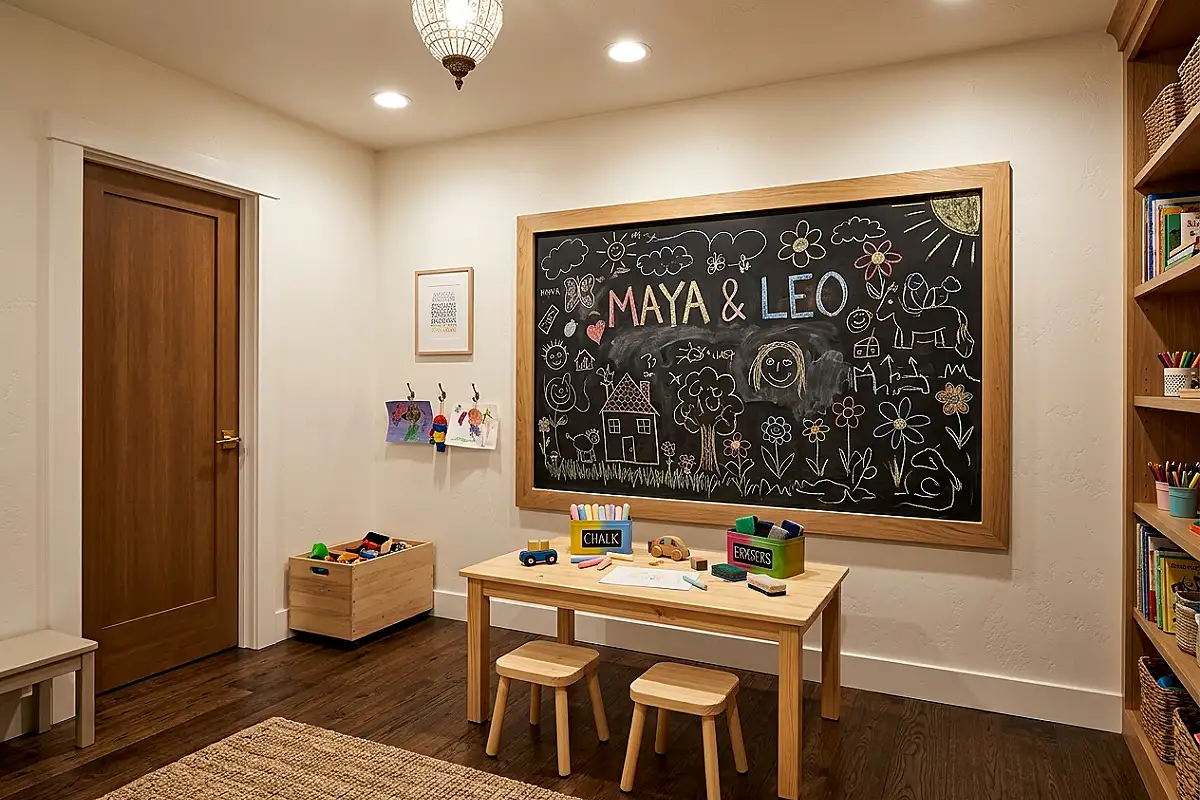
The wall that lets the child design the room: a panel of chalkboard paint — a single door-sized rectangle, framed with thin oak trim so it reads as furniture rather than a school wall — where the child’s drawings become the room’s rotating wallpaper. The trim does the styling work: without a frame, chalkboard paint reads as institutional; with oak framing, it reads as a commissioned feature. Place the panel where the child actually draws (near the desk, beside the bed), stock it with quality chalk and a small eraser on a peg, and the panel becomes the room’s living art gallery — new art every week, zero wall repairs.
Pro Tip
Apply three thin coats of chalkboard paint with sanding between coats — a single thick coat peels and chips at the edges, and a sanded, multi-coat surface writes smoothly and erases cleanly for years.
Cloud Pendant Lights
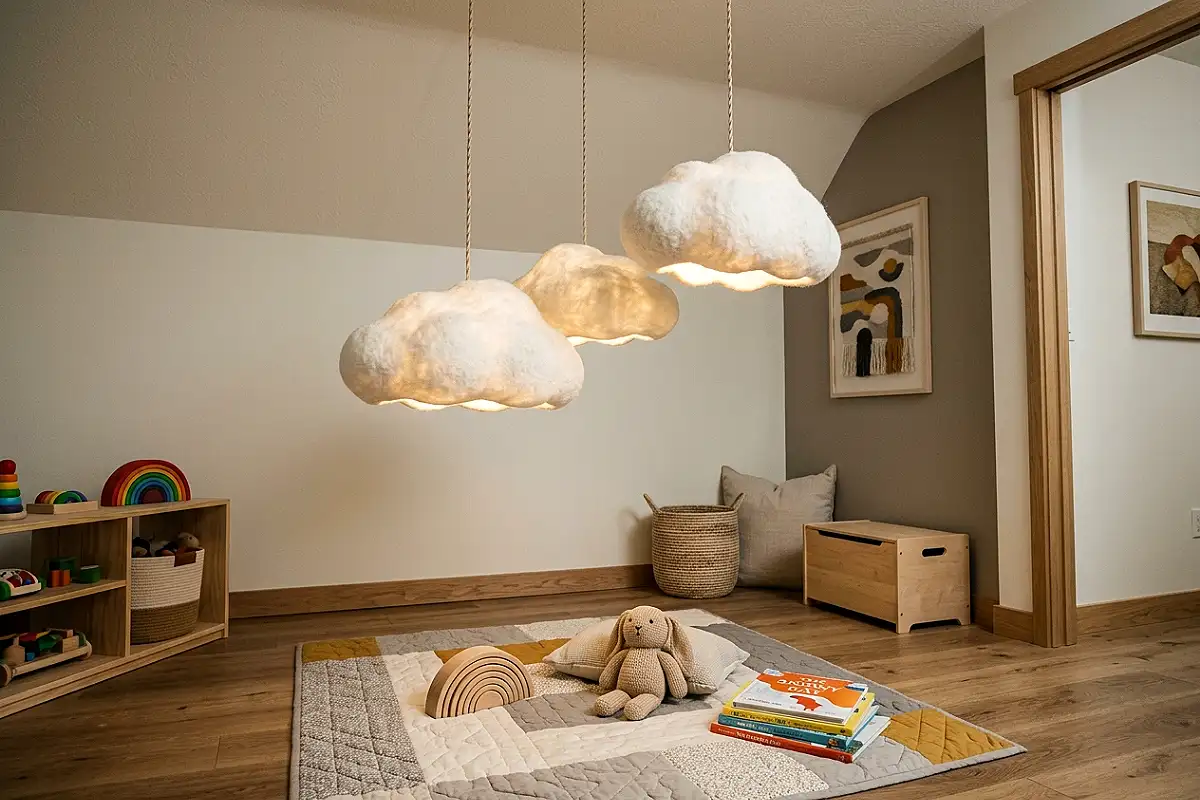
The ceiling moment every kids’ room photoshoot features: two or three felted wool cloud pendants — plump, handmade, softly glowing — hanging at staggered heights over the bed or play zone. The clouds do what no ceiling light manages: they make the ceiling itself playful, at the level the child actually notices, while staying soft, warm, and entirely calm in tone. Felt diffuses the light completely — no bulb visible, no glare, just a wool-wrapped glow — and the handmade irregularity means no two clouds match, which reads as craft rather than catalog. Group odd numbers (three is the sweet spot), and the ceiling becomes a small sky that belongs to the child.
Pro Tip
Hang cloud pendants with cool-running LED bulbs only — felt is wool and wool near heat smells before it smokes; a dimmable LED keeps the cloud glow adjustable from bright play-light to faint night-light.
Floor Cushion Scatter
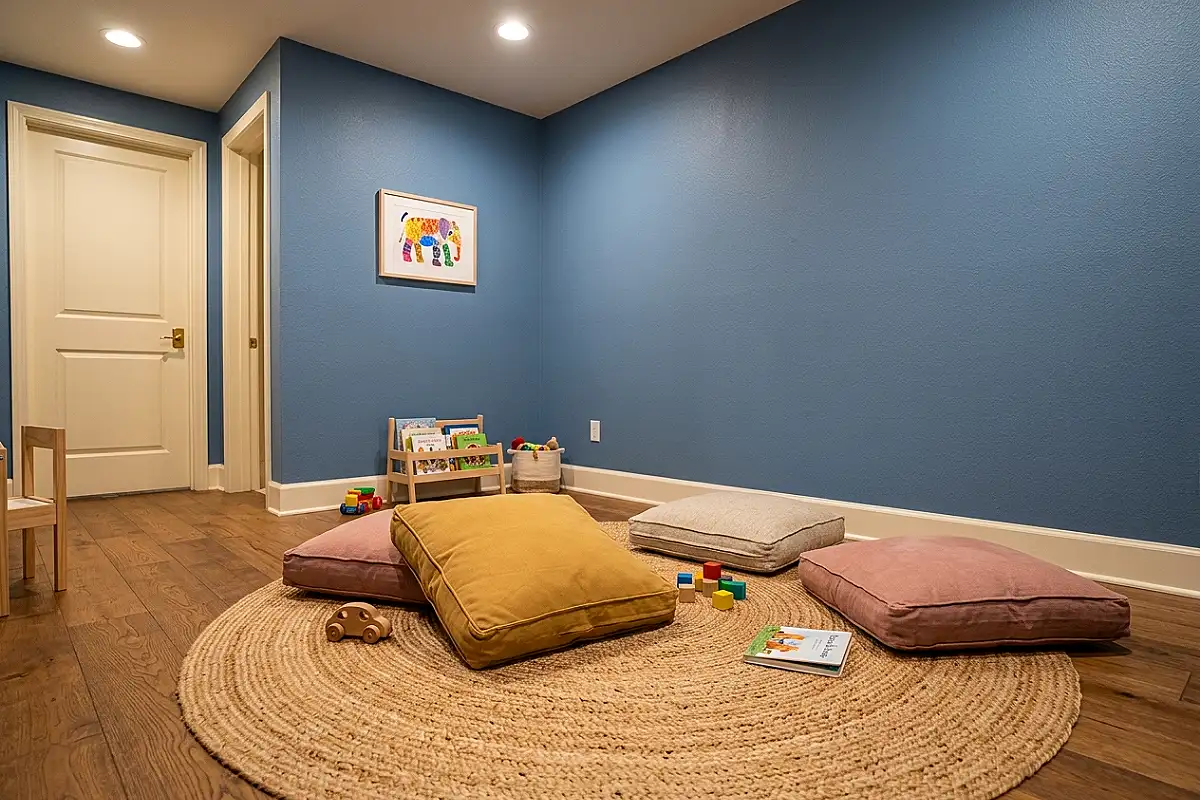
The furniture decision that turns a kids’ room into a playroom without losing its style: a scatter of floor cushions — round, square, and one large pouf — in a coordinated palette (mustard, dusty pink, and oatmeal, or any three tones that echo the walls). Floor cushions invite the actual way children live: on the ground, in clusters, building and rebuilding their own seating. Choose cushions with removable, washable covers (the single most important spec — floor cushions meet juice, mud, and mystery stains daily), and stuff them firm enough to sit on, soft enough to collapse into. When playtime ends, the cushions stack or tuck under the bed — the room’s most flexible furniture dollar spent.
Pro Tip
Place a rug pad under cushions’ favorite spots — cushions dragged daily wear through both their covers and the floor’s finish, and a pad absorbs the friction while quietly keeping cushions from sliding away during build sessions.
Roll-Out Under-Bed Storage
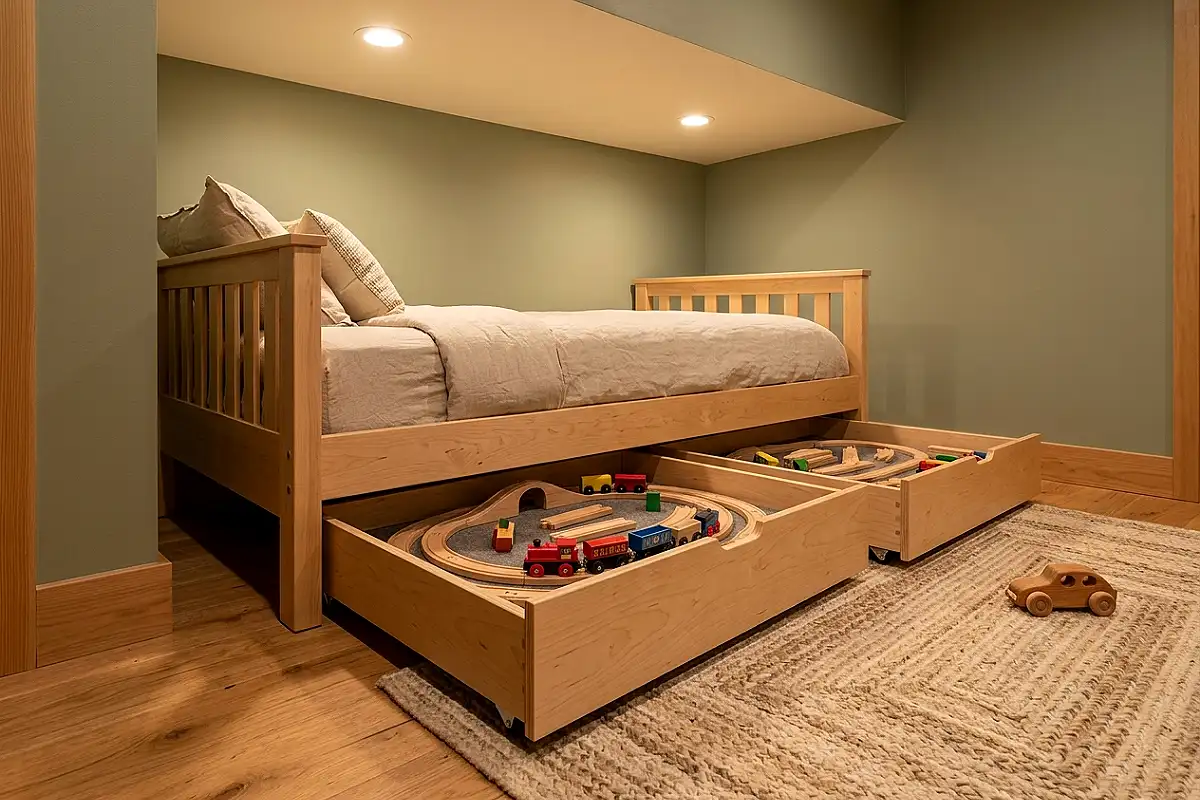
The storage that keeps a kids’ room serene: the bed raised on low feet with room beneath for rolling fabric bins or shallow drawers on casters — the entire toy population’s home, hidden at floor level where it belongs. Under-bed storage is the kids’ room’s secret weapon because it’s at the child’s own height: bins roll out, toys go in, bins roll back — no climbing, no shelves to maintain. Choose bins with rigid fronts (floppy bags lose their shape and refuse to slide), in a neutral tone so the visible edge reads as part of the furniture, and make the rolling ritual part of the bedtime routine — three minutes, one bin, and the room resets itself nightly.
Pro Tip
Measure under-bed clearance with the bed’s feet on, not off — storage bins need the gap plus a half inch of caster height to actually roll, and discovering the shortfall after buying bins is a universal parenting regret.
Framed Kids’ Art Gallery
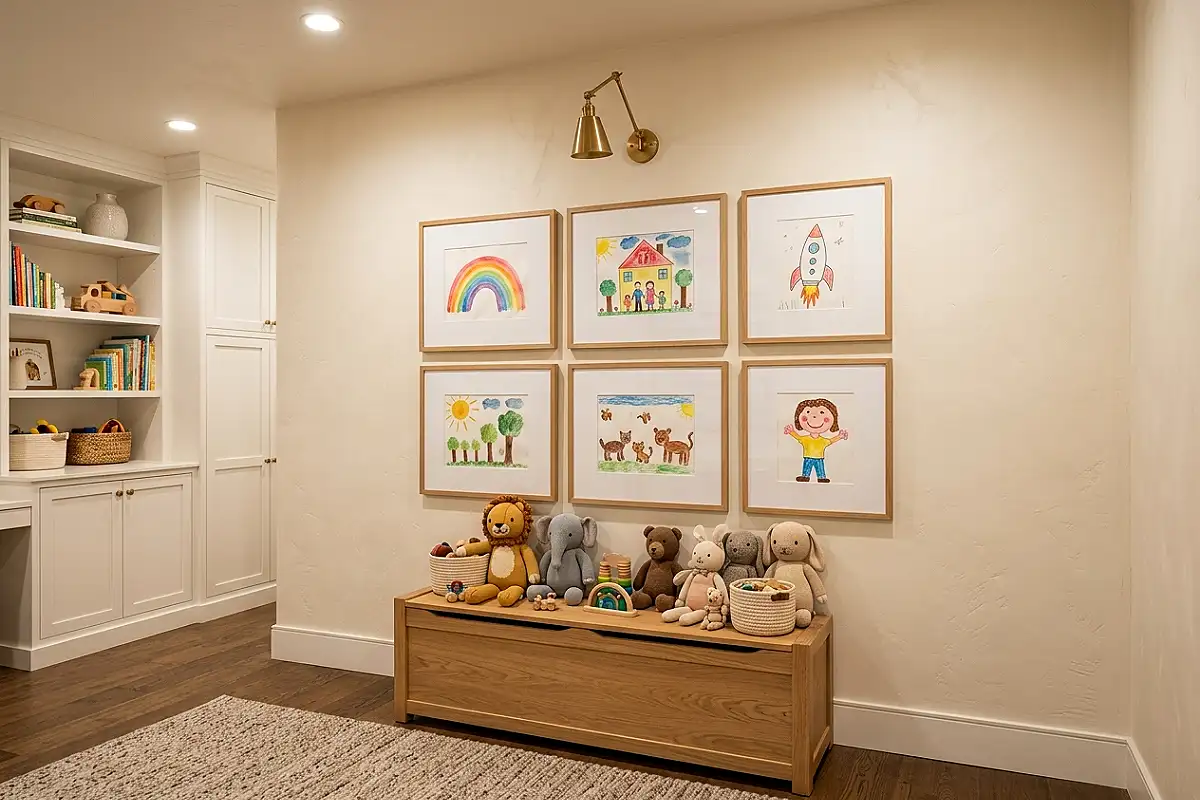
The wall treatment that honors the child’s work like real art: a gallery row of identical slim oak frames, each holding a piece of the child’s own artwork, hung in a loose horizontal line along the room’s mid-wall. The identical frames do the styling — uniformity makes crayon masterpieces read as a curated collection — while the art itself rotates monthly, which is the detail that keeps the room alive: the child’s current phase, in their own hand, on permanent display. Use acid-free mats so the artwork survives framing (children’s work is drawn on paper that ages), and let the child choose which pieces hang next. It’s the cheapest custom art a family will ever own, and it never goes out of style.
Pro Tip
Hang the gallery with clip-in frames or reusable mounting strips — kids’ art rotates constantly, and clip frames make each month’s new lineup a two-minute swap instead of a nail-and-spackle project.
Painted Growth Chart
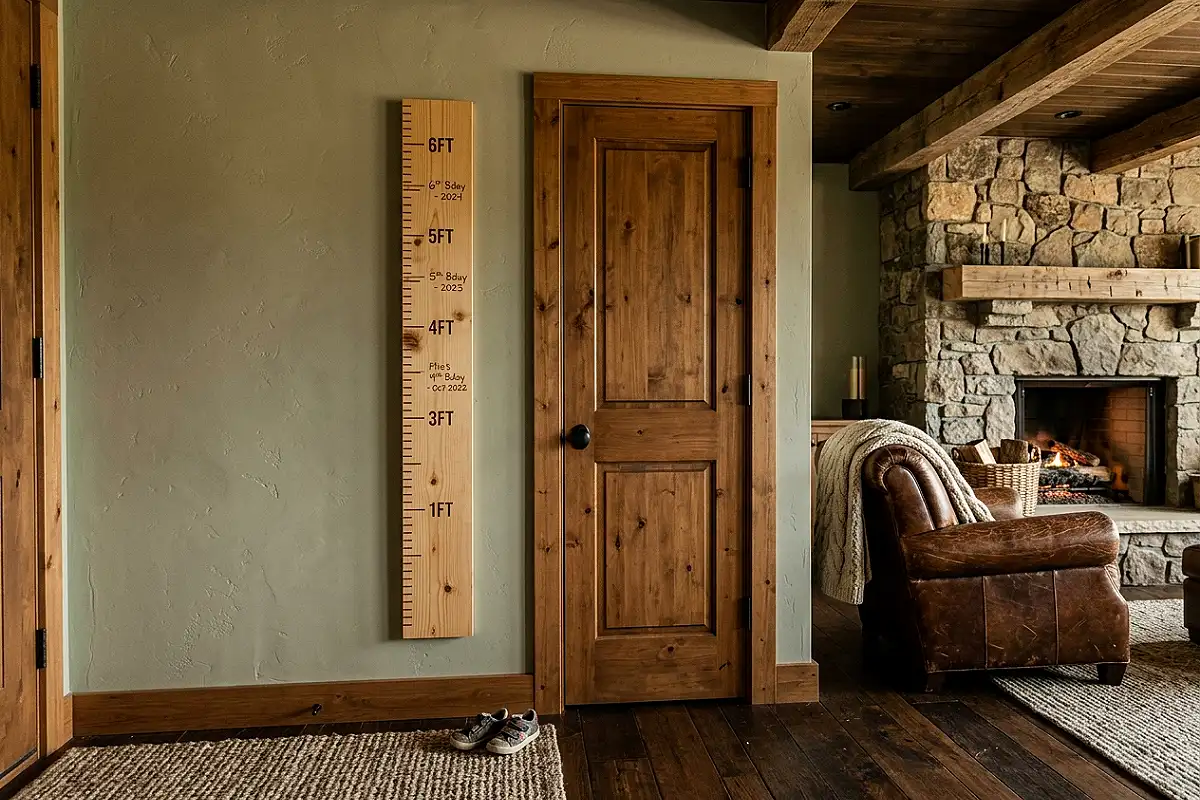
The keepsake wall that doubles as decor: a painted height chart — a vertical column of painted marks or a hand-painted ruler motif — running up the wall beside a doorway or beside the bed, its marks annotated with dates and ages. Growth charts turn a blank vertical surface into the family’s living record, and a painted one (as opposed to a sticker decal) has the permanence that makes it meaningful: paint endures, decals peel. Choose the chart’s tone to match the room’s two-tone scheme, letter the ages in a simple hand style, and photograph each new mark the day it’s made — the wall keeps the history, and the photos keep the moments.
Pro Tip
Measure heights against the chart standing on the same spot each time — carpets compress, shoes vary, and posture slumps; a marked floor spot plus heels-together, straight-posture measuring keeps the chart’s record genuinely comparable year to year.
Basket Wall Pockets
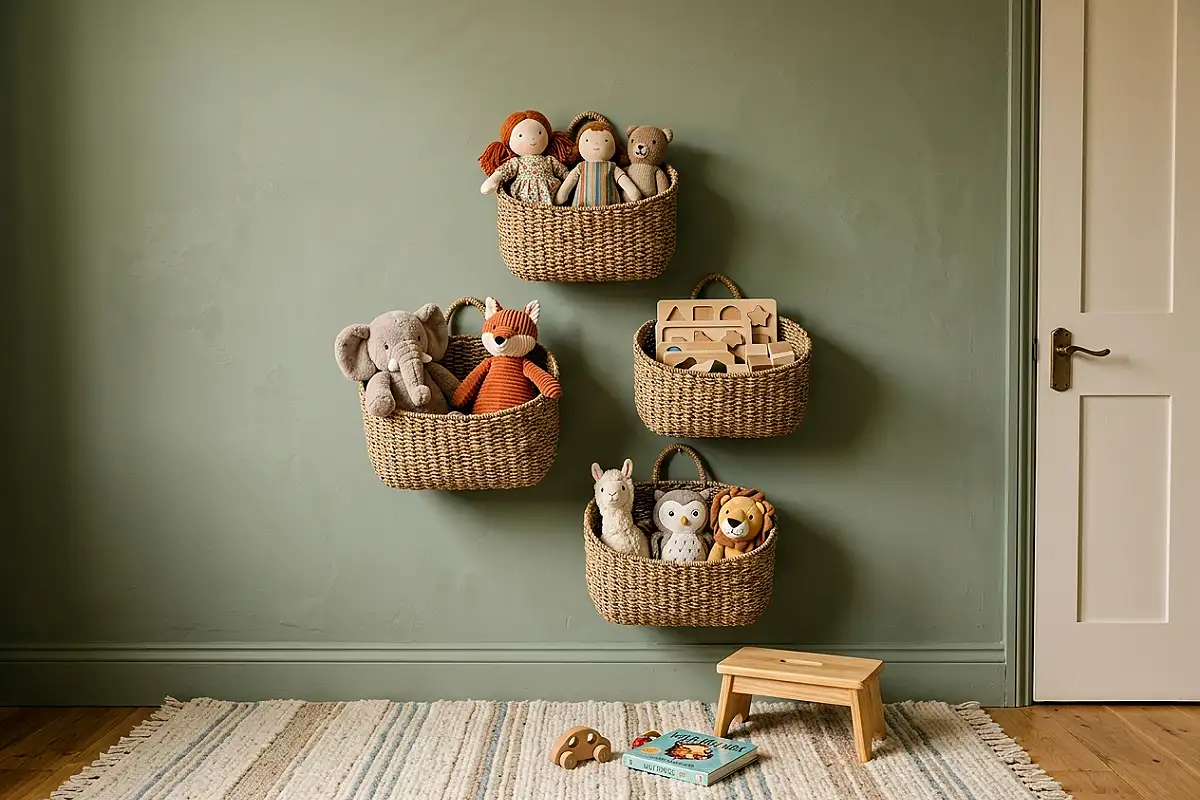
The storage that looks like a market wall: a grid of woven baskets — seagrass, rattan, or wire — mounted across one wall, each basket holding a category of the child’s world: dolls in one, blocks in another, art supplies in a third. The baskets turn storage into display (woven texture is inherently stylish), and the wall-level placement keeps everything visible and reachable — the child sees the block basket, grabs the block basket, returns the block basket. Mount the bottom row at the child’s height and upper rows as display, so the wall works as both system and art. Baskets breathe — fabric bins sweat; seagrass doesn’t — which matters for anything stored long-term.
Pro Tip
Mount wall baskets with brackets sized to each basket’s base, not one bracket type — a bracket too small lets the basket tip when loaded, and toy-weight is front-heavy; a base-sized bracket keeps the load’s center inside the wall.
Toy Rotation Shelf
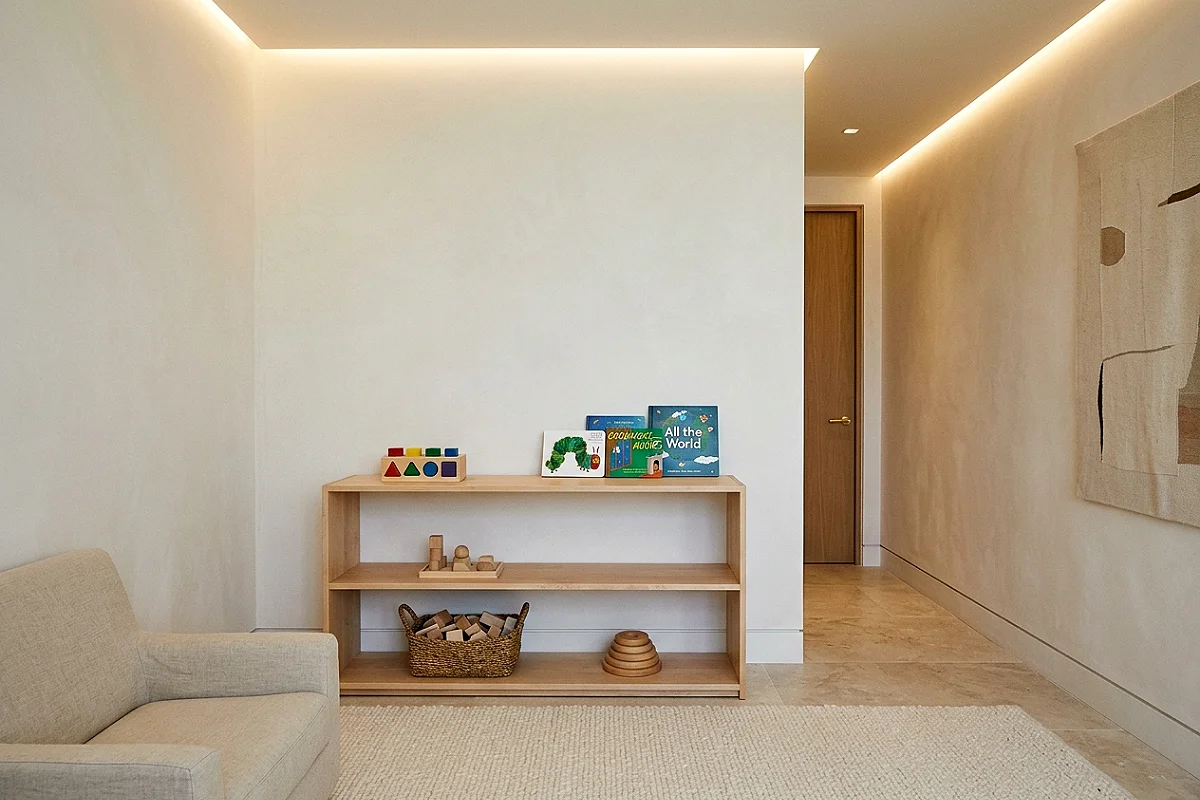
The Montessori secret dressed as furniture: a low shelf system holding only a quarter of the household’s toys at any time, the rest rotating in from storage monthly — same shelf, ever-changing invitations. The rotation works because children play harder with fewer toys, and a shelf that changes monthly feels perpetually new without buying anything new. Keep the shelf’s styling disciplined: one shelf of books, one of blocks, one of puzzles, one open — and resist the urge to display the rotation stockpiles. The magic of rotation shelves is the emptiness they protect: a shelf that’s only a quarter full looks intentional, and intentional is the difference between a playroom and a storage unit.
Pro Tip
Store rotated toys in labeled, sealed bins under the bed or in the closet — the rotation only works if off-duty toys are truly out of sight, and a labeled system makes the monthly swap a fifteen-minute reshuffle instead of an archaeology dig.
Daybed Reading Nook
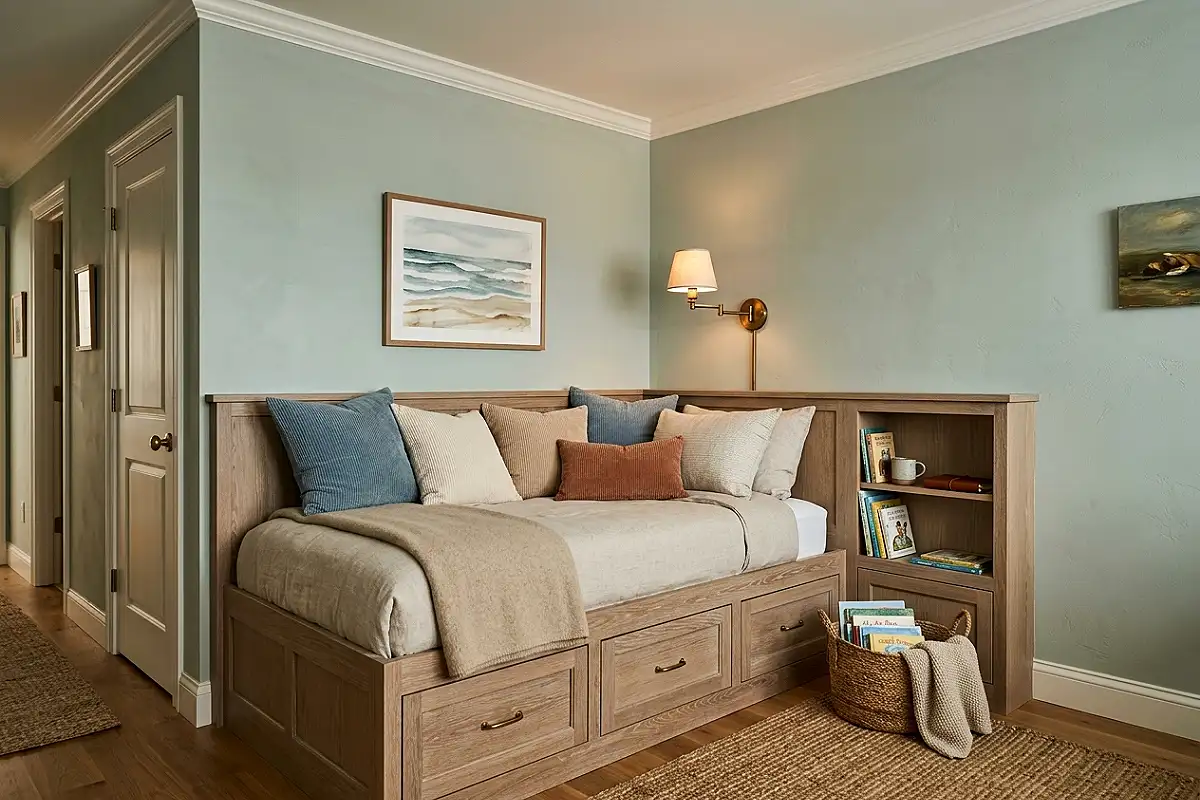
The corner that becomes the child’s favorite room: a narrow daybed — twin-sized, backed against two walls in the corner — piled with cushions and a folded throw, crowned by a wall-mounted reading light. Daybeds are the kids’ room’s most durable furniture investment because they outlive childhood entirely: the daybed that hosted stuffed animals hosts weekend guests at eighteen. Dress it with washable covers and cushions the child can move, keep a small book rail on the daybed’s back wall, and the nook becomes the room’s gravity well — the place the child goes when the world is too much, which is exactly what a good room should offer.
Pro Tip
Add under-daybed drawers when buying — daybeds are the one twin bed where under-storage is almost always free space, and drawers that slide under it quietly double the room’s storage without adding a single visible piece of furniture.
Themed Play Rug Zone
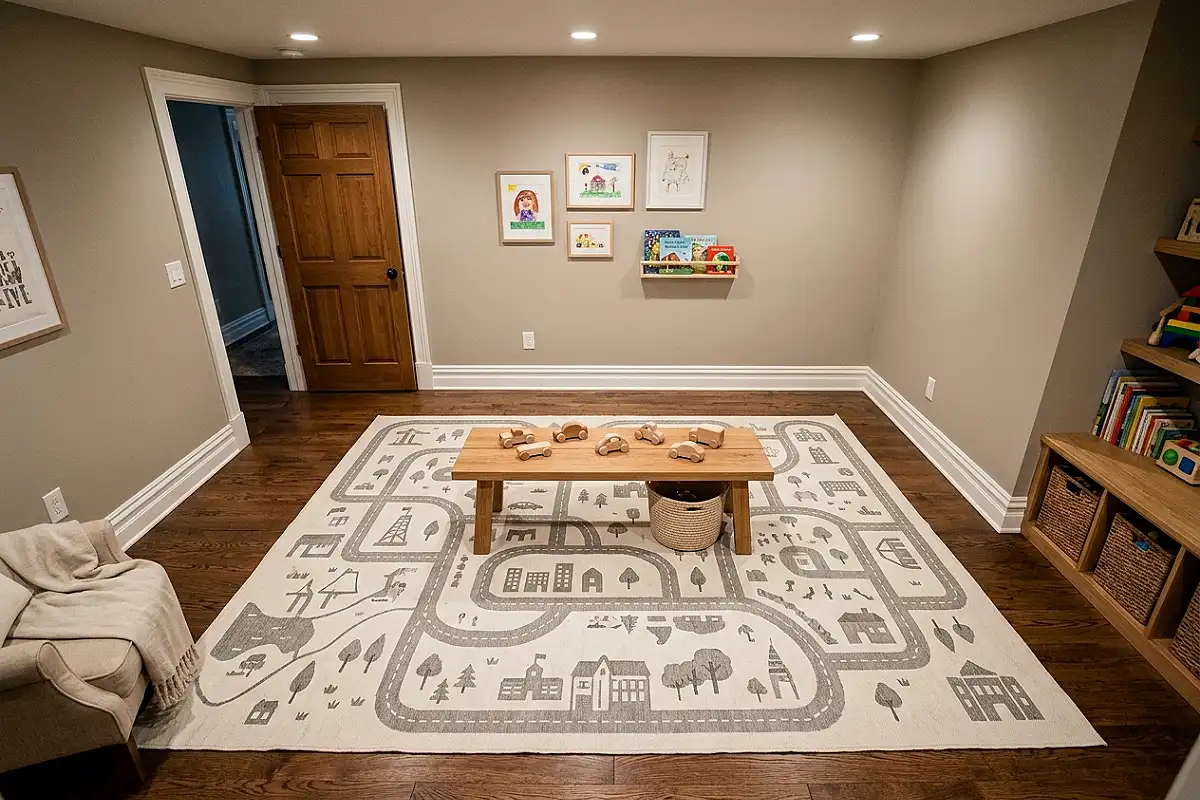
The rug that defines the room’s play geography: a large washable rug with a printed play theme — roads and towns for cars, a meadow for animals, an ocean for ships — laid in the room’s open floor area so the whole center of the room becomes one giant toy. The rug’s theme should be subtle and graphic (flat-printed roads, simple shapes) rather than cartoon-saturated, which keeps it stylish while remaining endlessly playable. Choose machine-washable as the non-negotiable spec — play rugs meet everything — and let the rug’s edges define the play zone: inside the rug, toys are welcome; outside, the room stays tidy. It’s the cheapest way to give a small room a dedicated play floor without building anything.
Pro Tip
Check the rug’s pile height before buying — piles over half an inch trip little feet and trap small toy parts, while low-pile washable rugs stay safe under running feet and release both crumbs and crayon dust in one machine cycle.
Quilted Wall Pocket Organizer
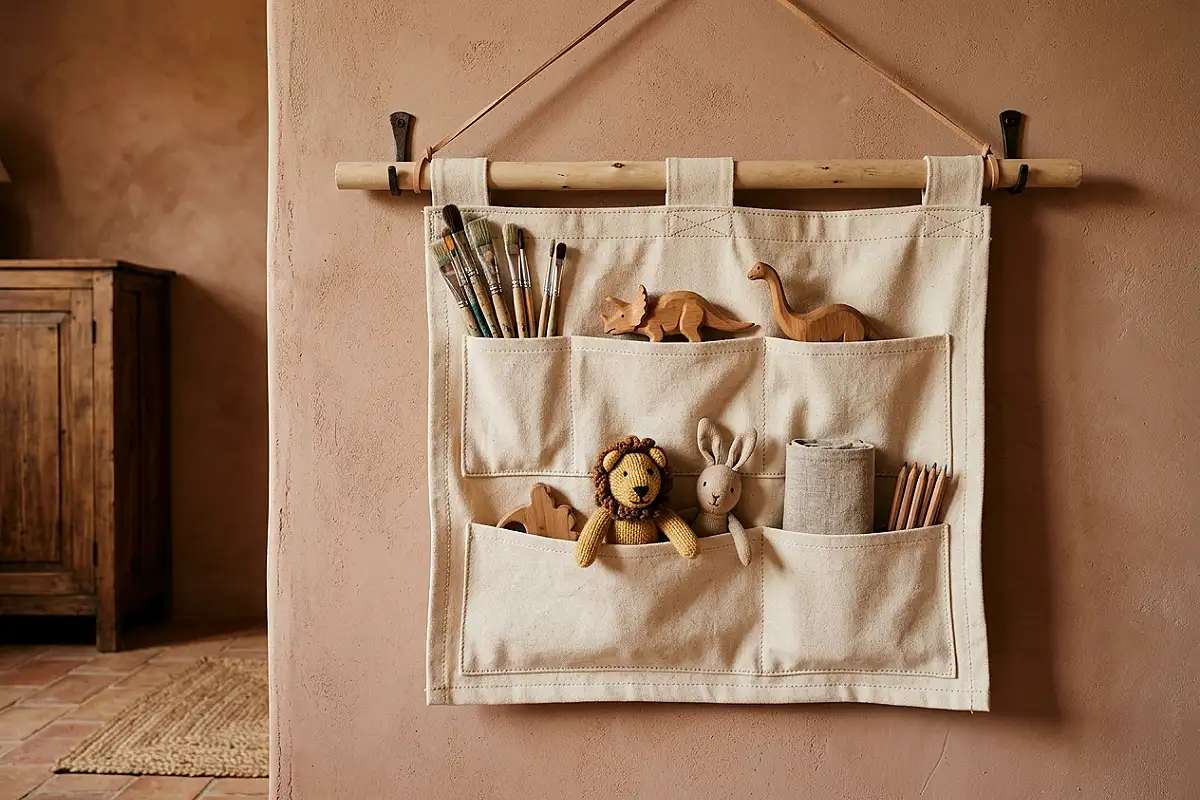
The soft storage for small treasures: a quilted fabric pocket panel — rows of stitched canvas pockets — hung on the wall at the child’s height, each pocket holding a doll, an action figure, a hair bow collection, or tonight’s favorite stuffed animal. The pockets turn the wall into a closet the child can actually use: everything visible, everything reachable, everything home. Choose cotton canvas pockets with firm seams (floppy pockets empty themselves when a doll is pulled out), in a neutral or gently colored fabric that matches the room’s scheme, and hang the panel over a small rug where dropped things land softly. It’s the storage solution small people understand instantly — and understanding instantly is the whole game.
Pro Tip
Distribute a loaded pocket panel’s weight across multiple hooks, not two — a canvas panel full of dolls weighs more than it looks, and multiple hooks keep the panel’s weight off any single anchor point for the years it will hang.
String Light Canopy
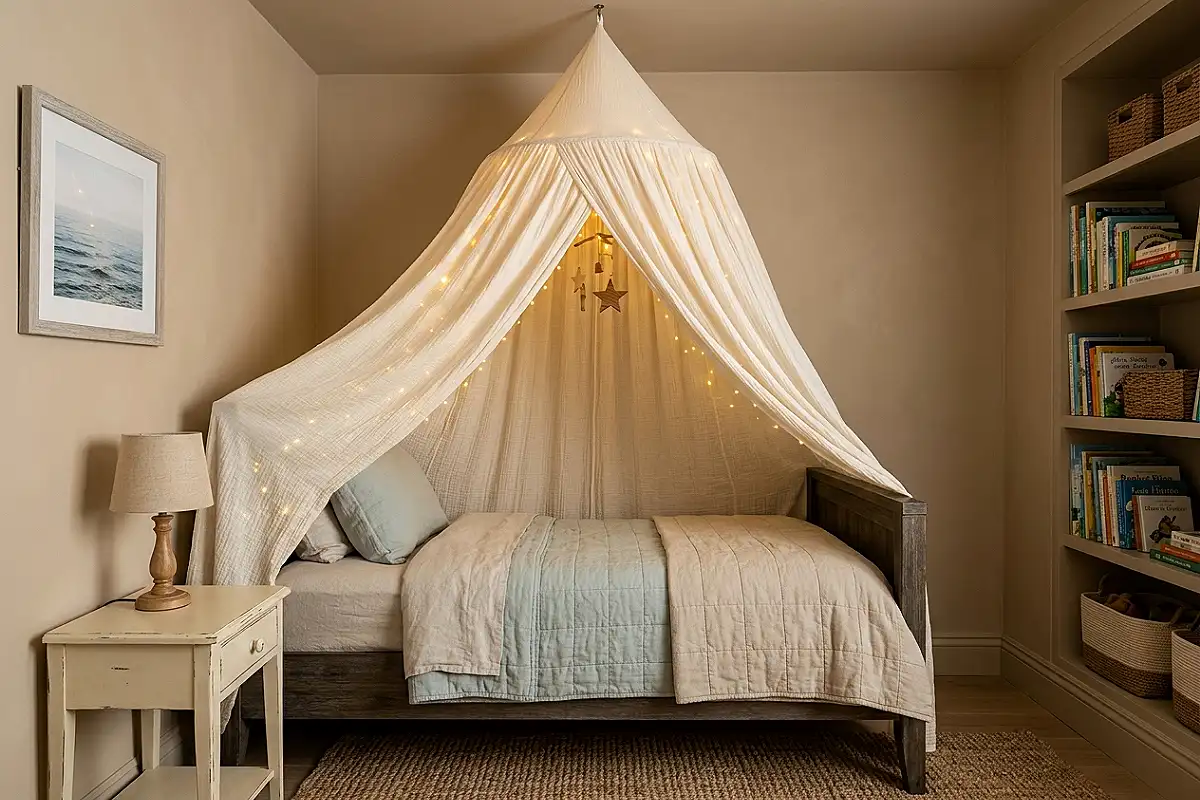
The bedtime upgrade that costs almost nothing: a string of warm-white fairy lights draped inside a bed canopy or along the room’s ceiling perimeter, dimmable, battery or USB-powered. Light at a child’s eye level does what overhead light can’t — it makes the room feel like an event, a celebration, a story beginning — and a dimmable string beside the bed becomes the actual night-light, warm enough not to fight sleep, bright enough to read by. Choose warm-white over cool-white (cool white reads as hospital, warm white reads as lantern), and drape the string through a canopy’s fabric so the light softens into a glow. Children argue less at bedtime in rooms that feel like the world is softly lit just for them.
Pro Tip
Choose string lights rated for their location — any string near bedding must be low-heat LED with a certified plug and no exposed wire, and battery sets remove the cord hazard entirely for toddlers who climb.
Play Kitchen Corner
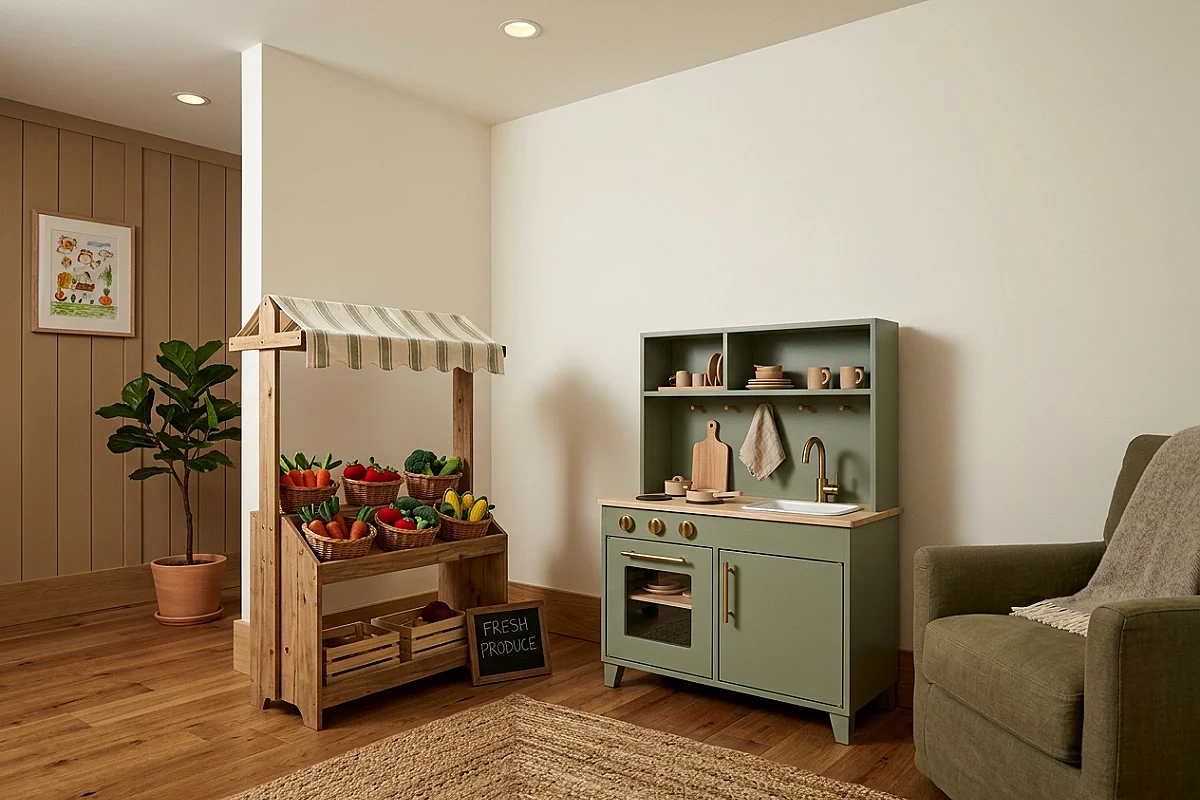
The pretend-play anchor that styles itself: a compact wooden play kitchen — painted in the room’s palette rather than primary-plastic brights — tucked into one corner with its own shelf of play food above it. The play kitchen becomes a room within the room, and its corner placement keeps the play contained: kitchen in the corner, floor clear in the center. Choose wood over plastic for longevity and looks (painted wood kitchens photograph beautifully and survive a decade of play), style the shelf above with real ceramic props the child is allowed to handle — small bowls, a teapot, a wooden tray — and the corner becomes both a toy and a styling moment. When the pretend-play years end, the same corner houses a desk: furniture that outgrows its phase.
Pro Tip
Check the kitchen’s paint is certified toy-safe (EN71 or ASTM) — play kitchens are mouthed, chewed, and leaned on daily, and certified finishes are what separate a real toy from a furniture prop wearing toy’s clothing.
Rocking Chair Corner
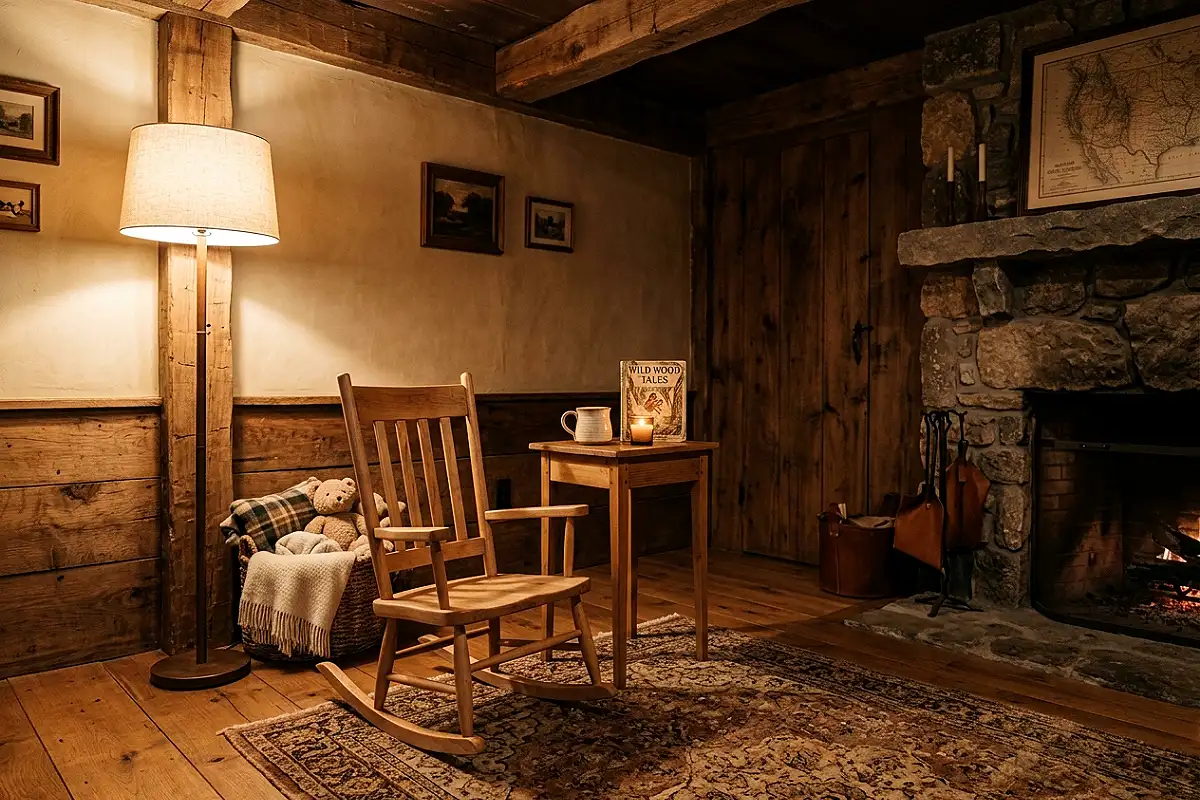
The reading ritual made physical: a small wooden rocking chair in a corner, paired with a floor lamp and a small side shelf, becoming the room’s storytime throne. The rocking chair does something no beanbag achieves: it pairs parent and child in one piece of furniture, and storytime in a rocker is a ritual children remember for decades. Choose a child-sized rocker in solid wood (plywood rockers crack; solid birch or maple endures), finish it in the room’s accent tone or natural clear, and set it where the lamp’s light falls across both laps. Style the side shelf with the current story rotation, and the corner becomes the room’s emotional center — the place where the day ends well.
Pro Tip
Keep the rocker clear of walls and furniture by at least twelve inches all around — rockers travel as they rock, and a rocker that bumps the wall nightly develops both wall dents and a reputation for being outgrown too soon.
Wooden Name Letters
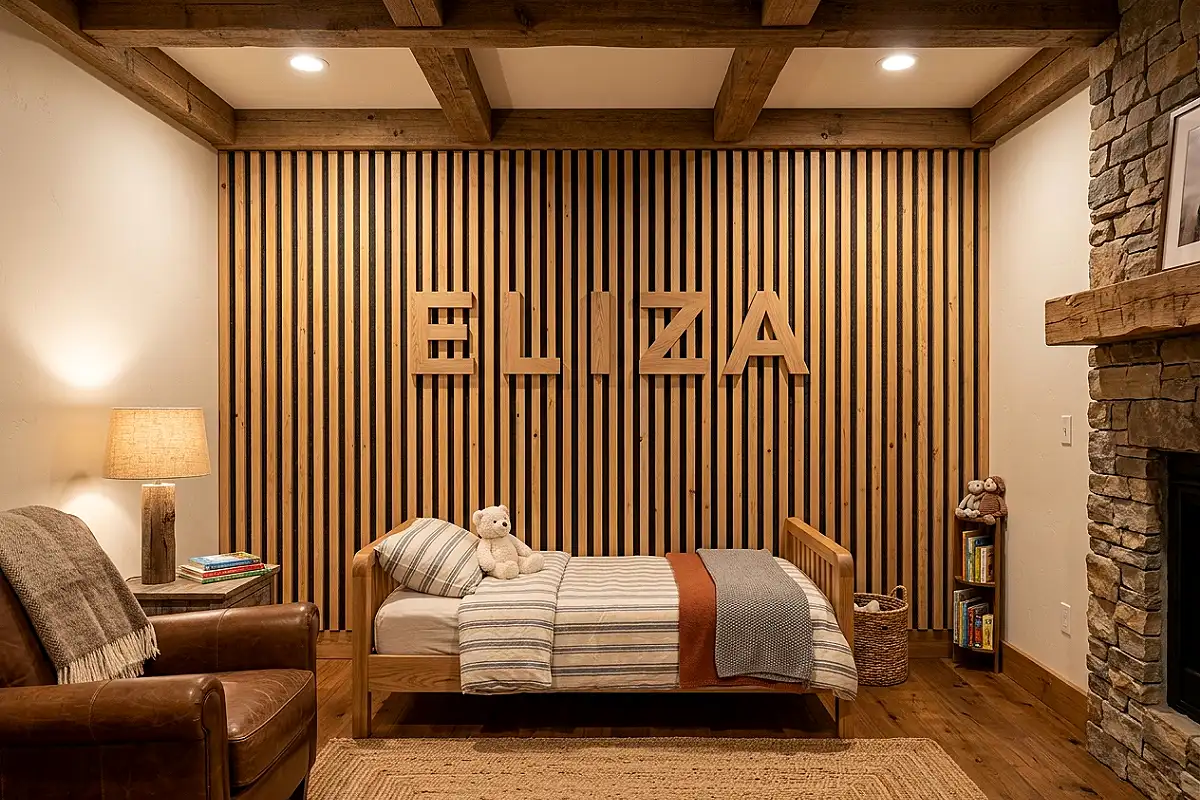
The personalization that never looks like a name tag: large wooden letters spelling the child’s name, mounted on the wall in a simple row above the bed or beside the door, painted in the room’s palette or left natural. Name letters turn the room from “a kid’s room” into “their room” — identity at a height the child sees daily — and done with restraint they read as design rather than decoration. Choose letters in a single clean typeface (mixing fonts reads as a craft table, one font reads as signage), mount them level and evenly spaced, and let the letters’ tone match the room: natural oak for warm rooms, painted matte for colorful ones. It’s the single most personal object the room can hold, and it scales perfectly from nursery letters to a teenager’s door sign.
Pro Tip
Lay the letters on the floor in their intended arrangement before drilling — letter spacing is the difference between signage and scatter, and a floor dry-run with a ruler measures the composition before any wall remembers a hole.
Twenty Ideas, One Growing Room
The thread through all twenty: build the bones like an adult room, let the child fill it like a child — and change only the fill when the years ask for it. The teepee outgrows itself; the daybed doesn’t. The cloud lights stay; the character bedding goes. A kids’ room done this way isn’t a room your child passes through — it’s a room that passes through childhood with them, still stylish, still theirs, long after the last teepee is folded.
Frequently Asked Questions
How do I make a kids’ room stylish without it looking like a cartoon?
Keep the room’s bones grown-up — calm wall colors, quality natural-wood furniture, good lighting — and add the play through objects rather than surfaces: a teepee, floor cushions, a cloud light, a themed rug. The room reads as a styled space that happens to be for a child, not a playground wearing a room’s costume.
At what ages should I update a kids’ room?
Plan three natural transitions: toddler to preschool (floor seating, low storage), preschool to school age (desk, reading nook, gallery wall), and school age to tween (more privacy, personality-driven decor). Between those, small swaps — band color, bedding, art — keep the room fresh without renovations.
What paint is safest for a kids’ room?
Choose zero-VOC or low-VOC paints certified for children’s environments — they’re widely available in nearly every color now. Avoid fresh-paint exposure for the first 48 hours after painting, and prefer washable eggshell or satin in kids’ rooms: durable enough for crayon, safer than scrubbing matte walls.
What toy storage can young children manage themselves?
Low, open, and categorical: baskets on low shelves, pegboards at their height, under-bed roll-out bins, and wall pockets — anything at the child’s eye level with a clear “home” for each toy type. Bins with lids and high shelves ask adults to do the tidying; open low storage lets the child do it.
How can a kids’ room grow with the child?
Choose furniture that outlives phases — daybeds over cribs, desks over activity tables, natural wood over character prints — and keep the room’s expensive elements neutral (paint, flooring, big furniture). Then let the cheap, changeable elements (bedding, cushions, art, lights) carry each age’s personality.
How do I make a small kids’ room feel bigger?
Go vertical: wall storage, peg rails, loft beds if ceiling height allows, and wall-mounted desks. Keep the floor clear with under-bed storage, use one light wall color (the two-tone band reads as spacious when the upper half is white), and choose furniture with legs rather than solid bases — visible floor always reads as more floor.