20 Budget Friendly Ways to Decorate a Bedroom Beautifully
A beautiful bedroom doesn’t require a large budget—it requires thoughtful choices. The bedrooms that look the most expensive are often not the ones filled with costly furniture, but the ones with warm lighting, balanced proportions, uncluttered surfaces, and carefully chosen materials.
The 20 ideas below focus on simple, practical ways to make a bedroom feel more beautiful without overspending. Each one offers a specific design approach you can realistically put into practice, with many costing little or nothing at all.
The goal is to spend where it matters, work with what you already have, and use thoughtful styling to create a bedroom that feels polished, comfortable, and intentionally designed.
Warm Amber Bulb Swap
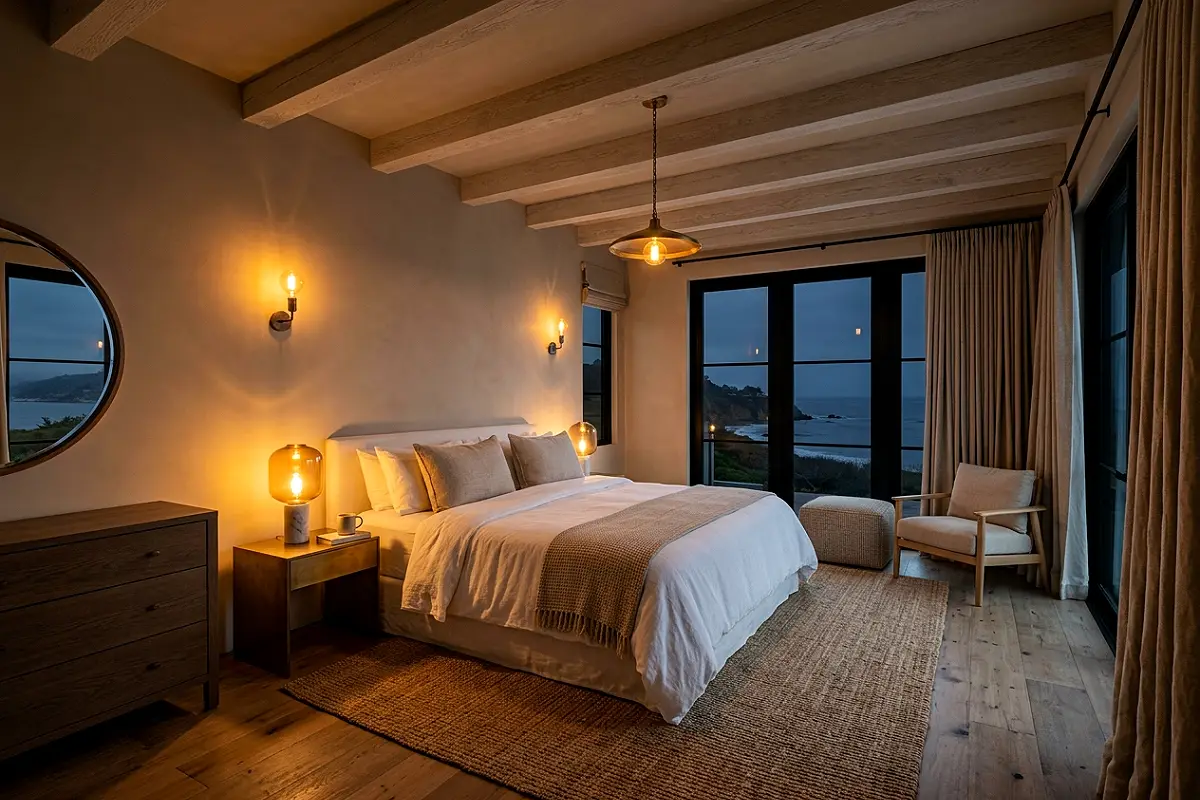
Replacing every bulb in the bedroom with a 2200K warm amber option is the single highest-impact change available in any bedroom for under $20, and it works immediately without moving a single piece of furniture. Standard cool-white bulbs — even those marketed as “warm white” at 3000K — produce a flat, clinical light that flattens textures, dulls warm tones in paint and fabrics, and makes even beautiful rooms feel like waiting areas. A 2200K amber bulb does the opposite: it deepens warm wall colors, activates the richness in natural wood and linen, and creates the kind of atmospheric glow most people associate with expensive hotel rooms. GE’s Vintage Edison ST19 bulbs at 2200K cost under $10 for a two-pack and are available at any hardware or home goods store.
Pro Tip
Pair the bulb swap with a $10 plug-in dimmer adapter on at least one lamp cord. The combination of warm amber light at low brightness is the specific condition that makes a bedroom feel genuinely atmospheric rather than just warmly lit — and you get it for under $30 total.
Ceiling-Height Curtain Rehang
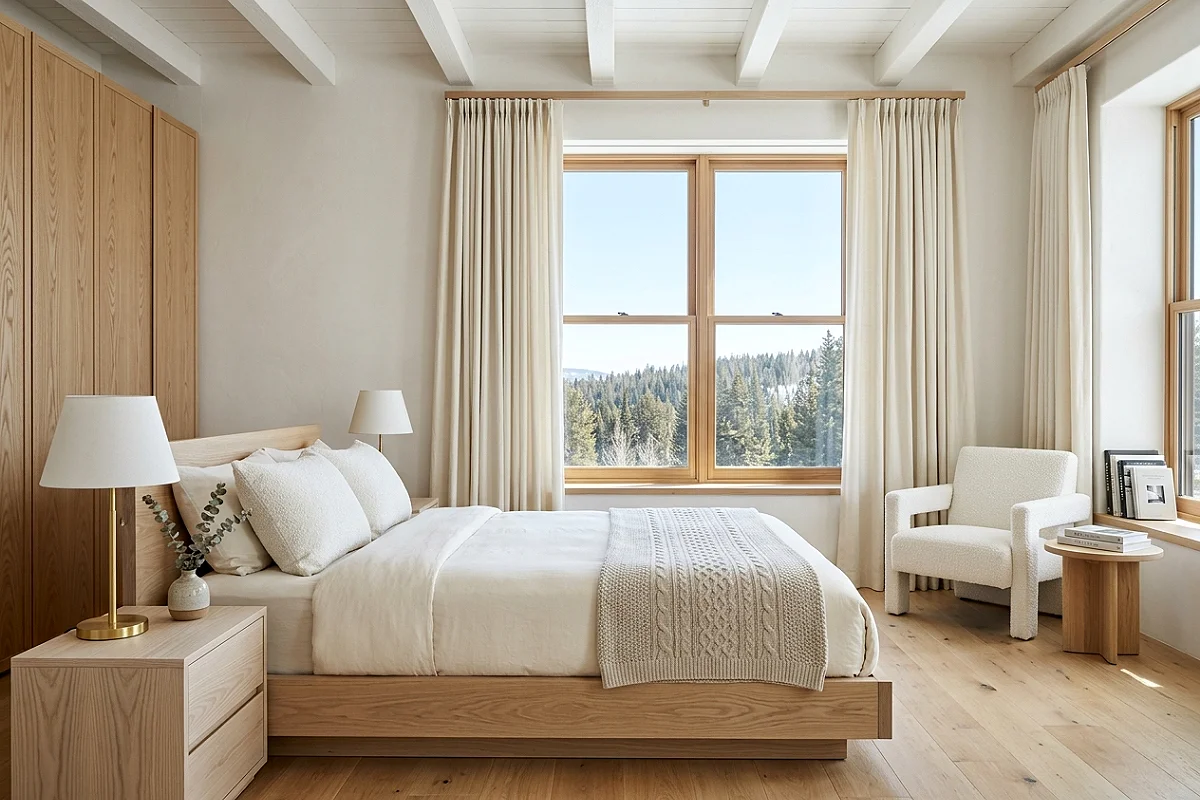
If your curtains are currently hung at the standard window-frame height, moving the rod to the ceiling — or as close to the ceiling as possible — and letting the panels fall to the floor is the fastest zero-purchase upgrade available to most bedrooms. The same curtain panels that look ordinary at window height look dramatic and expensive at ceiling height, because the uninterrupted vertical drop from ceiling to floor reads as architectural rather than decorative. It makes the ceiling feel taller, the window feel larger, and the entire room feel more deliberately designed. All it requires is moving the rod bracket up the wall with a drill and two screws — a ten-minute job. If the panels are not long enough to reach the floor from their new height, fabric stores sell basic linen by the yard for simple hemmed panels at a fraction of ready-made curtain pricing.
Pro Tip
While moving the rod, extend it 8 to 10 inches beyond the window frame on each side. When the curtains are open, they stack entirely off the glass, keeping the full window visible and making both the window and the room feel larger. Curtains that barely clear the window frame look narrow regardless of how high they hang.
Tonal Trim Paint
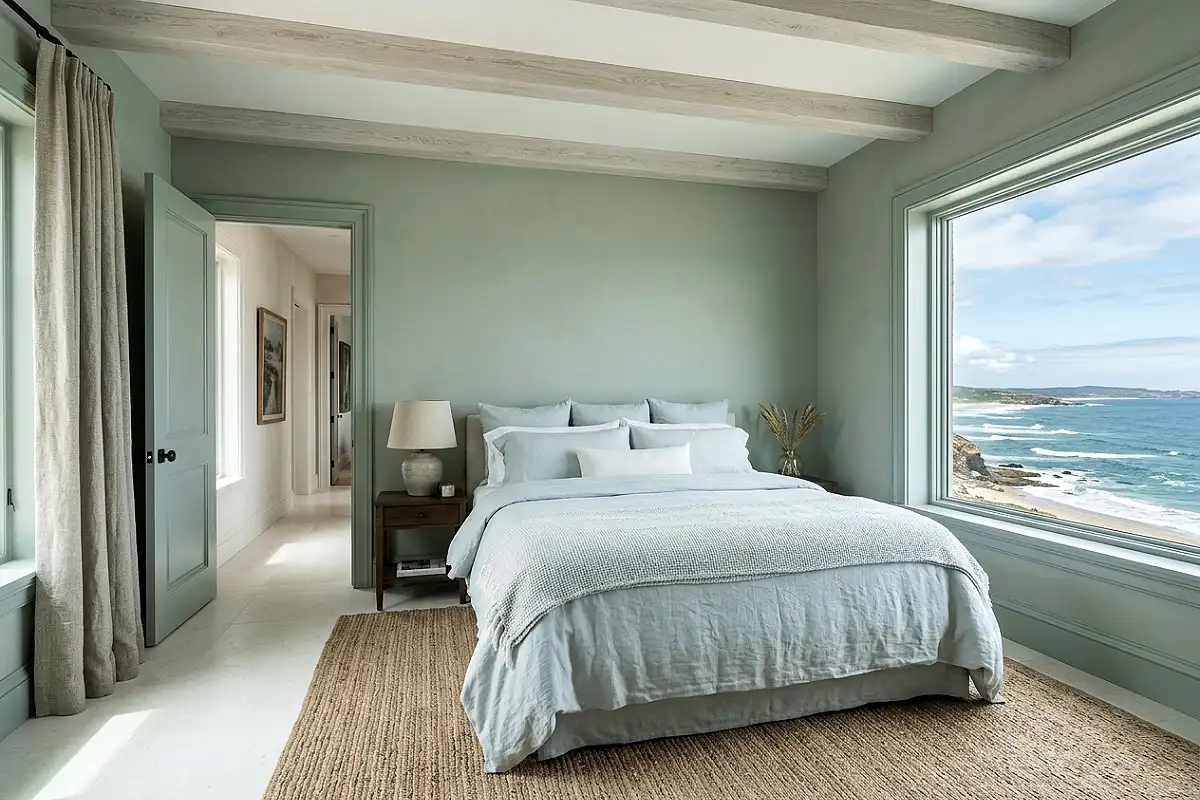
One of the most persistent visual signals that a room has not been professionally considered is white gloss trim against a colored wall. Painting the baseboards, door frames, and window surrounds the same tone as the walls — or just one shade deeper — transforms the room’s architectural quality for the cost of a small sample pot of paint. The walls and the trim merge into a single continuous surface, the room gains a sense of considered depth it did not have before, and the overall effect reads as intentional and sophisticated rather than default and unfinished. This is a detail that professional interior designers consistently cite as the most overlooked easy upgrade in any room.
Pro Tip
Use a satin finish on the trim even when the walls are matte. The slight sheen of satin trim against a matte wall reads as an intentional material distinction — similar to the effect of lacquered woodwork — and makes the trim look more substantial without using a different color.
Thrifted Frame Gallery
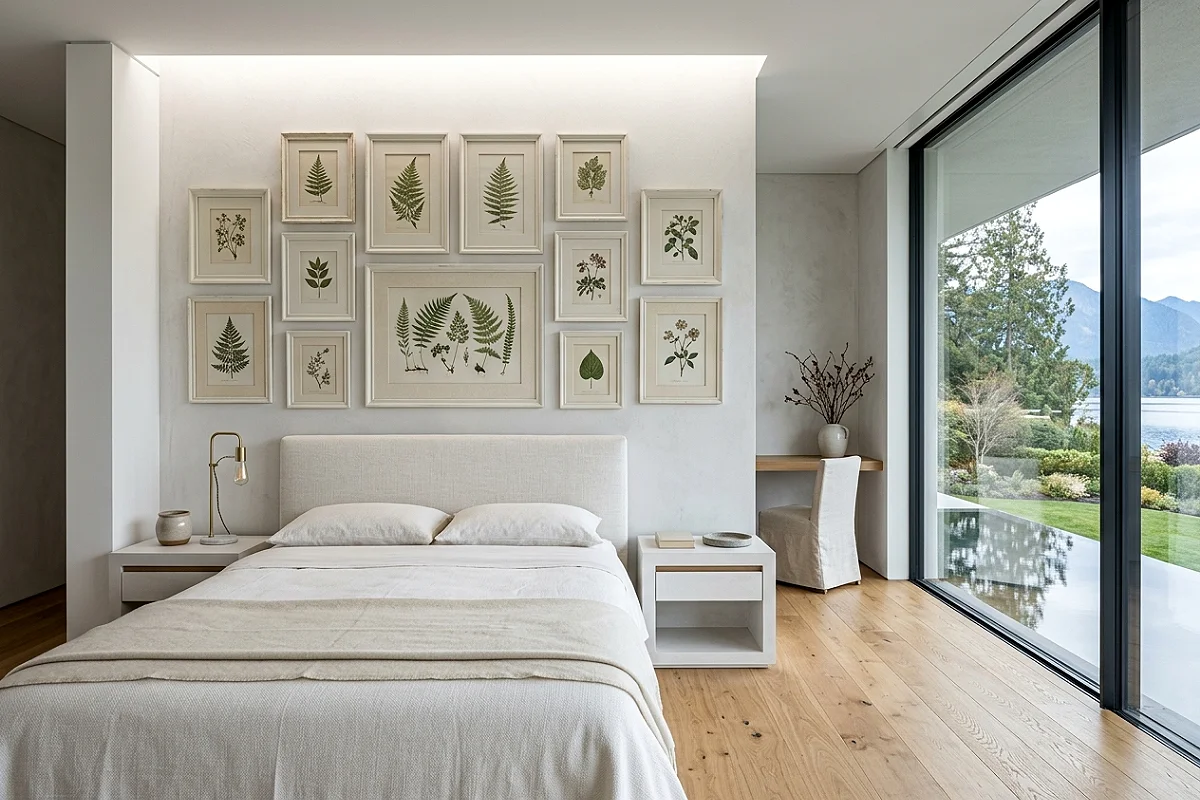
A gallery wall built entirely from thrifted or secondhand frames — mismatched in size and finish, unified by a consistent mat color and art subject — is one of the most beautiful, most personal, and most affordable wall treatments available in a bedroom. Visit any thrift store and you will find frames in every size and finish; buy six to ten, sand and repaint those that need it in a single tone — warm white, natural wood, or matte black — then fill them with public domain botanical prints, black-and-white photographs, or simple abstract prints downloaded from free art archives and printed at a local copy shop. The total investment for a full gallery wall rarely exceeds $30 to $40, and the result has an authentic, collected quality that purchased gallery wall sets can never replicate.
Pro Tip
Lay your frames on the floor and photograph the arrangement from above before committing a single nail to the wall. Transfer the arrangement by tracing each frame on kraft paper, cutting out the shapes, and taping them to the wall as placement guides. It saves significant patching and rehanging and lets you see the full composition clearly before drilling.
DIY Painted Arch
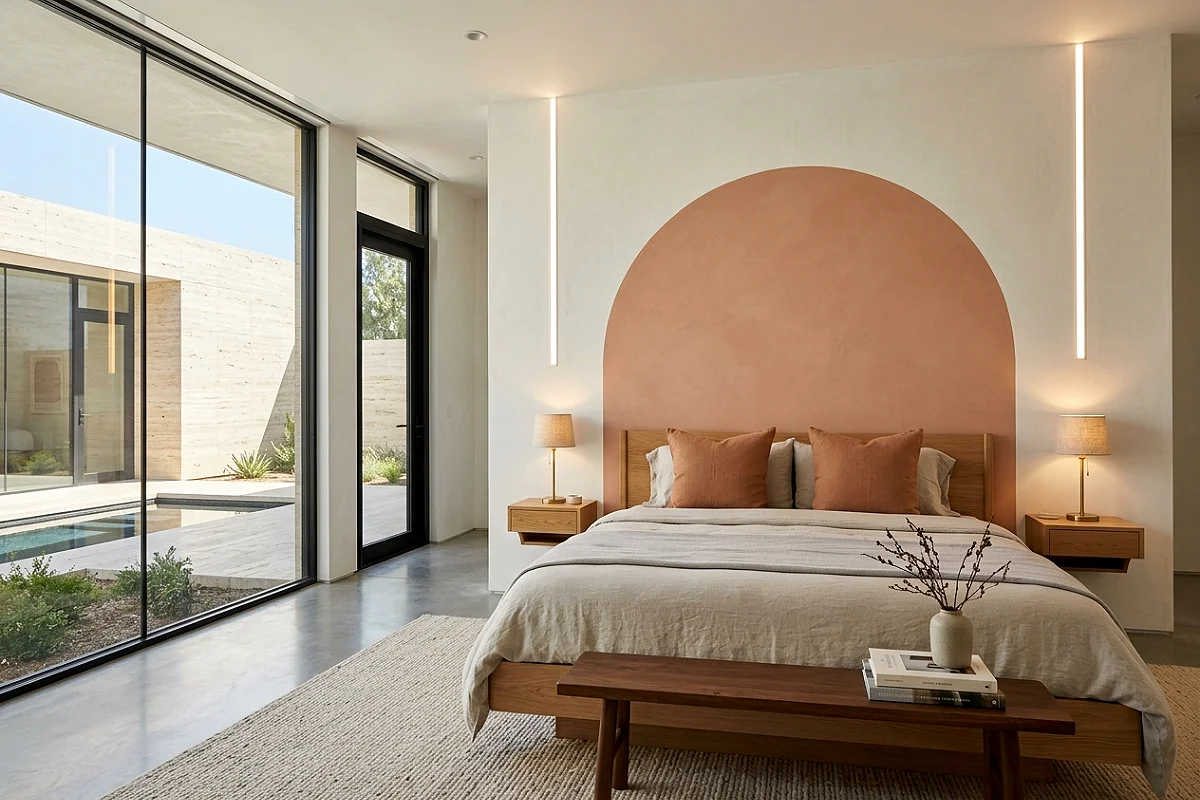
Painting a soft, rounded arch on the wall behind the bed — using nothing more than a sample pot of paint, a piece of string as a compass, and a small foam roller — creates an architectural focal point that reads as designed and intentional for a cost of under $15. The arch should be slightly wider than the bed and tall enough to clear the pillow stack by 8 to 10 inches; a warm terracotta, dusty sage, muted blush, or pale clay tone two to three shades deeper than the surrounding wall is the color combination that works most reliably. It photographs extraordinarily well, immediately gives the bed a sense of being framed and anchored on the wall, and can be painted over in an afternoon if you ever want a change. No technique in budget bedroom decorating delivers a higher visual return for the time and money invested.
Pro Tip
Use a pin tacked at the apex point of the arch and a piece of string tied to a pencil as a compass to draw a perfectly even curve. Adjust the string length until the radius looks right on your wall before drawing — freehand arches almost always skew slightly to one side, which is far more obvious once painted than it looked in pencil.
Euro Sham Addition
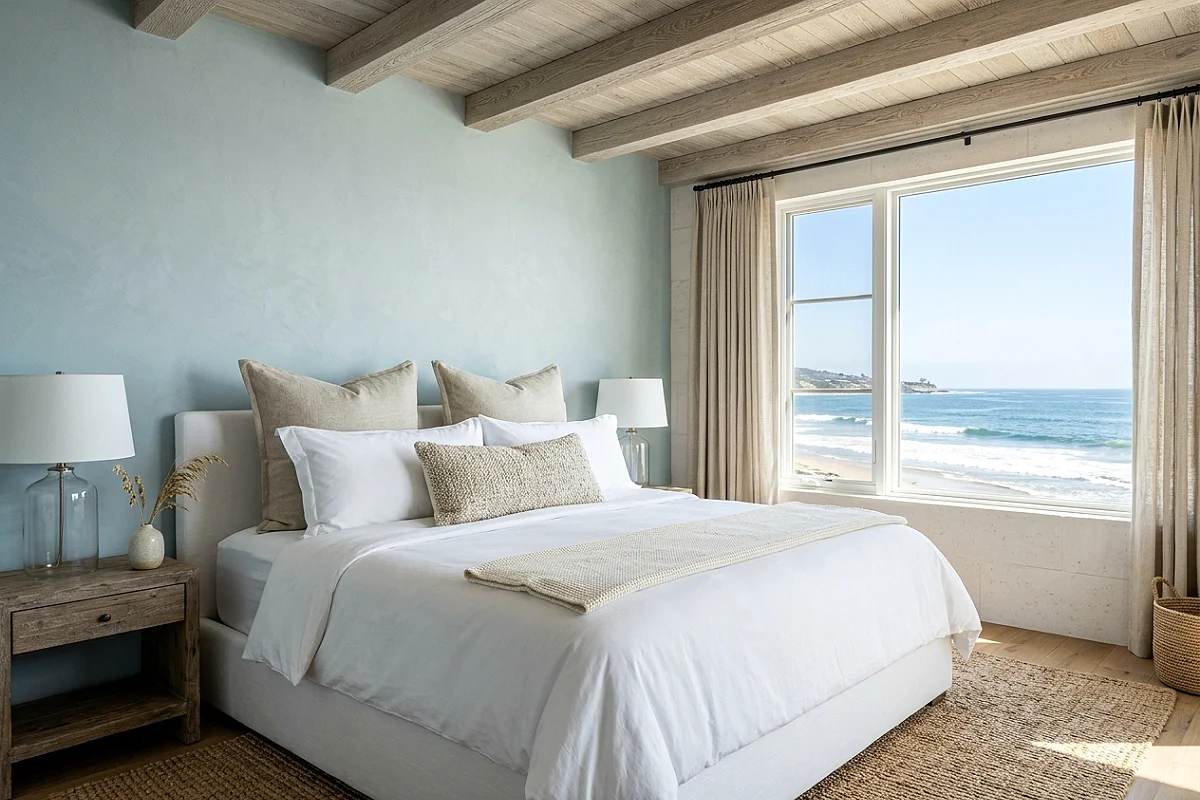
Adding two 26-by-26-inch Euro shams behind the standard sleeping pillows is the single bed upgrade with the best ratio of visual impact to cost. The large square shams create a layered depth at the headboard that makes the bed look hotel-styled and intentionally arranged — a quality that a flat row of two sleeping pillows can never achieve on its own. IKEA sells Euro pillow inserts for under $8 each; cover them in a plain linen or cotton sham from H&M Home, Zara Home, or even a fabric remnant hemmed into a pillowcase, and the total investment per sham is under $20. Buy inserts one size larger than the cover — a 28-inch insert in a 26-inch cover — so they stand upright and full rather than collapsing forward.
Pro Tip
Keep Euro shams in a slightly different but coordinating tone to the duvet cover rather than an exact match. The tonal variation — oatmeal shams against a warm white duvet, or sage shams against a natural linen duvet — creates visual depth that an exact match loses entirely. It makes the bed arrangement look considered rather than just coordinated.
Hardware Swap
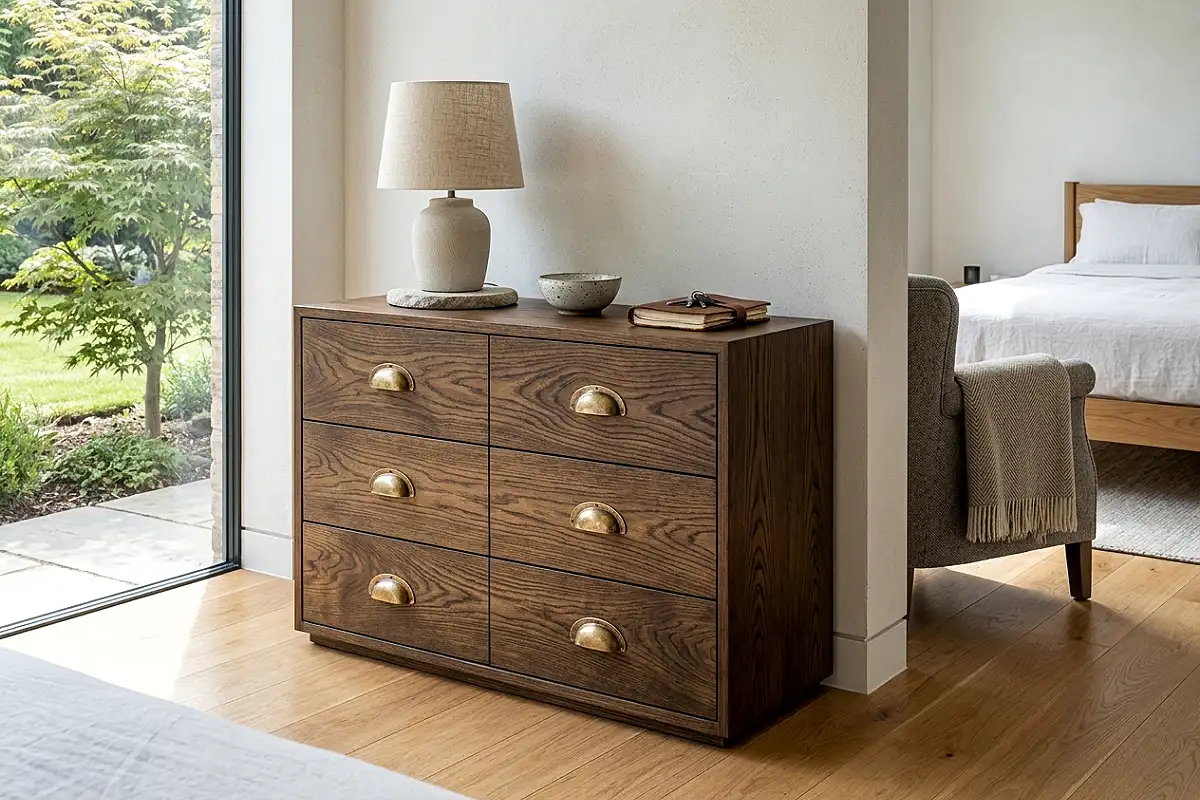
Replacing the drawer pulls and knobs on a dresser, nightstand, or wardrobe with unlacquered brass cup pulls, hand-thrown ceramic knobs, or slim brushed-gold bar handles takes under twenty minutes with a standard screwdriver and costs between $3 and $15 per pull depending on the source. The visual difference between generic flat-bar hardware from a mass-market furniture piece and a well-chosen replacement pull is immediate and striking — the same chest of drawers reads as a found vintage piece rather than flat-pack furniture with one simple swap. Most IKEA and budget furniture uses standard 32mm or 64mm hole spacing, which means replacement hardware fits without any modification. Amazon, Anthropologie’s home hardware section, and Etsy small-batch makers all carry options across every price point and finish.
Pro Tip
Measure the center-to-center distance between the screw holes on your existing pulls before ordering replacements — not just the pull’s overall length. Ordering hardware with a different hole spacing than your furniture means drilling new holes, which turns a 20-minute swap into an hour-long project with room for error.
Dried Stem Floor Vase
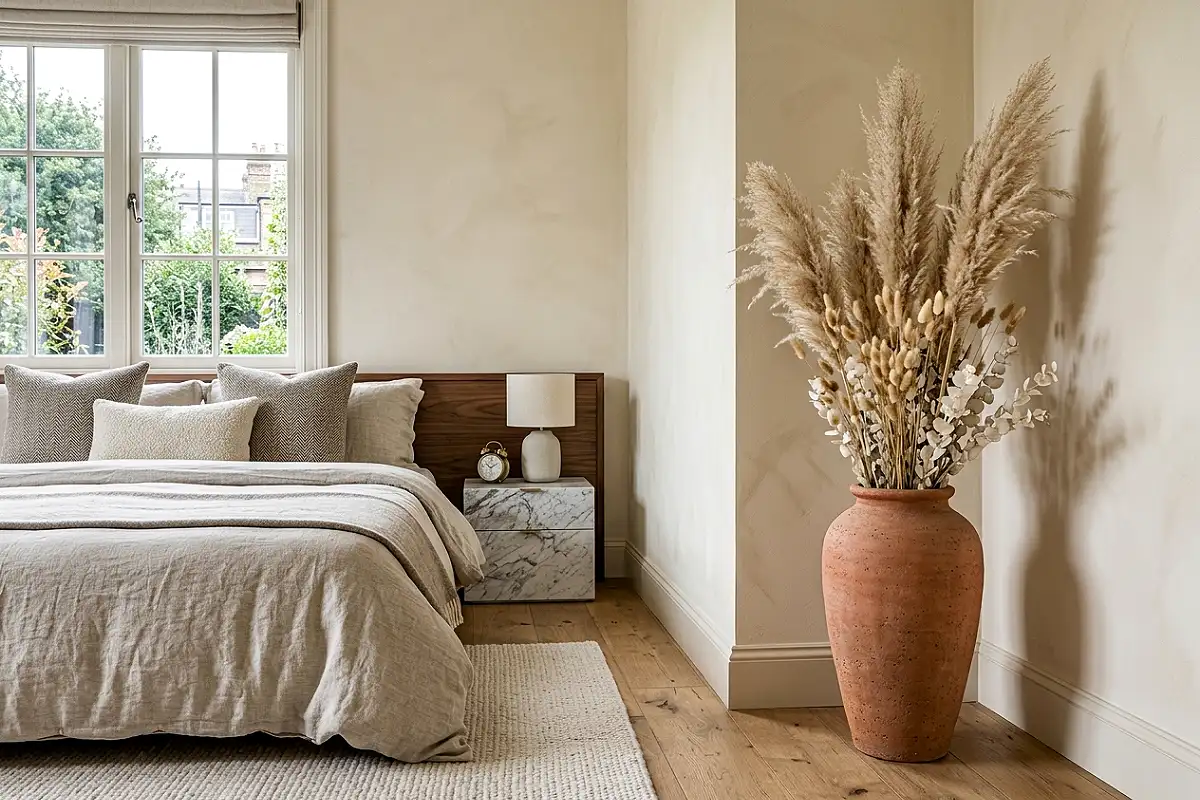
A tall, generously filled floor vase of dried stems — pampas grass, bunny tails, dried palm fronds, bleached eucalyptus, cotton bolls — placed in an empty corner or beside the bed is one of the most visually impactful zero-maintenance additions available in a bedroom at almost any budget. The vessel matters as much as the stems: a tall terracotta pot, a simple ceramic in a warm sandy matte glaze, or a hammered brass urn all turn the arrangement into a genuine design object. Source the vessel from a thrift store or a dollar store spray-painted in a matte finish; buy dried stems from a grocery store, a craft store, or in bulk from an Etsy dried flower supplier for a fraction of what florists charge. The entire setup — vessel and stems — rarely exceeds $25 to $35.
Pro Tip
Arrange stems at three distinct heights — some tall, some medium, some just clearing the rim — and face the arrangement slightly asymmetrically rather than in a perfectly centered fan. Arrangements that look gathered rather than arranged always photograph better and feel more natural in the room.
Accent Color Rule of Three
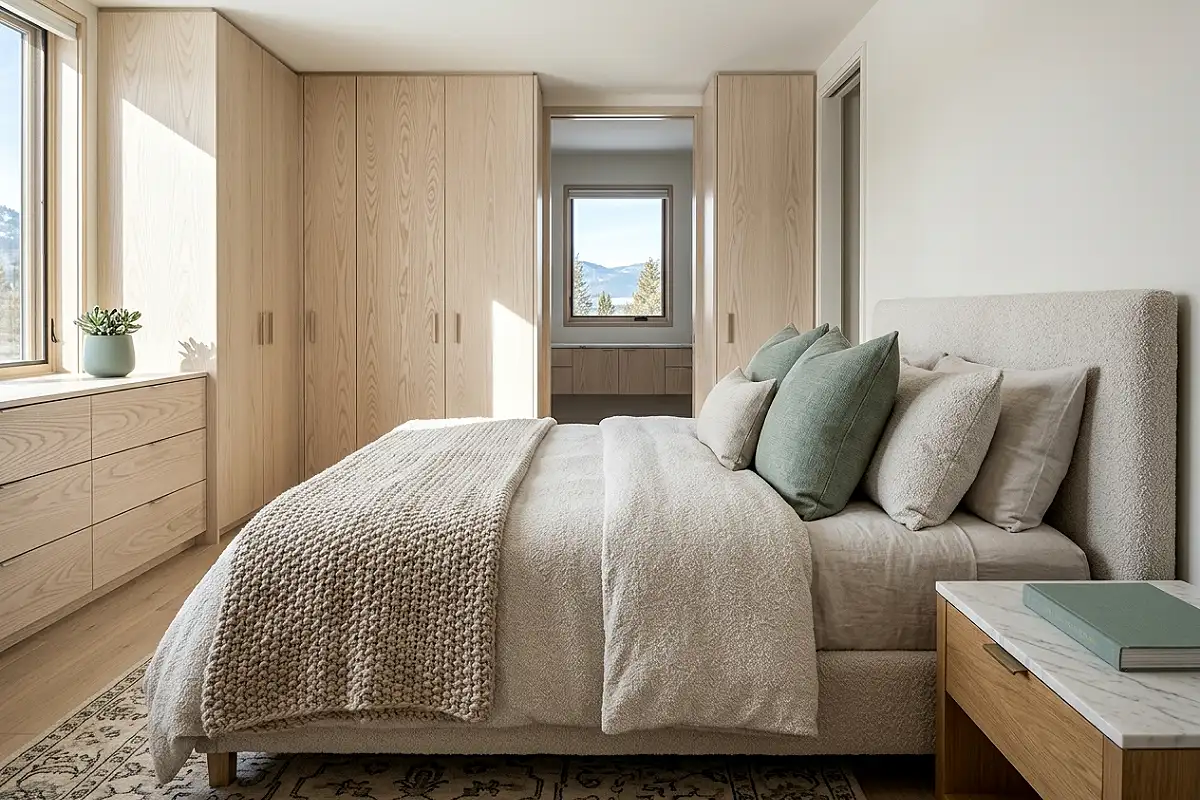
Choosing one accent color and repeating it in exactly three or more distinct locations throughout the bedroom is the simplest, most reliable method for making any room feel designed rather than randomly assembled — and it costs nothing if applied to objects you already own. Dusty sage in a throw pillow, a small potted plant, and the cover of a book on the nightstand. Warm terracotta in a candle holder, a cushion, and a ceramic vase. The eye registers a color that appears three or more times as intentional and chosen; a color that appears once reads as accidental. Audit what you already have in the room, identify a color that appears in two places, and find one more object in the same tone. This single exercise often makes an immediate and visible difference without a single purchase.
Pro Tip
Pull your accent color from something already present in the room — the undertone of the wall paint, the grain color of the wood furniture, the secondary tone in the rug — rather than introducing an entirely new hue. This makes the accent feel discovered rather than added, and it is almost impossible for it to clash with the existing palette.
Full Surface Declutter
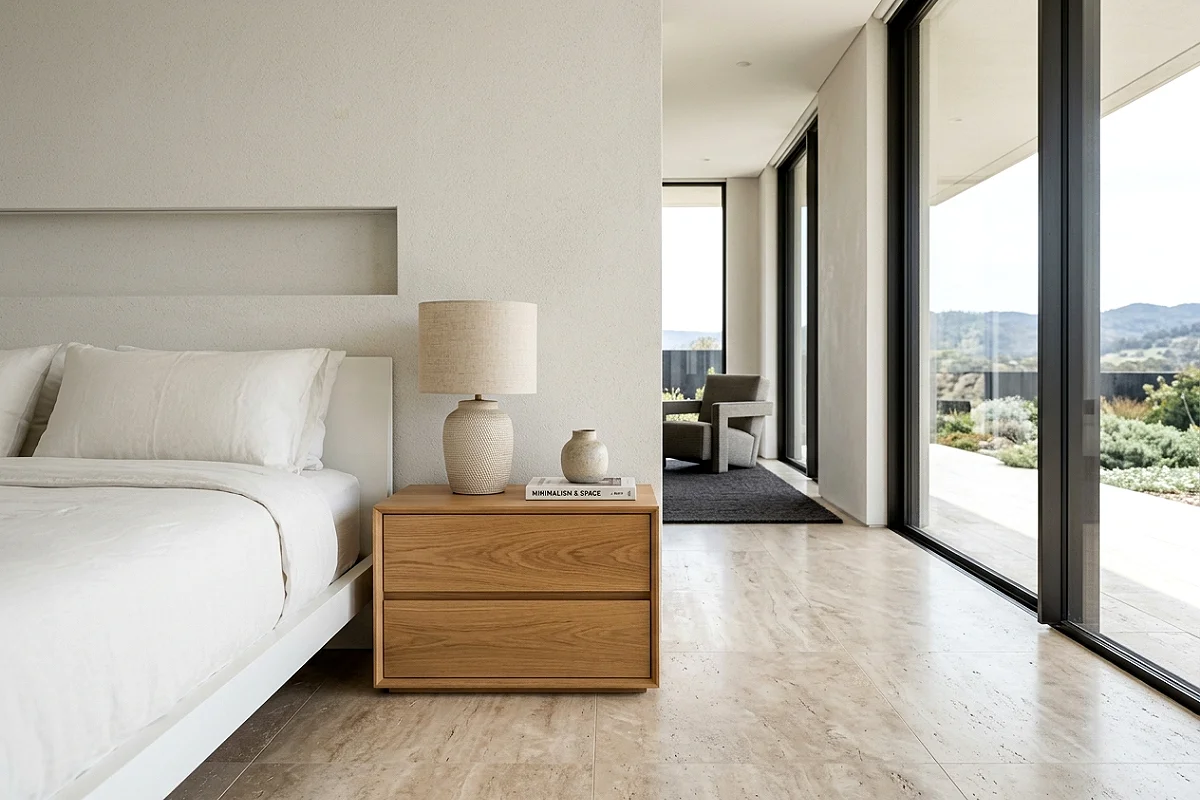
Clearing every surface in the bedroom completely — every nightstand, every dresser top, every shelf — and replacing each object with deliberate intention rather than habit is the one bedroom upgrade that costs absolutely nothing and has an immediately visible effect on the quality and calm of the space. The process is simple: remove everything, wipe the surface clean, then return only what is genuinely beautiful or genuinely necessary, with visible breathing room between each object. Three objects per surface maximum — one with height, one with texture, one that is flat or low. Everything else goes in a drawer, a basket, or out of the room entirely. No purchase, no paint, no rearranging of furniture: just the discipline of removing what does not earn its place on a surface you look at every day.
Pro Tip
Box up everything you removed from the surfaces and leave the box in a closet for two weeks. If you have not gone looking for something specific in that time, you do not need it accessible in the bedroom. This is a more honest way to edit than trying to decide in the moment what to keep, when everything feels necessary because it has been there a while.
Single Potted Plant in a Beautiful Vessel
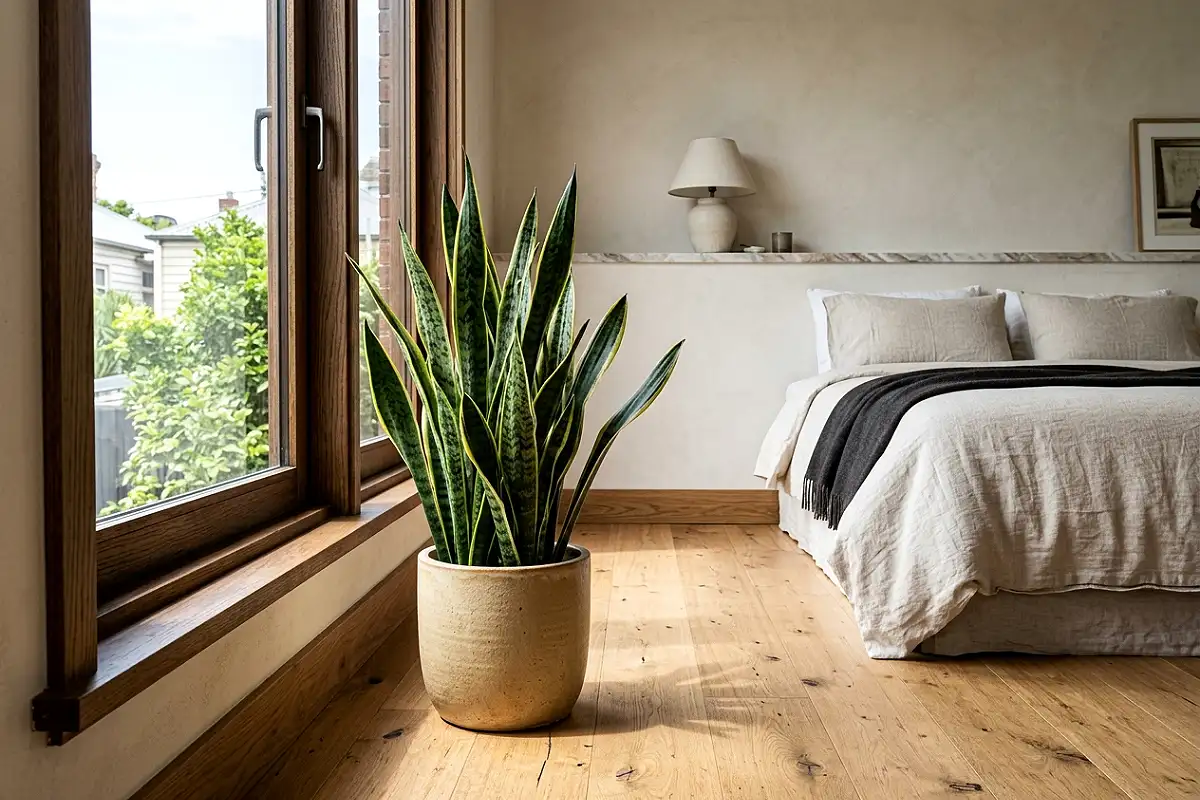
One healthy, well-chosen plant in a genuinely beautiful pot does more for a bedroom than a shelf of faux botanicals, a collection of small succulents in mismatched nursery pots, or any number of artificial arrangements. The key decisions are the plant — something with a strong silhouette and a manageable care profile for a bedroom: a snake plant, a trailing pothos in a hanging ceramic, a small olive tree in terracotta, a monstera for a corner statement — and the vessel: a hand-thrown matte ceramic, a simple terracotta with a clean rim, or a woven seagrass basket sleeve. The combination of a genuinely healthy plant in a genuinely beautiful pot communicates both taste and attentiveness in a way that no manufactured decorative object quite replicates.
Pro Tip
Repot a grocery store or nursery plant into a better vessel immediately upon bringing it home — before placing it in the room. A healthy plant in a plastic nursery pot on a windowsill reads as neglected regardless of its condition; the same plant in a good ceramic reads as a design decision from the moment it arrives.
Textile Layering on the Bed
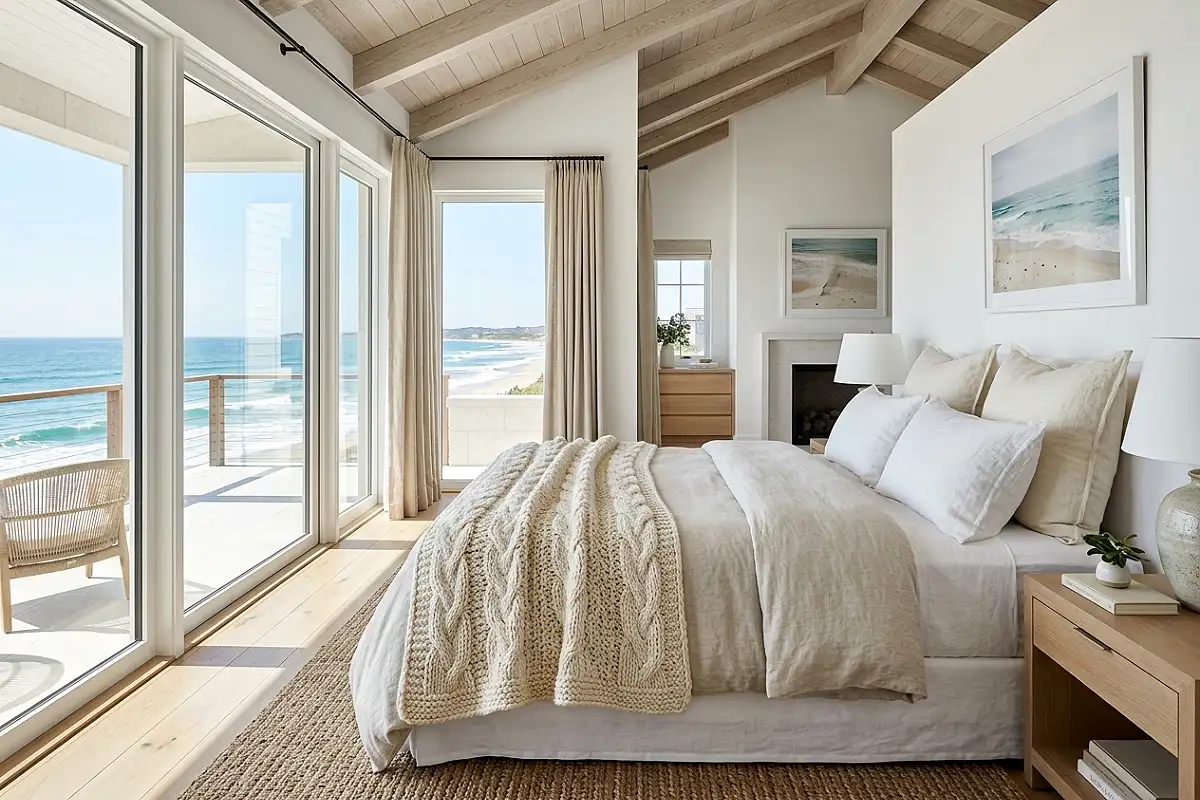
A flat duvet with two pillows is a made bed; a flat duvet with layered pillows, a textured throw, and a folded coverlet at the foot is a styled bed — and the difference between the two is entirely in the layering rather than the quality of the individual pieces. The formula is simple: fitted sheet, duvet cover, two Euro shams at the back, two standard shams in front, one accent pillow at the very front, and a textured throw draped across the lower third of the bed and slightly off-center. The throw is the piece that does the most visual work: a chunky knit, a waffle-weave, a herringbone wool, or a faux-fur in a complementary tone adds a layer of tactile richness that transforms a flat bed into one that reads as genuinely inviting. IKEA, H&M Home, and Amazon all carry affordable throws in every texture.
Pro Tip
After placing the throw, pick it up in the center, give it one gentle shake, and let it fall naturally before adjusting only the edges. A throw arranged entirely by hand tends to look deliberately placed; the shake-and-drop method produces soft, natural folds that look used and effortless — which is exactly what a styled bed should appear to be.
Leaning Mirror Upgrade
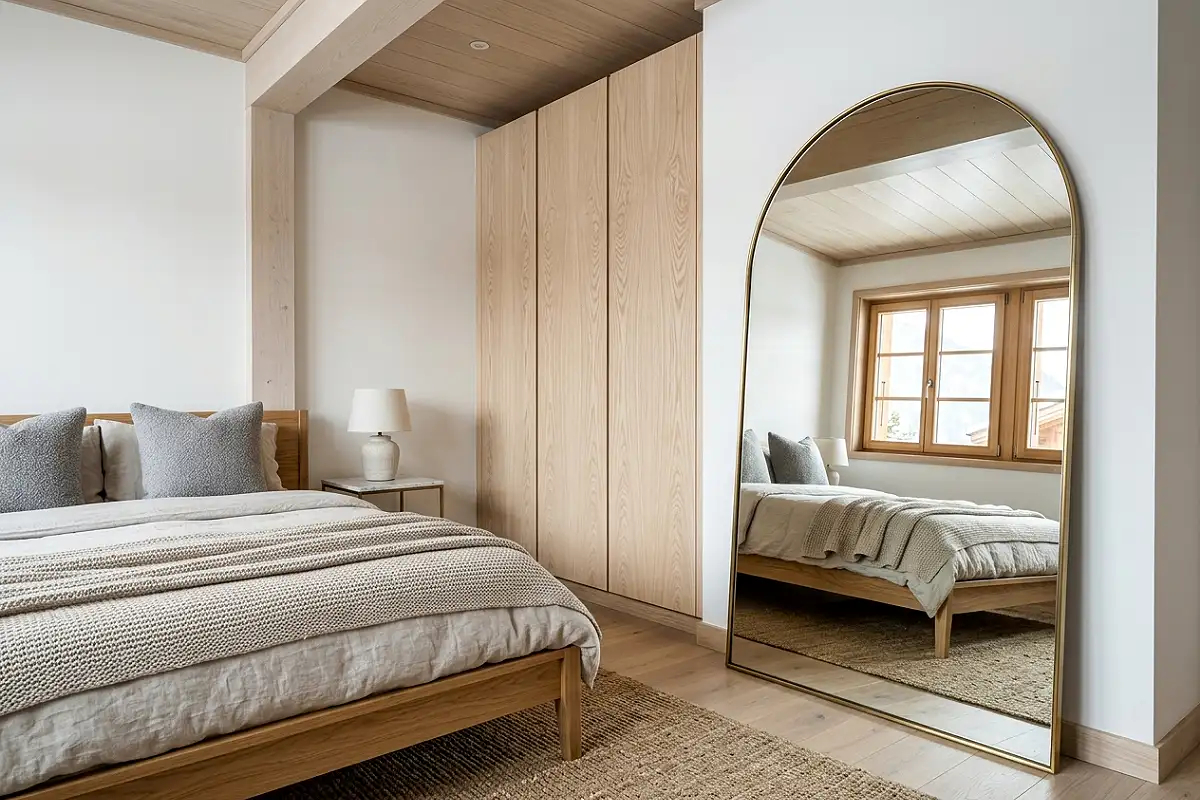
Replacing a frameless, mounted, or cheaply framed mirror with a full-length mirror in a genuinely good frame — leaned against the wall rather than mounted — is one of the most affordable ways to add a piece that reads as a considered design object rather than a practical afterthought. A large arched mirror with a thin black or brass frame, a round rattan mirror above the dresser, or a wide rectangular mirror in a natural wood frame leaned against the bedroom wall all contribute visual depth, reflect light into darker corners, and add architectural shape variety to a room full of rectangles. Amazon, TJ Maxx, HomeGoods, and IKEA’s HOVET all carry large-format mirrors in good frames at genuinely accessible prices — this is a category where the budget option is legitimately competitive with expensive alternatives.
Pro Tip
Position a leaning mirror so it reflects the most visually appealing element in the room — a window, the bed arrangement, or a lamp — rather than an empty wall or the back of a door. What the mirror shows is part of its decorative contribution, and choosing that reflection deliberately is the detail that makes a leaning mirror look placed rather than abandoned.
Woven Tray Vignette
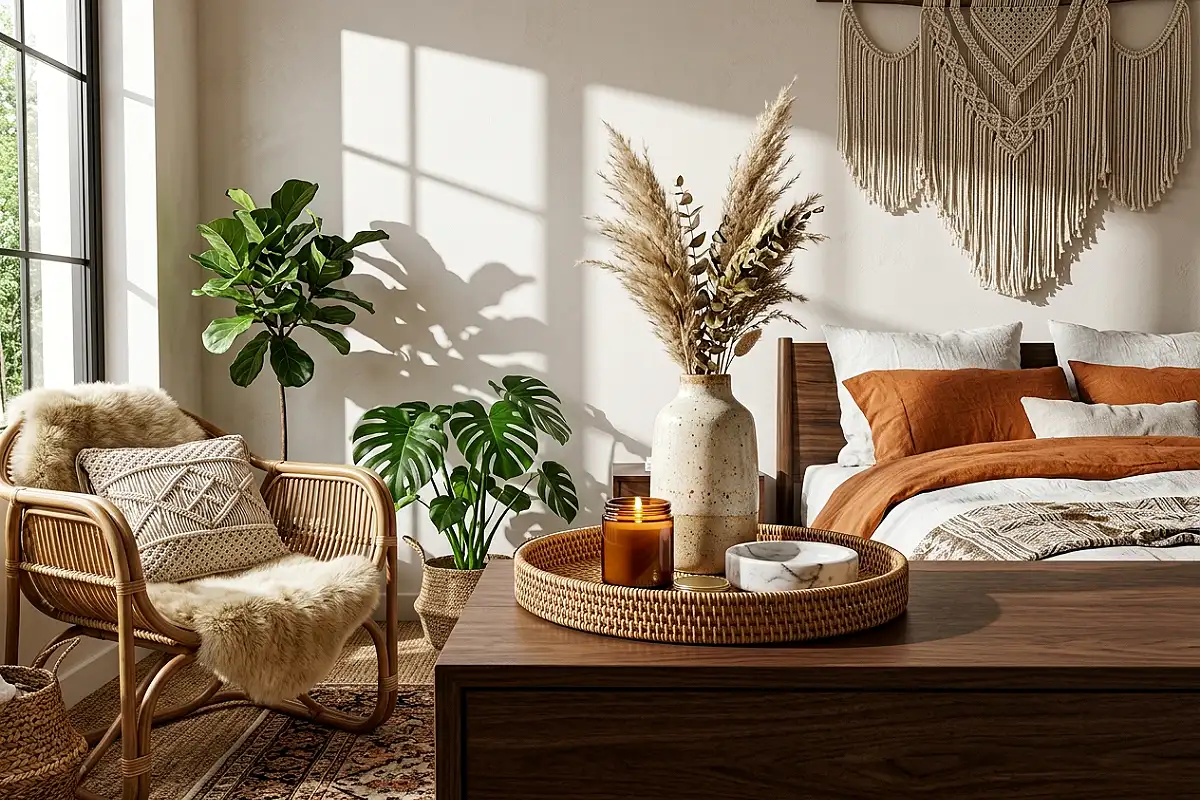
A simple woven, wooden, or marble tray placed on the dresser top turns a collection of disparate objects into a single, coherent visual unit with almost no effort or cost. Without a tray, the same five objects distributed across a dresser surface read as accumulated clutter; corralled onto a tray with visible space between them, they read as a deliberate vignette. The tray itself is the organizing principle: a round wooden tray from a thrift store — often available for $2 to $5 — a rectangular marble slab from a tile showroom’s offcut bin, or a simple rattan tray from a discount home store all accomplish the same organizational and visual purpose. Style the tray with height variation — one tall object, one medium, one low — and leave at least 30 percent of the surface empty.
Pro Tip
Tile showrooms and stone yards regularly discard marble, travertine, and granite offcuts too small for installation but perfectly sized for a dresser tray. Ask at the front desk — most will give offcuts away for free or a few dollars, and a piece of genuine marble as a tray costs nothing and looks extraordinary.
Book Spine Color Arrangement
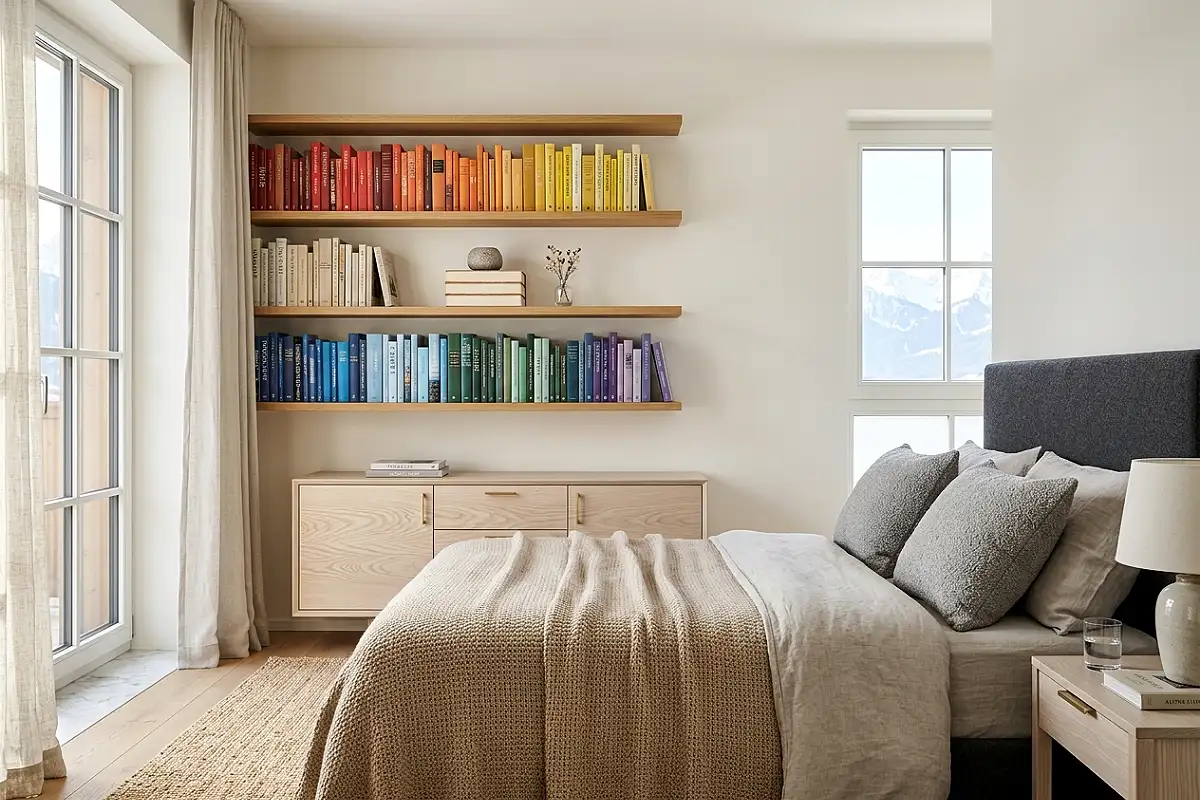
Reorganizing the books on any open shelf in the bedroom by spine color — grouping warm tones in one cluster and cool tones in another, with a few horizontal stacks breaking the vertical rhythm — takes twenty minutes, costs nothing, and produces a quietly beautiful effect that makes the shelf read as a styled surface rather than a storage one. The color-grouped spines create a natural gradient across the shelf that the eye registers as intentional even without identifying why. Face a few books spine-inward in each section so the raw cream page edges face out — this adds textural variation and breaks what would otherwise be a wall of color. Place one small object on top of each horizontal stack: a tiny ceramic, a smooth stone, a dried stem in a bud vase.
Pro Tip
Remove the dust jackets from hardcover books before shelving them. The raw cloth or board covers underneath are almost universally more beautiful — quieter in color, more textural, more cohesive with other books — than the commercial typography of the jacket designs. It costs nothing and consistently improves how the shelf looks.
Free Printable Art in Proper Frames
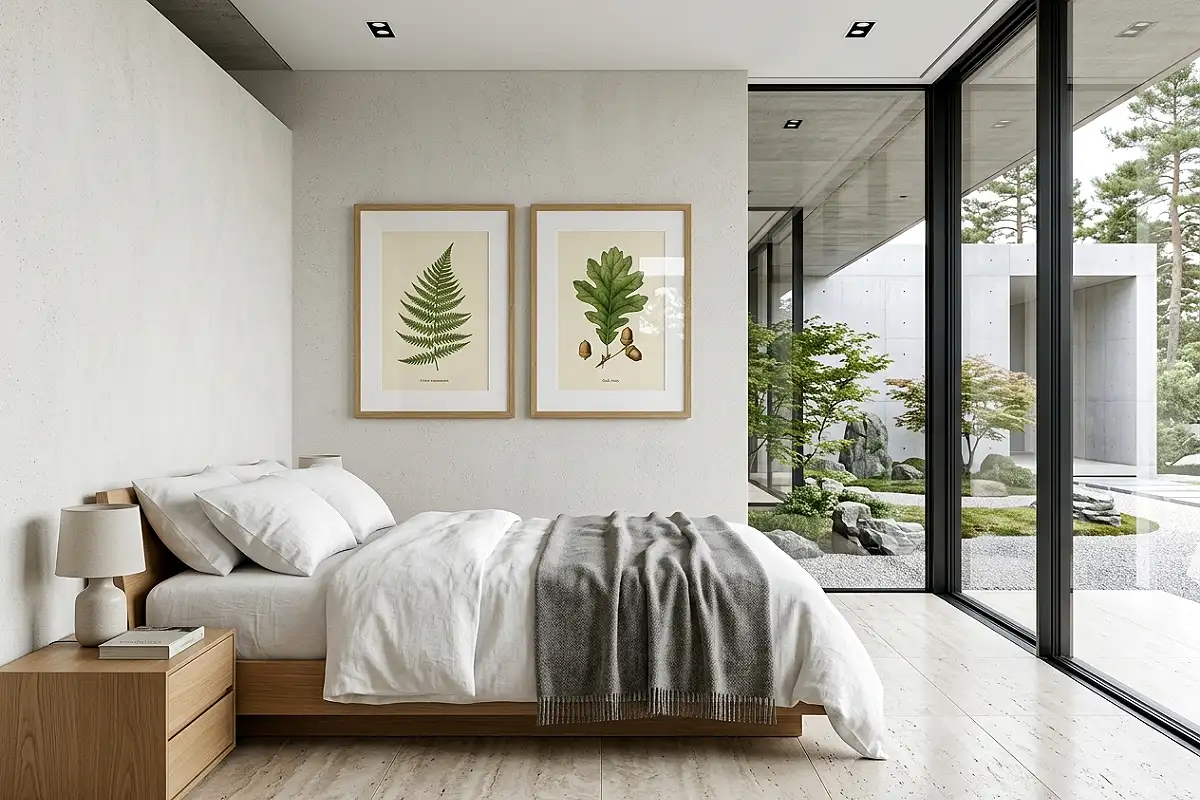
The public domain archives of the Smithsonian, the Metropolitan Museum of Art, the Rijksmuseum, and the Biodiversity Heritage Library contain millions of high-resolution artworks, illustrations, and botanical specimens available for free personal download. A botanical study from the Kew Gardens archive, a Dutch Golden Age still life, a woodblock print from a Japanese natural history manuscript — all available for free, printable at any local copy shop at sizes up to 18 by 24 inches, and transformative when framed properly. The frame does most of the work: a simple gallery frame in natural oak or matte black with a wide white mat turns a free digital download into a piece that looks curated and genuinely archival from any normal viewing distance.
Pro Tip
Print on a warm cream or slightly yellow-tinted paper stock rather than bright white. Warm paper reads as genuinely archival and aged; bright white paper immediately reads as a digital print regardless of the source image’s quality or age. Most local print shops stock a cream fine art paper for a small upcharge that is completely worth it for wall art.
Candle in a Quality Vessel
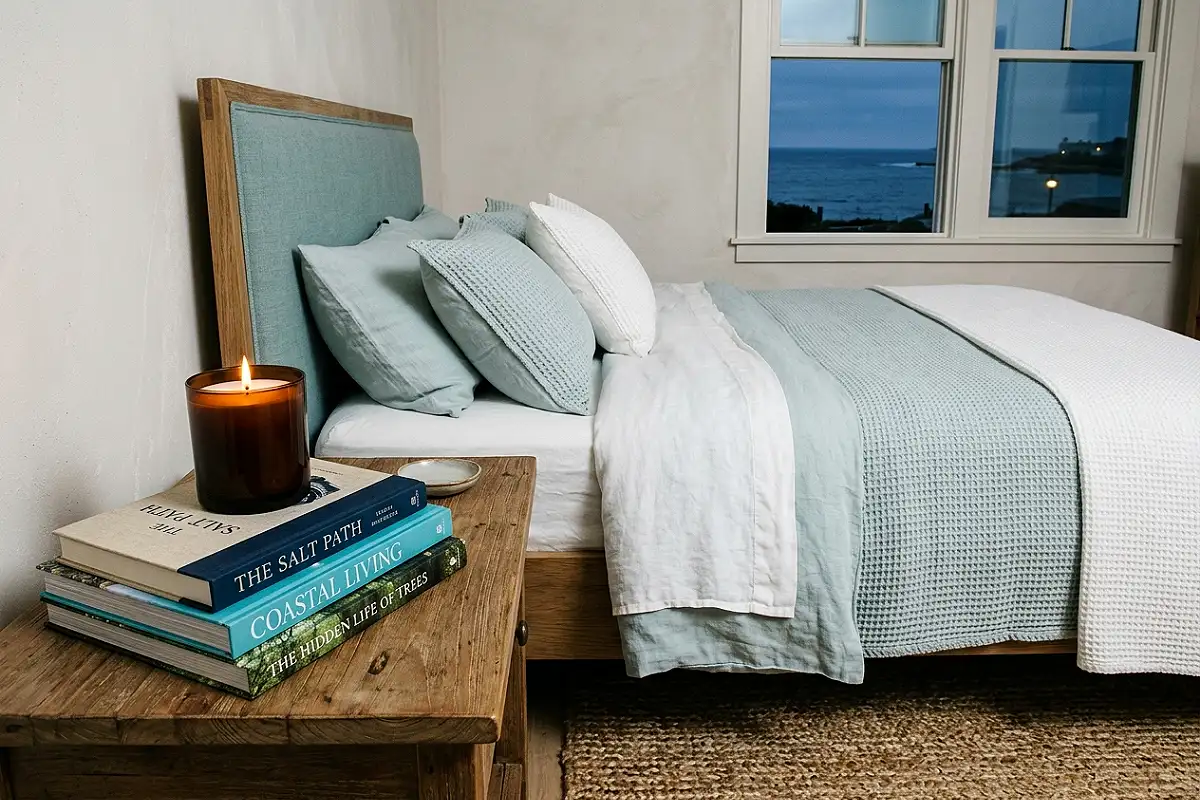
A single well-chosen candle on the nightstand or dresser sits in an unusual category between functional object and design piece — it contributes warmth, scent, visual texture, and a quality of living intention to a surface without requiring any arrangement around it. The vessel is what makes it a design object rather than just a candle: a wide-mouth concrete vessel in a matte finish, a heavy ribbed glass jar in amber or smoke, a hand-thrown ceramic in a warm earthy glaze. Many of the most beautiful candle vessels are available for under $15 at HomeGoods, TJ Maxx, or a discount home store. Light it in the evening and the bedroom gains atmosphere and scent in one move. Unlit, the vessel holds its place as a considered object on the surface that no other single item quite replicates at the same price point.
Pro Tip
When the candle burns down, remove the remaining wax by placing the vessel in the freezer for an hour — cold wax shrinks from the glass and pops out cleanly — then wash with hot soapy water and repurpose the vessel as a bud vase, a pen holder, or a small plant pot. A beautiful candle vessel earns its cost several times over across its various lives.
Linen Spray Scent Ritual
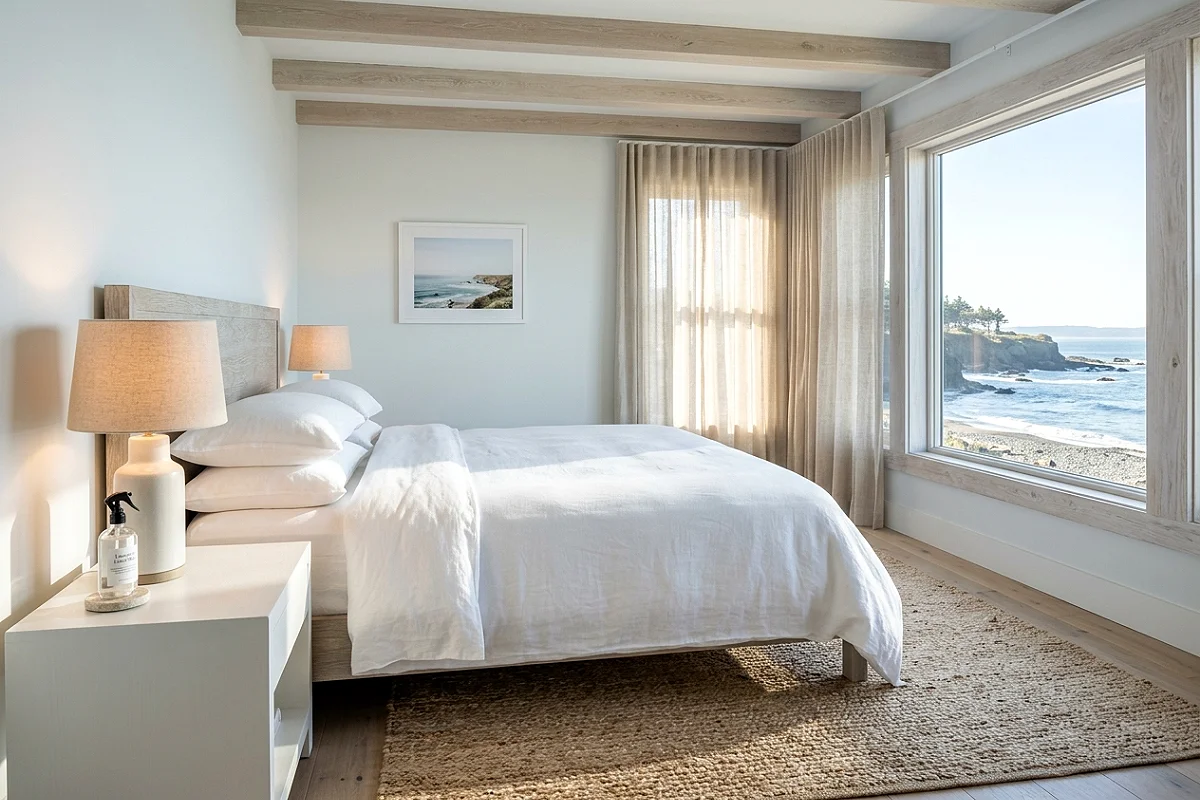
A bedroom that smells beautiful is a more beautiful bedroom — scent affects the perception of a space more directly and emotionally than almost any visual element, and a room with a specific, consistent, pleasant fragrance registers as cared for and considered before the eye has processed a single design decision. A simple linen spray — lavender and cedarwood, rose and sandalwood, jasmine and vanilla — spritzed onto the duvet, pillowcases, and curtains fifteen minutes before bedtime is one of the lowest-cost, highest-sensory-impact additions to a bedroom routine. Many beautiful linen mists are available for under $12 at TJ Maxx, Marshalls, and Amazon; alternatively, a small spray bottle filled with distilled water and 15 drops of essential oil makes an effective DIY version for under $5 in total.
Pro Tip
Choose one signature scent for the bedroom and use only that consistently rather than rotating through multiple fragrances. A consistent scent becomes a powerful sensory cue associated with that specific space — rest, comfort, the specific quality of being in that room — in a way that a rotating assortment of fragrances never builds.
Furniture Rearrangement
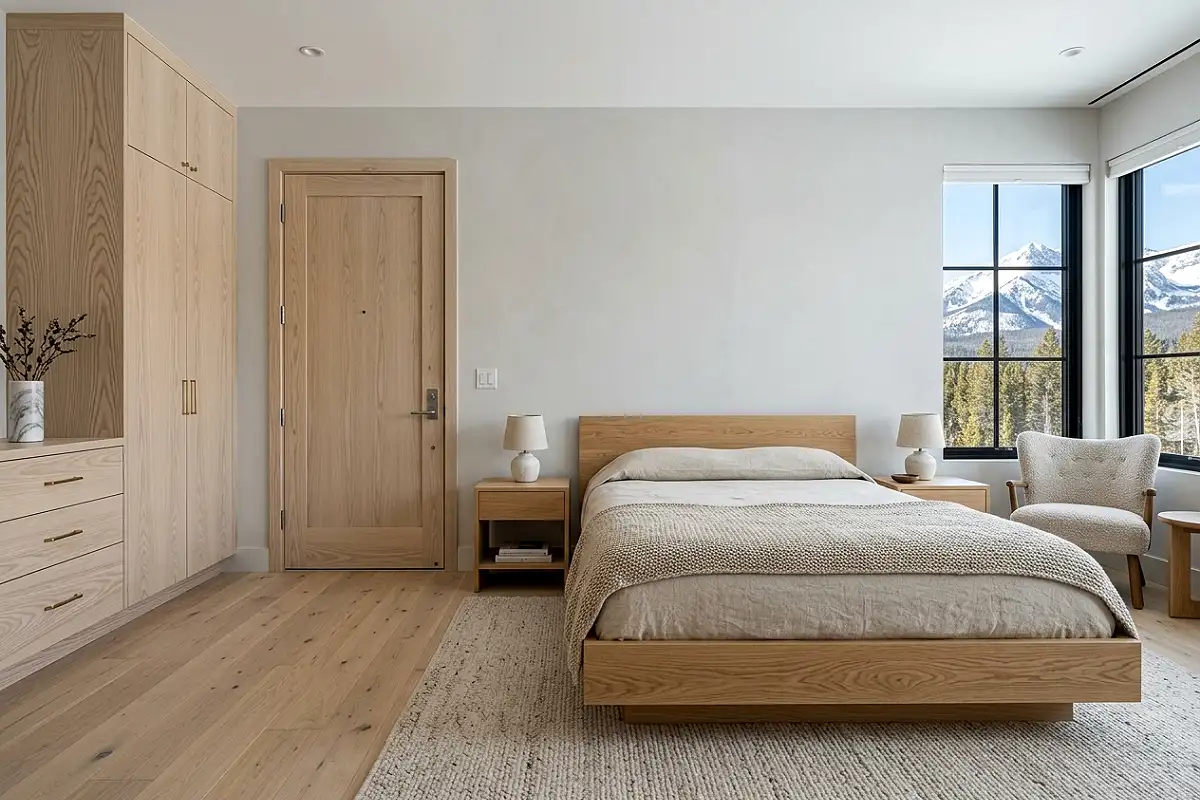
Moving the furniture into a genuinely considered arrangement — rather than the default position it landed in when it first arrived — costs nothing and frequently produces the most dramatic before-and-after improvement available without any purchases at all. The principles are straightforward: the bed should be the first thing you see when you enter the room, which usually means placing it on the wall opposite the door or on the largest uninterrupted wall. Nightstands should sit within 2 inches of mattress height. No furniture should block natural light. There should be at least 24 inches of clear floor space on both sides of the bed and at the foot. Dressers and wardrobes belong on secondary walls, not the one facing the door. Most people have never deliberately applied these principles to their bedroom and find the room works dramatically better after doing so.
Pro Tip
Before moving anything, draw the room to scale on graph paper — or use a free room planning app like Planner 5D or IKEA Place — and move scaled furniture cutouts around the floor plan first. This takes 15 minutes and saves hours of physically moving heavy furniture into arrangements that do not work, only to move them back or to a third position.
Wicker Basket Storage Edit
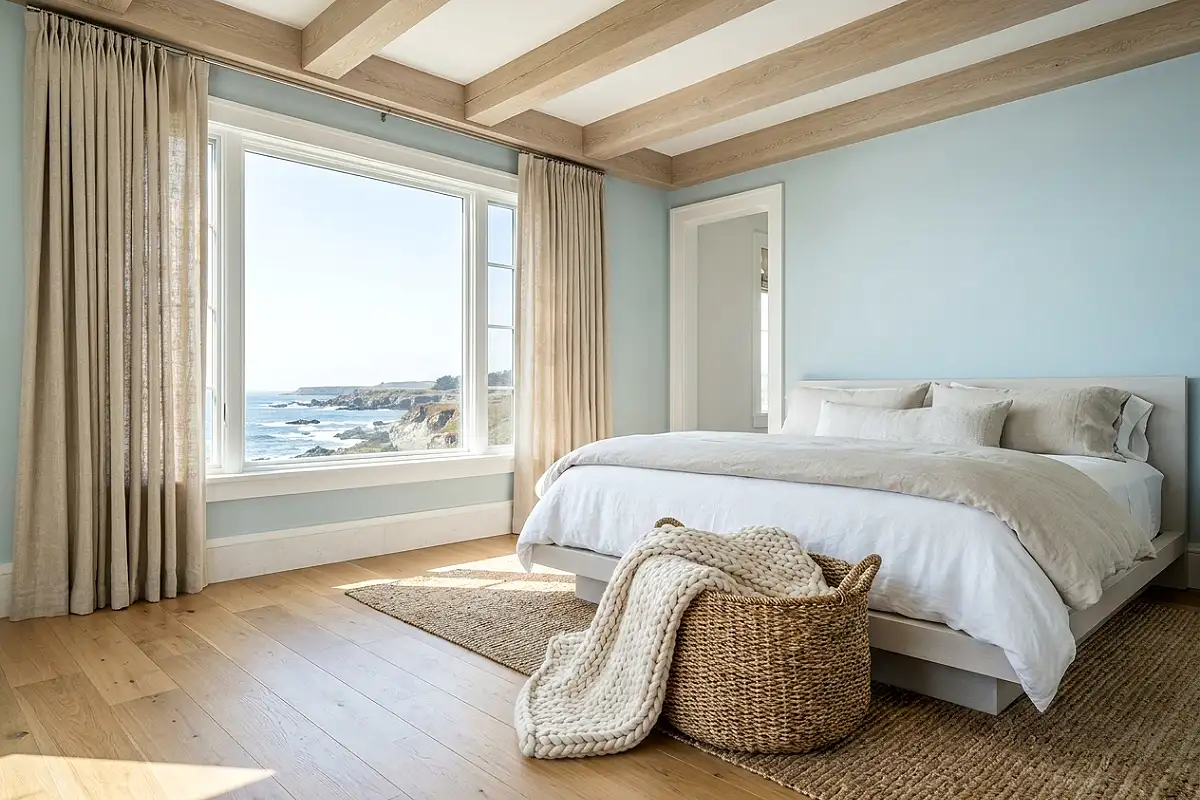
Replacing visible plastic storage bins, cardboard boxes, or open shelves of loosely stacked items with woven wicker, seagrass, or jute baskets turns a storage problem into a design solution simultaneously. A large wicker basket beside the bed holds extra blankets; a medium lidded seagrass basket on a shelf corrals cables and chargers out of sight; two matching baskets under a floating shelf hold folded clothing or seasonal items. The baskets themselves — in a natural honey, warm oatmeal, or bleached natural tone — add organic texture and warmth to the room at the precise locations where clutter would otherwise undercut the rest of the design. A set of three matching woven baskets in graduated sizes costs $15 to $30 at IKEA, TJ Maxx, or World Market and immediately transforms any storage area from a visual liability to an asset.
Pro Tip
Let whatever is stored in a basket spill very slightly over the top edge — a corner of a folded blanket, a trailing vine from a small plant, the edge of a magazine. A basket packed precisely to the brim reads as storage; one with a slight organic overflow reads as decor. It is a small distinction that determines whether the basket contributes to the room’s visual warmth or simply tidies its mess.
Frequently Asked Questions
How can I decorate my bedroom on a very tight budget?
Start with changes that cost nothing. Rearrange the furniture, clear unnecessary items from surfaces, improve the layout, and make better use of what you already own. If you have a small budget, prioritize warm lighting, a textured throw, and one or two well-chosen decorative accents for the greatest visual impact.
What makes a cheap bedroom look expensive?
Focus on warm lighting, clean surfaces, balanced proportions, and cohesive materials. Warm bulbs, uncluttered nightstands, properly hung curtains, and a few thoughtfully selected accessories can make even inexpensive furniture feel more polished.
Where is the best place to find budget bedroom decor?
Look beyond traditional home-decor stores. Thrift shops are excellent for frames and unique accessories, while IKEA and similar retailers work well for practical storage and structural pieces. Online marketplaces can also be useful for affordable lighting, textiles, and everyday essentials.
How do I make a rented bedroom look more beautiful without permanent changes?
Focus on removable and portable elements such as bedding, rugs, throw pillows, floor mirrors, plants, baskets, and plug-in lighting. Removable adhesive strips can also be useful for lightweight artwork, provided they are suitable for your wall surface and lease requirements.
What is the most important thing to buy first when decorating a bedroom on a budget?
Start with lighting. Warm, soft bulbs can dramatically change the atmosphere of a bedroom for very little money. Once the lighting feels right, prioritize pieces that have a strong visual impact, such as quality bedding, a textured throw, or one distinctive accent.
How many decorative items does a bedroom actually need?
Less is usually more. A bedroom can feel complete with a few intentional pieces: bedside lamps, artwork, a small dresser arrangement, a plant, a throw blanket, and perhaps a mirror. Anything that doesn’t add beauty, function, or personality can usually be removed.
A beautiful bedroom is ultimately built through good editing, thoughtful styling, and intentional choices—not excessive spending. Often, the simplest change is the one that makes the biggest difference.