20 Minimalist Bedroom Ideas for a Clean & Cozy Home
Minimalism isn’t about removing everything from a bedroom until the space feels bare, cold, or impersonal. It’s about being intentional with what you choose to keep—surrounding yourself with pieces that serve a purpose while adding beauty, comfort, warmth, or character. When thoughtfully designed, a minimalist bedroom can feel instantly calming, with soft natural light, clean lines, uncluttered surfaces, warm textures, and a beautifully layered bed that encourages you to slow down and unwind. The overall effect is refined and peaceful, creating a sense of simplicity without ever feeling sterile or overly clinical.
In the ideas below, you’ll discover 20 beautiful ways to create a clean yet cozy minimalist bedroom aesthetic at home. Each idea includes a practical styling tip to make the look easier to recreate, whether you’re working with a spacious primary bedroom or a compact space. From choosing a restrained color palette and layering natural textures to simplifying surfaces and adding carefully selected accents, these ideas show how small, intentional decisions can make a meaningful difference. Mix and match the elements that reflect your personal style, keep what feels useful and beautiful, and create a minimalist bedroom that feels effortlessly curated while remaining genuinely comfortable and inviting.
A Platform Bed With Low, Clean Lines
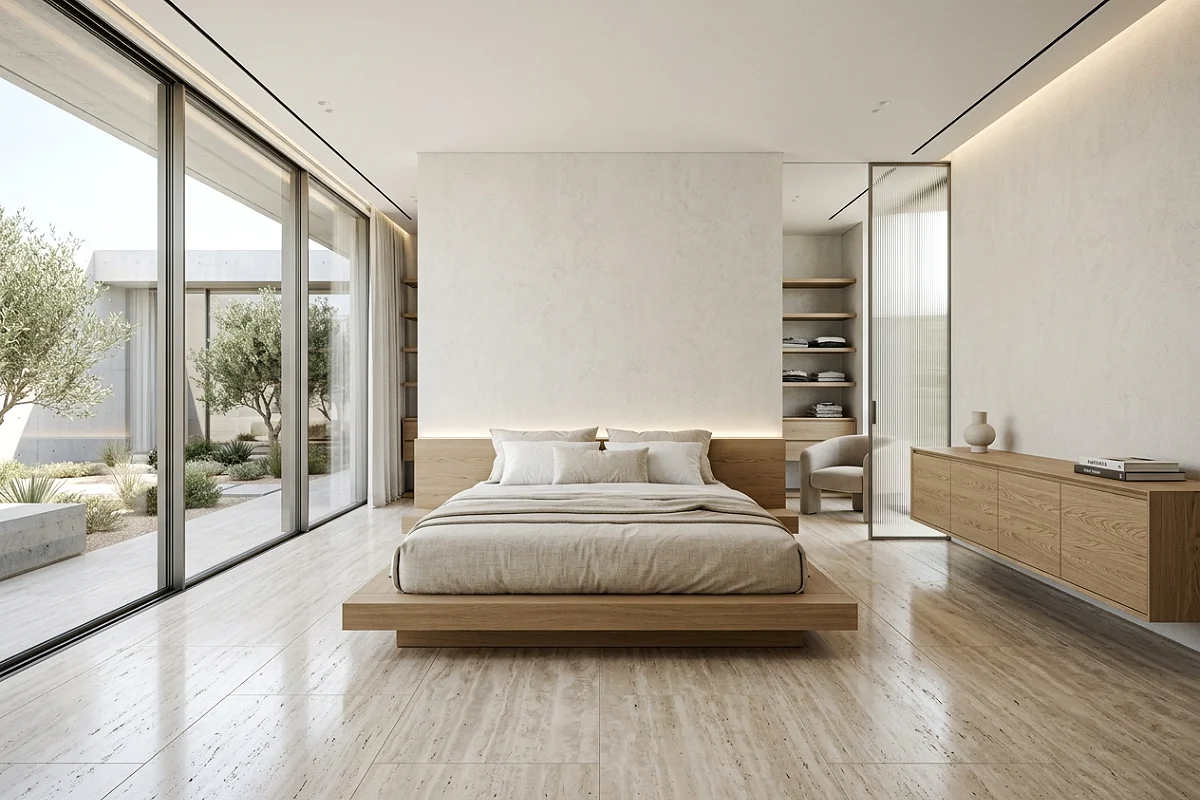
A platform bed sitting low to the ground is the backbone of almost every minimalist bedroom. Without a tall, ornate frame pulling focus, the eye settles instead on soft bedding, warm wood tones, and the architecture of the room itself. Choose a solid wood or upholstered frame in a natural, muted tone so it reads as grounded rather than plain.
Pro Tip
Measure your ceiling height before buying a low platform bed. In rooms under 8 feet, a low frame makes the ceiling feel noticeably taller, in rooms already tall, it adds a grounded, editorial contrast.
Monochrome Bedding in Soft White and Warm Grey
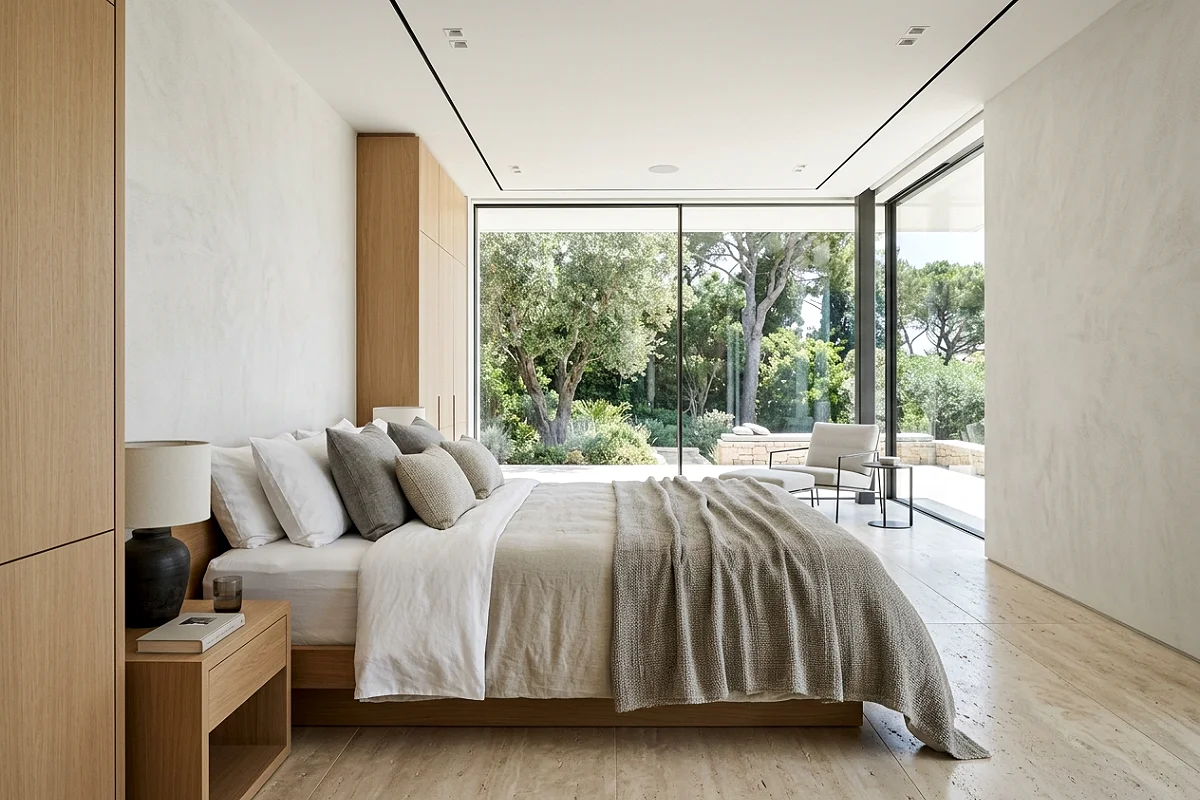
Instead of patterned duvets, dress the bed in tonal layers, a crisp white base sheet, a warm oatmeal duvet, and one grey linen throw folded at the foot. The subtle tonal shift adds depth without ever feeling busy, and it’s the easiest way to make a bed look like it belongs in a boutique hotel.
Pro Tip
Stick to two or three tones within the same color family. Pure white paired with pure white can feel flat, adding one warmer, slightly deeper shade brings the layers to life.
One Statement Piece Instead of Multiple Accents
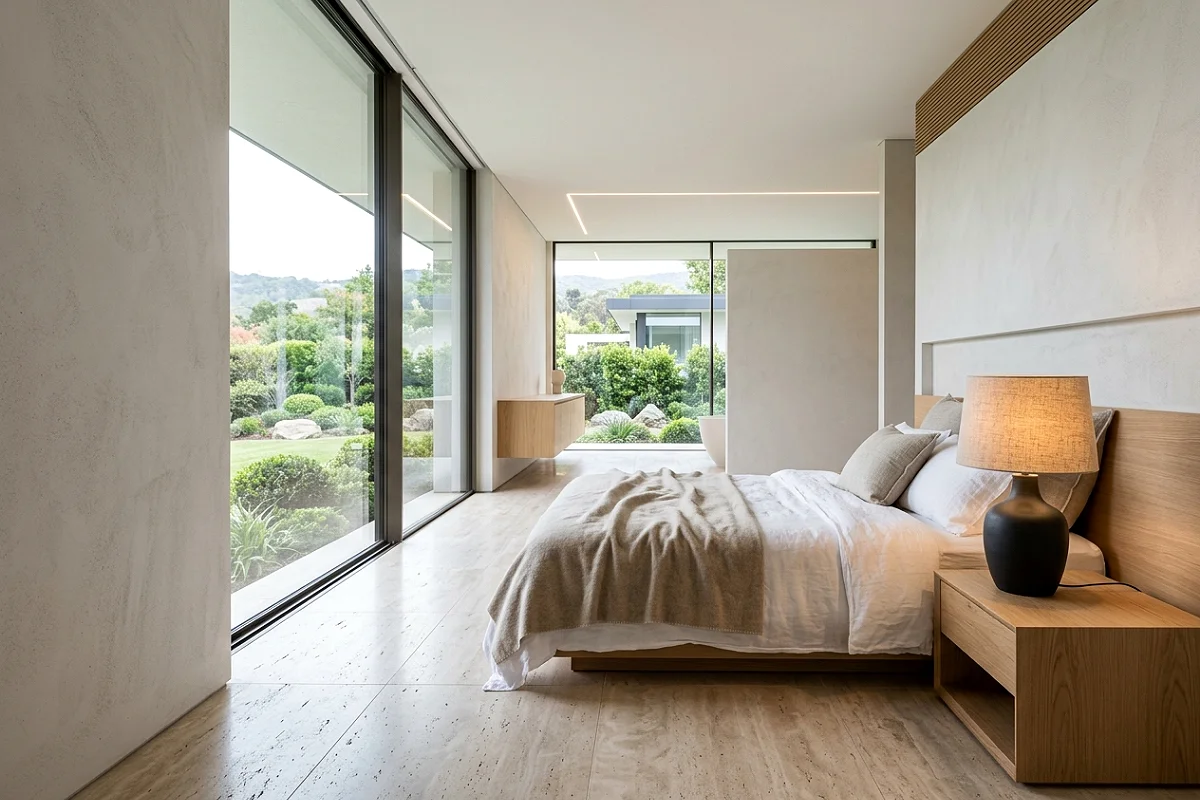
Minimalist rooms feel intentional when they’re built around a single standout piece, a sculptural lamp, a beautifully grained wood bench, or one framed print, rather than a handful of smaller decorative objects competing for attention. Let that one piece carry the personality of the room.
Pro Tip
Before adding a new decor item, ask if it could replace something already in the room instead of sitting alongside it. Minimalism grows by subtraction, not addition.
Hidden Storage for a Clutter-Free Look
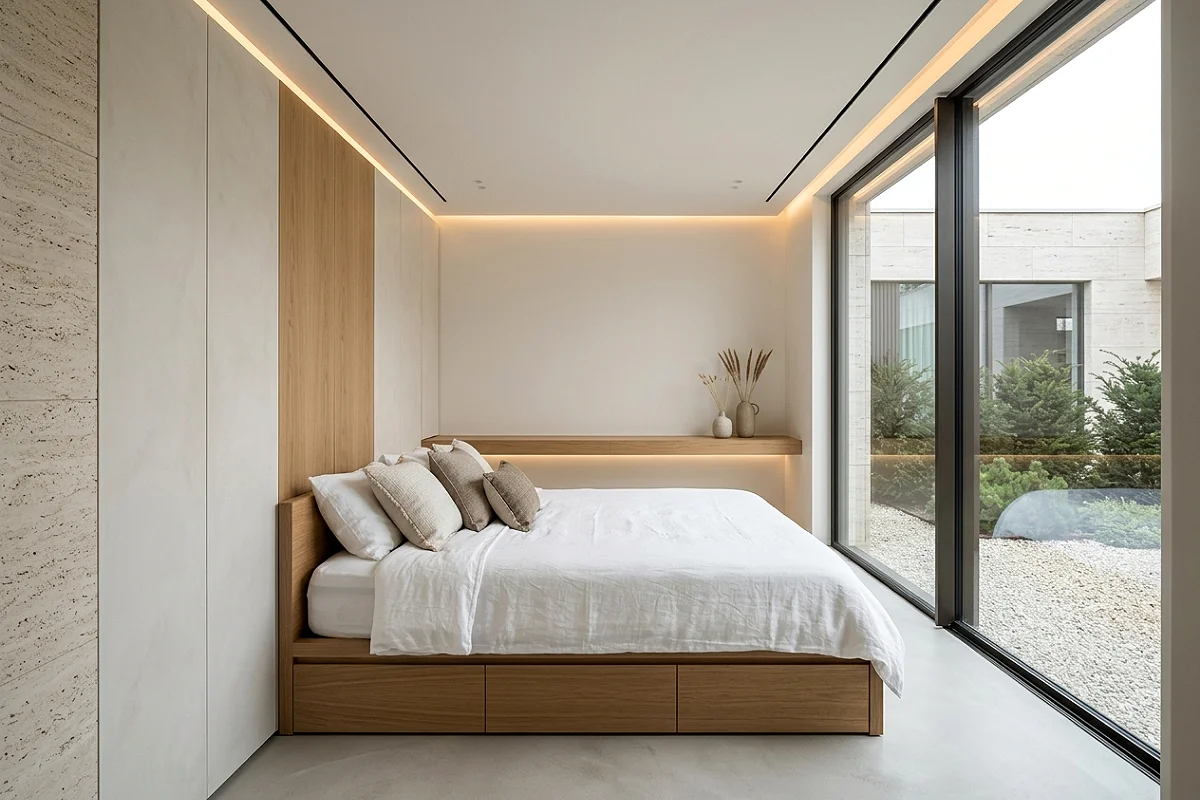
The real secret behind a calm bedroom isn’t what’s on display, it’s what’s tucked away. Under-bed drawers, a slim wardrobe with flush cabinet fronts, or a storage bench at the foot of the bed keep everyday items out of sight so surfaces stay clear.
Pro Tip
Choose cabinet fronts with push-to-open mechanisms instead of visible handles. Removing hardware from view is a small detail that makes storage disappear into the wall.
Natural Light Left Unobstructed
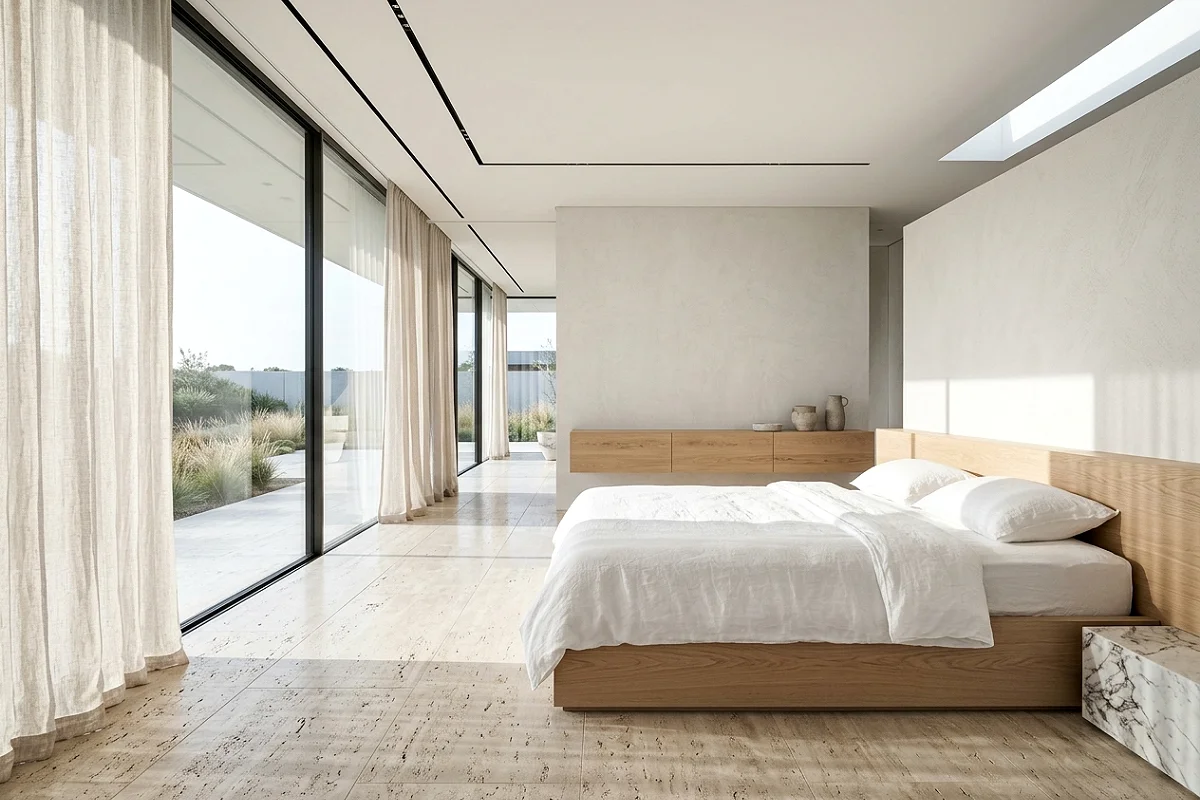
Skip heavy drapery in favor of sheer linen panels or a simple roller shade that disappears fully when raised. Letting daylight move freely through the room is one of the most effective, and least expensive, ways to make a small or simple bedroom feel open and calm.
Pro Tip
Mount curtain rods a few inches above the window frame and slightly wider than the window itself. It lets more light in and makes the ceiling feel taller.
A Single Oversized Art Print
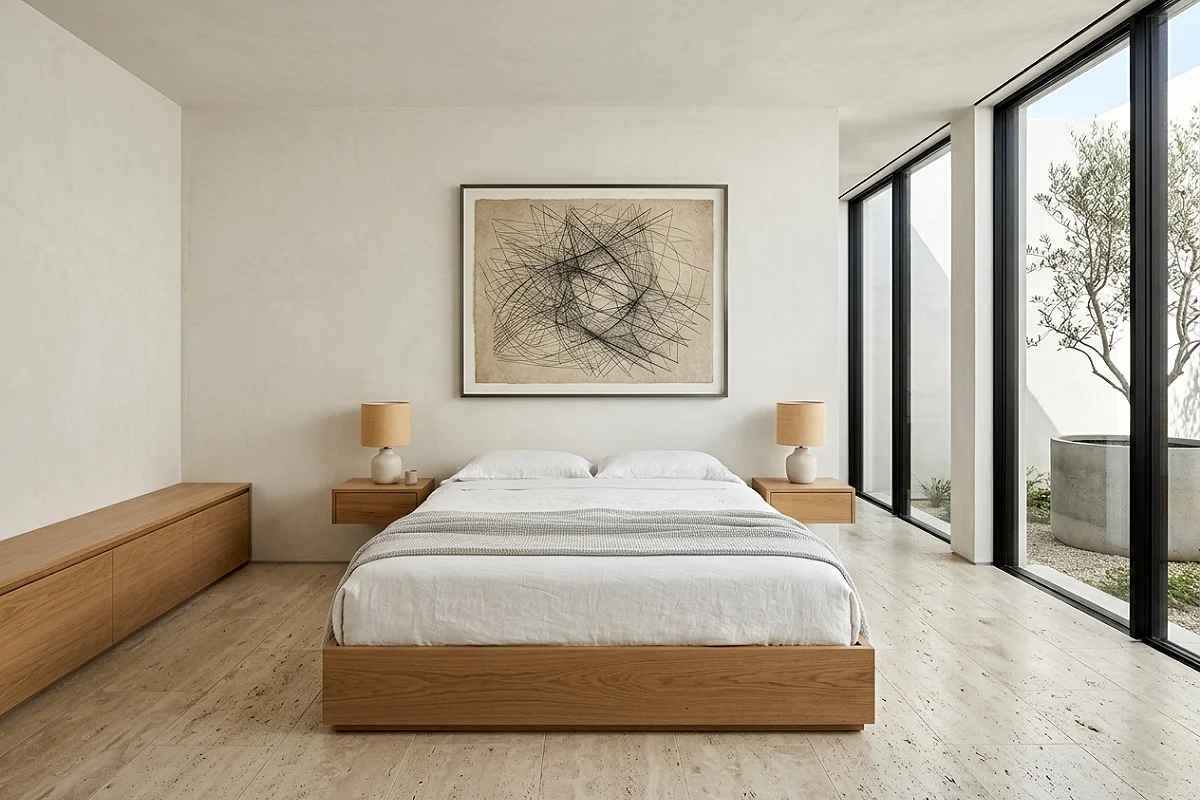
One large, quiet piece of art, an abstract wash of color, a simple line drawing, or a soft landscape, does more for a minimalist bedroom than a gallery wall ever could. Give it room to breathe with plenty of blank wall space around it.
Pro Tip
Center the artwork so its middle sits roughly at eye level when standing, about 57 to 60 inches from the floor, rather than centering it above the headboard.
Warm Wood Tones for Softness
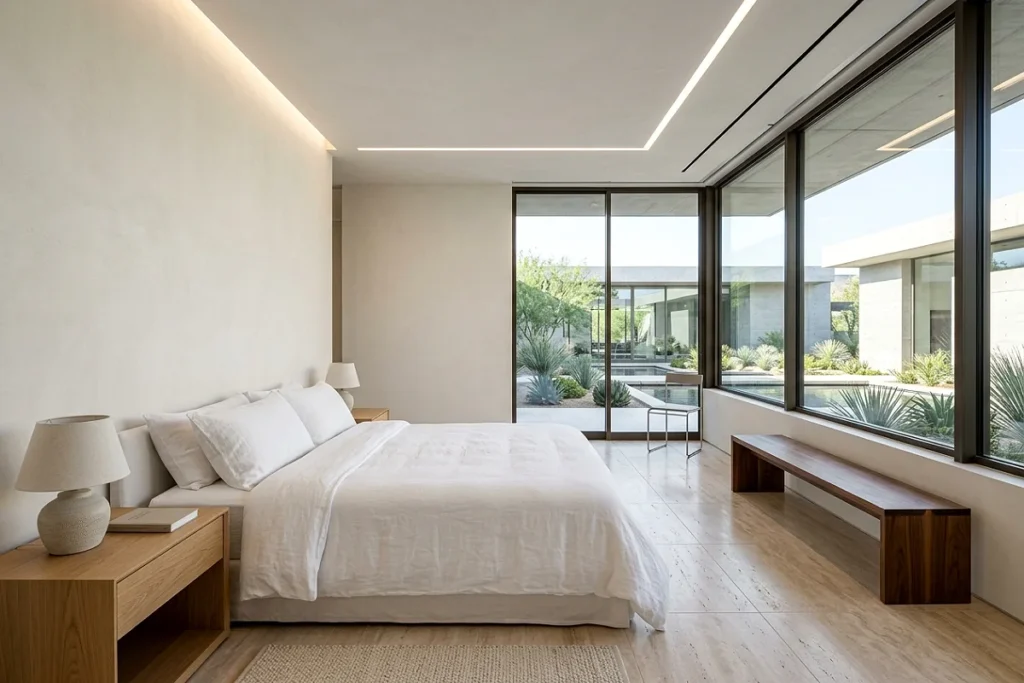
Minimalism can easily tip into feeling cold, warm wood is the antidote. A honey-toned oak nightstand, a walnut bench, or even wood-framed windows introduce a natural warmth that keeps the room feeling inviting rather than sterile.
Pro Tip
If your existing furniture runs cool-toned, add just one warm wood piece, like a nightstand, to instantly soften the whole palette without a full furniture swap.
Negative Space as a Design Choice
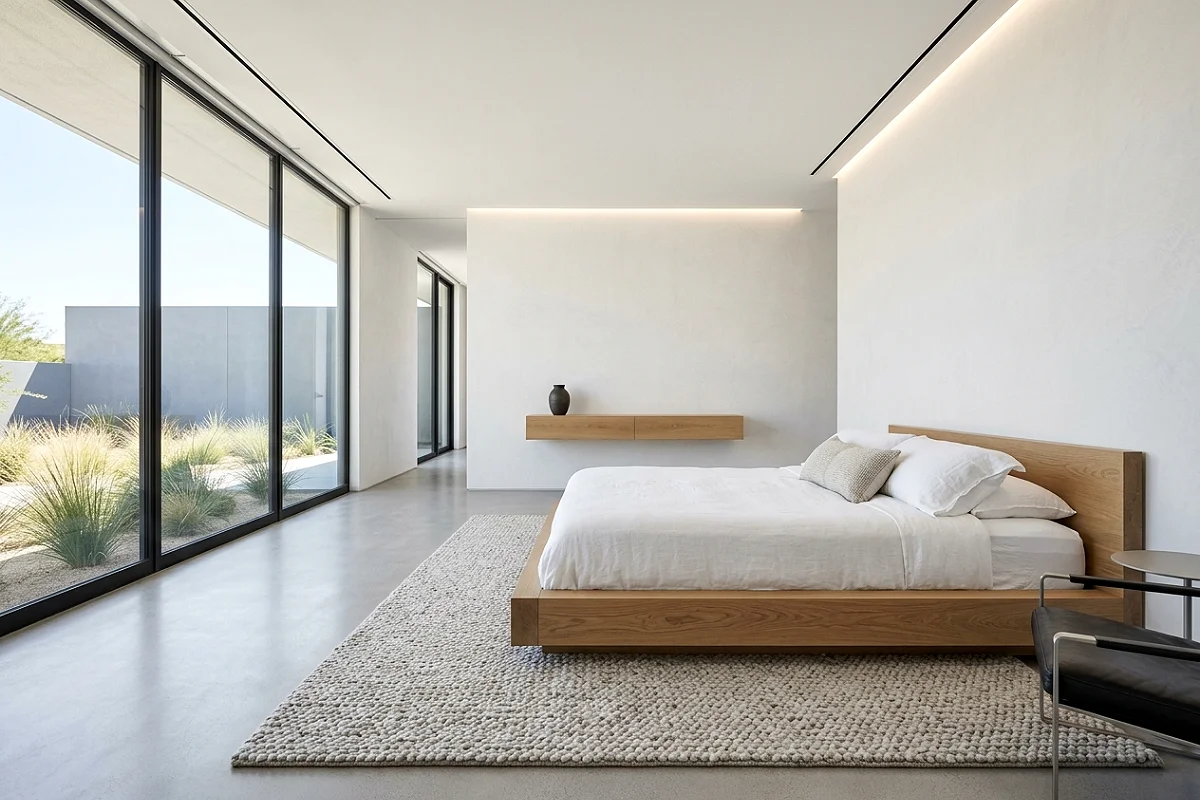
Leave one wall completely bare, or keep a corner of the room genuinely empty. Negative space isn’t unfinished, it’s what gives the eye somewhere to rest and makes every other element in the room feel more considered.
Pro Tip
If a room feels unfinished rather than restful, it usually needs one grounding element, like a rug or a bench, not more decor on the walls.
A Neutral Palette With One Layered Texture
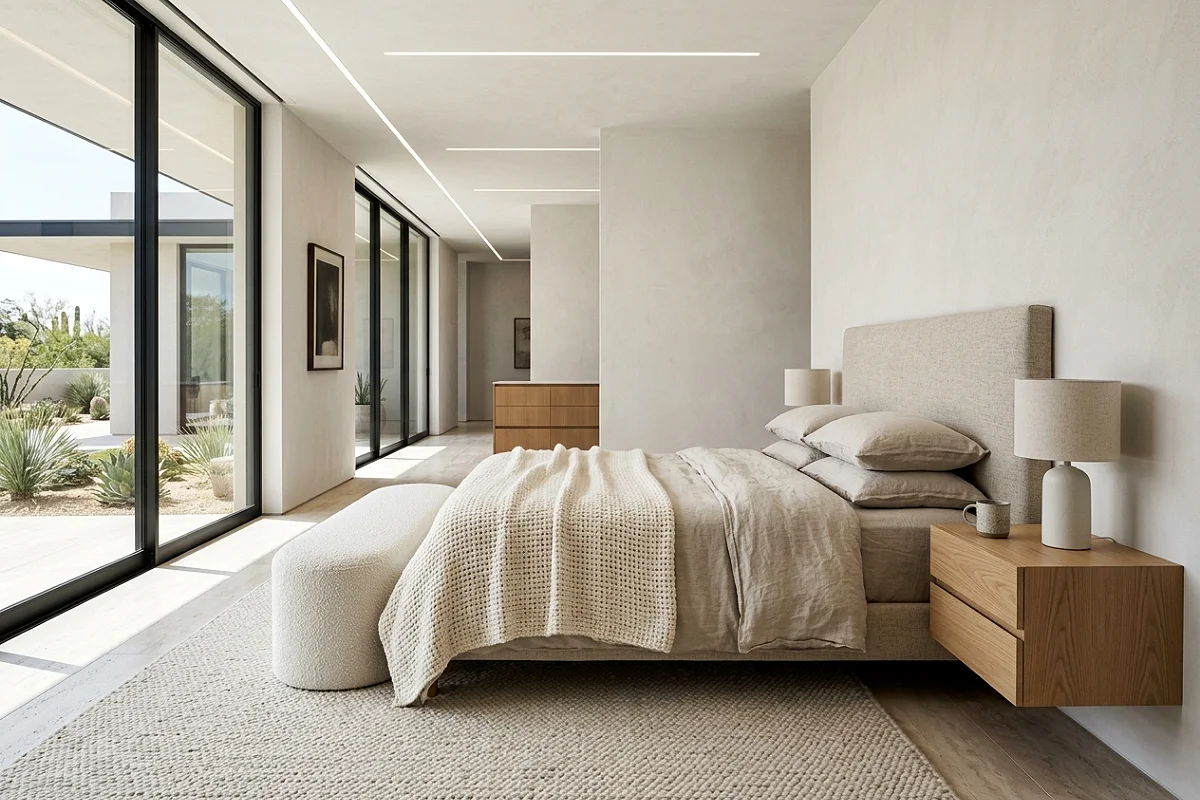
Keep color minimal, but never skip texture. A bouclé bench, a nubby wool rug, or a linen headboard adds richness to an all-neutral room without introducing a single extra color. Texture is what keeps minimalist spaces from feeling flat.
Pro Tip
Aim for at least three different textures in a neutral room, smooth, woven, and soft, even if every piece is the same color.
Woven Baskets for Soft Storage
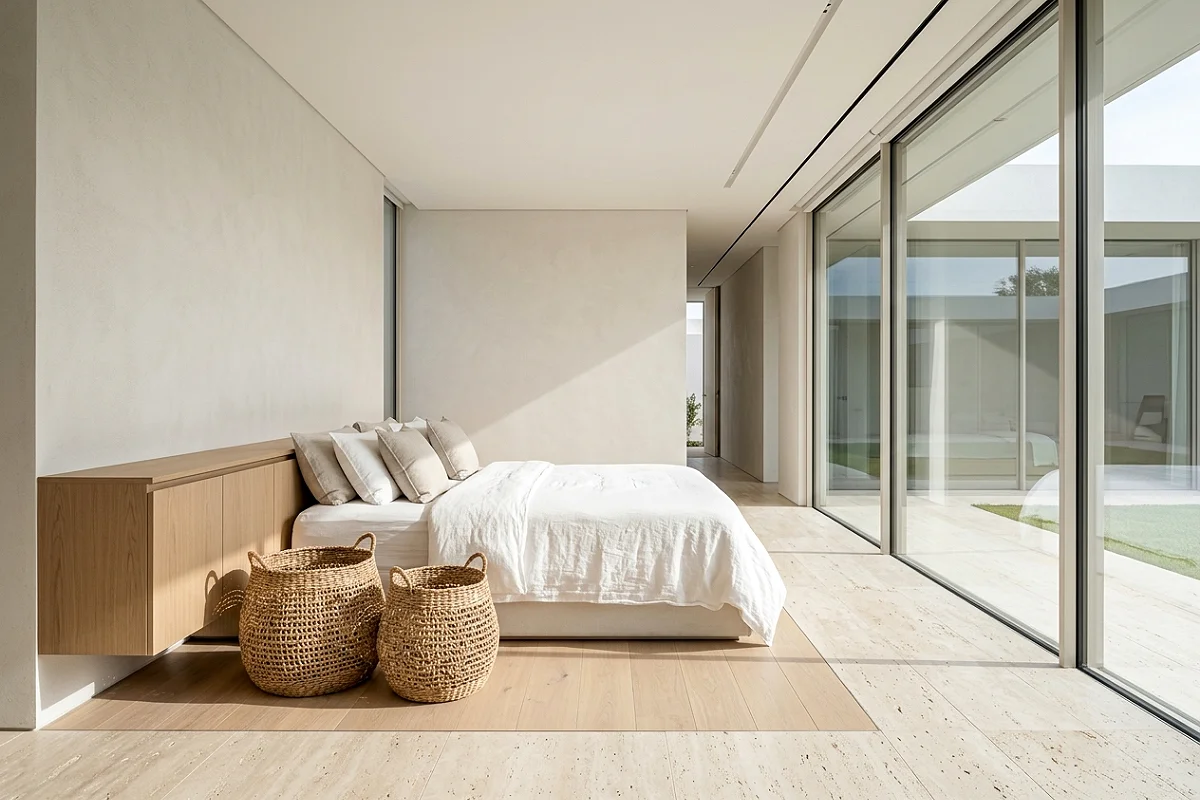
A pair of woven seagrass or rattan baskets tucked beside the nightstand or under a window bench gives you a spot for extra blankets or laundry without introducing plastic bins or visible clutter. They add organic texture while staying fully functional.
Pro Tip
Choose baskets with lids if they’ll sit in open view. A lidded basket reads as furniture, an open one reads as storage.
Simple Linen Curtains
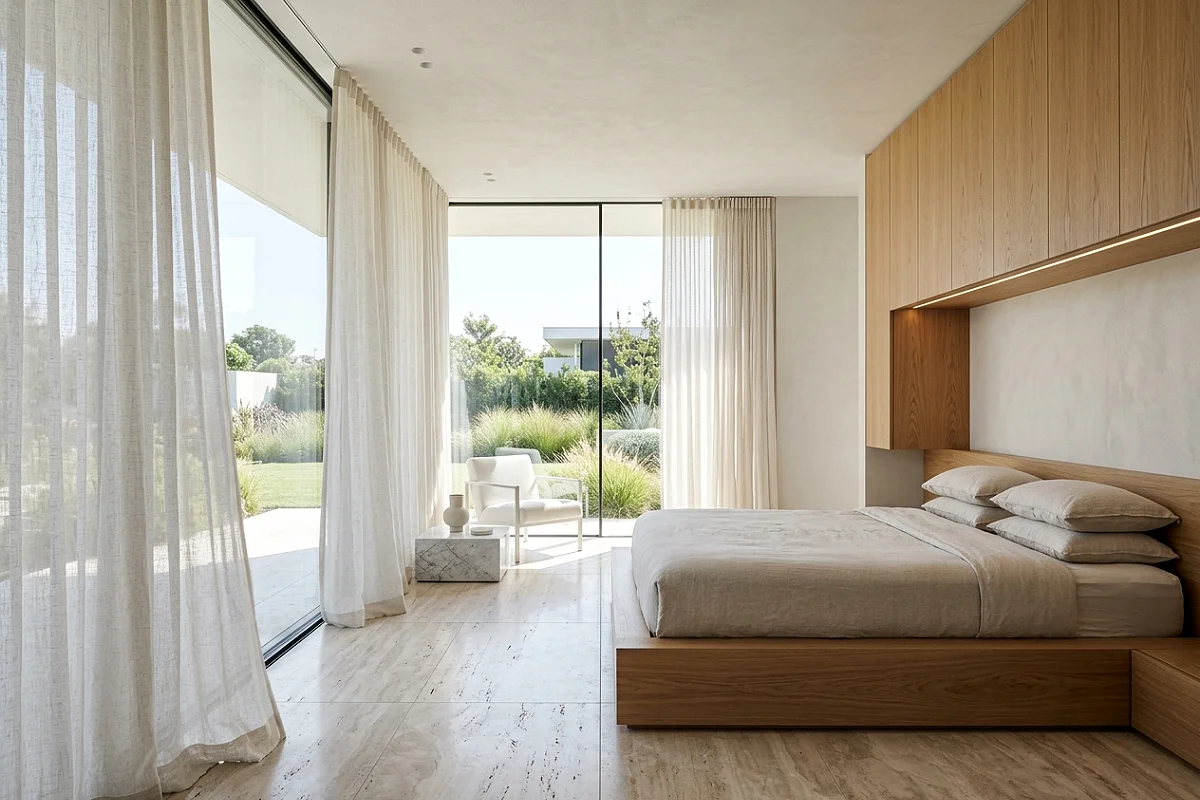
Unlined linen curtains in a soft, undyed tone add movement and softness to a room built mostly from hard, clean lines. They diffuse light beautifully and bring a relaxed, slightly imperfect texture that keeps the space from feeling too rigid.
Pro Tip
Wash linen curtains before hanging them. It softens the fabric and brings out the slightly rumpled texture that gives linen its relaxed character.
A Floating Nightstand or Shelf
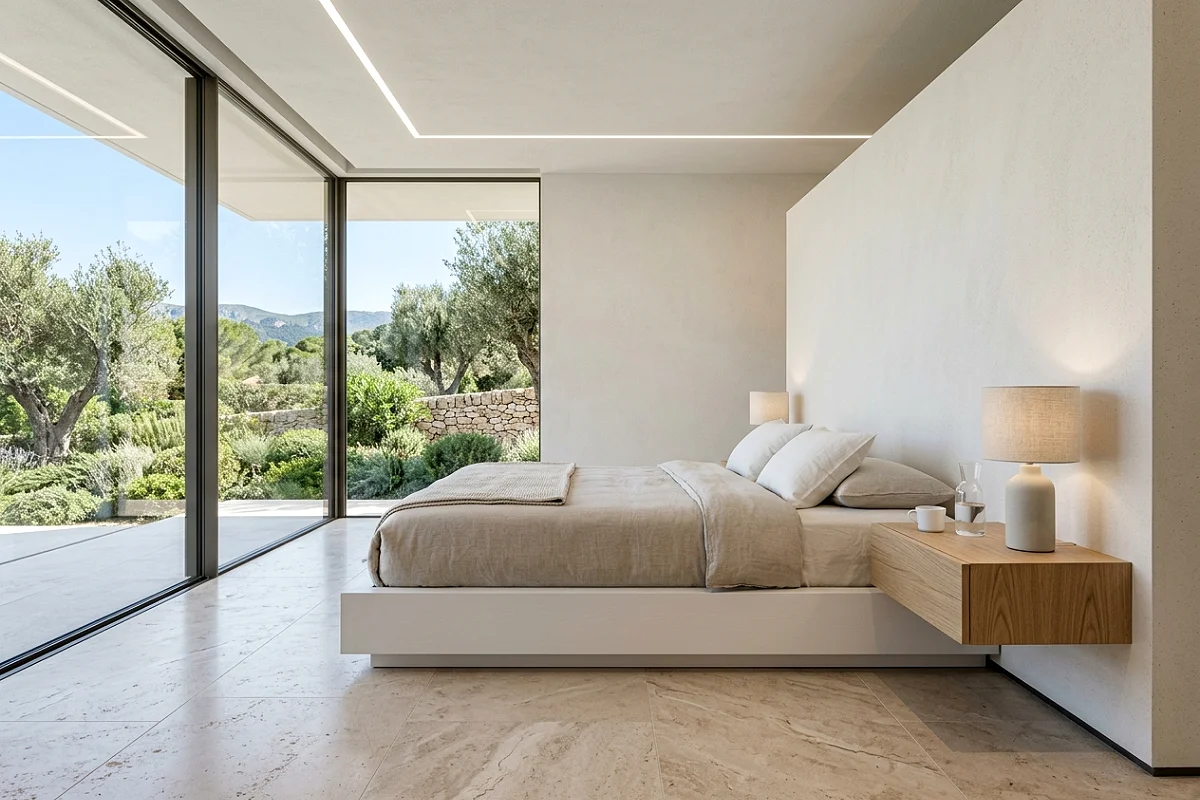
A wall-mounted nightstand or a single floating shelf beside the bed keeps the floor visually open, which makes even a small bedroom feel more spacious. It’s a favorite trick in Scandinavian-style interiors for exactly this reason.
Pro Tip
Mount floating shelves so the surface sits level with or just below the mattress top, this keeps a lamp or glass of water within easy reach at night.
Matte Black or Brass Accents in Small Doses
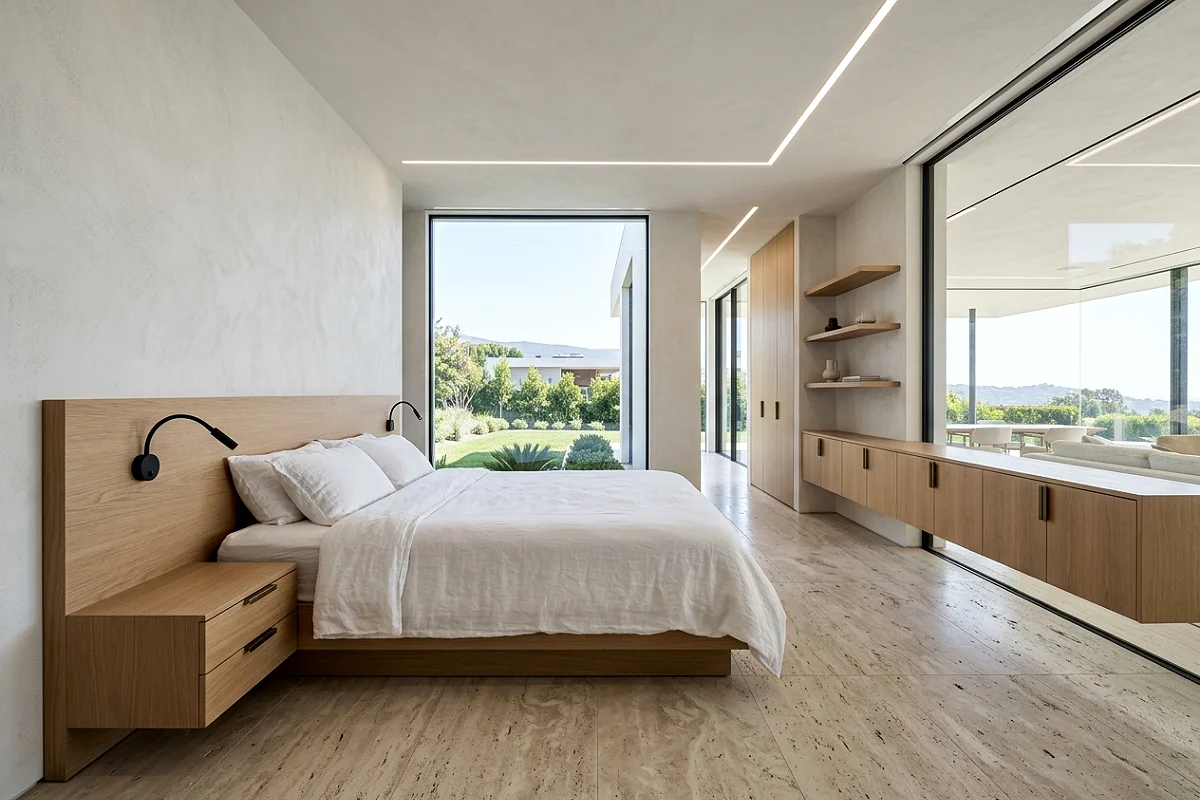
A matte black reading lamp, or a set of slim brass drawer pulls, gives a neutral room a quiet sense of finish. Keep the metal to one or two small touches rather than repeating it across every fixture in the room.
Pro Tip
Pick one metal finish for the whole room and repeat it in at least two places, this is what makes small accents feel deliberate rather than random.
A Low Dresser Instead of a Tall Wardrobe
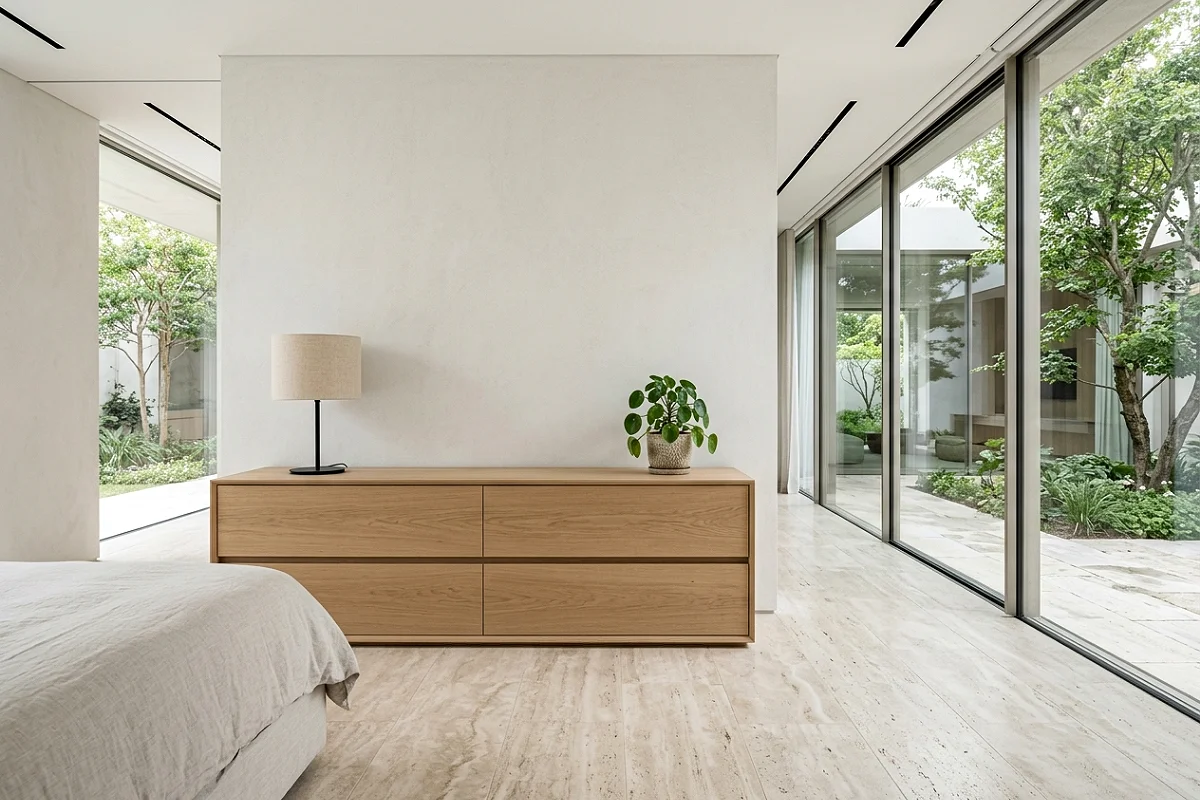
Where space allows, a long, low dresser feels lighter in the room than a tall wardrobe pressing against the ceiling line. It also doubles as a styling surface for a lamp, a small tray, or a single plant.
Pro Tip
Leave at least two-thirds of the dresser top empty. A styled surface needs breathing room to read as curated instead of cluttered.
Soft, Diffused Lighting
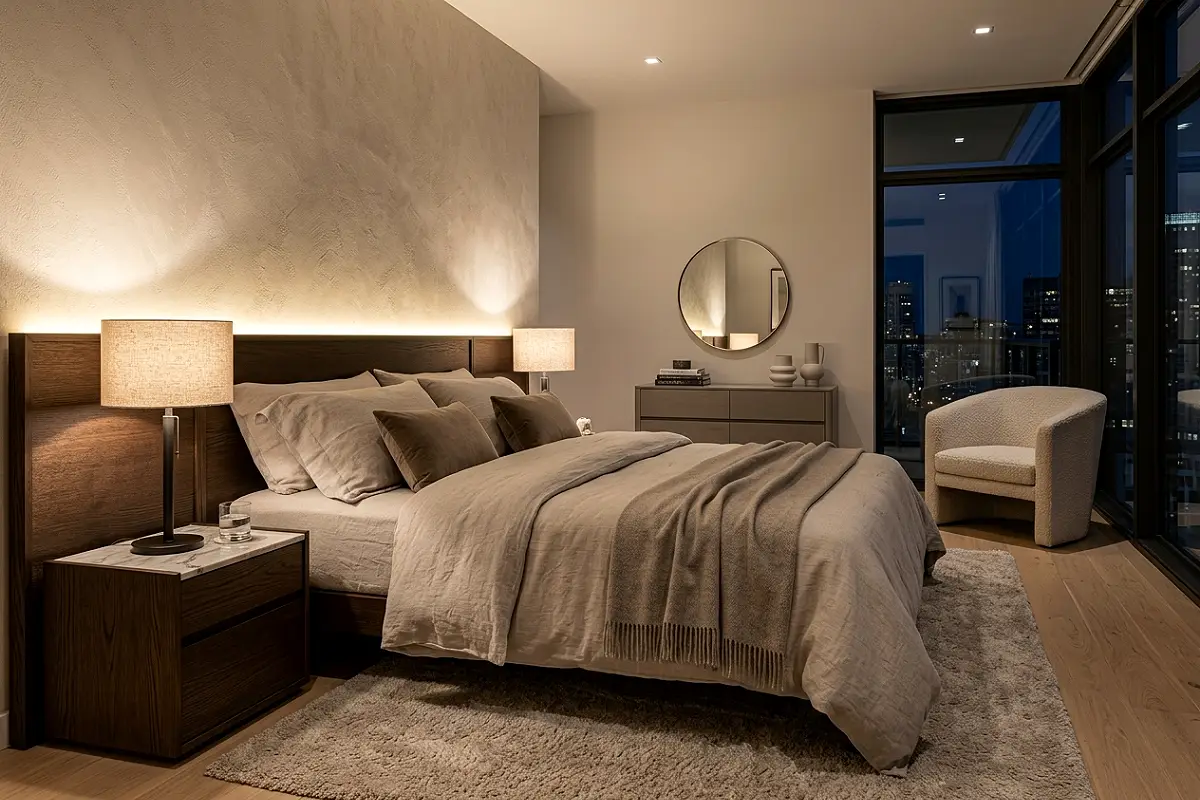
Swap bright overhead lighting for warm, diffused sources, a paper or linen shade pendant, a dimmable lamp, or hidden LED strip lighting behind a headboard. Soft light is one of the fastest ways to make a minimalist room feel cozy rather than cold.
Pro Tip
Look for bulbs labeled 2700K or lower. Anything higher starts to read as clinical white light rather than warm, restful glow.
An Uncluttered Headboard Wall
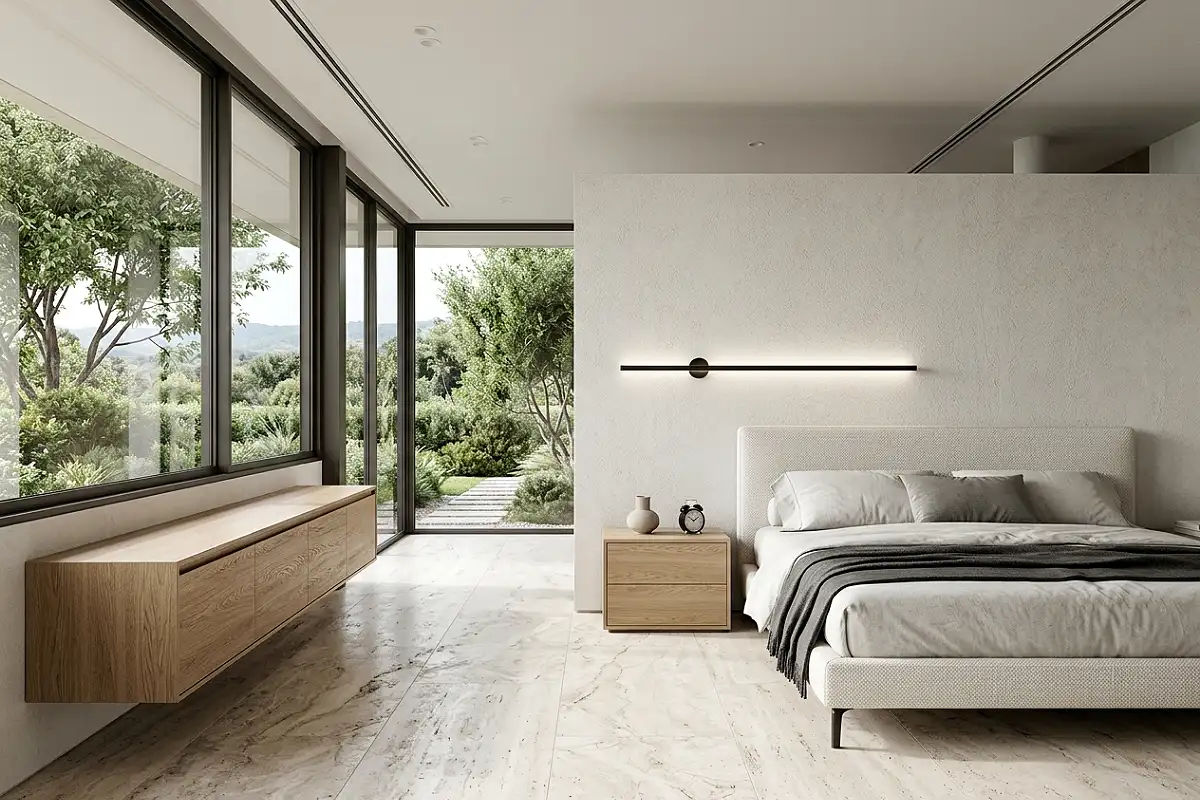
Let the headboard wall be the calmest surface in the room, no gallery frames, no shelving, just the bed, the wall’s natural texture, and maybe one small sconce. This restraint is what gives minimalist bedrooms their signature quiet.
Pro Tip
If the headboard wall feels too bare, add texture through paint or plaster rather than objects, it keeps the calm intact while still adding interest.
A Cozy Throw Blanket in Neutral Wool
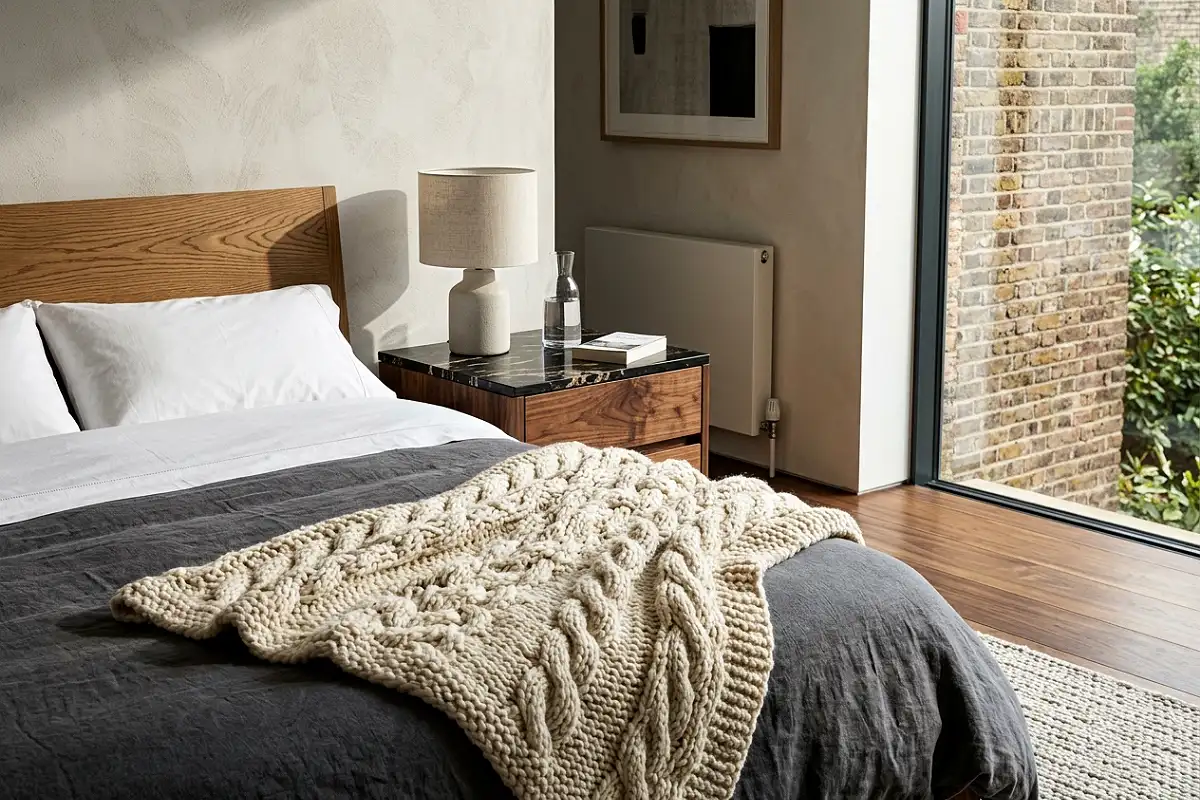
One substantial wool or chunky-knit throw, folded loosely at the foot of the bed, brings warmth and tactility into an otherwise streamlined room. It’s a small, affordable addition that makes the whole space feel more inviting to sink into.
Pro Tip
Fold the throw loosely rather than perfectly, a slightly relaxed fold looks more natural and lived-in than a stiff, hotel-corner style fold.
Minimal Wall Décor, One Mirror
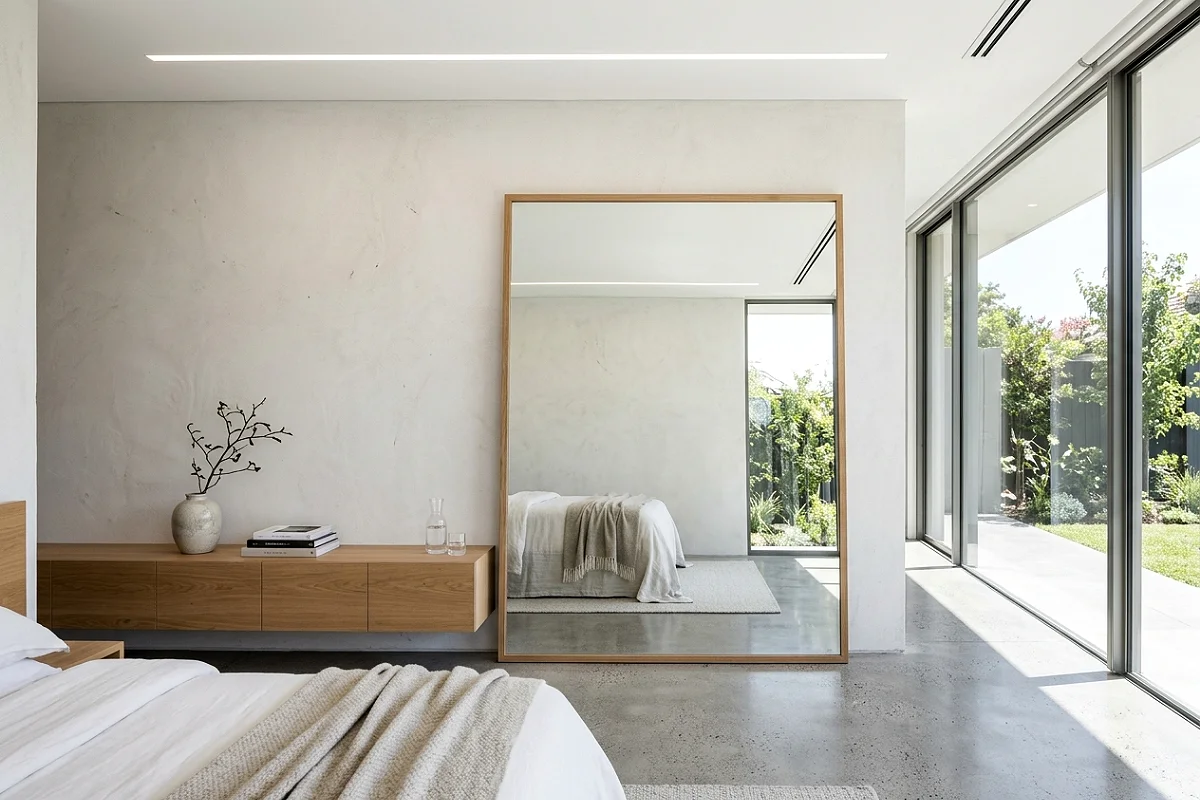
A single well-placed mirror, ideally with a slim wood or brass frame, adds light and dimension to the room without introducing more visual clutter. Lean it against the wall rather than hanging it for an easy, relaxed finish.
Pro Tip
Position a leaning mirror so it reflects the window. It doubles the natural light in the room without adding a single extra fixture.
A Quiet Reading Corner
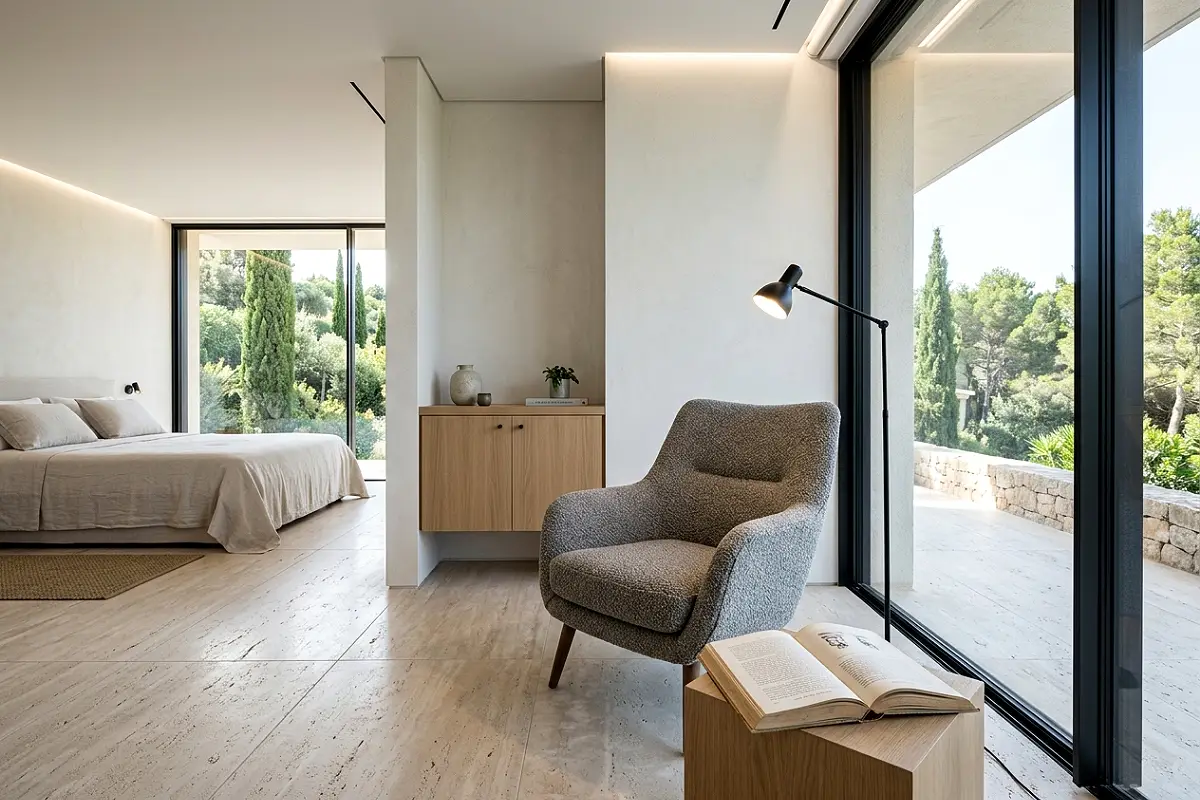
A single accent chair and a small side table near a window turn an unused corner into a purposeful retreat. Keep the styling as restrained as the rest of the room, one chair, one lamp, nothing more.
Pro Tip
Angle the chair slightly toward the window rather than squaring it to the wall, it makes the corner feel like a considered nook rather than leftover space.
Consistent Color Temperature Throughout
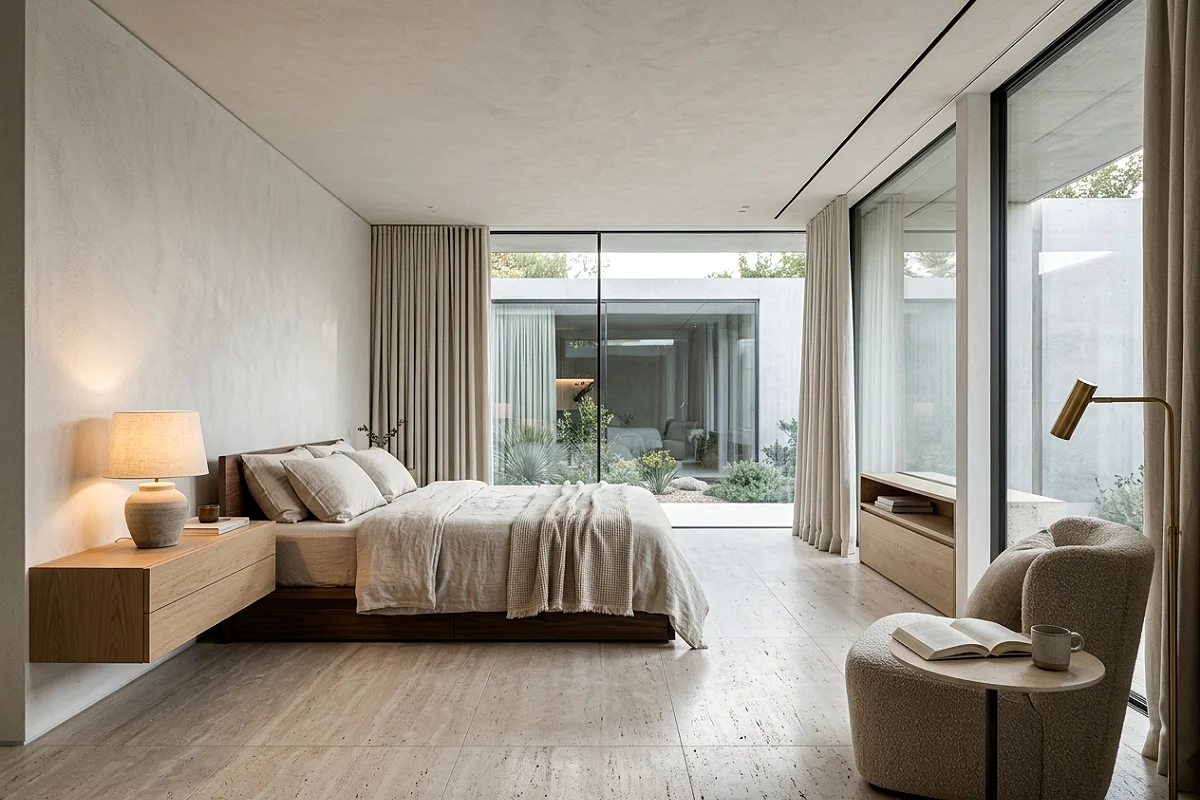
Nothing breaks a minimalist room’s calm faster than mismatched light bulbs, one warm, one cool, one daylight. Keep every bulb in the room the same warm temperature so the lighting feels cohesive from every angle.
Pro Tip
Buy all your bulbs from the same product line when possible, small variations between brands are more noticeable than most people expect.
Frequently Asked Questions
What defines a minimalist bedroom?
A minimalist bedroom is built around simplicity, intention, and visual balance. It usually features a restrained color palette, uncluttered surfaces, functional furniture, and thoughtfully chosen decor. The goal isn’t to have as few belongings as possible, but to create a space where every piece has a purpose—whether it adds comfort, function, warmth, or visual appeal.
How do I make a minimalist bedroom feel cozy instead of cold?
Texture, natural materials, and warm lighting are the easiest ways to add coziness without losing the clean look of minimalism. Layer linen or cotton bedding with a soft wool, knitted, or woven throw, introduce warm wood tones, and use lamps that create a gentle, diffused glow. A few carefully chosen textiles and natural accents can make the room feel inviting while keeping the overall design calm and uncluttered.
What colors work best in a minimalist bedroom?
Soft, neutral shades are an ideal starting point for a minimalist bedroom. White, ivory, cream, oatmeal, beige, warm gray, and greige create a serene and versatile backdrop, while richer shades such as charcoal, espresso brown, muted olive, or deep taupe can provide subtle contrast. Keeping the palette limited to a few complementary tones helps the room feel cohesive, sophisticated, and restful.
Do minimalist bedrooms need matching furniture?
No, a minimalist bedroom doesn’t need a perfectly matching furniture set. Mixing complementary pieces can actually create a more refined and personal look. To keep the space cohesive, choose finishes, materials, or colors that share a visual connection—such as warm woods, natural finishes, or matte black details—while allowing individual pieces to vary slightly in shape and style.
How much storage does a minimalist bedroom need?
The right amount of storage depends on your lifestyle, belongings, and daily routines. Instead of focusing on having as little storage as possible, prioritize practical solutions that keep frequently used items organized and surfaces clear. Built-in wardrobes, under-bed storage, bedside drawers, baskets, and streamlined cabinets can provide plenty of functionality while preserving the clean appearance of a minimalist bedroom.
Is minimalist design the same as modern design?
Not exactly. Modern design refers to a specific aesthetic and design movement, while minimalism is a broader design philosophy focused on simplicity, functionality, and intentional choices. Minimalist principles can complement many different styles, including modern, Scandinavian, Japandi, organic, and traditional interiors. The defining idea is that each element should feel purposeful and contribute to a balanced, harmonious space.