
18 Yellow Bedroom Ideas for a Bright and Cheerful Space
Few colors do what yellow does. It’s the only hue proven to make people feel genuinely happier in a room — studies of color psychology keep finding it raises mood and energy — but anyone who has lived with a bad yellow knows the flip side: underdone, it turns a bedroom into a nursery or a 1970s kitchen. The difference between those two outcomes isn’t the color. It’s the tone, the dose, and the company yellow keeps. Butter tones read as light, marigold reads as warmth, mustard reads as vintage sophistication, and lemon zest reads as joy. Pick the right tone and everything else follows.
After years of styling bright rooms, I’ve learned that yellow works best when it behaves like sunlight behaves: it fills some places completely, touches others only at the edges, and always sits near something white to bounce off. The 18 ideas below use yellow at every scale — from a pale wash on all four walls to a single lemon in a ceramic bowl — so you can choose the dose that matches your courage. All of them share one rule: yellow is the sunshine; white is the sky. You need both.
Butter Yellow All-Over Walls
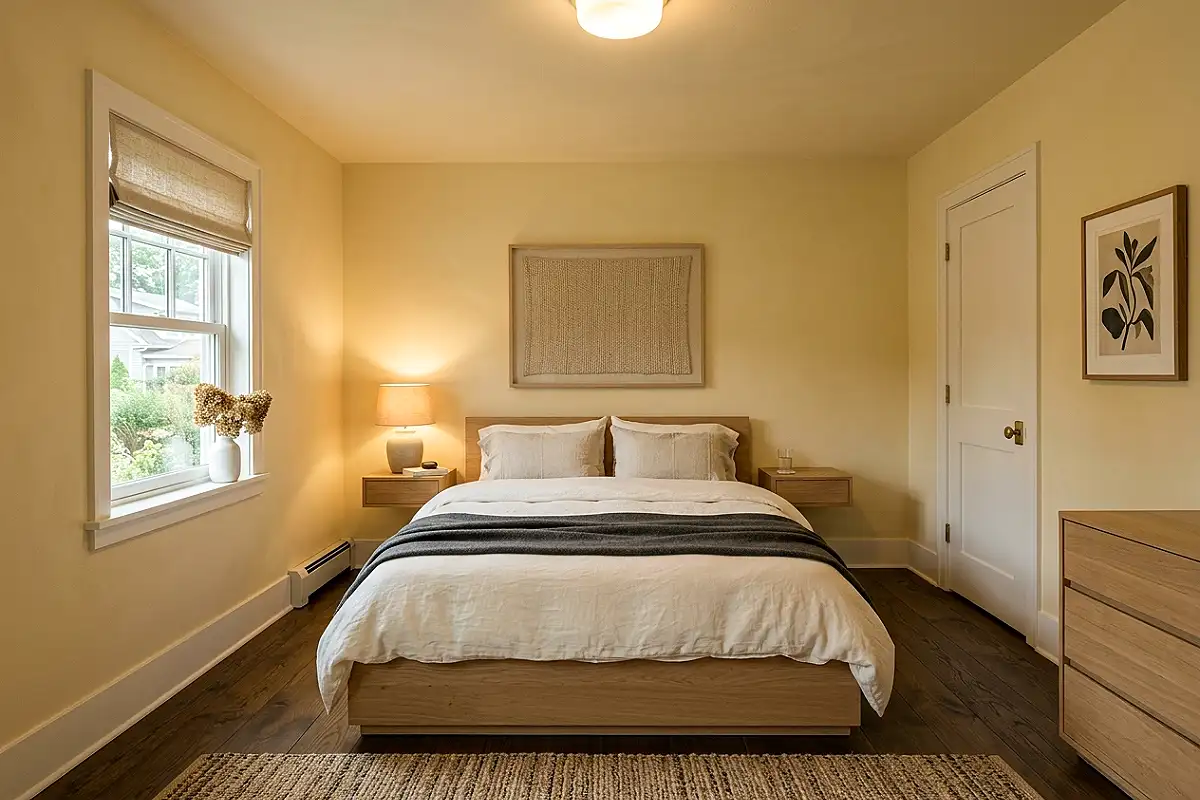
The gentlest way into yellow is the butter wash: a pale, creamy yellow on all four walls, the color of morning light through linen curtains. Applied everywhere rather than on one accent wall, it transforms the room’s light quality — the whole space feels backlit and soft, the way it does in rental photos that make you say “it’s so sunny in here.” Choose a yellow with real white in it (look at the sample against paper, not the chip), and it behaves like a warm neutral: white trim stays crisp, wood tones get cozier, and the room reads as bright rather than colored.
Pro Tip
Paint your butter sample on the wall and watch it for a full day — yellow shifts dramatically between morning and evening light, and a tone that glows at noon can look greenish at dusk.
Mustard Velvet Accent Chair
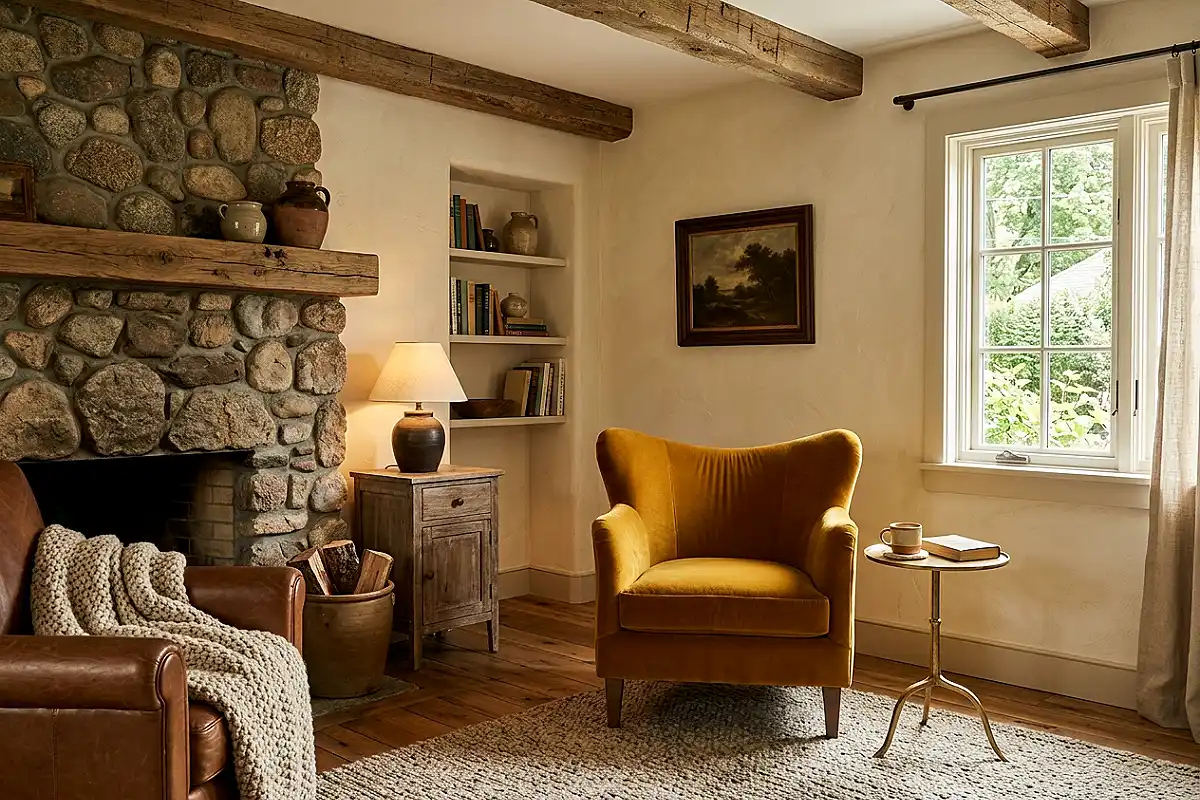
When the walls stay white, let one piece of furniture carry the yellow — and velvet is yellow’s best fabric. A mustard or marigold velvet armchair in the corner, preferably with a curved back or winged profile, gives the room a jewel-toned anchor that photographs beautifully against neutral bedding. Velvet’s pile deepens the color into something closer to ochre in shadow and burnt gold in the light, so one chair reads as two or three shades at once. Place it where morning sun crosses — the fabric’s color shift through the day becomes the room’s quiet entertainment.
Pro Tip
Keep the chair at least three feet from the window — direct sun fades velvet’s dye from the pile down, and a faded seat front is the fastest way to date a beautiful piece.
Botanical Yellow Bedding
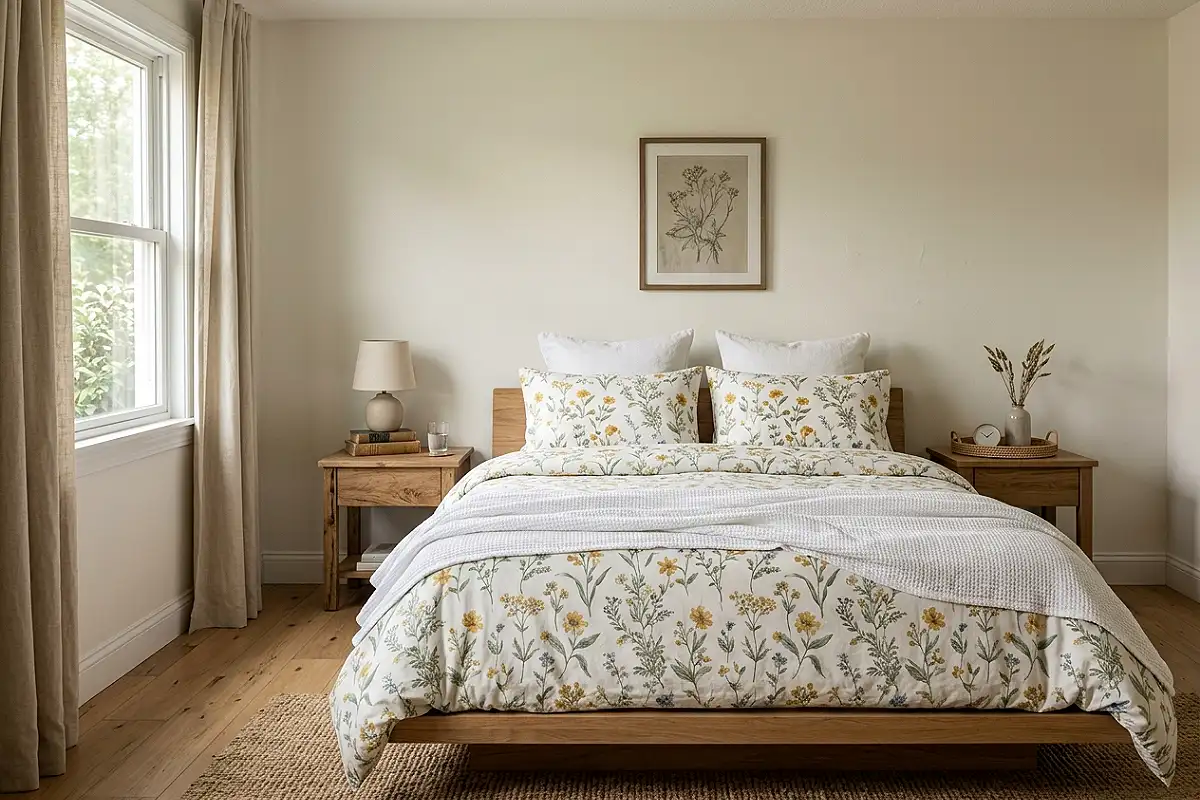
Yellow bedding is where the color earns its cheerful reputation. A duvet in a yellow botanical print — wildflowers, sprigs, oversized blooms on white — dresses the room in a perpetual garden, and the white ground keeps it airy rather than loud. For restraint, choose prints where yellow is the accent and greenery does the heavy lifting; for full optimism, a yellow-ground floral (think vintage Cath Kidston energy) makes the bed the room’s centerpiece. Layer it with a plain white coverlet folded at the foot so the print has a frame, and the whole scheme reads as styled rather than purchased-in-one-trip.
Pro Tip
Wash floral bedding in cold water with a color-catcher sheet for the first few cycles — yellow and green dyes bleed notoriously, and a single warm wash can turn your white coverlet cream.
Sunshine Yellow Ceiling
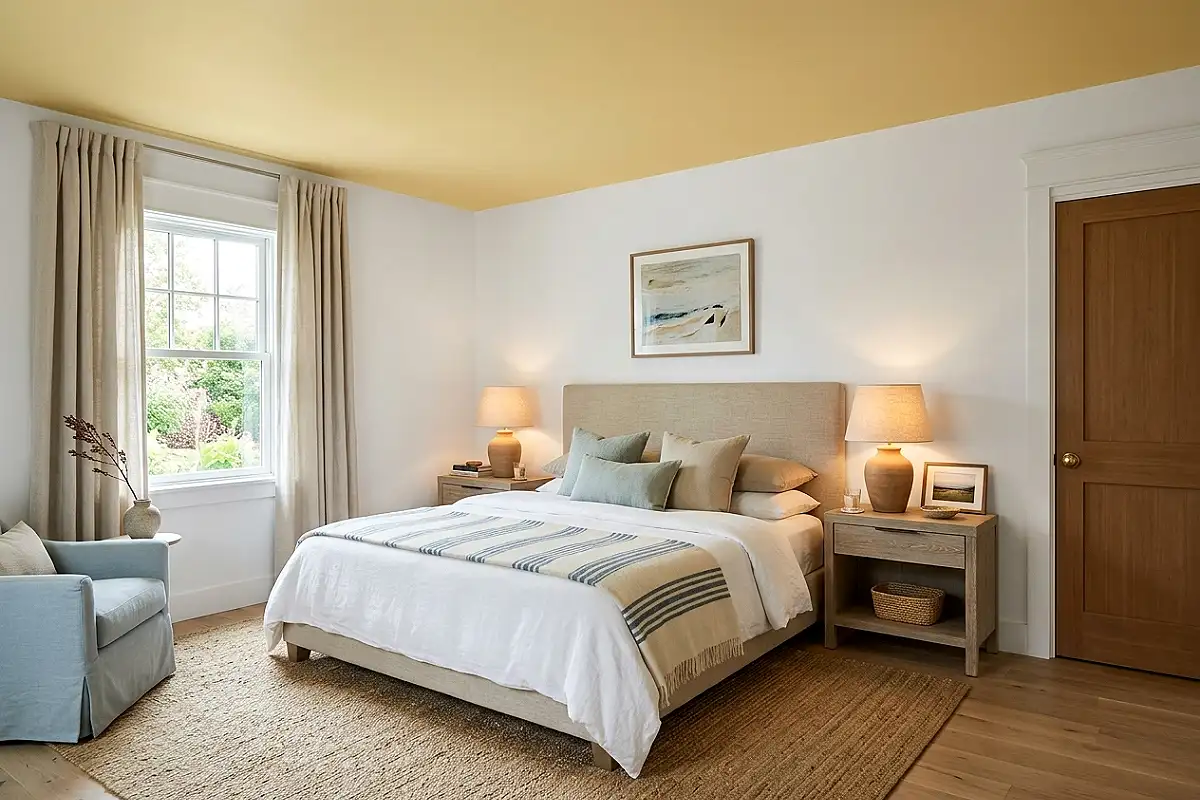
Painting a ceiling yellow is the boldest cheerful move in interior design — and one of the most misunderstood. Done in a saturated gold, it reads as a circus tent; done in a pale sunshine tone, the ceiling becomes permanent morning light, a glow that doesn’t depend on the weather. The effect works because ceilings are where our eyes rest when we lie in bed, and a warm ceiling makes the whole room feel held. Pair it with white walls and simple trim, and the yellow stays on the sky where it belongs. Matte finish only — a gloss ceiling would mirror the room back while you sleep.
Pro Tip
Drop the ceiling tone one shade lighter than you’d pick for a wall — paint reads stronger on overhead surfaces than eye-level ones, and the lighter pass keeps the effect glow-like rather than painted-looking.
Yellow Trim & Doors
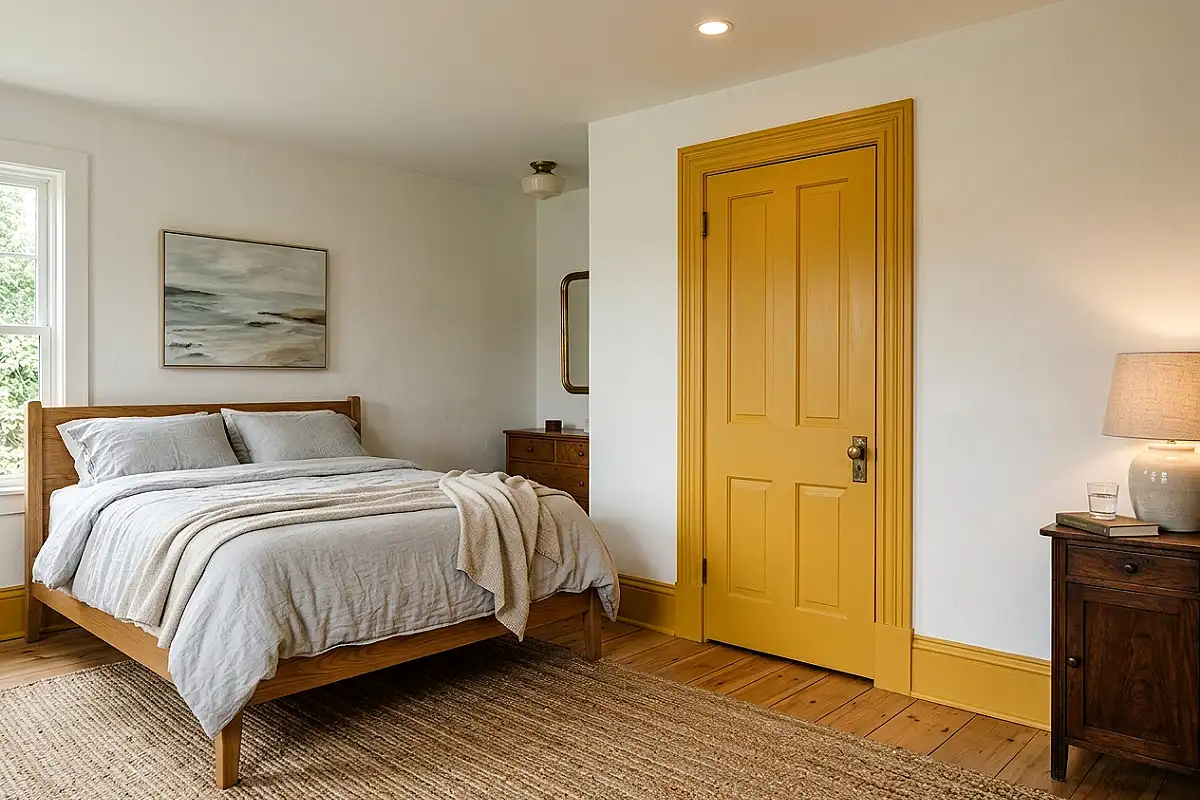
For yellow that’s more architecture than decoration, paint the trim: baseboards, window casings, and doors in a warm yolk or ochre yellow against white walls. The effect is the English-cottage detail that makes a room feel settled and charming — color living in the room’s bones rather than on its surfaces. A single door in yellow is the softest version; all trim in yellow is the boldest. Gloss or satin enamel is essential on trim for durability, and the sheen itself adds a little daylight to dark corners. It’s also the most reversible yellow decision you can make — paint lives on wood differently than on drywall.
Pro Tip
Paint doors and trim last, in satin enamel, and wait a full cure week — trim takes the daily abuse of the room, and uncured yellow enamel will pick up door-handle shadows within days.
Lemon Zest Gallery Wall
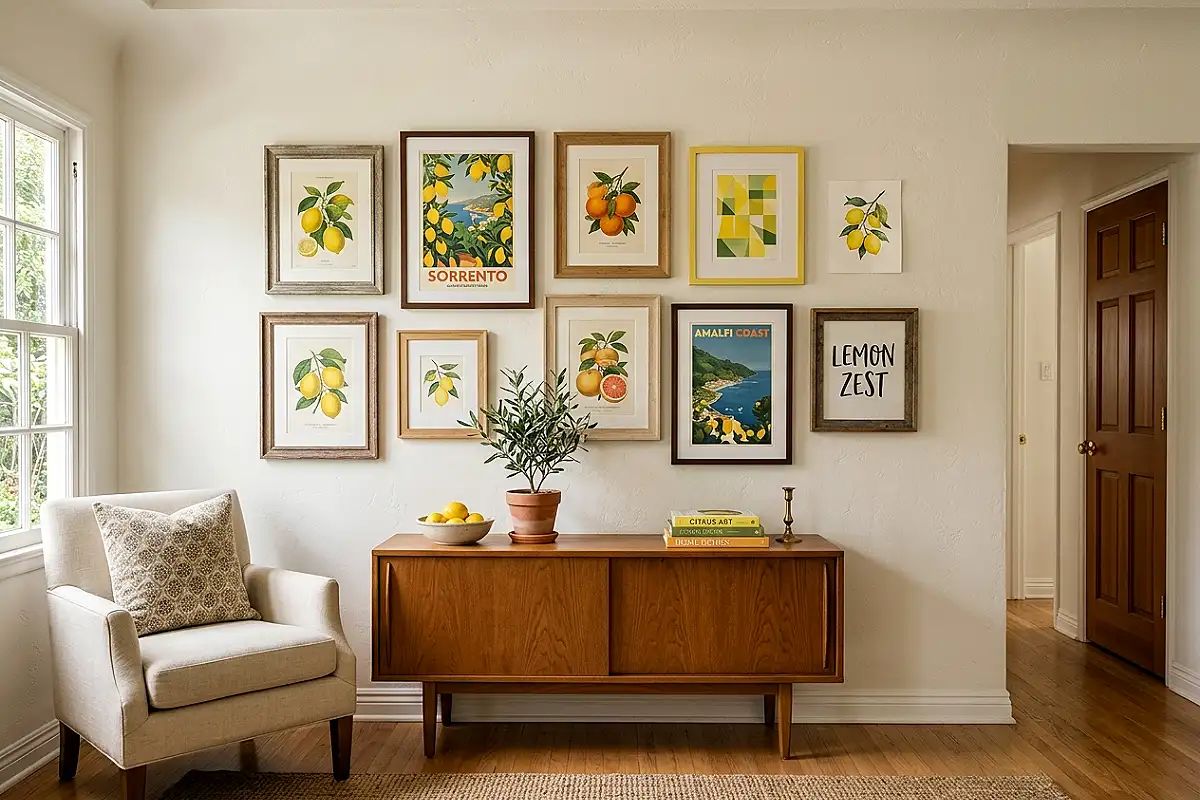
A gallery wall with yellow woven through it is a cheerful project with real artistic payoff. Collect prints with yellow moments — citrus botanicals, sunny landscapes, vintage travel posters, yellow abstracts — and hang them in simple frames on a white wall, letting the yellow notes repeat like a melody. Include one frame painted yellow itself (a lemon-colored frame holding anything at all ties the wall together), and the composition reads as curated rather than collected. This is yellow as punctuation: the wall stays white, the art supplies the warmth, and the room gains a personality that changes with what you hang.
Pro Tip
Lay the collection out on the floor first and photograph it before hanging — yellow-heavy arrangements need spacing, and a photo reveals balance problems that standing too close hides.
Marigold Color-Block Band
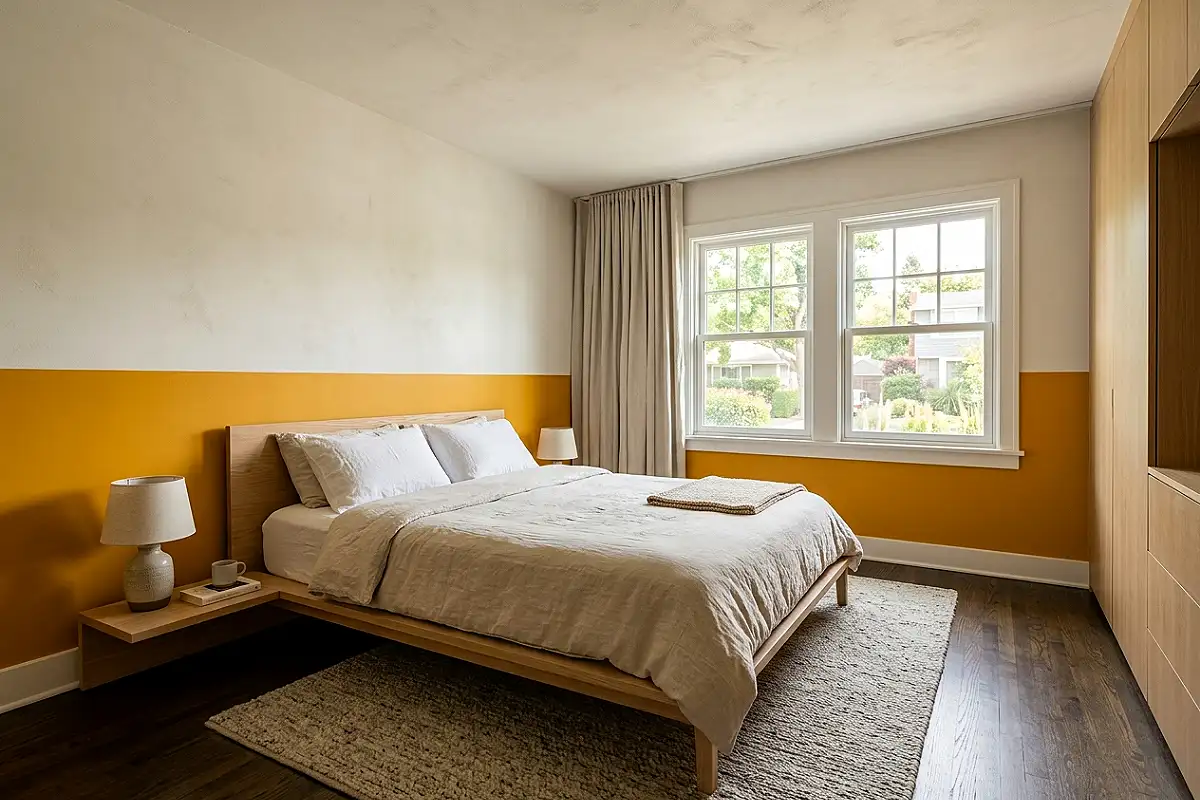
Color blocking — painting a defined section of the wall in a bold tone — gives yellow the confidence of modern art. Paint a horizontal band in deep marigold from the floor to chair-rail height, or box the head of the bed in a painted rectangle the width of the bed, and the yellow becomes architecture rather than decoration. The crisp taped edges are the whole technique: sloppy edges read as mistakes, sharp ones read as intention. Behind the band, hang white-framed art and keep the bedding pale, and the room achieves the look of a designed hotel without a single piece of custom furniture.
Pro Tip
Paint the band over a coat of the white wall color first — painting marigold directly on bare primer demands three coats, while painting over white usually takes two, saving both paint and an afternoon.
Yellow Painted Rattan Headboard
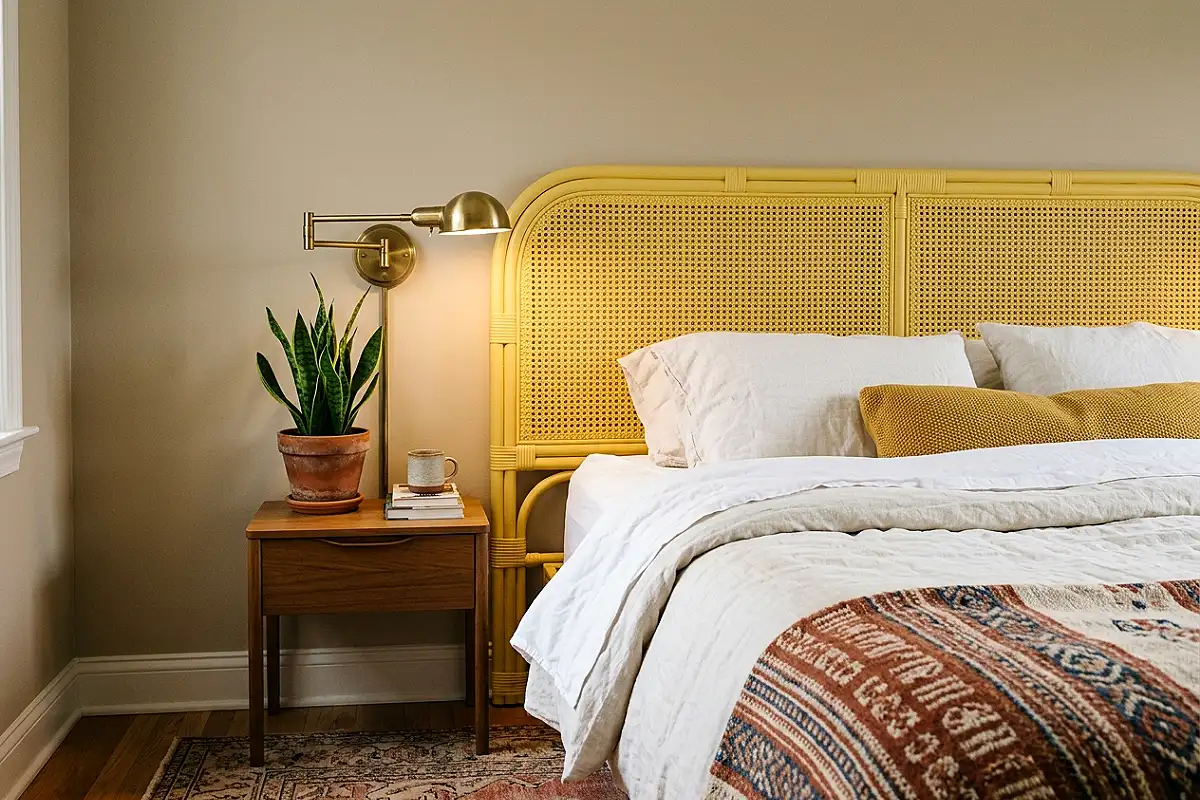
Rattan and cane are yellow’s natural partners — the material’s own honey tone meets the paint halfway. A peacock chair or a wide cane headboard, spray-painted in a saturated buttercup or marigold, becomes the room’s sunniest object: the weave catches light from every direction, so the piece glows rather than merely sits there. Choose a high-build spray for cane, which drinks paint into its fibers, and finish with a clear matte topcoat so the color survives years of backs leaning on it. Against white bedding and green plants, the yellow rattan reads as permanent summer — which is, after all, the entire point of a yellow room.
Pro Tip
Spray cane in thin passes from all angles, letting each pass dry between coats — cane’s open weave sags and drips under heavy paint, and three light coats stay crisp where one heavy coat sags.
Citrus Still-Life Styling
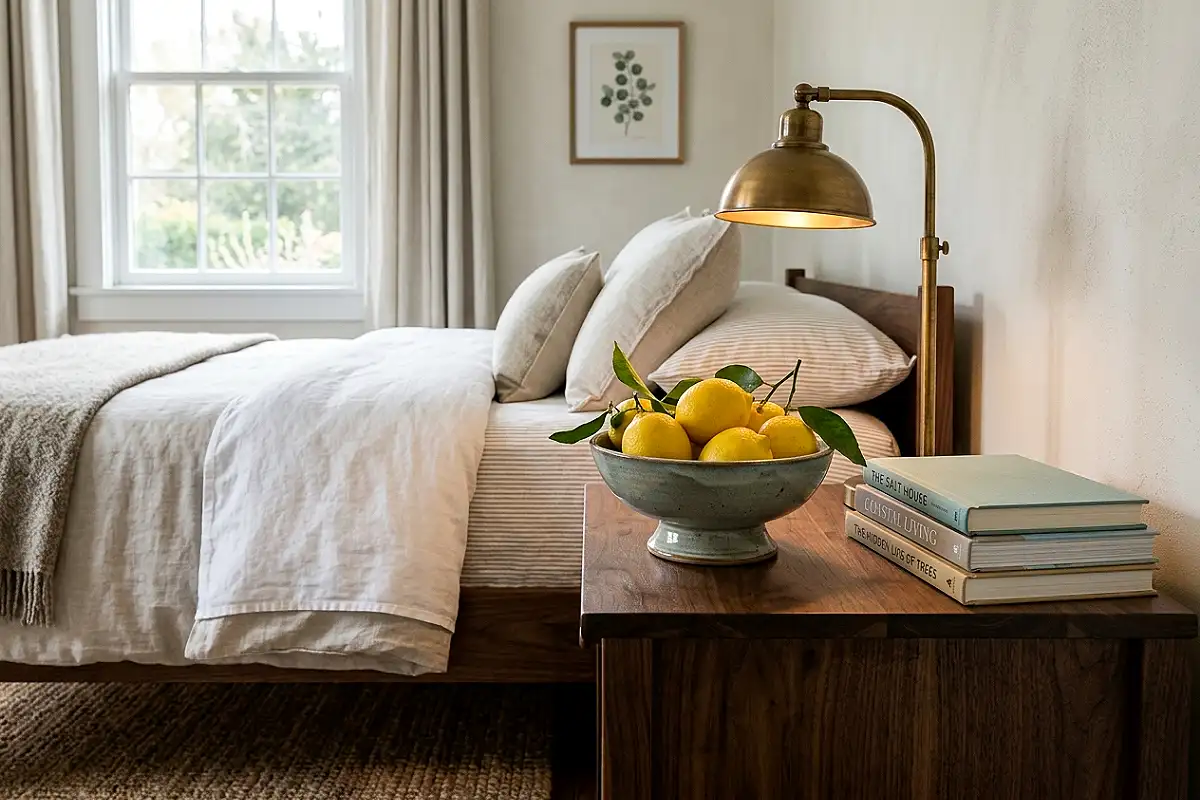
The cheapest yellow in design is the yellow that’s already growing: lemons. A ceramic bowl of real lemons on the nightstand, a small vase with a lemon branch, or a plate of citrus on the dresser delivers genuine color — with scent and impermanence built in. The tradition is old (Dutch still lifes painted lemons for exactly this reason) and the effect is immediate: real fruit among styled objects breaks the room’s perfection in the best way. Rotate the bowl weekly so nothing spoils, and in summer add limes or kumquats for a two-tone citrus moment. No other decor element delivers this much joy per dollar.
Pro Tip
Choose a bowl with a footed or lidded base — citrus oils stain porous ceramics over time, and a glazed footed bowl keeps both the stain and the fruit’s residue off your furniture.
Yellow & White Cabana Stripe
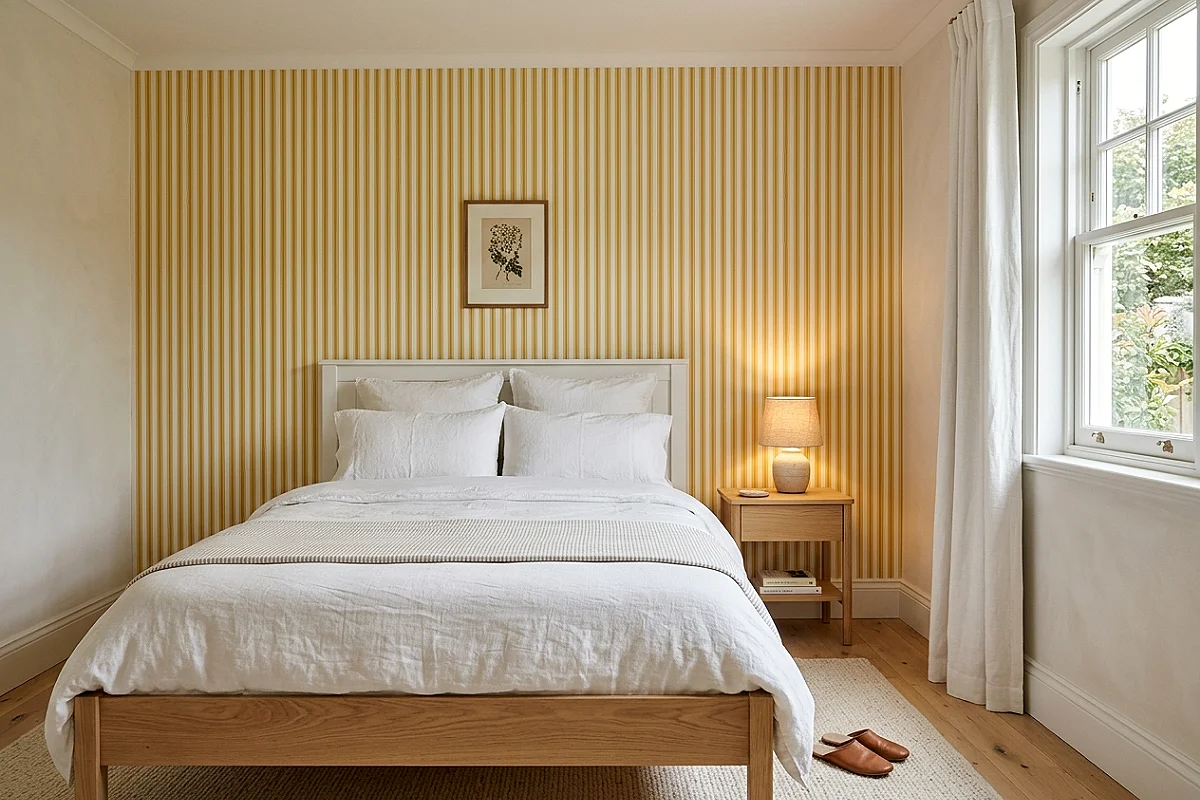
Nothing says cheerful like the cabana stripe — and a bedroom dressed in yellow-and-white stripes earns summer all year. Apply it as curtains (yellow and white ticking stripe, hung full-length), as a wallpaper on one wall, or as a pair of pillows on white bedding; the stripe’s horizontal rhythm reads as awning and hammock, poolside and picnics. Keep the stripe medium in width — too fine and it vibrates from across the room, too wide and it reads as a tent. Against plain white walls and simple wood furniture, the stripe does all the decorating the room needs, and it never feels seasonal because sunshine isn’t seasonal.
Pro Tip
Match stripes across curtain panels by cutting them from the same fabric run — mismatched stripe alignment at the window’s center is the detail that separates purchased from styled.
Yellow Ceramic Lamp Bases
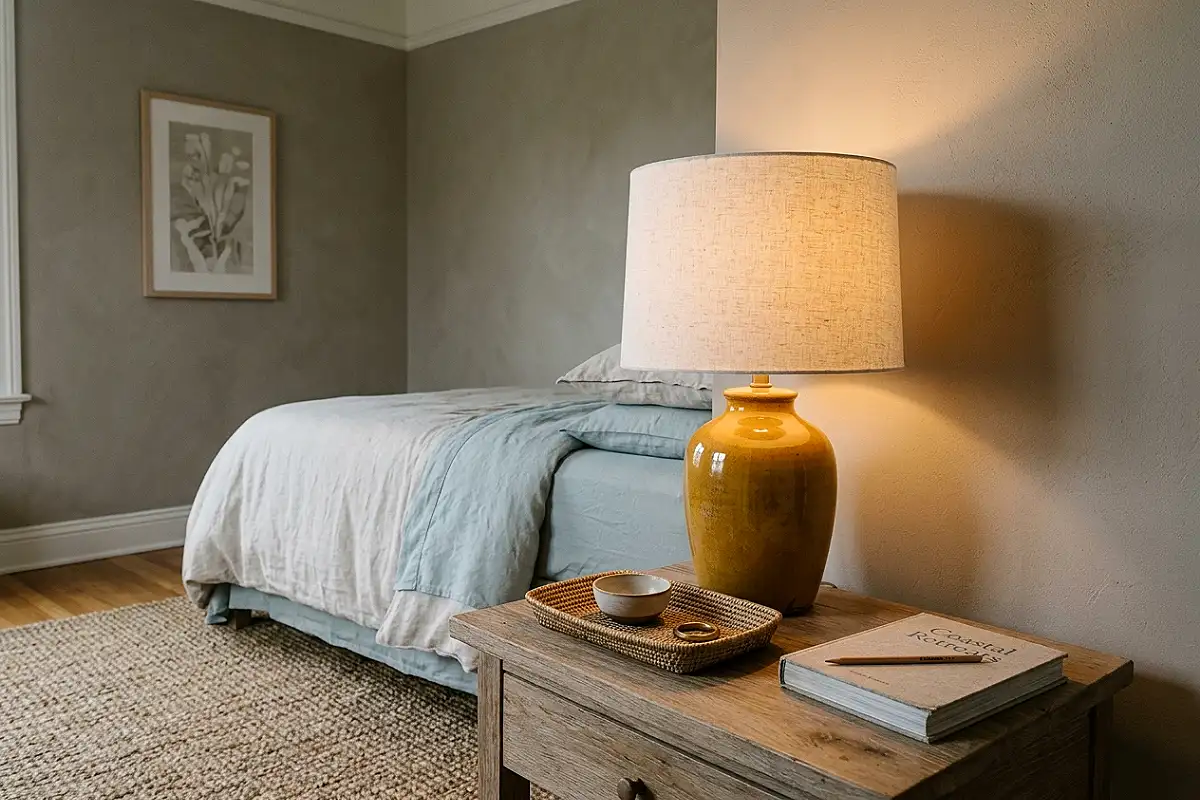
A yellow ceramic lamp is a sculpture that happens to give light. Hand-painted ceramic bases — the Italian-style majolica tradition, or contemporary studio pottery — in butter yellow, ochre, or sunflower yellow, bring the color onto the nightstand as a three-dimensional object with the warmth of clay. The ceramic’s glaze catches the lamp’s own light from below, so the shade’s glow turns the base into a soft lantern at night. Pair a yellow base with a plain white or natural-linen shade — a patterned shade would fight the base — and the lamp becomes the room’s quiet centerpiece at both the bed’s left and right sides.
Pro Tip
Choose a lamp with a weighted ceramic base over a hollow one — bedside lamps get nudged nightly by reaching hands, and a heavy base stays put while a hollow one walks toward the edge.
Chunky Yellow Knit Throws
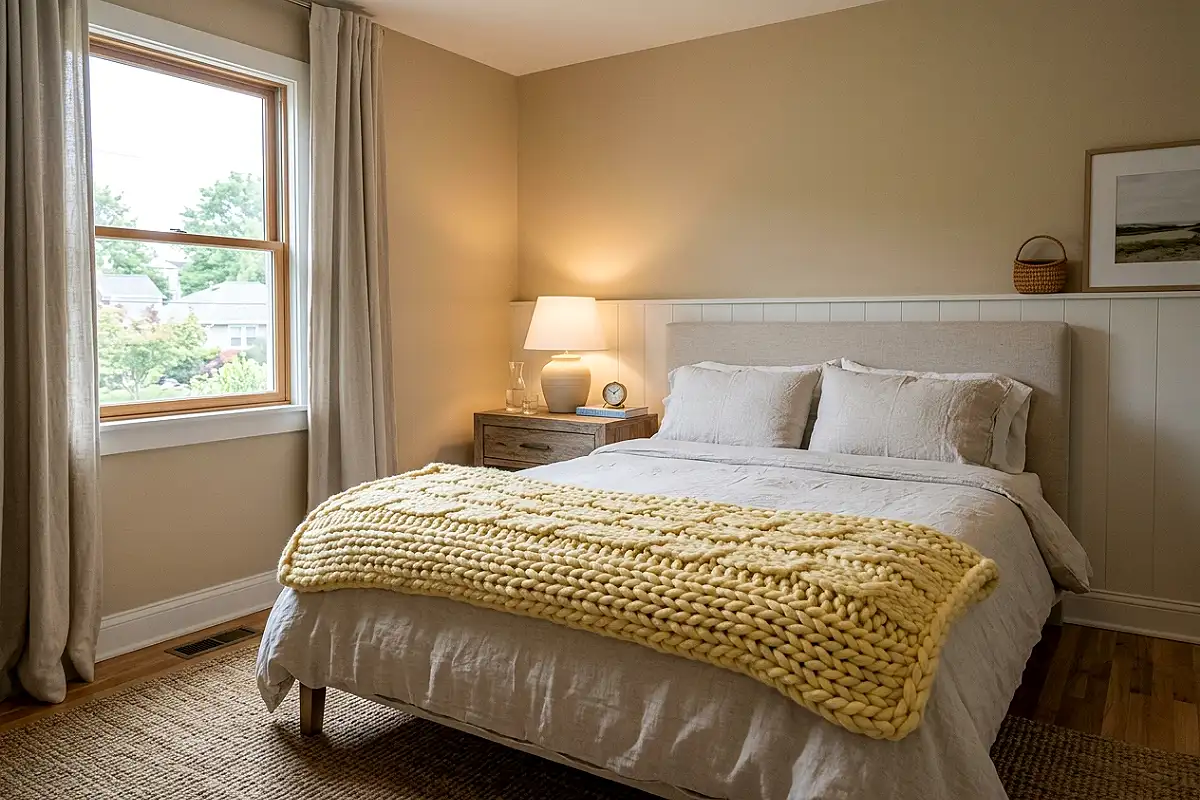
Texture is where yellow gets cozy: a chunky knit throw in daffodil or pale butter, draped over the foot of the bed or the back of a chair, adds wool’s soft geometry to the color story. The big stitches catch shadows between them, making even a pale yellow read as rich and dimensional — knitting is yellow’s way of speaking in lowercase, warm but never shouting. Merino blends stay soft against bare legs during movie nights, and a hand-knit or thick-gauge piece photographed against white bedding is one of the most pinnable bedroom details there is. Fold it in thirds, not rolled: the folded block of color looks deliberate.
Pro Tip
Air out chunky knits instead of washing them — the thick yarn takes days to dry flat, and a misshapen knit never recovers. A few hours outside with the windows open restores freshness without a single wash.
Yellow Book Spine Section
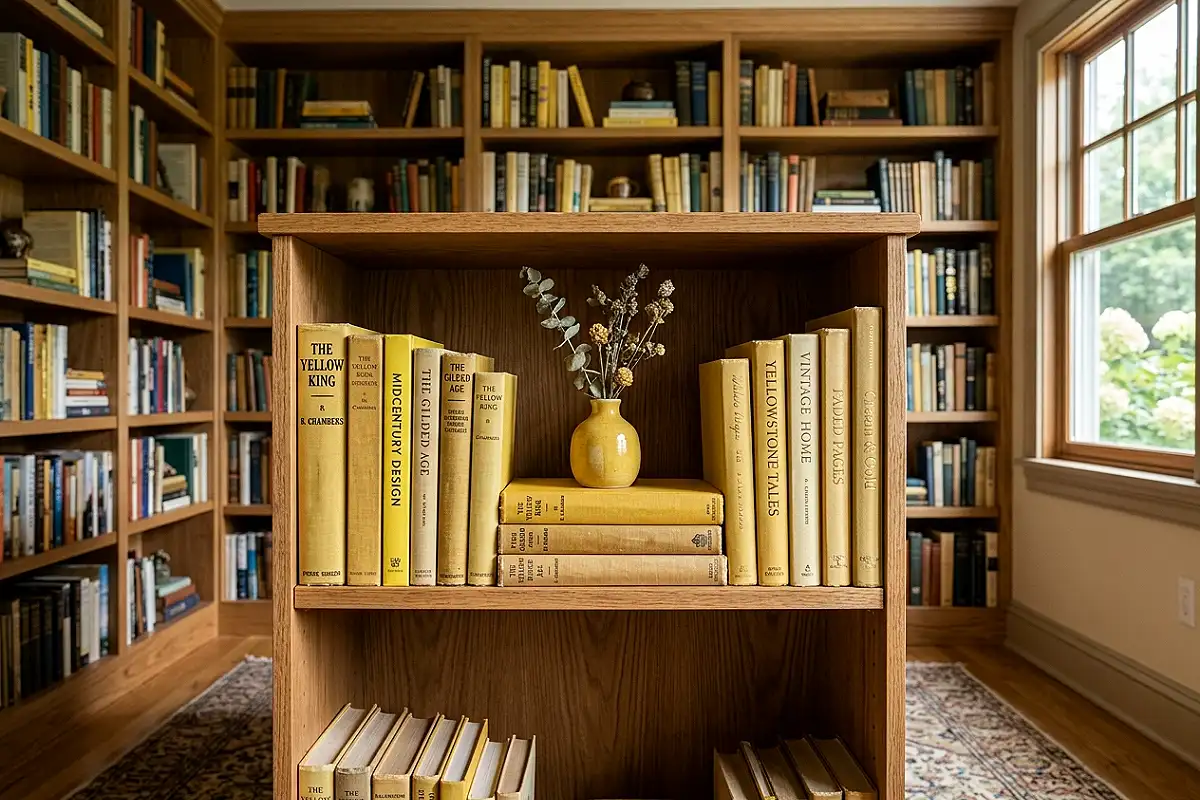
Bookshelf styling with a yellow section is the detail-oriented version of the color story: arrange one shelf (or one shelf’s worth of books on any shelf) in yellow and cream spines, and the books become a designed object rather than storage. Hunt thrift stores for yellow jackets and cloth spines — mid-century editions are yellow goldmines — and mix in one or two yellow boxes or a small vase to unify the section. It works in a bedroom’s bookshelf, on a nightstand stack, or beside the desk, and it satisfies the same impulse as the gallery wall: color arranged by a human hand, which is always more charming than color bought pre-arranged.
Pro Tip
Mix spine heights in thirds — tall, medium, short — and lean a few books instead of standing all of them; perfectly uniform spines read as staged, while varied stacks read as loved.
Sunny Yellow Dresser
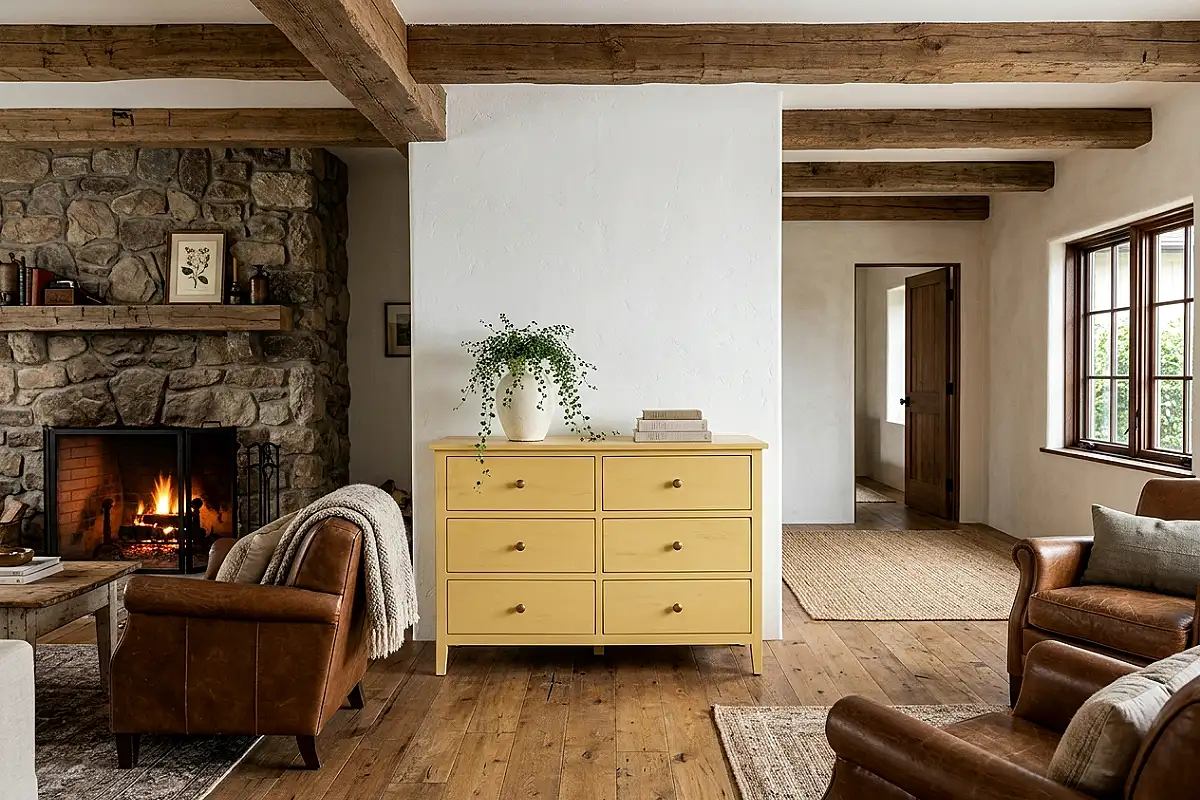
A dresser painted in cheerful yellow — yolk, daffodil, or soft ochre — turns everyday furniture into the room’s event. Sand and prime thoroughly (dresser paint takes real abuse from daily use), finish in satin, and fit brass knobs or leave the original hardware for a more lived-in look. The dresser’s large flat surfaces make it yellow’s biggest single canvas short of a wall, and its placement matters: against a white wall it glows, beside a window it catches morning light, and under a gallery wall it anchors the composition. Styled with a lamp, a small plant, and one ceramic bowl, it becomes the photograph every yellow bedroom dreams of.
Pro Tip
Paint drawer fronts and the frame in one session with the drawers removed — reassembling with mismatched drying times leaves visible lap marks at every drawer’s edge, and one-session painting keeps the color continuous.
Vintage Yellow Statement Rug
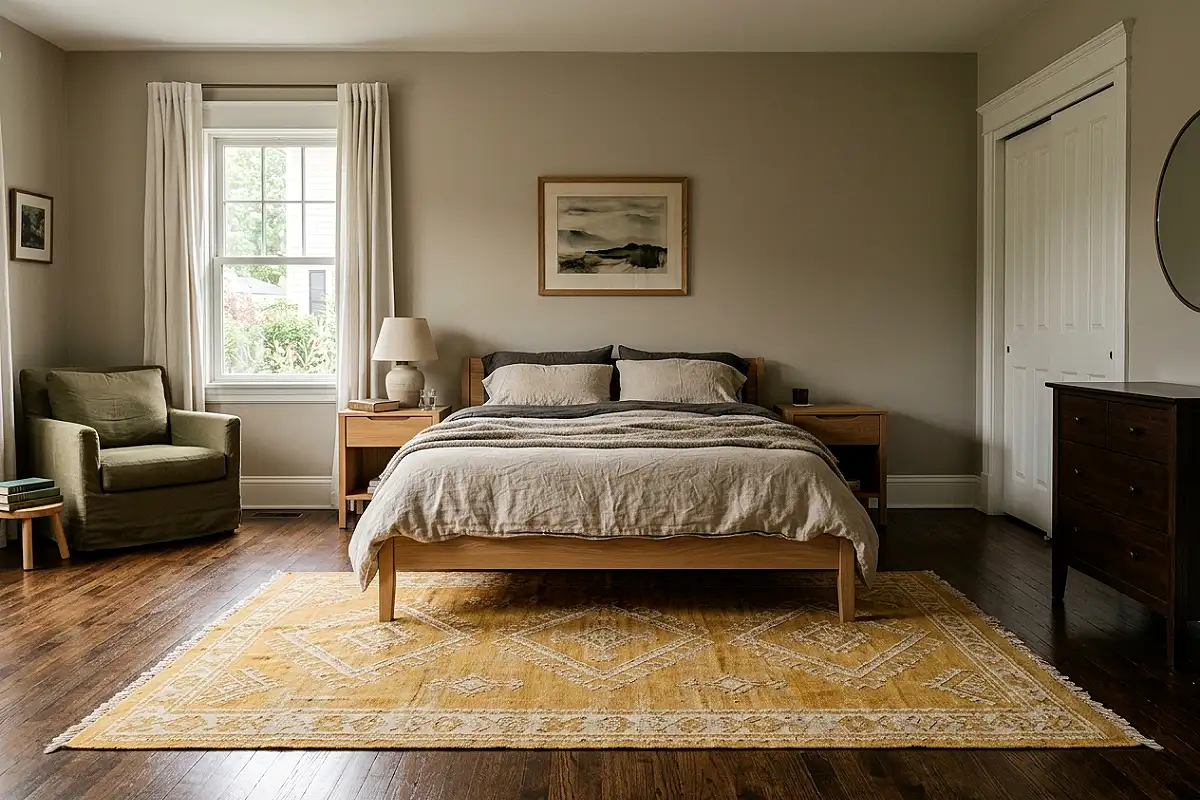
A yellow rug does what no wall color can: it puts sunshine underfoot. Vintage Turkish or Moroccan kilims often come in faded mellow yellows — saffron grounds with ivory and rust motifs — and that aged tone is more sophisticated than any new yellow, because time has already done the muting work. A modern flatweave in mustard works too, but the vintage route brings pattern, history, and a tone no factory can reproduce. Center it under the bed with two feet showing on three sides, and the whole room’s palette reorganizes around it — the rug becomes the source, and the walls merely respond.
Pro Tip
Buy vintage rugs with a pad and vacuum them without the beater bar — old wool knots loosen under aggressive vacuuming, and a quality pad both protects the knots and stops the rug from creeping across the floor.
Yellow Window Seat
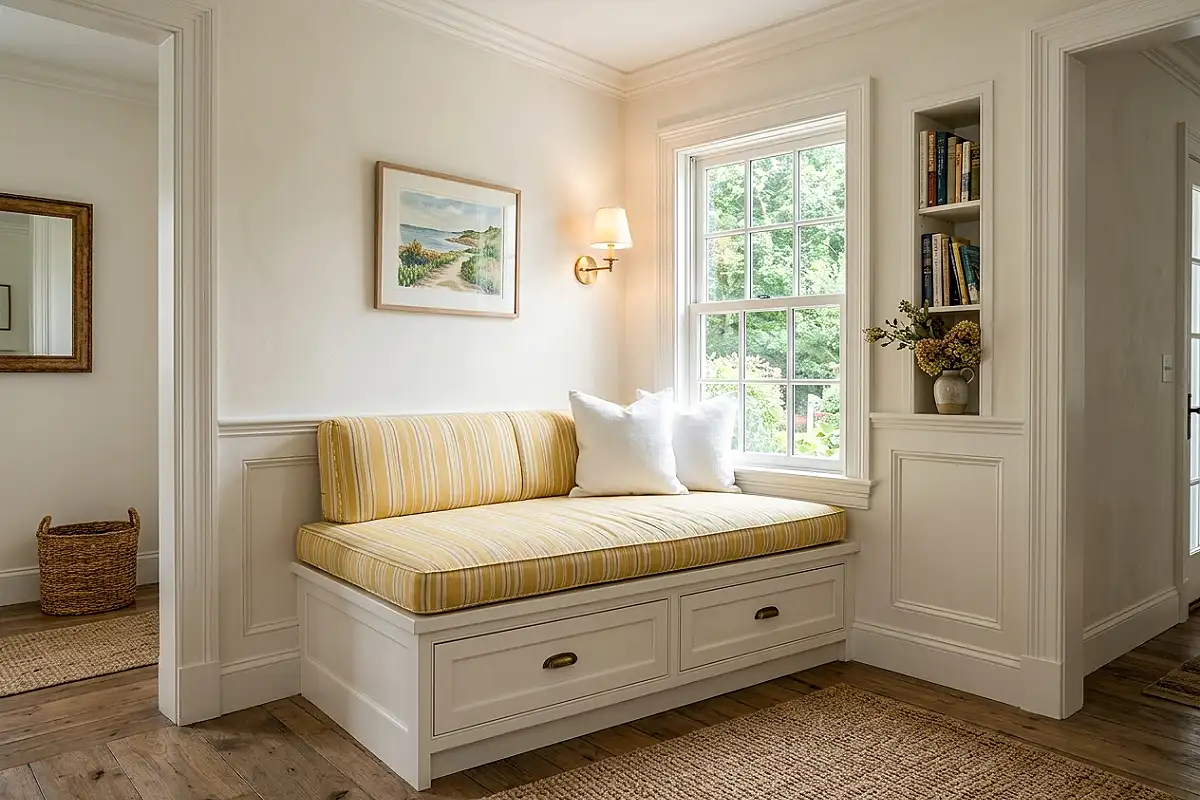
Where a window meets a wall, a built-in window seat with yellow cushions is a small room’s happiest corner. The seat itself can be simple white wood — the color lives in the cushions, in a sunny yellow ticking or linen, with two or three white pillows layered on top. It’s a reading nook, a morning-coffee perch, and hidden storage for blankets beneath the lift-up lid, all in one structure that adds no square footage. Even without a built-in, a bench beneath the window dressed in yellow cushions achieves eighty percent of the effect. Rooms with window seats photograph as if they were designed around the window — which, functionally, they are.
Pro Tip
Choose solution-dyed or indoor-outdoor fabric for the cushions — window seats sit in direct sun daily, and ordinary cotton yellows further or fades; solution-dyed yarns keep their tone for years of mornings.
Yellow Enamel Pendant Light
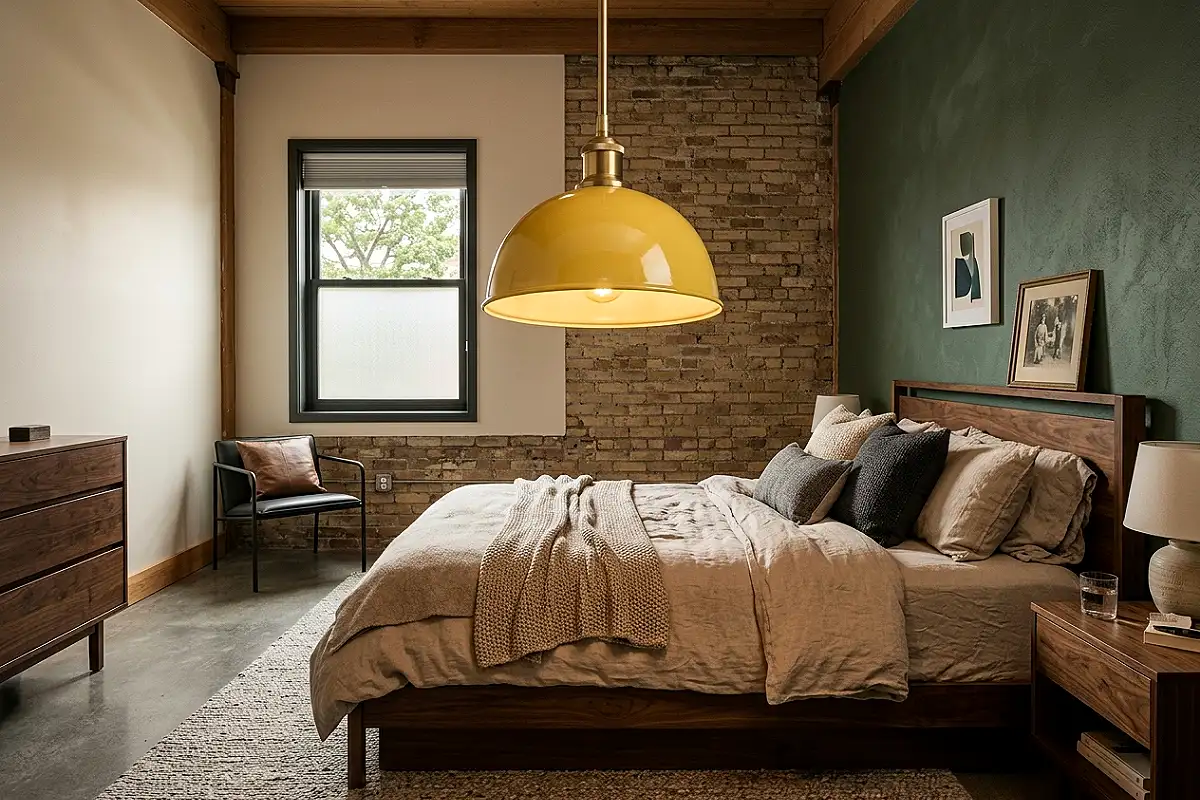
Yellow light fixtures bring the color into the room’s glow itself. A yellow enameled metal pendant — the factory-shade kind, or a contemporary dome in buttercup — hanging over the bed’s foot or beside it throws warm reflections from its colored interior, tinting everything beneath it honey-gold at night. The enamel’s interior color matters as much as its exterior: a yellow-lined shade makes the bulb’s light land warm no matter the bulb’s temperature. Pair with an exposed warm Edison-style bulb for evenings and the pendant becomes both daytime sculpture and nighttime lantern — one object doing double duty, which is exactly how good bedrooms are built.
Pro Tip
Hang the pendant 30 to 36 inches above the nearest surface it lights — lower and the shade blocks sightlines across the room, higher and the tinted glow dissipates before reaching the bed.
Yellow & Navy Balanced Pairing
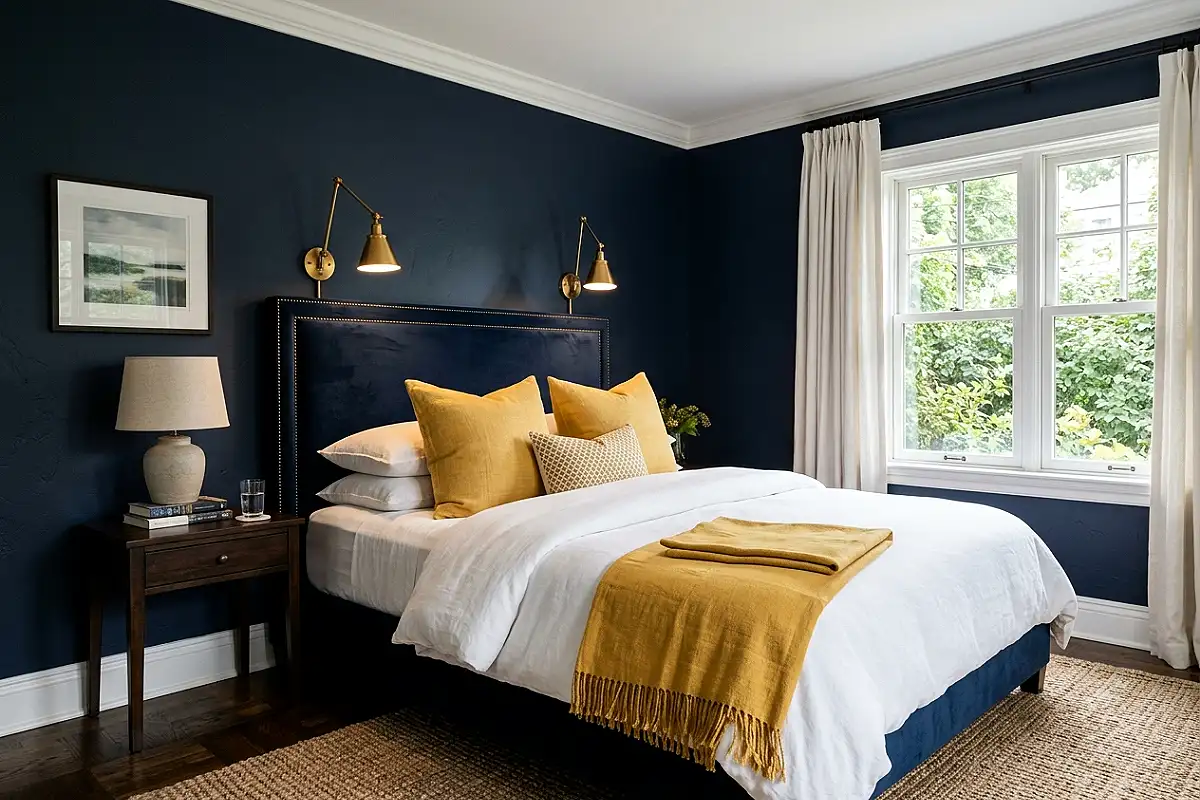
The color pairing that gives yellow its grown-up form: yellow against deep navy. Navy provides the night sky against which yellow becomes unmistakably the sun — the two colors need each other, and together they achieve something neither can alone: cheerfulness with depth, brightness with restfulness. Apply it as a navy headboard wall with yellow art and lamps, yellow bedding on a navy coverlet, or navy-painted trim with yellow walls. The ratio matters: roughly two parts navy to one part yellow keeps the room calm enough to sleep in, while flipping the ratio makes it a waking room that happens to have a bed.
Pro Tip
Test the navy and yellow samples side by side at night under your lamps — navy pulls toward purple or green depending on the light, and the wrong undertone pairing makes the yellow look sour instead of sunny.
A Room That Wakes Up Happy
Eighteen ways to put sunshine in a bedroom — and the real secret is that you only need two or three. A butter wash on the walls, a yellow chair by the window, lemons in a bowl, and a knit throw at the foot of the bed is already a yellow room in the truest sense: bright, warm, and happy without trying too hard. Start with the dose that matches your morning, and let the rest of the sunshine gather over time, the way it always does in rooms people love.
Frequently Asked Questions
How do I use yellow without it feeling overwhelming?
Choose tone over intensity: butter and cream yellows work on large surfaces like walls and ceilings, while saturated marigold and mustard belong on single objects — a chair, a lamp, a rug. Always balance yellow with generous white space and natural textures, and never paint two yellow surfaces that touch.
What yellow works best in a small bedroom?
Pale butter tones applied to all four walls, which lift the light in the room rather than coloring it. Avoid saturated yellows in small rooms except as small accents — a marigold wall in a tiny space shrinks the room, while a butter wash makes it feel sun-filled and larger.
What colors pair best with yellow in a bedroom?
White is yellow’s best partner at any scale, followed by deep navy and charcoal for contrast, olive and sage green for a natural pairing, and warm wood tones that amplify yellow’s warmth. Avoid pairing it with other bright primaries in large doses — red and yellow compete for the same energy.
Is yellow paint hard to paint over later?
Yes, more than most colors — yellow is notoriously stubborn over white. Plan for a stain-blocking primer and two topcoats when changing colors later. That’s one more reason the safest yellow applications are furniture, textiles, and accessories, which you can simply replace.
How do I keep a yellow bedroom from feeling dated?
Anchor yellow in timeless elements: white bedding, natural wood, brass details, and quality textiles. Avoid yellow-heavy patterns from a single era, dated yellow-and-brown combinations, and fluorescent-toned yellows — butter, ochre, and marigold have centuries of staying power; neon yellow has decades at best.
Does yellow affect sleep and mood?
Color psychology research consistently associates yellow with elevated mood and energy, which is why it works so well in waking areas of a bedroom. For sleep itself, keep the immediate bed area calm — white and pale bedding, warm dim lighting — and let the yellow live in the room’s edges, so the space wakes you happily without keeping you awake.