Halloween movie night is more memorable when the bedroom carries the film’s atmosphere before the opening credits begin. The trick is to build each theme from a clear palette, one strong spatial gesture, and a viewing setup that remains comfortable after the photograph is taken. These fourteen ideas move from silent cinema and fogbound ghost stories to colorful thrillers and tactile stop-motion worlds, giving every room a genuinely different point of view.
Before decorating, settle the practical pieces: choose a blank, low-sheen projection surface; check sightlines from the bed or floor seating; and keep the projector ventilated on a rigid stand. Then add only the details that strengthen the chosen story. A few specific materials will always look richer than a room crowded with generic Halloween props.
1. Set a Silent-Era Shadow Salon
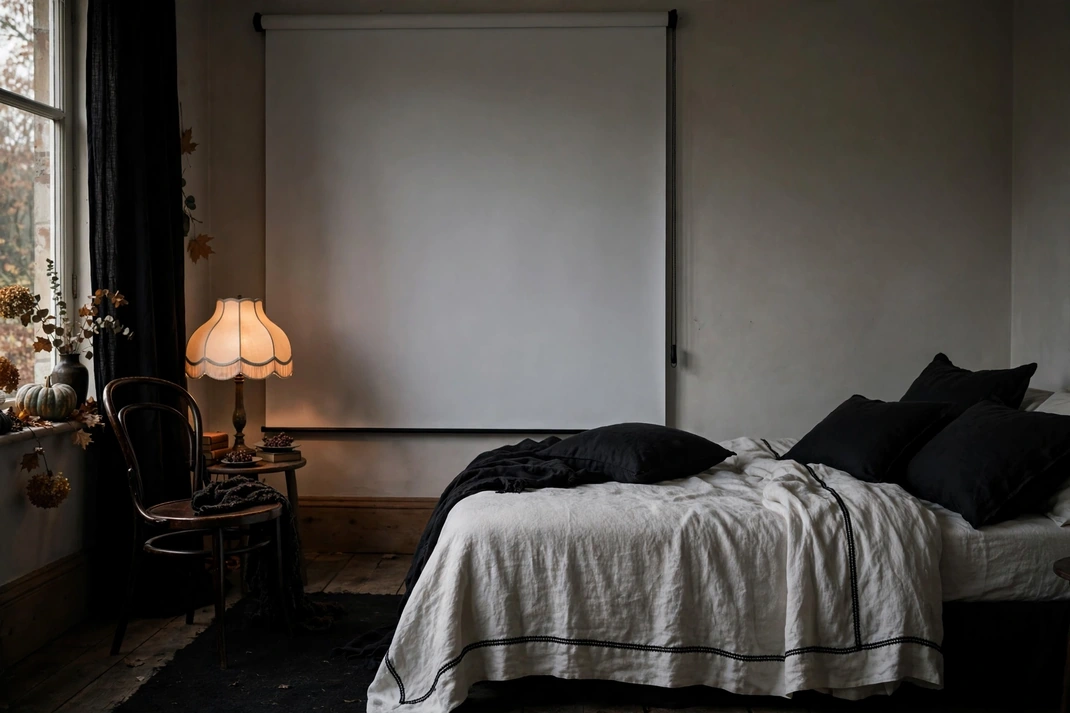
A chalk-white screen, ink-black textiles, and soft sepia light give the bedroom the hush of a silent-picture house after closing. Instead of filling the walls with film posters, this theme relies on high-contrast shapes: a scalloped lampshade, a dark bentwood chair, and a pale coverlet edged in black. The restraint makes even a small bedroom feel intentional rather than themed.
The Setup:Mount a portable pull-down screen or smooth white blackout blind opposite the bed, leaving the wall around it bare. Dress the mattress in ivory cotton with one black lumbar cushion, place a bentwood chair at a slight angle near the foot, and use a dimmable table lamp with an opal globe; set the projector on a rigid ventilated shelf, align it before styling, and route every cable along the skirting in a paintable cover.Why It Photographs Well:The pale screen becomes a clean field while the curved chair and dark bedding create crisp, period-like silhouettes. Side lighting at roughly 45 degrees preserves detail in both the white linens and black furniture, so the photograph feels cinematic without needing a movie image on the screen.Pro Tip:Replace pure white bulbs with 2200K warm LEDs and lower the lamp slightly below eye level. That one change creates the amber tonal range associated with aged film while keeping the room comfortable enough for a full feature.
2. Host an Art Deco Vampire Premiere
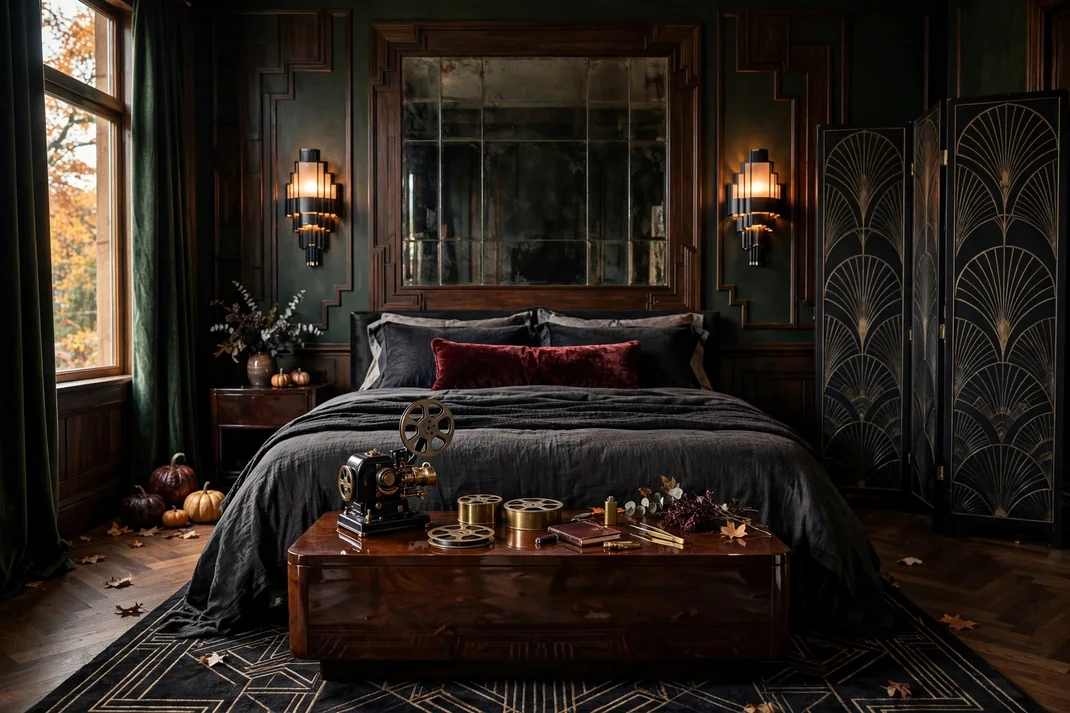
Glossy walnut, smoked mirror, and garnet upholstery turn movie night into a private 1930s premiere with a vampiric edge. The geometry is sharp and glamorous rather than cobwebbed: stepped forms, fan motifs, and narrow brass lines give the room its drama. A neatly made bed keeps all that shine from slipping into stage-set territory.
The Setup:Center a low projector table on the bed axis and flank the screen wall with two removable black-and-brass fan decals or slim stepped sconces. Add a garnet velvet bolster, a small smoked-mirror drinks table, and a walnut tray holding black glass tumblers and a covered snack bowl; keep the remaining bedding parchment or warm taupe so the jewel tones stay concentrated.Why It Photographs Well:Reflective surfaces catch pinpoints of warm light, while the symmetrical screen wall gives the image a polished premiere-night composition. Garnet velvet absorbs light beside the mirror and brass, creating the depth and tonal contrast that reads especially well in an evening room photograph.Pro Tip:Choose either polished brass or aged brass and repeat that finish exactly three times. Limiting the metal keeps the setting sophisticated; mixed golds can make a compact bedroom look like a prop department.
3. Screen a Fogbound Lighthouse Ghost Story
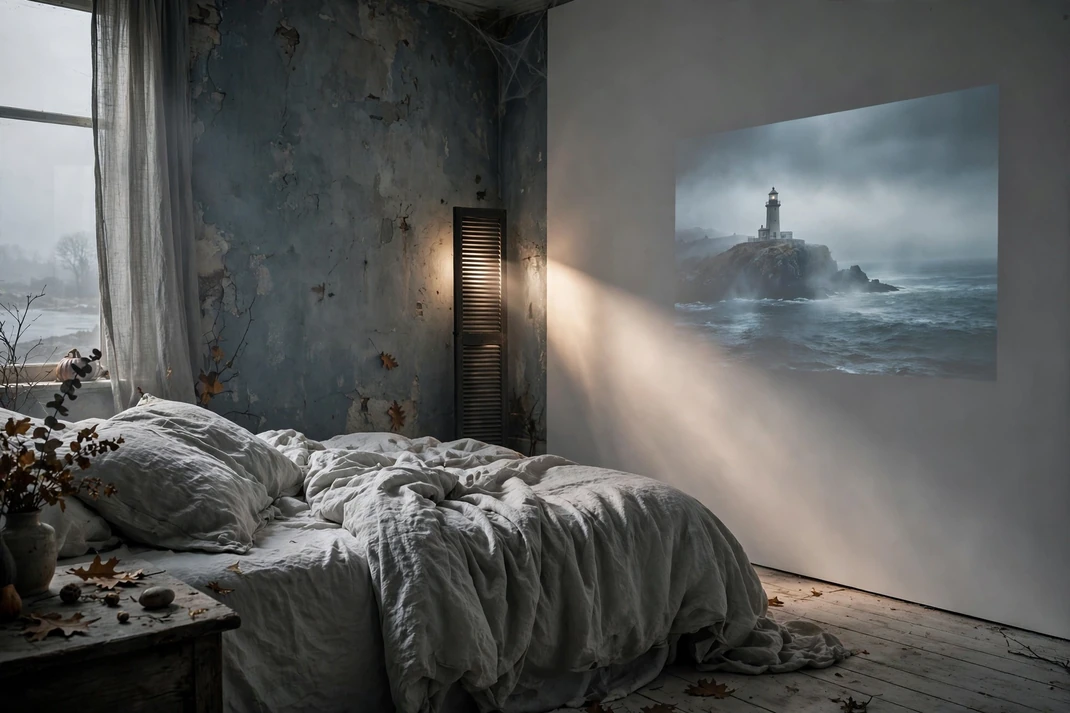
Weathered blue-gray walls, salt-white linen, and a single sweeping beam of light suggest a lonely lighthouse above a cold sea. The mood is ghostly but quiet, built from washed textures and empty space rather than spooky accessories. It is an especially elegant route for coastal, cottage, or pale Scandinavian bedrooms.
The Setup:Aim the projector at a matte white wall and place a narrow louvered floor lamp in the far corner so its light grazes the wall instead of facing the bed. Layer fog-gray linen sheets, a chalk-white waffle blanket, and one faded navy cushion; introduce weathered oak through a tray or stool, then set a clear carafe and a small dish of sea-salt popcorn on the bedside surface.Why It Photographs Well:A lateral strip of light creates the visual suggestion of a lighthouse beam and gives the room a strong diagonal. Rumpled linen, translucent glass, and dry-grained wood all hold delicate highlights, so a wide photograph feels atmospheric even when the screen is blank.Pro Tip:Keep the blue-gray palette warm by choosing colors with a slight green undertone, not icy blue. Against a 2400K lamp, that undertone resembles storm light rather than a beach-house pastel.
4. Build a Desert Tomb Adventure Den
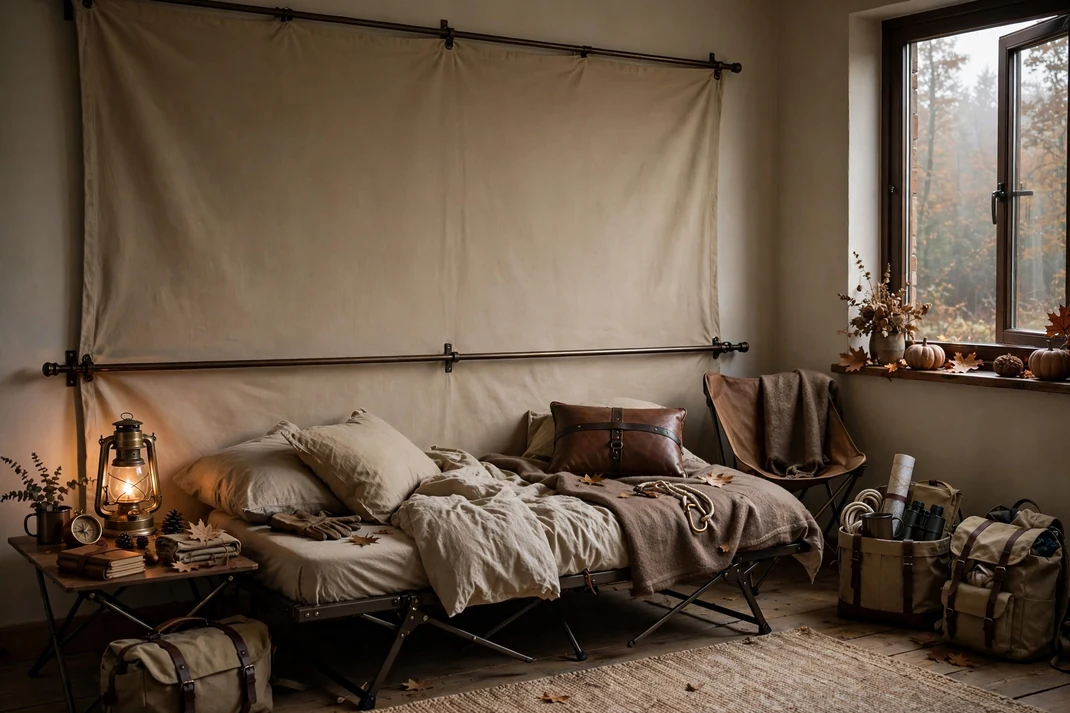
Sand-colored canvas, tobacco leather, and dark bronze turn the bed into an expedition base waiting outside an ancient tomb. The theme has Halloween mystery without using skeletons or faux artifacts; its character comes from portable furniture, dusty neutrals, and tightly edited travel details. It also works well in beige rooms that feel too light for conventional dark Halloween decor.
The Setup:Drape a heavy natural-canvas panel behind the headboard from a secure tension rod, keeping it taut enough to look tailored rather than tent-like. Add a striped camel-and-black wool blanket, one leather floor cushion, a bronze rechargeable lantern, and a low lidded basket for snacks; place the projector on a stable folding campaign table with clear ventilation and use a plain cream screen on the opposite wall.Why It Photographs Well:The limited desert palette allows every fold and woven fiber to register, while the bronze lantern creates a convincing pool of expedition light. Layered diagonals from the canvas, blanket, and folding table guide the eye toward the screen and give the photo narrative movement.Pro Tip:Dust the palette with color, not the room with fake sand. A small amount of ochre pigment in a framed abstract print or one clay bowl delivers the archaeological warmth without creating mess or looking like a party set.
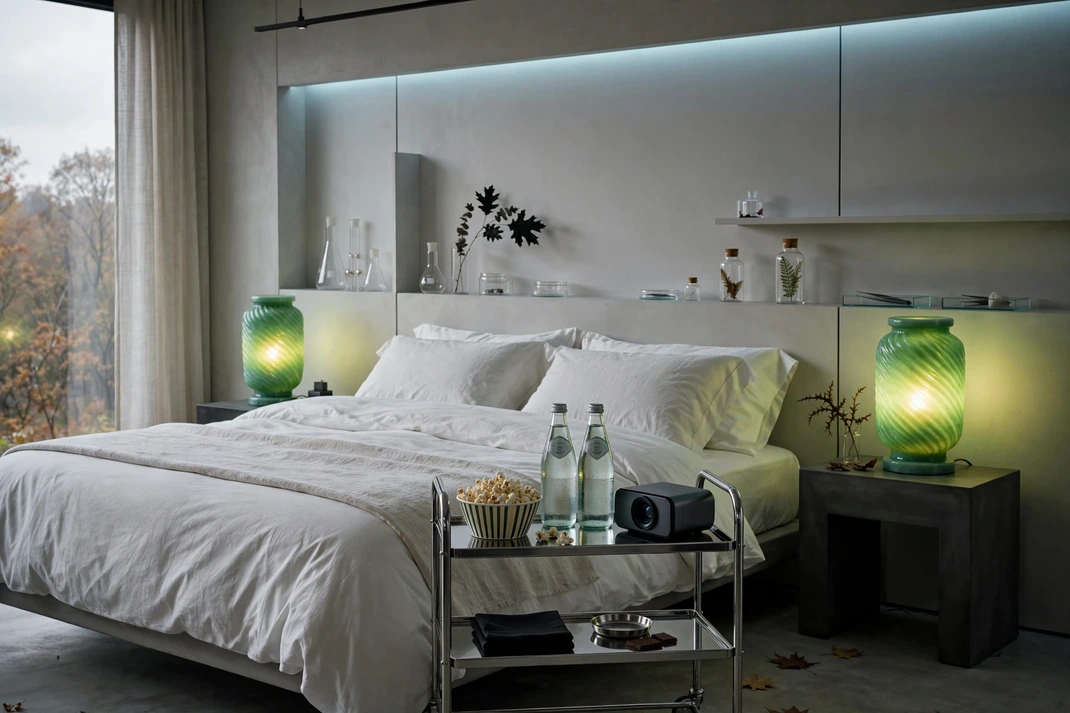
5. Stage a Jade Creature-Lab Matinee
Jade glass, ribbed chrome, and milky white bedding create a laboratory-inspired movie room that feels sleek, eerie, and grown-up. The look borrows the glow and precision of classic creature cinema, but avoids literal specimen jars and hazardous clutter. Clean lines make this one particularly effective in a modern apartment.
The Setup:Place two rechargeable jade-green glass lamps on matching sides of the bed and position a narrow chrome trolley near the foot for popcorn, sparkling water, and the projector remote. Use white percale, a silver-gray cellular blanket, and one deep teal cushion; conceal cords in a straight run, keep liquids on the lower trolley shelf, and aim the projector at a blank wall with no reflective frames nearby.Why It Photographs Well:Translucent green glass produces controlled pools of color against crisp white cloth, and chrome contributes fine highlights rather than broad glare. The repeated bedside lamps establish symmetry, while the trolley adds a useful foreground layer to the photograph.Pro Tip:Use green light on objects, not faces. Keep the bedside bulbs warm white and place a tiny green LED puck behind each glass base; the glass will glow jade while skin tones and food still look natural.
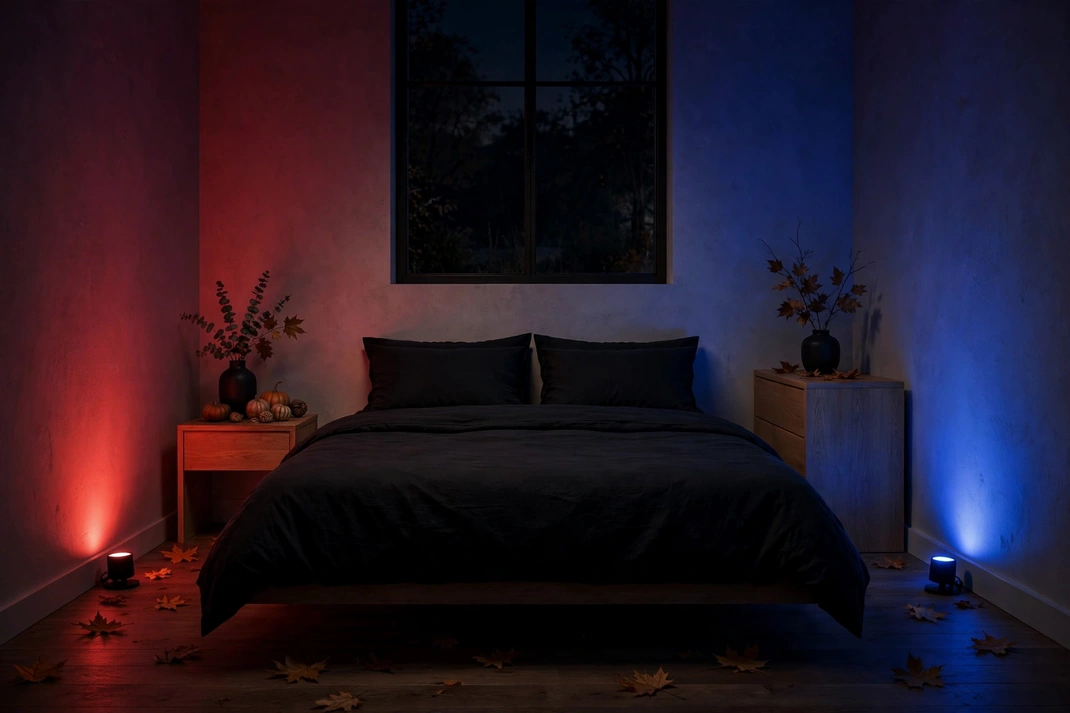
6. Wash the Room in Giallo Red and Cobalt
A red pool of light on one side of the bedroom and a cobalt pool on the other creates the taut, graphic atmosphere of a stylish Italian thriller. Because the color comes from lighting rather than permanent paint, the scheme can appear for one October weekend and disappear the next morning. Plain furniture and solid bedding give the saturated light room to perform.
The Setup:Set two dimmable uplights on opposite walls, fitted with red and cobalt smart bulbs, and keep both fixtures below mattress height so the sources remain hidden. Make the bed in matte charcoal, place a single white bouclé cushion at the center, and use a black tray for covered snacks; test brightness before the film so colored spill does not wash out the projector image.Why It Photographs Well:Opposing color fields create instant depth and a striking warm-cool split, while the white cushion records both hues along its textured surface. Shooting from the doorway captures the two walls as color blocks and keeps the darker bed as a calm anchor.Pro Tip:Never set both bulbs to full saturation and equal brightness. Let one color lead at about two-thirds intensity and keep the other lower; the imbalance feels cinematic, whereas equal red and blue can resemble gaming-room lighting.
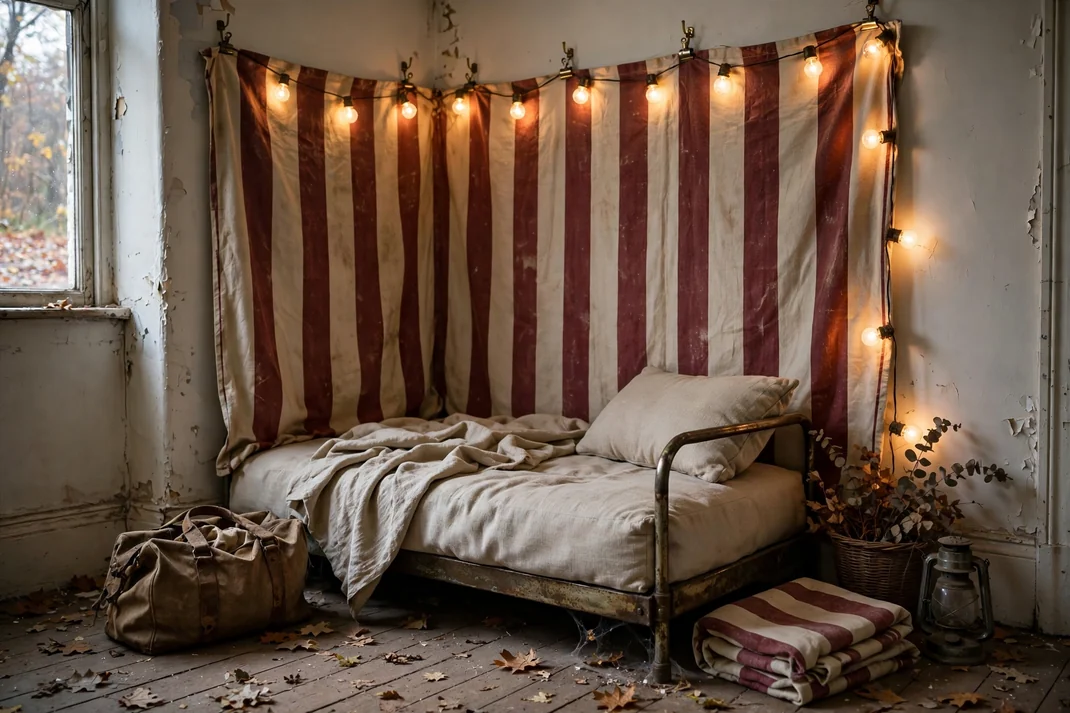
7. Create a Haunted Carnival Screening Nook
A narrow stripe, faded ticket red, and soft pools of globe light evoke an old traveling carnival after the crowds have gone. The best version feels worn and slightly uncanny, not sugary: think oatmeal canvas, tarnished metal, and muted burgundy rather than primary-color circus decor. It brings plenty of Halloween personality to a plain spare bedroom.
The Setup:Hang one removable cream-and-burgundy striped fabric panel behind a compact floor sofa or a stack of firm back cushions, then trace only the panel’s top edge with low-voltage warm globe lights. Use a galvanized tray for popcorn cartons, add a round tobacco-colored pouf, and project onto the adjacent undecorated wall; secure every light cable with clear clips and keep bulbs away from fabric.Why It Photographs Well:The vertical stripe gives the frame rhythm, while the round bulbs and pouf repeat a softer circular shape. Weathered red photographs with more nuance than bright scarlet, and the off-center screen space keeps the composition from feeling like a symmetrical party backdrop.Pro Tip:Mute a new striped textile with an oatmeal layer in front of it. Even a narrow raw-linen runner hung down the center breaks up the crisp pattern and makes the carnival reference feel collected rather than freshly purchased.
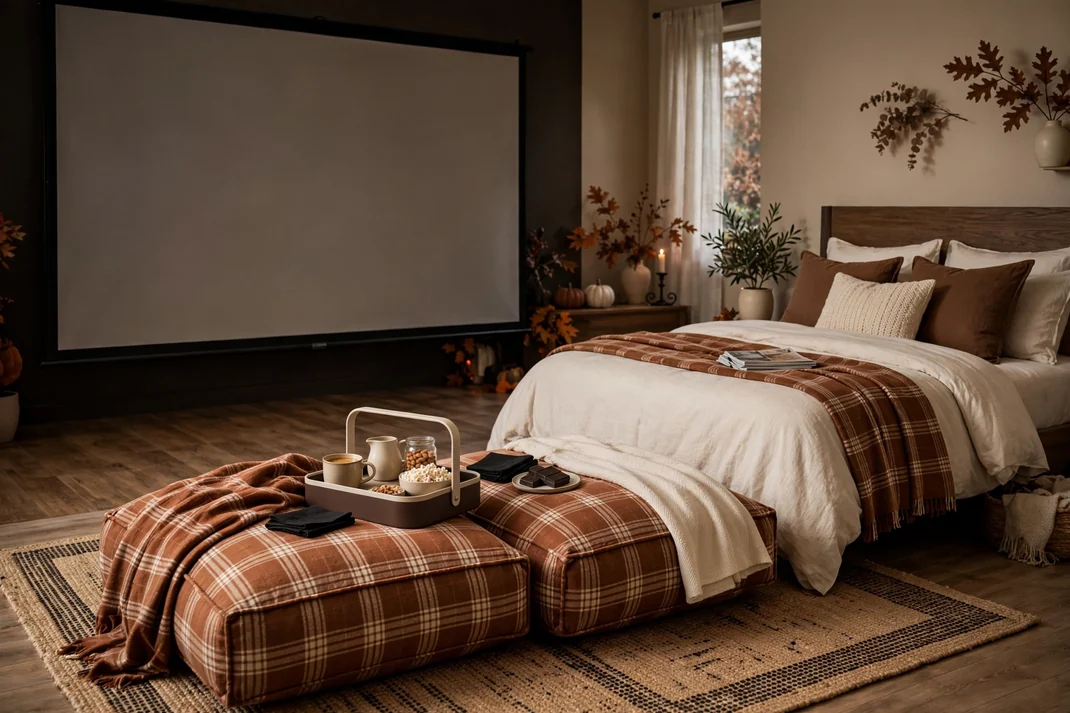
8. Reimagine the Floor as an Autumn Drive-In
A low nest of floor cushions turns the space between bed and screen into a cozy indoor drive-in, complete with plaid blankets and a streamlined snack caddy. The idea is playful without being childish because the palette stays rooted in rust, espresso, and cream. It is also useful for hosting friends when the bed itself should remain neatly made.
The Setup:Position two large square floor cushions on a nonslip rug facing a freestanding screen, with 30 to 36 inches of clear circulation behind them. Add rust lumbar pillows, a cream wool throw, and a low metal caddy divided into drinks, napkins, and popcorn; put the projector behind the seating on a stable raised stand so no one crosses the beam or blocks ventilation.Why It Photographs Well:The low viewpoint creates a layered foreground of cushions and blankets, with the screen rising cleanly beyond them. Rust fabric against a dark rug supplies autumn color, while the repeated pairs of cushions make the scene feel sociable and carefully arranged.Pro Tip:Choose firm foam-filled floor cushions at least four inches thick and add a small back wedge to each. Good posture is the difference between a photogenic setup used for ten minutes and a movie-night layout guests actually enjoy.
9. Turn the Bed into a Midnight Train Compartment
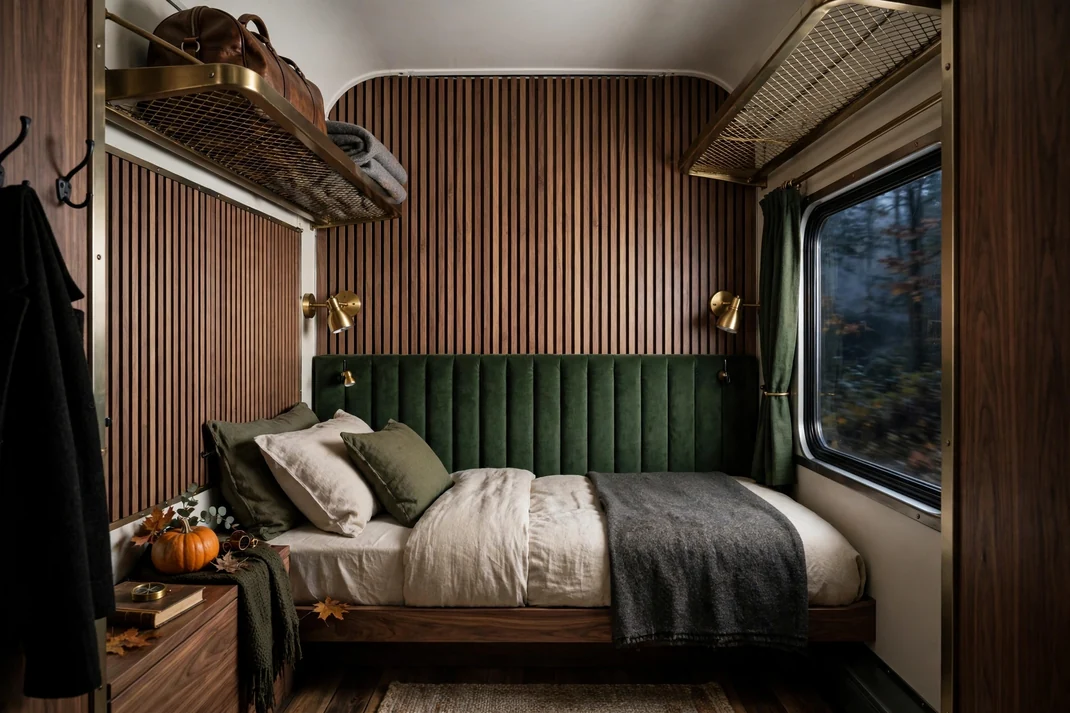
Vertical walnut slats, bottle-green upholstery, and compact brass lighting make the bed feel like a berth on a night train heading into a mystery. The illusion comes from disciplined proportions and rail-car details, not a novelty mural. In a narrow bedroom, the compartment effect can make limited width feel like part of the story.
The Setup:Install renter-safe walnut-look slat panels on the headboard wall, stopping at least 12 inches short of the ceiling, and use a bottle-green channel-stitched headboard or removable upholstered panel. Mount or place two petite brass reading lights inside the bed width, add striped cream-and-green bedding, and set a slim lidded snack tray across the foot only while watching; the projector should face a pull-down screen at the opposite end.Why It Photographs Well:Strong verticals compress the composition like a rail compartment, while green upholstery and brass pools of light create a luxurious nighttime focal point. A centered camera angle emphasizes the corridor-like symmetry and makes the modest bedroom feel deliberately intimate.Pro Tip:Keep the slats narrower than the bedside lamps and align one slat with the center of the bed. That visual datum prevents the wall treatment from looking randomly applied and makes the whole compartment read as built-in joinery.
10. Style a Stop-Motion Harvest Workshop
Paper foliage, carved wood, felt produce, and visible hand-stitching give movie night the tactile charm of a stop-motion autumn world. The room feels imaginative because every surface has evidence of the hand, yet the palette of mustard, moss, clay, and brown stays calm enough for sleep. It is a smart choice for craft lovers who want Halloween warmth without ghosts or gothic black.
The Setup:Cover a compact bench with brown kraft paper and arrange a shallow tray of finished felt acorns, wool pumpkins, and wooden leaves as a deliberate display, not an active mess. Clip a short run of paper foliage above the bench, layer the bed with a moss quilt and mustard throw, and use a small rolling cart to hold the projector and closed craft boxes; remove scissors, needles, and adhesives before guests settle in.Why It Photographs Well:Handmade surfaces produce tiny shadows and imperfect edges that read beautifully in close-up, while the restrained harvest colors unify the wider room. A bench in the foreground and bed beyond create the sense of a miniature workshop without overcrowding the frame.Pro Tip:Repeat one material in three scales: a large kraft-paper backdrop, medium paper leaves, and tiny paper snack labels. That hierarchy makes the craft story feel designed rather than assembled from unrelated seasonal pieces.
11. Compose a Film-Noir Detective Bedroom
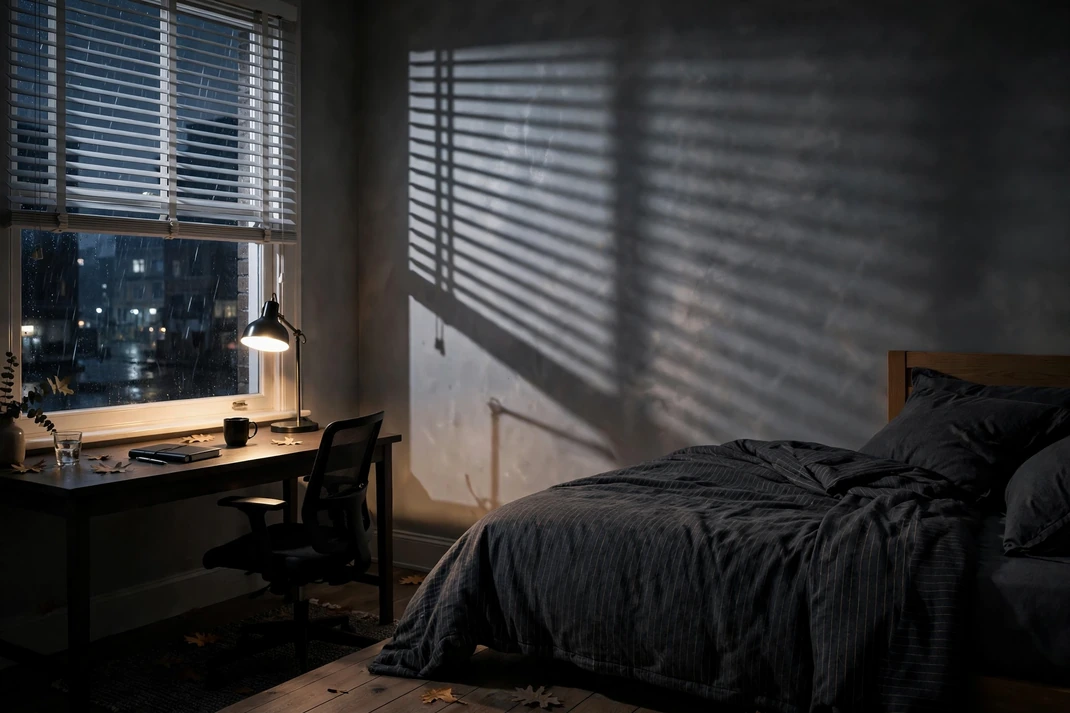
Venetian-blind shadows, smoke-gray tailoring, and one pool of desk light create a bedroom worthy of a rain-soaked detective story. The theme is crisp and urban, with no need for themed signs or faux evidence boards. A charcoal pinstripe coverlet and black desk chair supply just enough menswear formality.
The Setup:Fit the window with adjustable blinds and aim a focused lamp across them after dark to cast stripes on a blank side wall; for daytime, use a slatted gobo in front of a cool-running LED instead. Dress the bed in smoke-gray cotton with a pinstripe throw, place a compact black desk perpendicular to the window, and keep movie snacks in a dark lidded box so the desktop remains spare.Why It Photographs Well:Diagonal bands of light animate the wall and create unmistakable noir depth, while tailored textiles prevent the shadows from feeling accidental. Photograph from the bed corner so the desk lamp forms a bright focal point and the striped wall recedes behind it.Pro Tip:Angle the blinds until the shadows cross furniture rather than faces or the projector screen. The most convincing noir lighting reveals only part of the room, but the viewing area itself should stay comfortable and glare-free.
12. Gather a Folk-Horror Meadow Screening
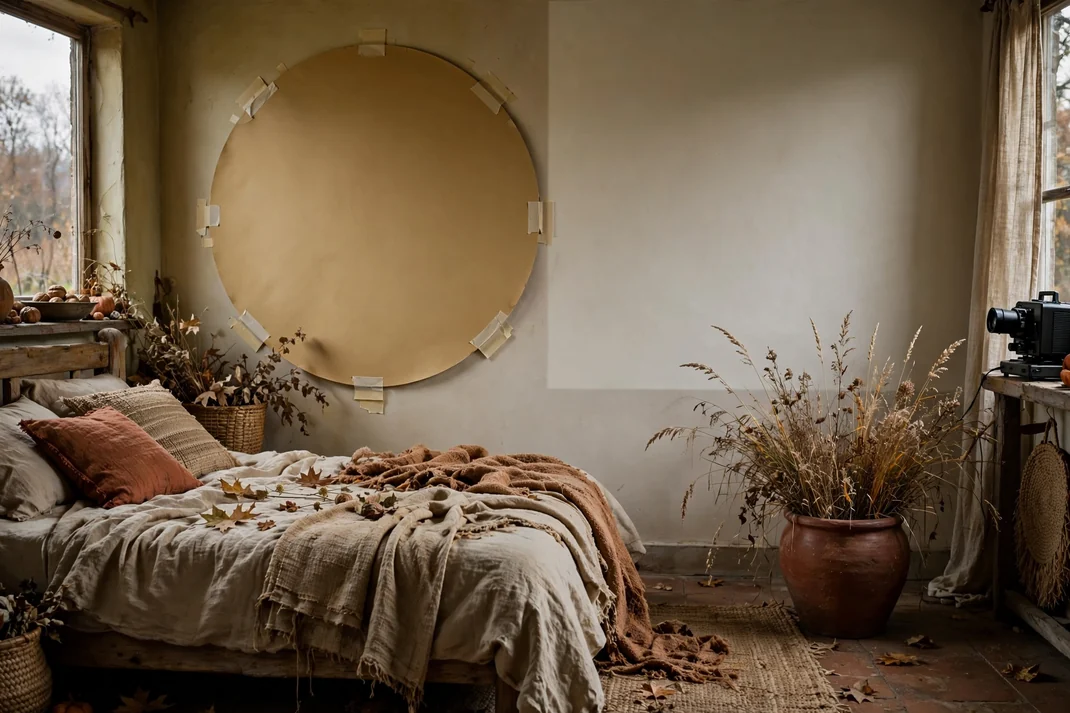
Dry meadow grasses, clay red, and raw flax bring the uneasy beauty of late harvest indoors. This is not a rustic pumpkin display; its tension comes from one oversized circular form, rough natural fibers, and a landscape palette that feels sun-faded. The result suits bohemian and organic-modern bedrooms especially well.
The Setup:Place a large plain ochre paper disc on the wall beside—not behind—the projection area, using removable mounting strips rated for the surface. Fill one floor crock with architectural dried grasses, add a flax duvet and clay-red blanket, and set out woven seat pads in a shallow semicircle; choose preserved or faux grasses if allergies are a concern and keep dry material well away from lamps and outlets.Why It Photographs Well:The circular disc reads like a low autumn sun and creates a strong graphic counterpoint to the rectangular screen. Backlit grasses add fine silhouettes, while matte linen and clay colors keep the image earthy rather than decorative.Pro Tip:Cut the disc large enough to relate to the bed—roughly one-third to one-half of the headboard width. A small circle looks like wall decor; an oversized one changes the perceived landscape of the whole room.
13. Build an Eighties VHS Rental Corner
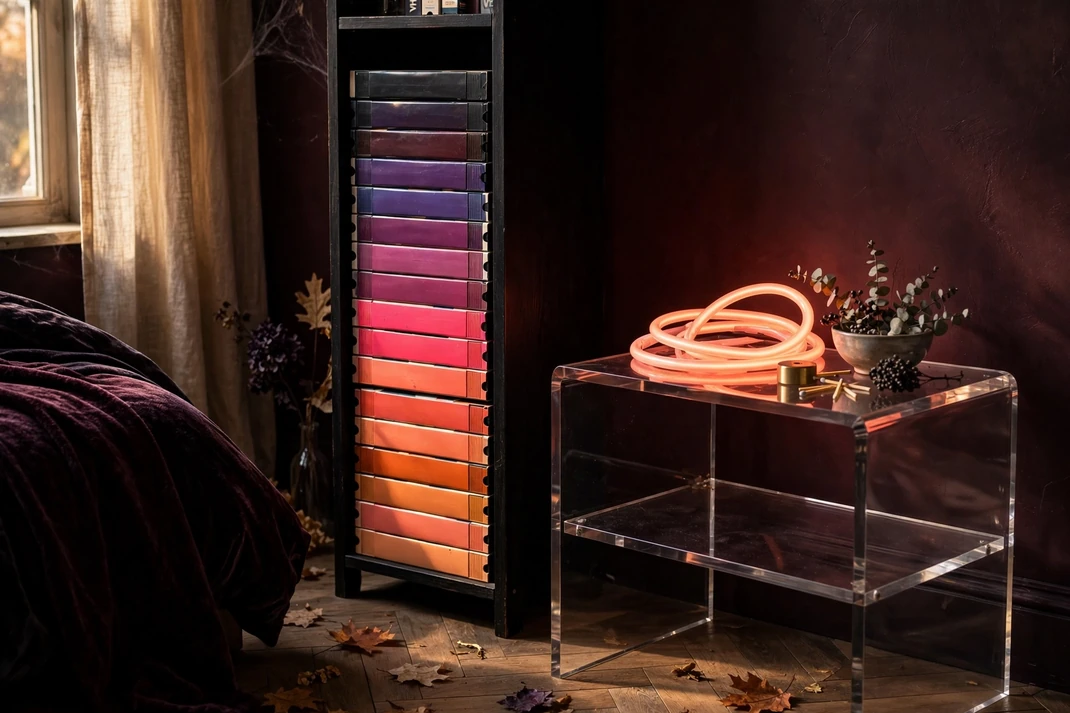
A tidy row of cassette cases, a smoked-acrylic table, and dusty neon accents recreate the thrill of choosing a late-night rental without turning the bedroom into a memorabilia store. The nostalgia lives in the media format and compact retail-like arrangement, not in branded posters. Black, aubergine, and electric coral keep the mood playful but polished.
The Setup:Dedicate one narrow bookcase to a single vertical row of blank or personally owned VHS cases, arranged by spine color, with the player or media box on a ventilated shelf below. Add a smoked-acrylic side table, an aubergine quilt, and one coral lamp with a warm bulb; hide modern streaming equipment in an open-backed box and leave at least half the shelving visually empty.Why It Photographs Well:Color-blocked spines create a satisfying repeating line, and smoked acrylic reflects light without the heaviness of solid black furniture. A three-quarter view catches the shelving, coral lamp, and bed in separate planes, giving the photograph authentic depth instead of a flat retro backdrop.Pro Tip:Use new printable spine inserts with abstract color only—no fake movie titles or logos. Consistent typography is unnecessary on camera, and avoiding it keeps the corner from looking like a reproduction video store display.
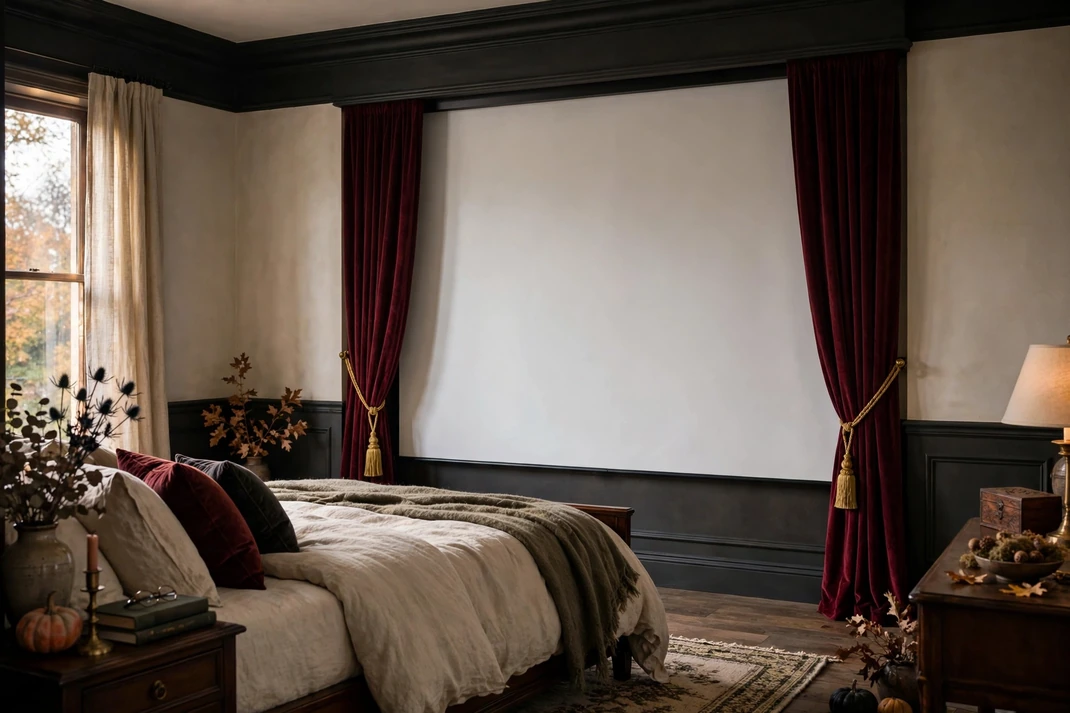
14. Frame the Screen Like a Phantom Opera Box
A retractable screen framed by burgundy velvet side panels turns the far wall into a private opera box, ready for a grand supernatural film. The arrangement is theatrical yet controlled because the fabric stays at the screen edges rather than surrounding the bed. Antique gold cord and a dark painted ceiling line complete the sense of a miniature proscenium.
The Setup:Mount a properly rated retractable screen according to the manufacturer’s instructions, then hang two narrow burgundy velvet panels from separate side rods so fabric cannot touch the mechanism. Hold each panel with antique-gold cord, place a low black bench beneath for blankets and covered snacks, and keep the projector centered on a rigid shelf with an unobstructed cooling path.Why It Photographs Well:The velvet frame absorbs stray light and directs attention toward the bright rectangle, exactly as a theater proscenium does. Deep folds provide rich shadow detail, while the gold cord adds two precise highlights that stop the red fabric from becoming a dark mass in photos.Pro Tip:Size each velvet panel to about one-fifth of the screen width and let it finish just above the floor. Wider drapery steals viewing area and feels like ordinary curtains; the narrow proportion is what makes the installation read as stage architecture.
A convincing movie-night bedroom does not need to imitate a film set. Let one cinematic reference guide the color, one architectural move shape the room, and one lighting decision establish the mood. With the screen, seating, and cables resolved first, the decorative layer can feel immersive in the evening and still look composed the following day.