22 Gorgeous Decorative Glass Entry Doors for Instant Curb Appeal
A standard entry door measures 36 by 80 inches and about 1 3/4 inches thick, which leaves a limited area for glass. The shape, texture and frame of that glass decide how the whole entry looks from the street. The 22 ideas below cover glass styles, frames, side panels, energy and security, with approximate sizes and practical notes. A glass comparison table at the end helps weigh privacy against daylight.
Frosted Full Lite Door
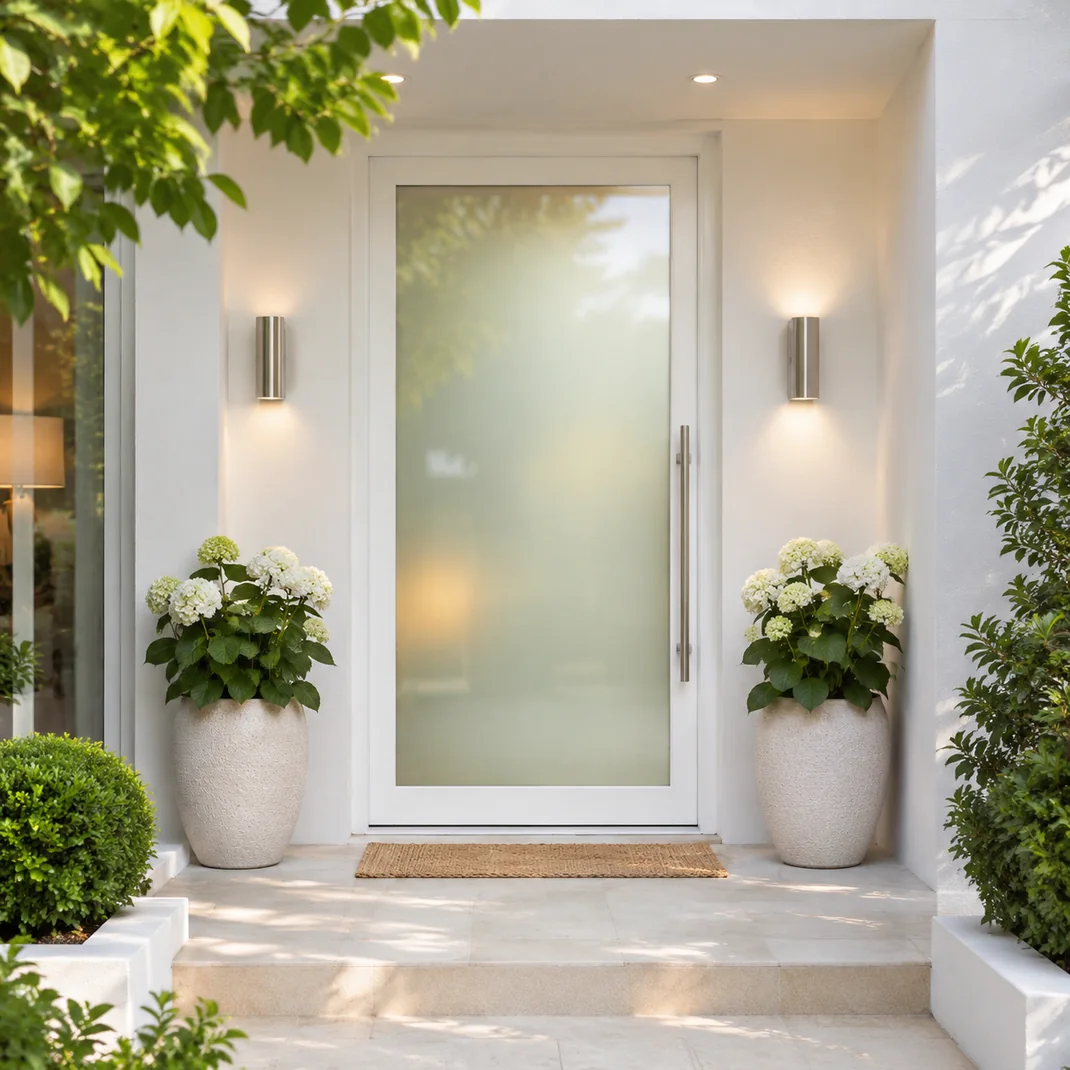
A frosted full lite door lets daylight into the hall while hiding the view from the street. The glass is acid etched or sandblasted, so it blurs shapes without going dark. Frosted glass gives high privacy, but you will still see movement at night when lights are on inside. Clean it with a soft cloth and glass cleaner, since oily fingerprints show on etched glass. Ask for tempered glass, which is the recommended choice in any door. Doors of 36 by 80 inches are the most common size, so replacement units are easy to find.
Reeded Glass Panel
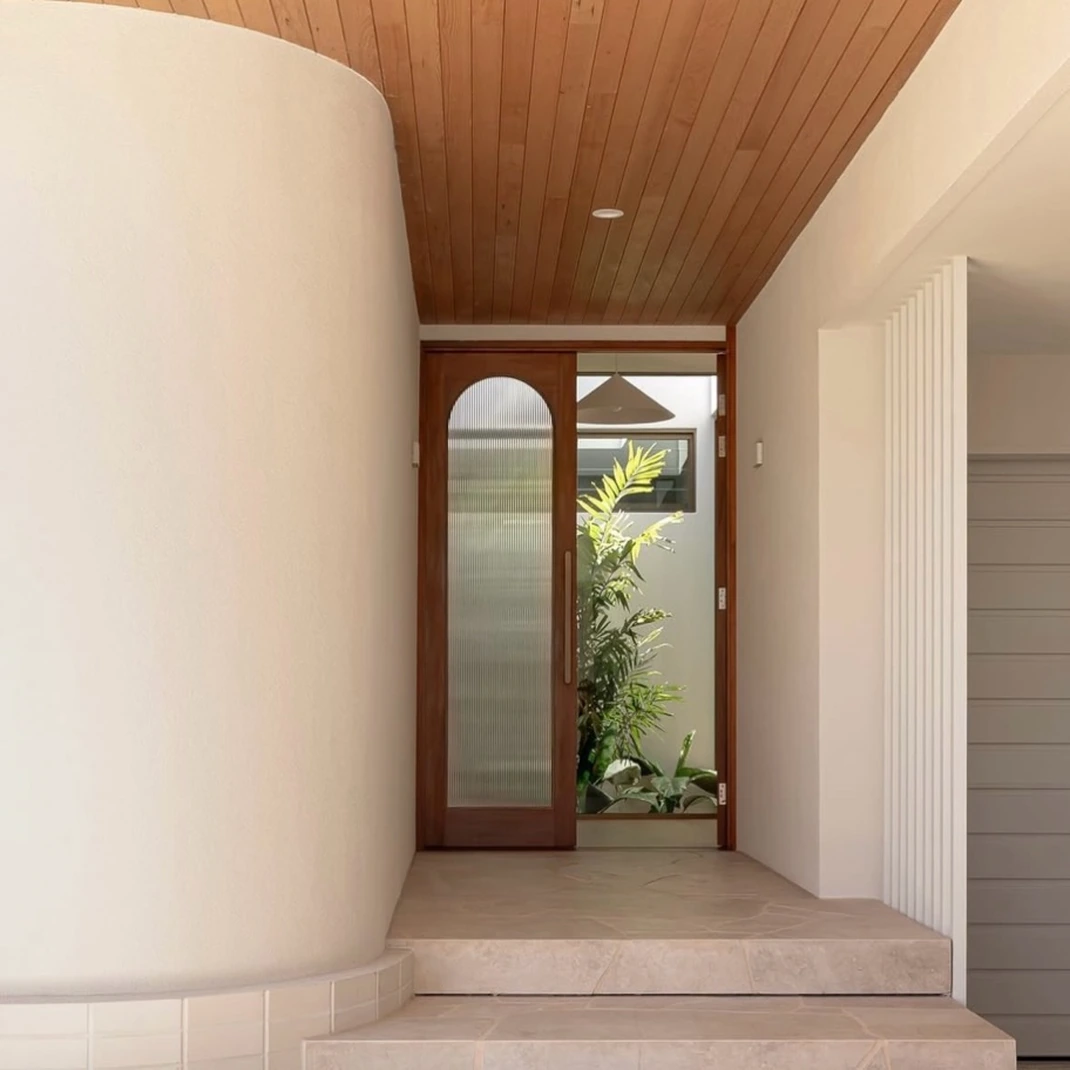
Reeded glass has parallel vertical ribs that bend light and blur the view behind it. The ribs run roughly a quarter inch wide, and they give a modern texture that suits both new and older homes. Privacy is good at a distance and lower when someone stands close to the glass. Dust collects in the grooves, so wipe the ribs with a soft brush every few weeks. Choose a vertical panel of about 12 to 16 inches wide next to a solid wood section to balance warmth and light.
Seeded Glass Half Lite
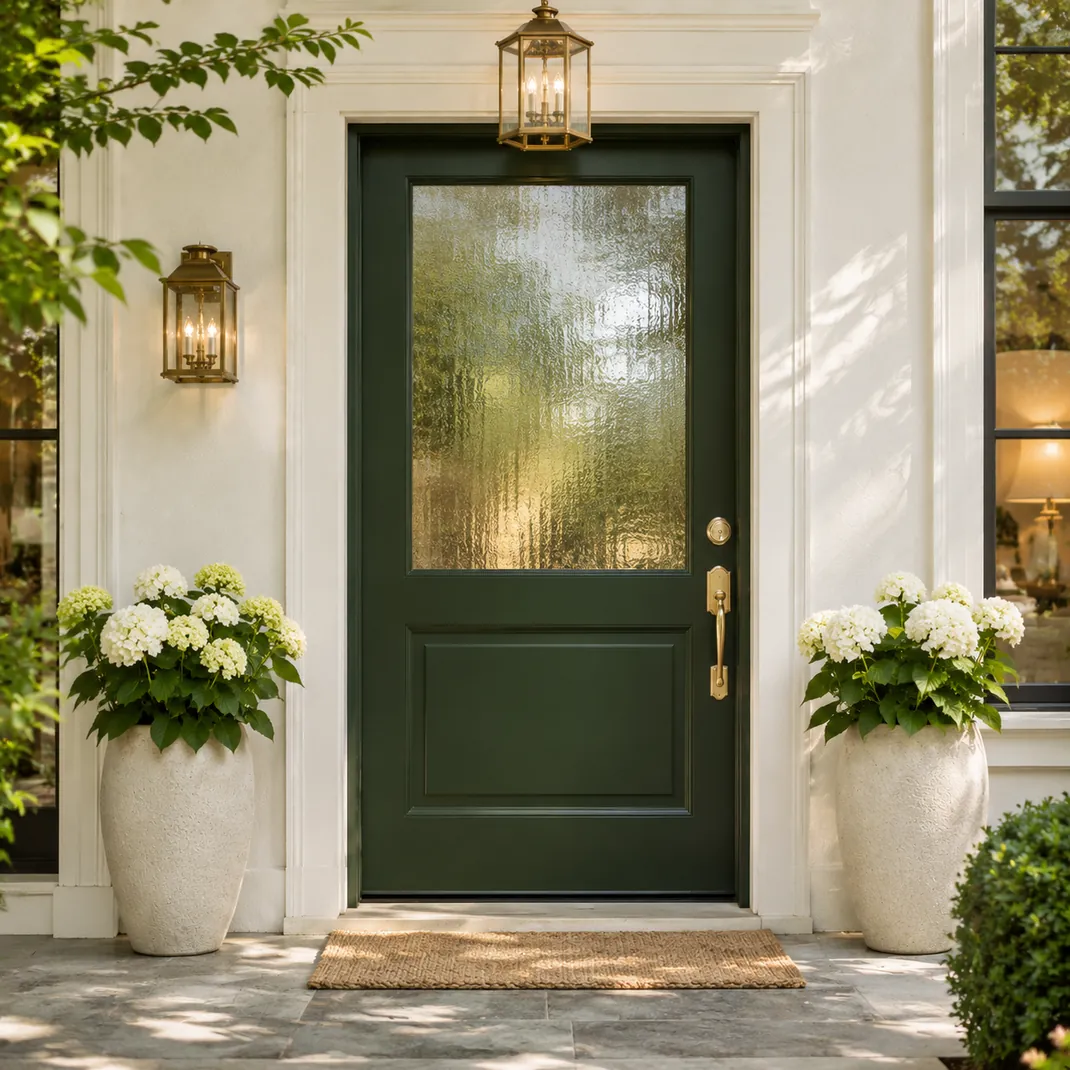
Seeded glass contains small air bubbles that scatter the view and give an antique look. A half lite door has glass in the upper half and a solid lower panel, which keeps the door sturdy and the privacy balanced. The bubbles are part of the glass and are not a flaw. Pair the door with aged brass hardware and a deep green or navy paint color. Check that the glass is tempered, since it sits at head height. A half lite suits a traditional house better than a plain flat panel.
Beveled Glass Oval Insert
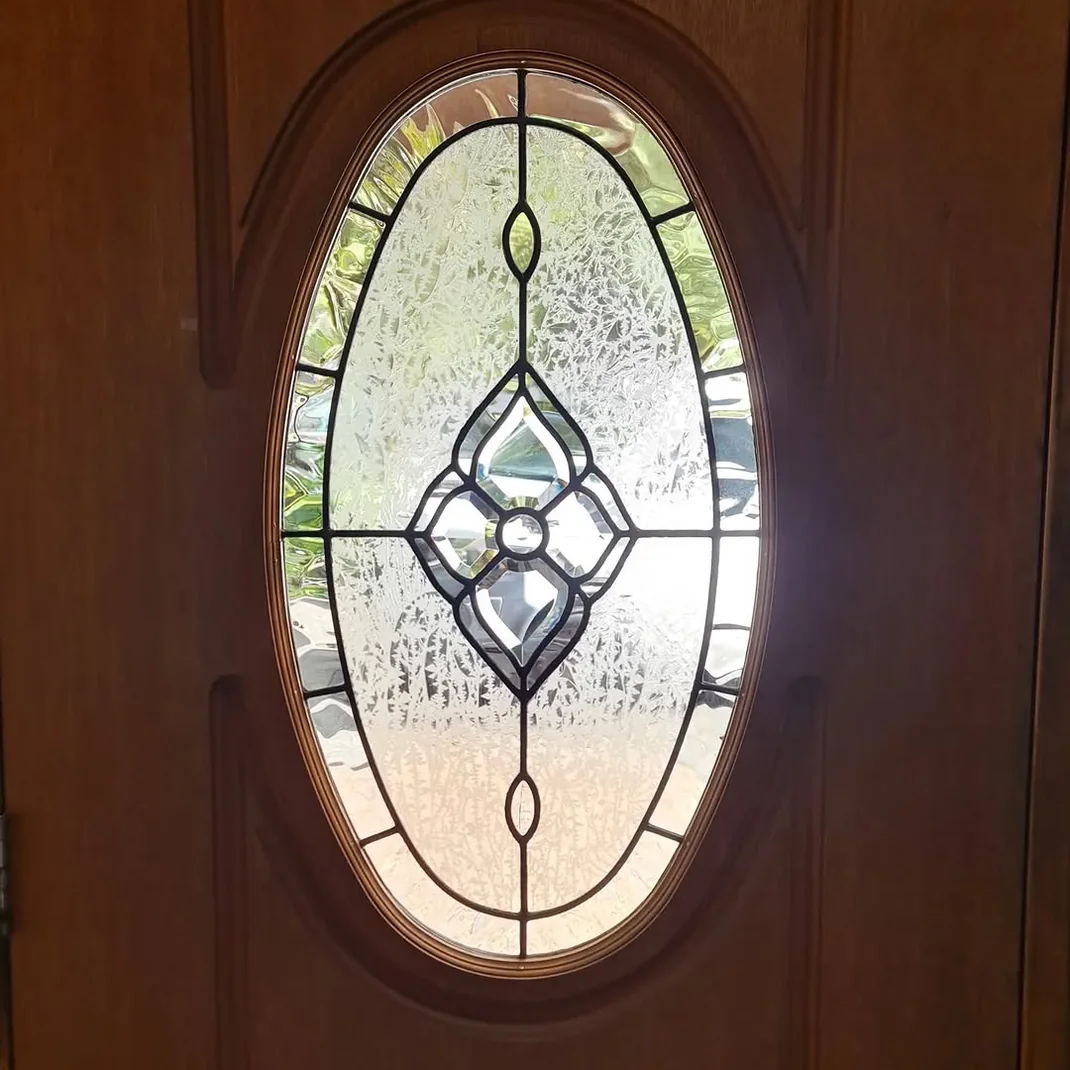
An oval insert with beveled edges catches the sun and throws small rainbows across the hall. Ovals of about 14 by 36 inches are common, and they suit older homes and traditional brick fronts. The cut edges of the glass refract light, so the effect changes over the day. Keep the glass clean with a soft cloth and avoid abrasive pads, which scratch the bevels. Choose clear bevels for a bright entry or a frosted center if you want more privacy.
Leaded Glass Cottage Door
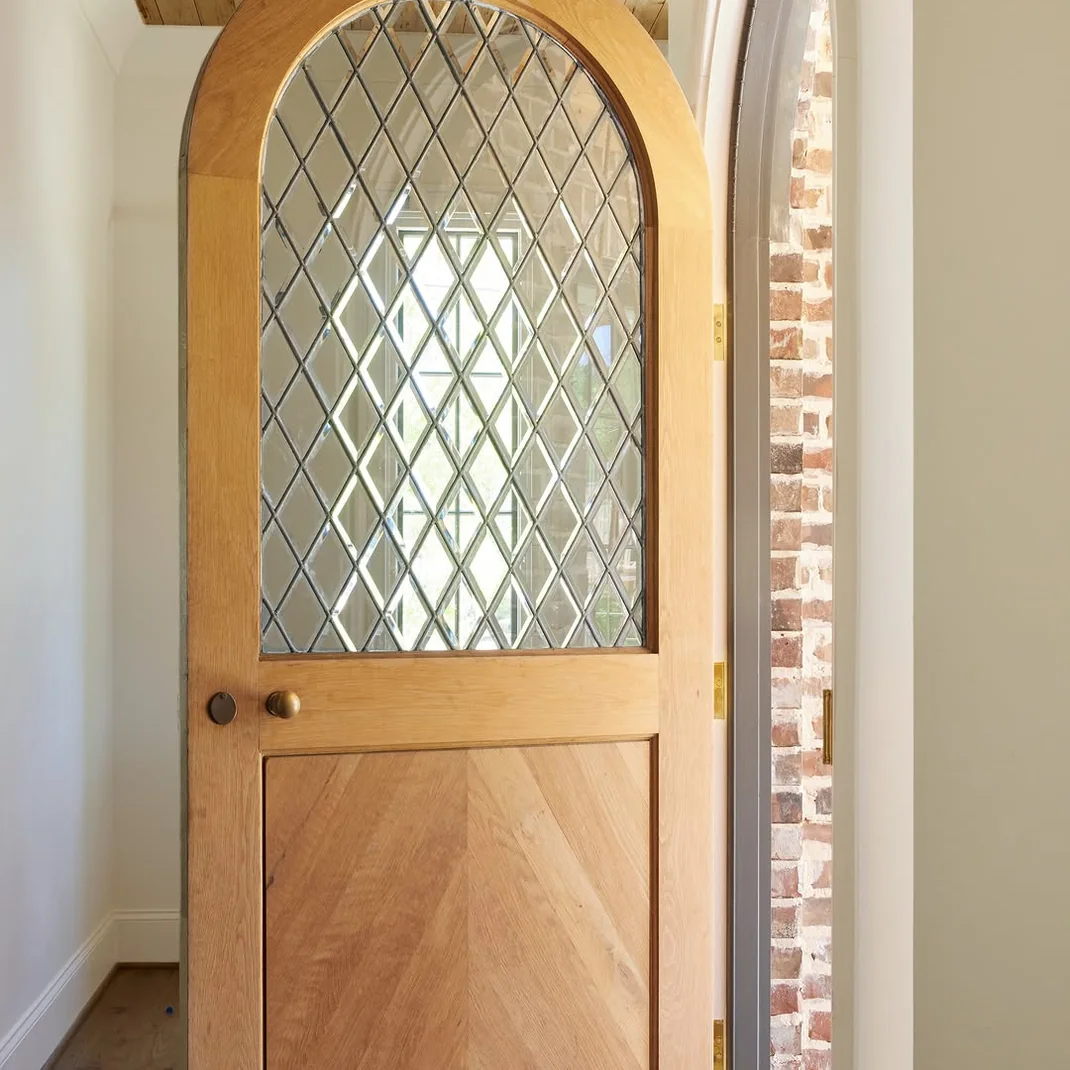
Leaded glass uses thin metal strips to join small pieces of glass in a diamond or geometric pattern. It suits cottages, Tudor houses and older brick homes. Many new doors use a pattern bonded onto a sealed glass unit rather than true lead, which is easier to clean and better for insulation. True leaded panels in antique doors may contain lead, so avoid sanding or scraping them and wash your hands after cleaning. Hang a wreath on the door only if it does not rub the glass.
Stained Glass Accent Panel
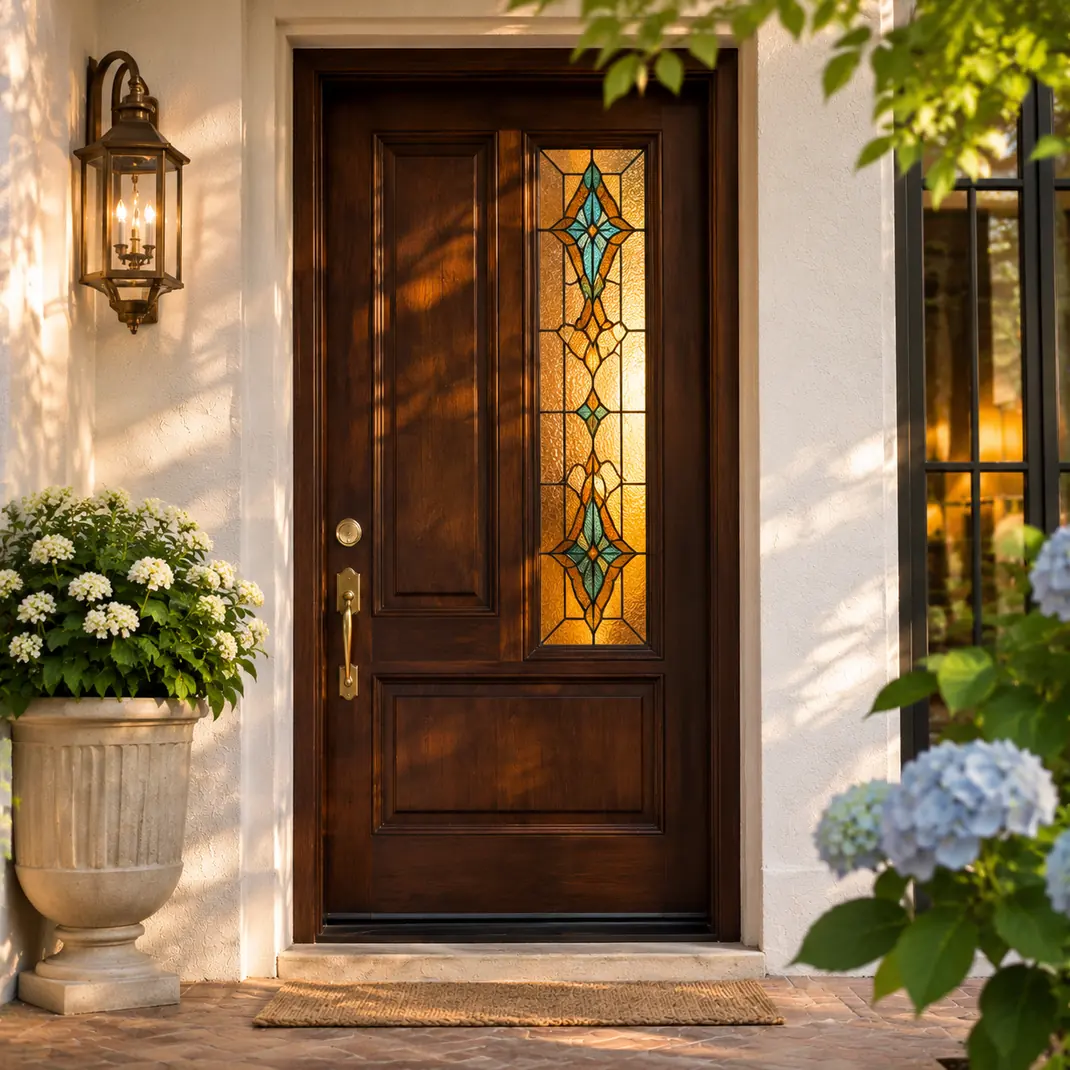
A narrow stained glass panel brings color into the hall as the sun moves across it. Panels of 8 to 12 inches wide look best beside a solid wood section. Stained glass is a design feature more than a privacy tool, so choose one with colors that suit your hall and paint. A sealed unit with the artwork protected between two sheets of glass keeps dust out and improves insulation. Ask the maker how to clean and protect the piece.
Black Steel Frame Glass Door
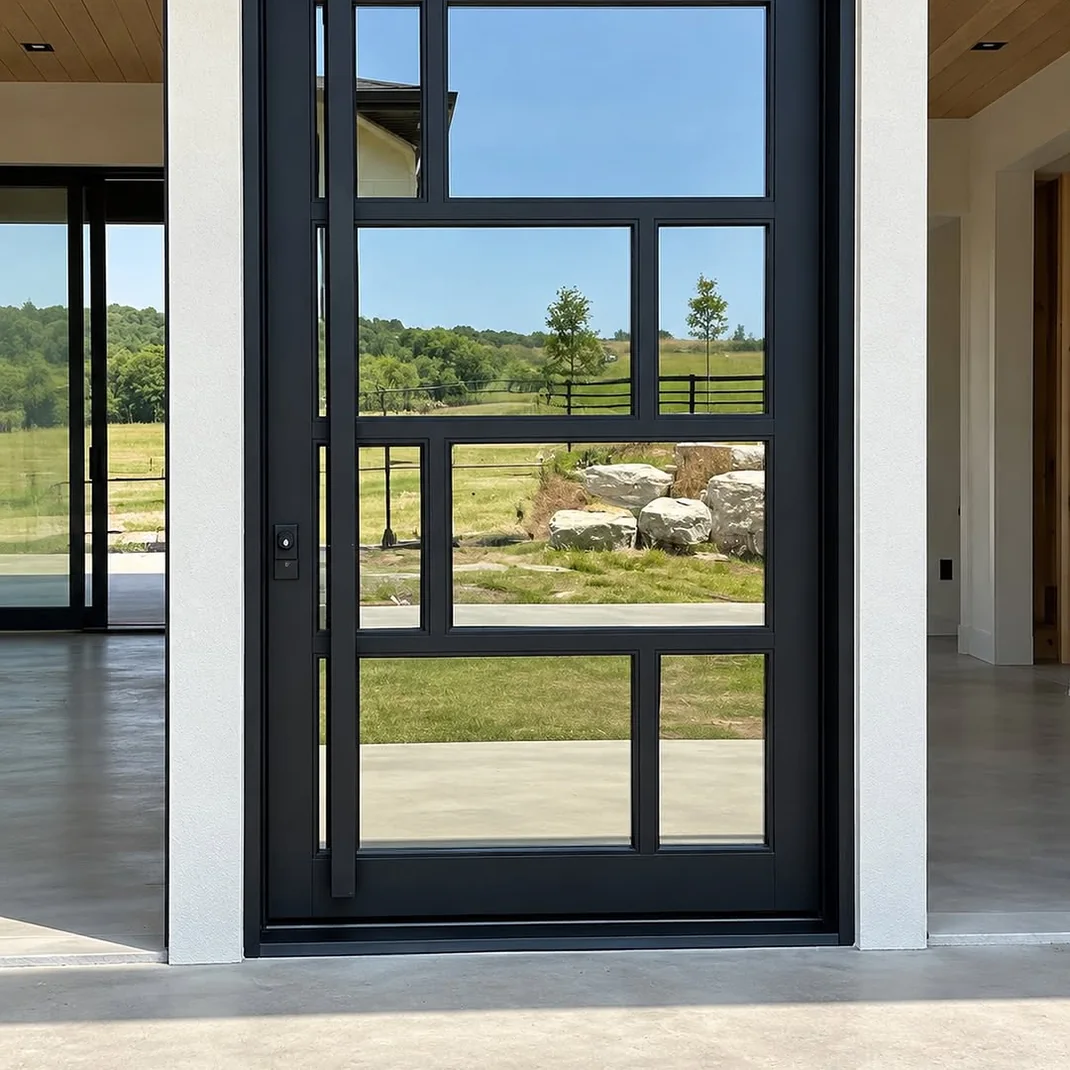
A door with a thin black frame and a grid of clear panes gives a modern industrial look. The grid adds visual interest without blocking light. Clear glass offers no privacy, so add sheer curtains or an inner screen if the hall faces the street. Choose safety glass and a thermal break in the frame, which stops cold from passing through the metal. True steel framed doors are heavy, so many homeowners choose a steel look aluminum or wood door with the same thin black grid. Ask the installer to confirm that the frame can carry the weight of the glass.
Wrought Iron Scroll over Glass
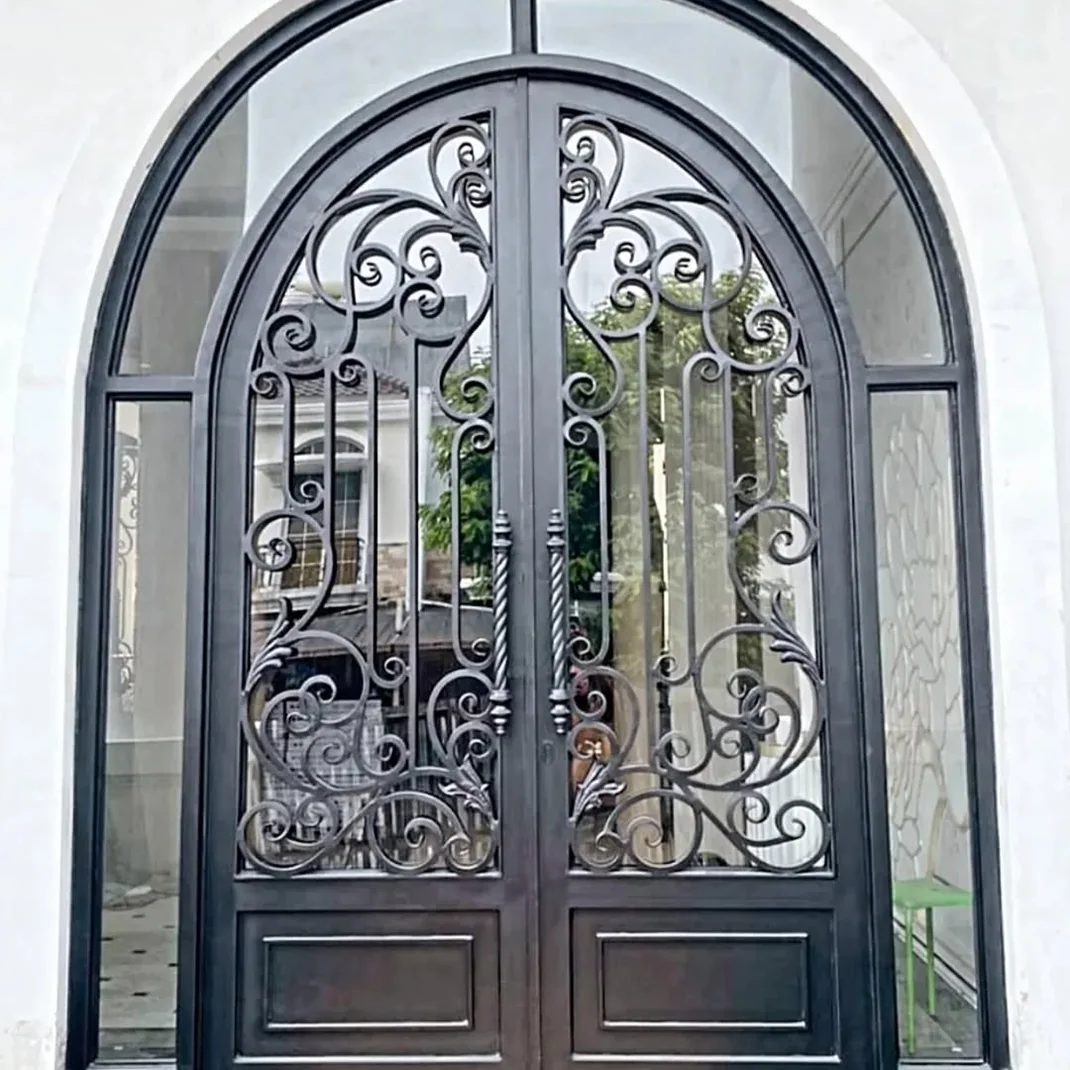
A wrought iron grille fixed over clear glass adds pattern and gives the door a classic Mediterranean look. The iron adds a layer of visible security, though it is not a substitute for a good lock. Look for powder coated iron, which resists rust better than plain paint. Wipe it with a damp cloth twice a year and touch up chips with matching paint. Check that the pattern leaves enough clear glass to let daylight reach the hall. Grilles are set outside the glass and can be removed later if the style changes.
Craftsman Three over One Lite
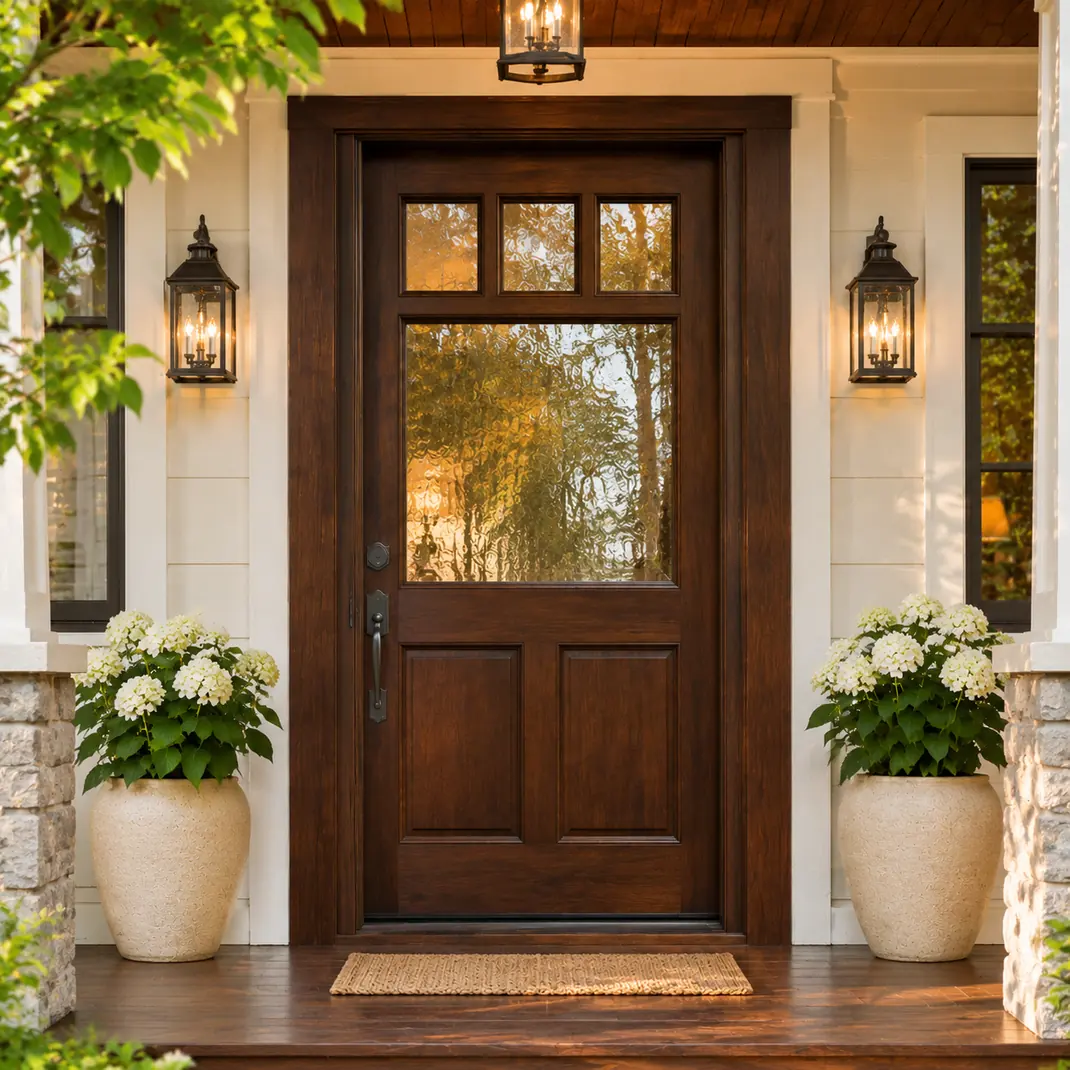
A craftsman door has three small panes across the top of one larger pane or panel. The shape suits bungalows and homes with deep porches. The wide top rail and slim vertical dividers give it a sturdy look. Choose a clear or lightly textured glass, since a craftsman door depends on its simple lines. Paint it in a deep color such as olive, charcoal or oxblood and add a plain handle set. Keep the porch roof wide enough to shade the glass from rain and sun.
Mid Century Slot Windows
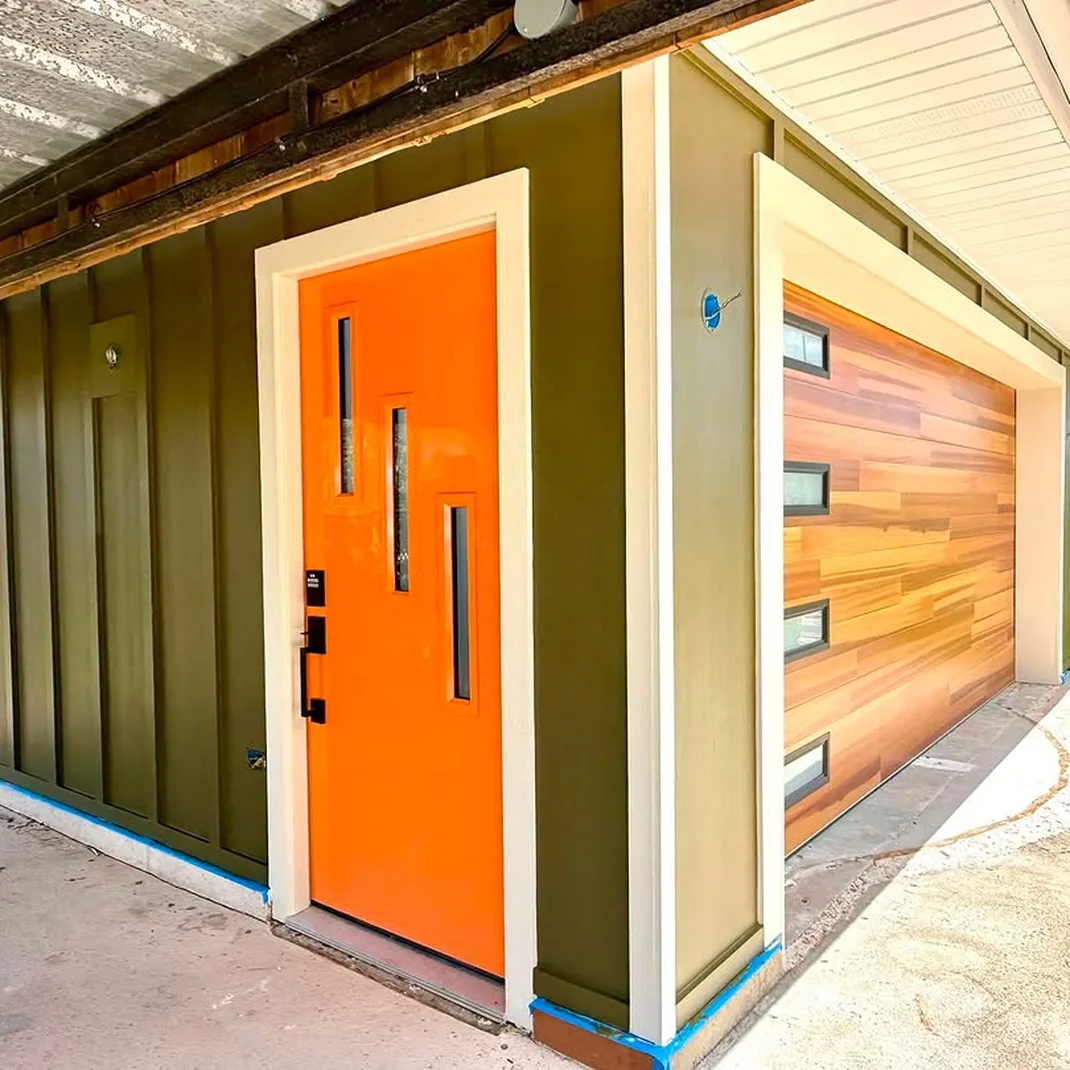
Mid century doors use flat wood with narrow rectangular windows set in a vertical or stepped row. The slots let in light without losing the privacy of a solid door. Choose walnut, teak toned or painted wood in a bold color such as mustard or turquoise. Each slot is small enough that the glass stays strong, but tempered glass is still the recommended pick. Pair the door with simple numbers, a slim handle and a low planter. A flat roof porch complements the horizontal lines.
Arched Top Glass Door
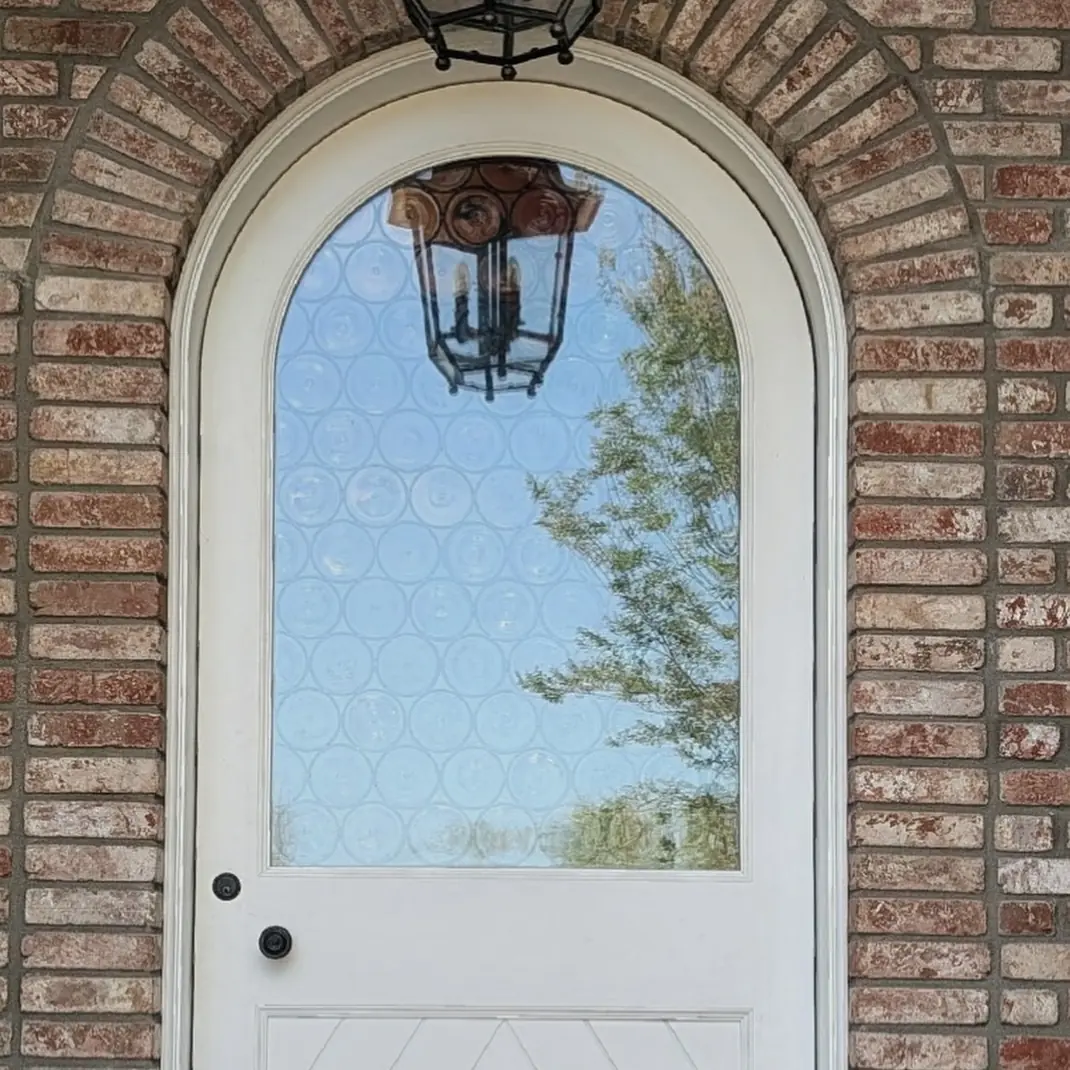
An arched top glass door softens a square facade and suits brick, stucco and stone. The door must match the opening, so measure the arch before ordering. Clear glass fills the hall with light while frosted glass adds privacy. Fit lanterns on both sides for symmetry. A pro should hang the door, because a slight error shows at the curved edge. Seal the joint between frame and brick to keep water out. Arched doors are usually made to order because the curved glass and frame must match the opening.
Double Doors with Glass
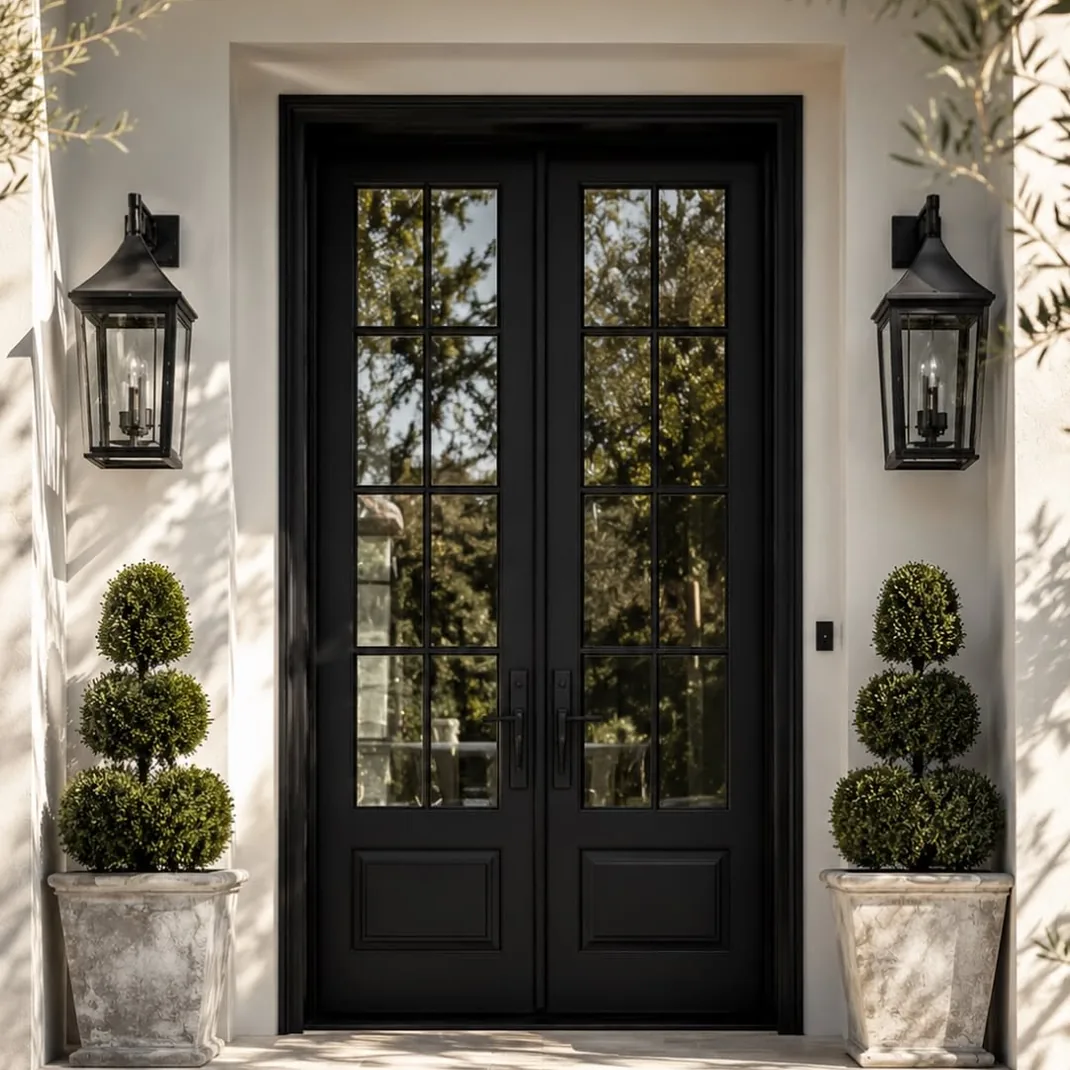
Double doors suit wide openings of 60 to 72 inches and give the entry a grand feel. Each leaf is usually 30 or 36 inches wide with a glass panel in the upper half or the full height. One leaf stays fixed with bolts at the top and bottom until you need the full opening, and the active leaf has the lock. Add a threshold that sits flat to make moving furniture easy. Frame the entry with matching planters of 18 to 24 inches high.
Sidelights on Both Sides
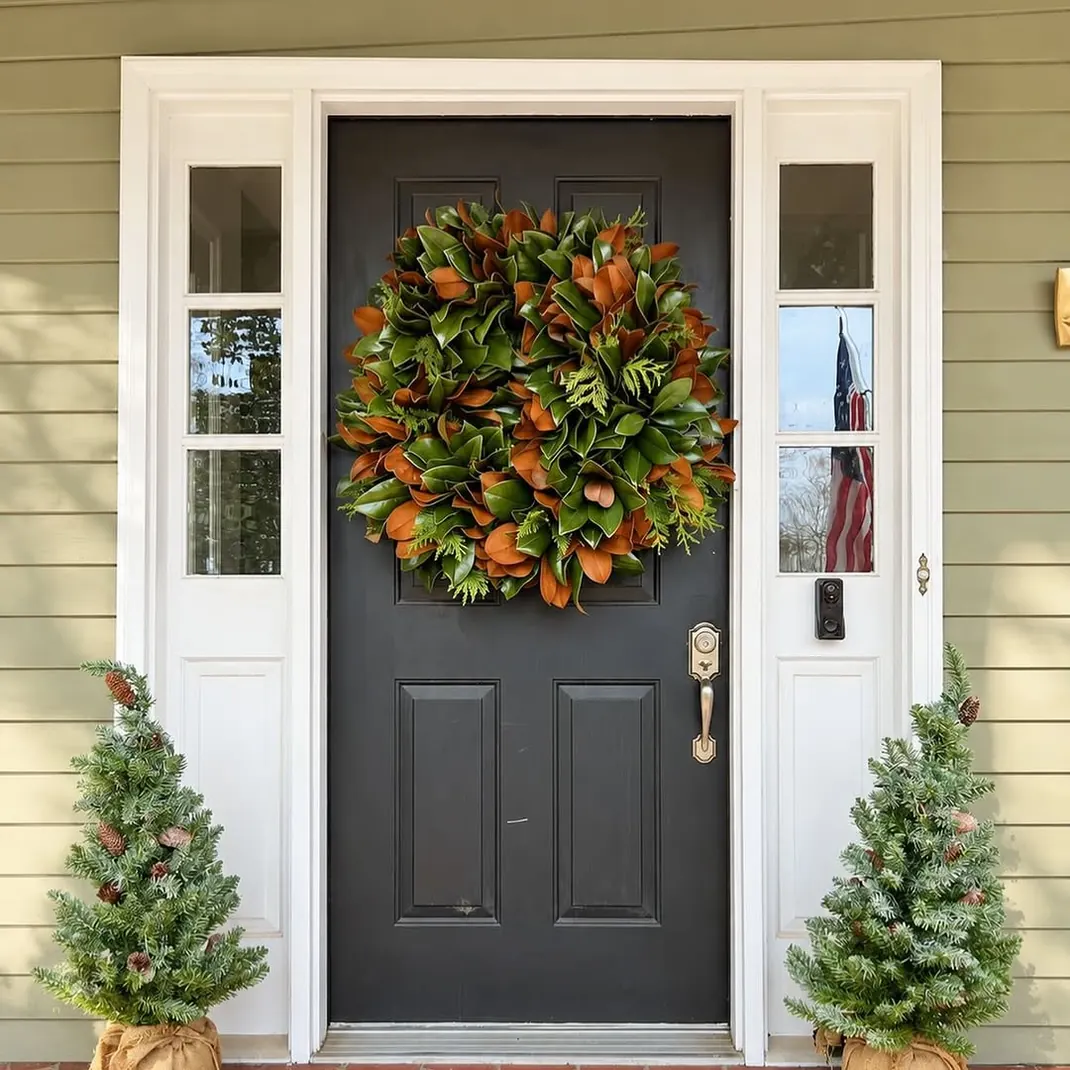
Sidelights are narrow glass panels fitted beside the door that add light and extend the entry. Standard widths are 12 or 14 inches and the height matches the door at 80 inches. Choose frosted or textured glass if the hall is close to the street, since clear sidelights show everything inside. Tempered glass is required for these panels in most building codes. A keyed lock on the door is easier to reach than one on a sidelight, so add a clear sign of where the door opens. Plan the porch lighting and planters around the glass, as covered in welcoming outdoor entry decor ideas, so the whole entry feels finished.
Transom Window Above the Door
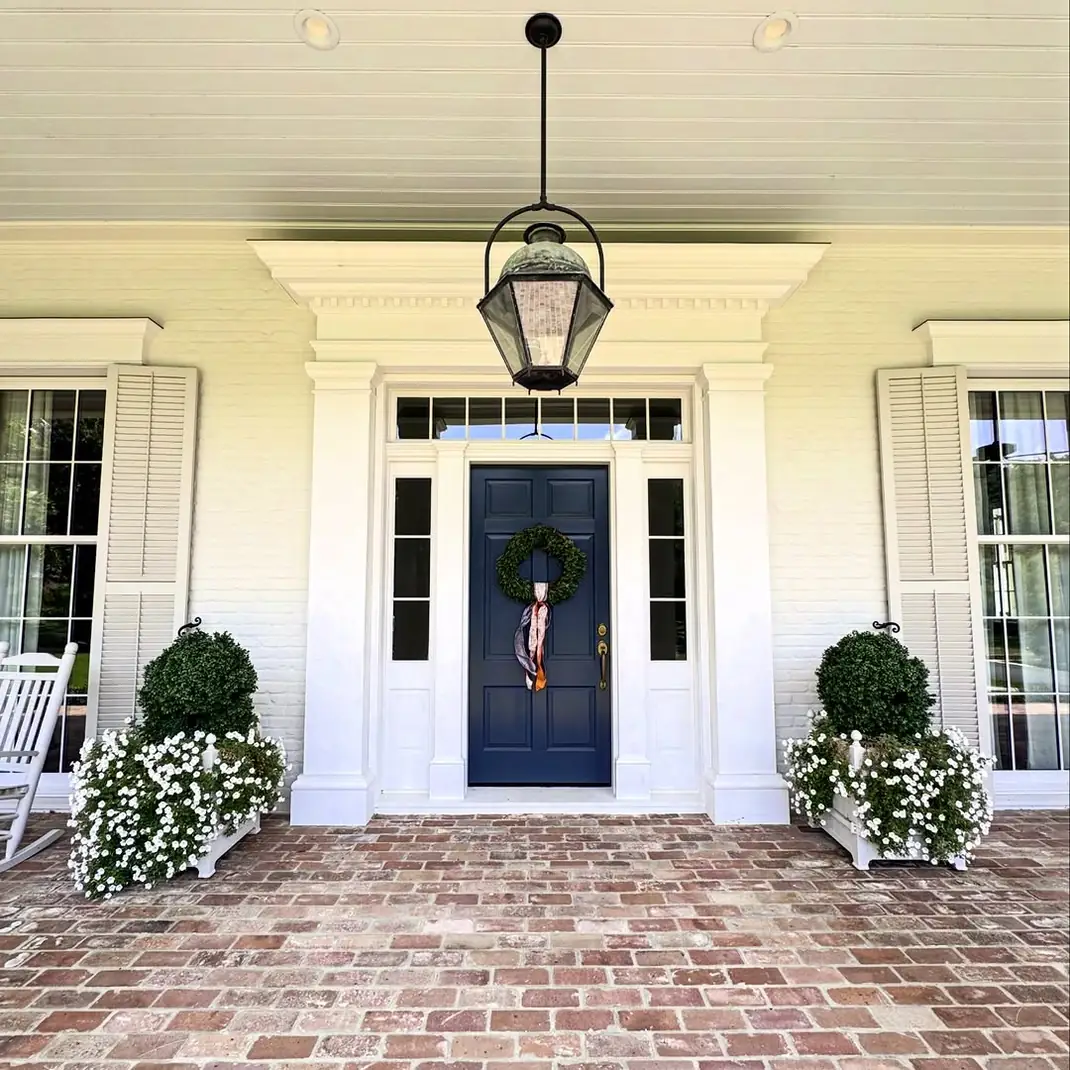
A transom is a horizontal window above the door that adds daylight and height. Heights of roughly 12 to 24 inches are common, and the width matches the door and any sidelights. It lets light into the hall without giving up privacy at eye level. Match the glass type to the door so the entry looks consistent. A fixed transom does not open, but a hinged one gives extra ventilation. Dust the sill each month to keep it tidy. Adding a transom to an existing opening needs structural work, so ask a pro to check the header first.
Pivot Door with Glass Panel
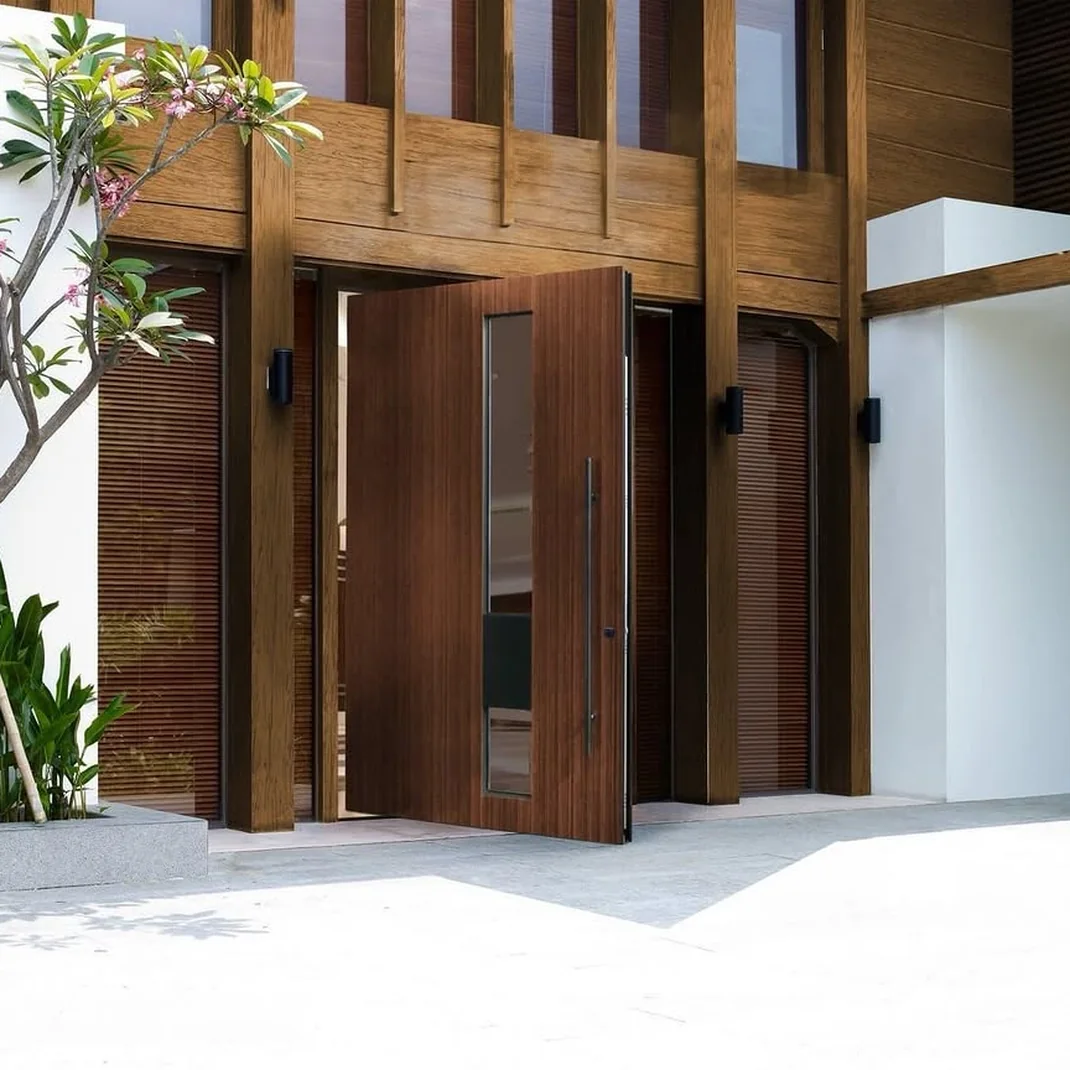
A pivot door turns on a hinge set near the center instead of at the edge, which suits wide modern entries. Doors of 48 inches wide or more are common and a glass panel brings light into a deep hall. A pivot door can weigh well over 150 pounds, so the frame and floor must be built for it. Ask a professional to hang it and confirm the weather seal. Keep a wide clear area on both sides, since the door swings in a larger arc.
Dutch Door with Glass Top
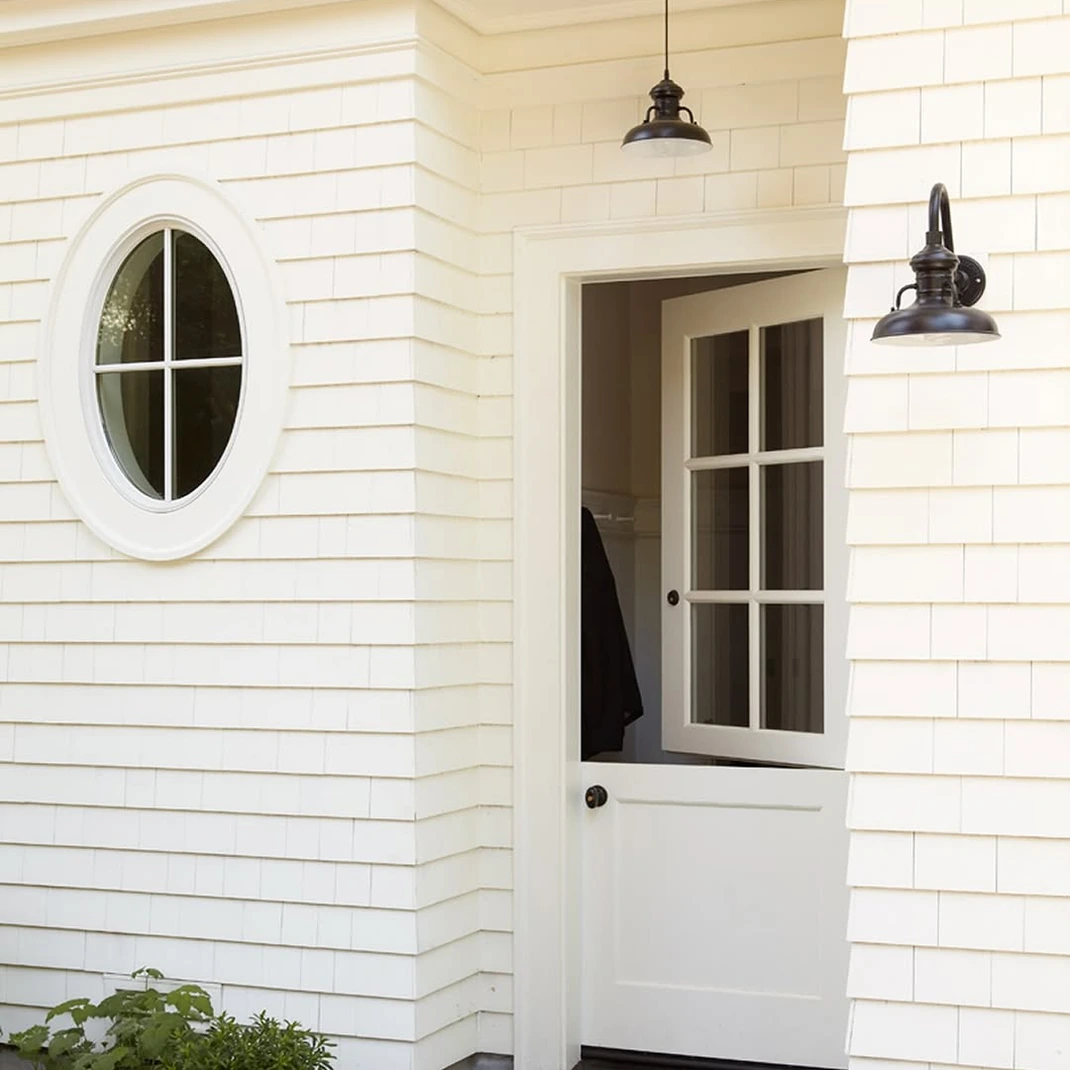
A Dutch door has two halves that open on their own, so the top can swing wide while the bottom stays shut. A glass top lets in light and airflow, and the solid bottom keeps pets and small children in. Install a latch that links the halves when you want a single door. Fit a screen on the top half in warm months. Use tempered glass in the upper half, and place hardware low enough for children to reach. Paint the bottom half a bold color for charm.
Fiberglass Door with Glass Inserts
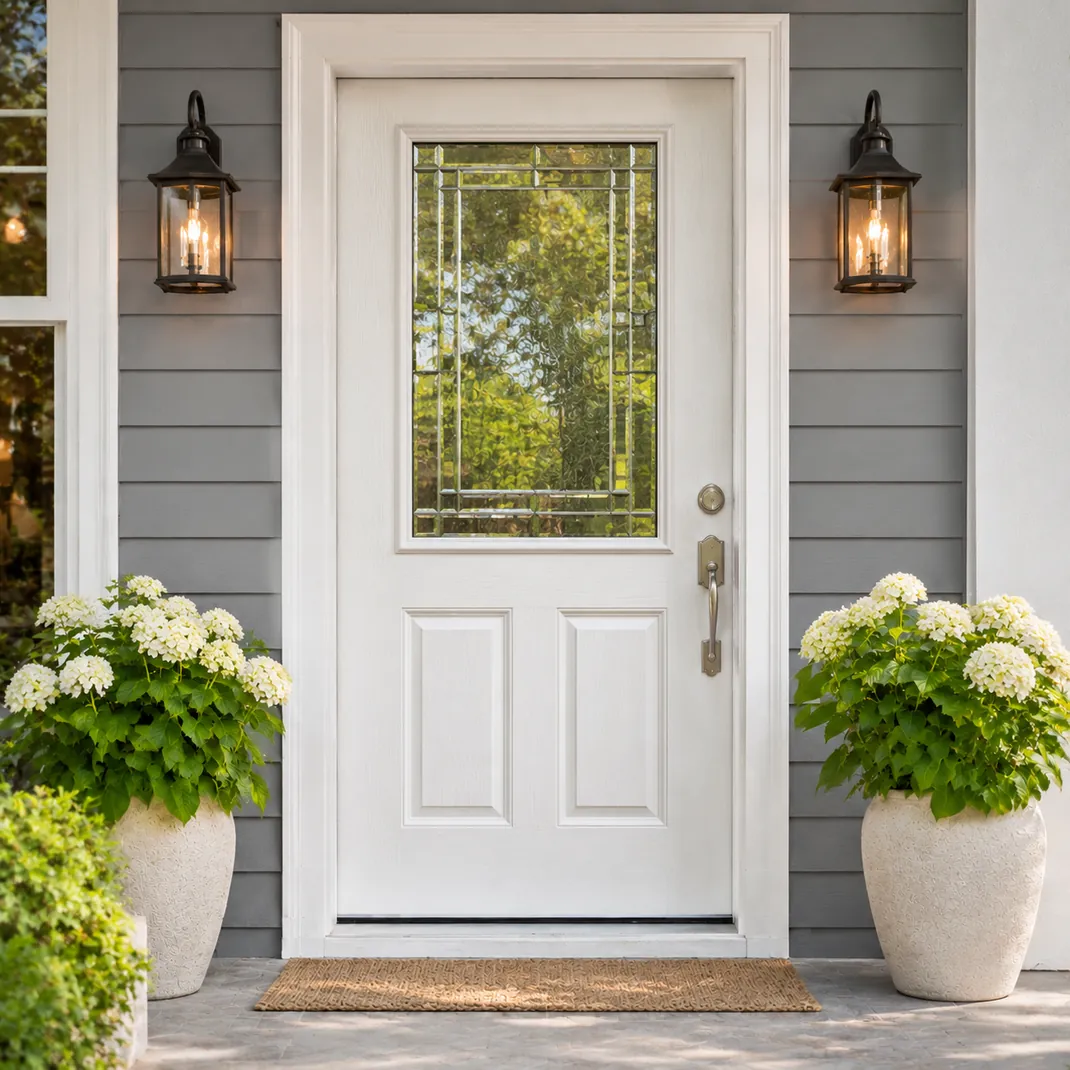
A fiberglass door with a glass insert resists warping and needs little upkeep, which suits homes with sun and rain exposure. The surface can mimic wood grain and be stained or painted. Ask for an insulated core and a sealed glass insert. Fiberglass can fade slowly in strong sun, so choose a finish rated for outdoor use. Wipe it with a damp cloth twice a year. A glass insert of 8 by 36 inches adds daylight without losing the strength of the door.
Textured Rain Glass Door
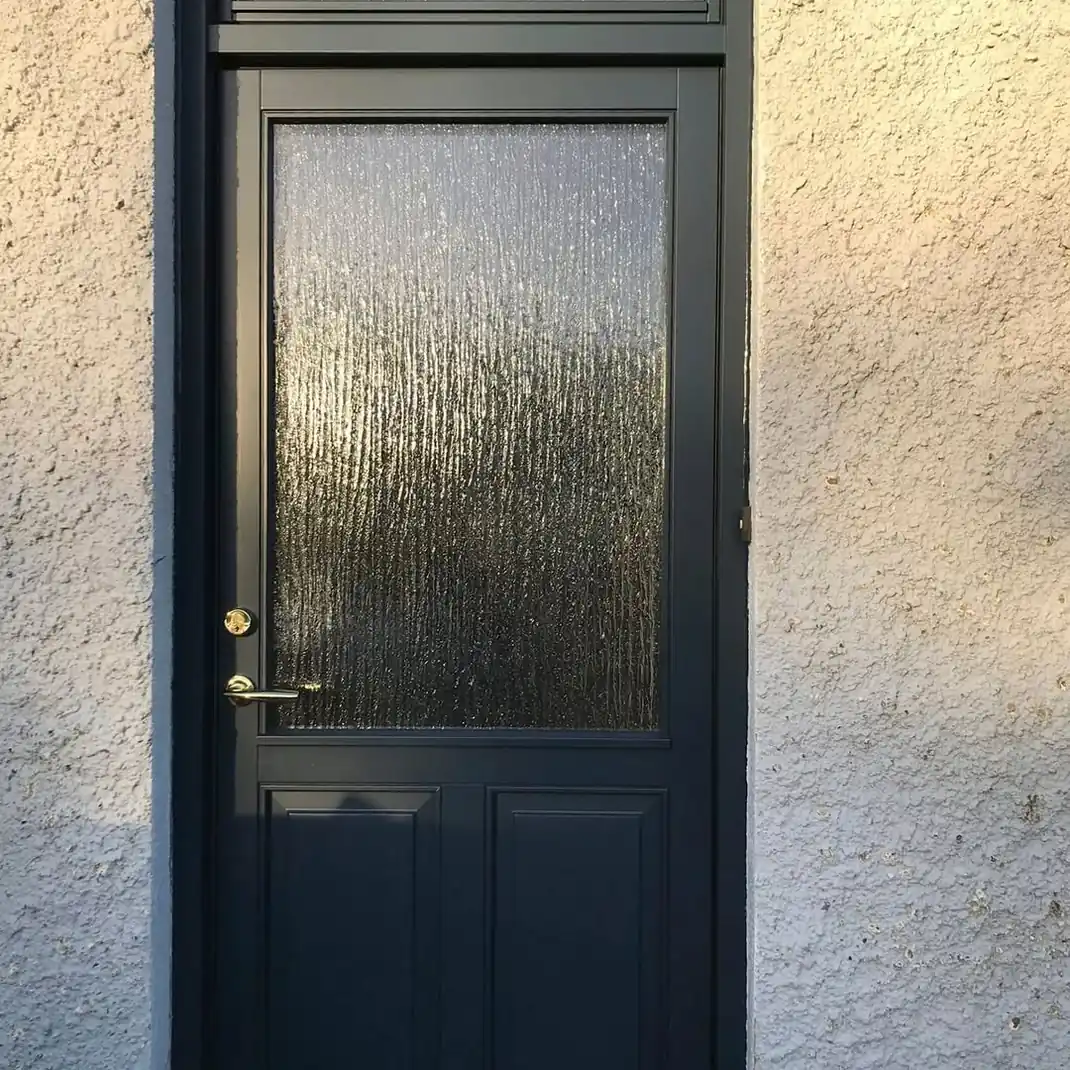
Rain glass has a surface that looks like water running down a window, which blurs shapes while letting plenty of light through. It offers more privacy than clear glass and less than frosted glass. The glass is easy to wipe clean but the textured side can collect dust, so ask which side faces out. Keep curtains off the glass to let the pattern show. It suits narrow halls and small terraced houses where the front door faces a path. Rain glass panels suit bathrooms, hallways and front doors where privacy matters.
Laminated Security Glass
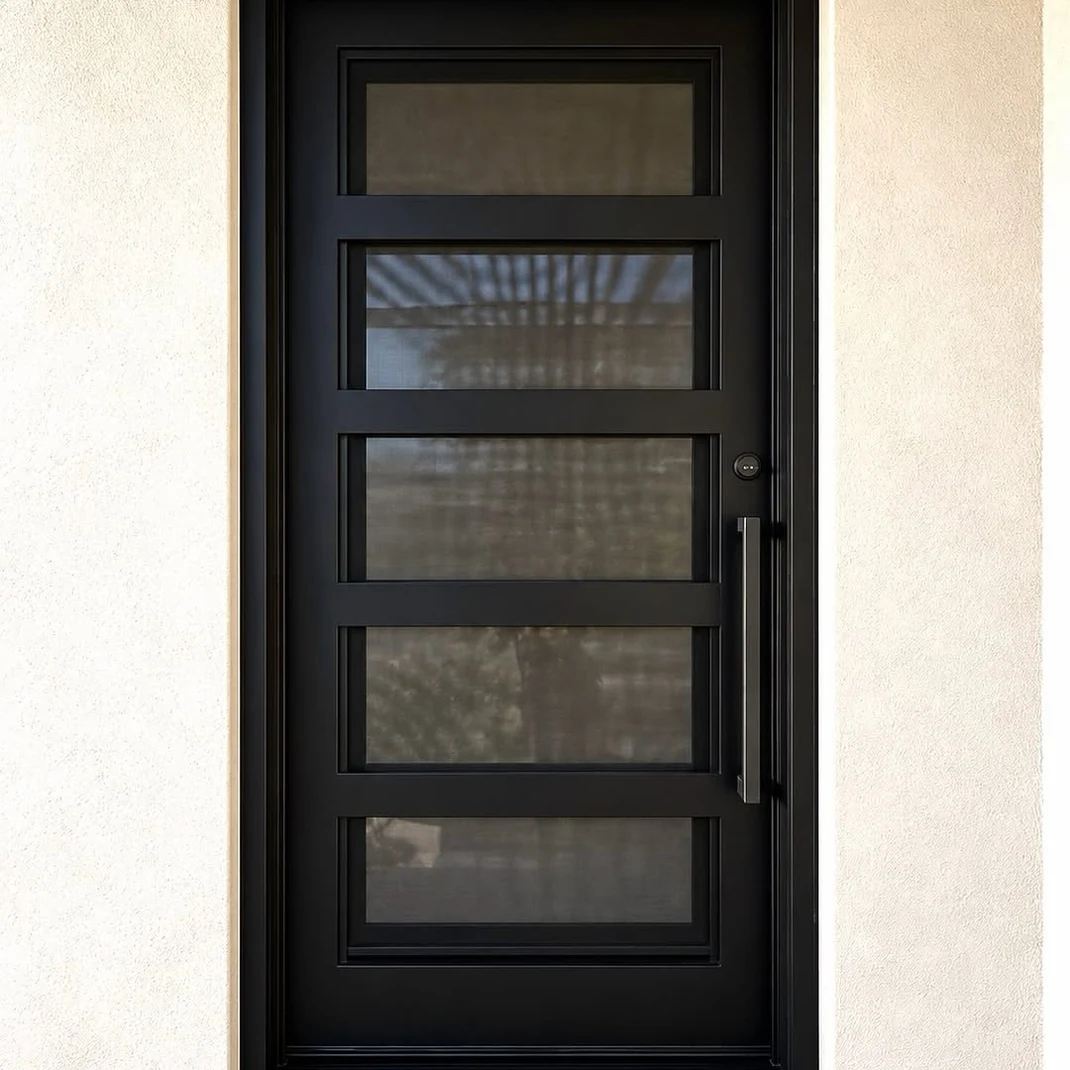
Laminated glass has two layers bonded with a clear plastic interlayer, so it stays in place when it breaks. That makes it harder to force through than ordinary glass and offers more protection if someone falls against it. Pair it with a solid frame, a deadbolt with a 1 inch throw and long screws into the frame. Laminated glass also reduces outside noise. Ask a local supplier what the building code requires for door glass in your area, since rules vary. Laminated panels also filter some ultraviolet light, which helps protect floors and rugs from fading.
Low E Coated Glass for Energy Savings
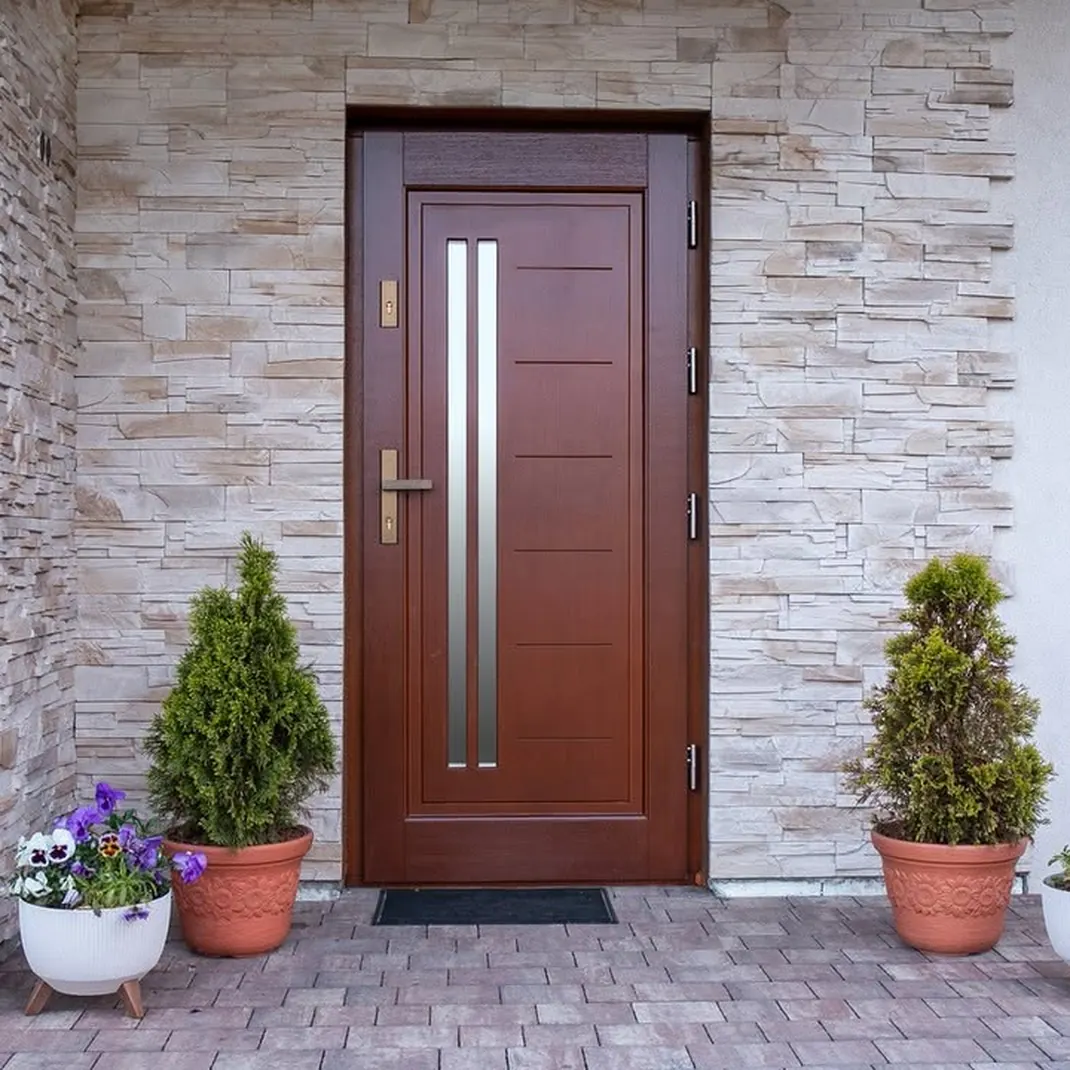
Low E glass has a thin coating that reflects heat, so it helps keep warm air in during winter and out during summer. When you compare doors, look for the label showing the U factor, where a lower number means less heat loss. A double pane unit filled with argon gas performs better than a single pane. Glass in a door is a weak point for heat, so a smaller panel can help in cold climates. Ask for a door with a tested label rather than a claim.
Between Glass Blinds
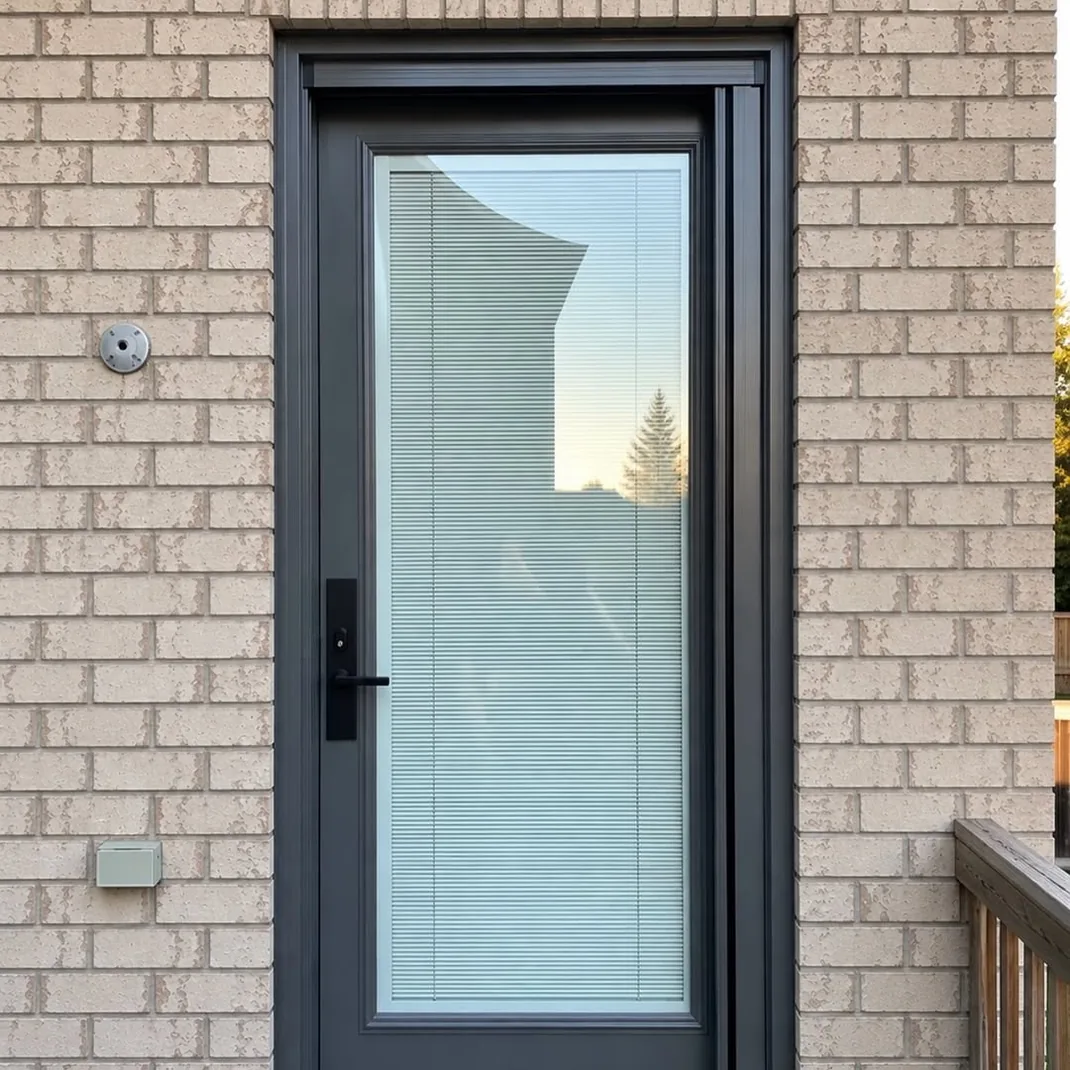
Blinds or grilles sealed between two glass panes give privacy on demand with nothing to clean. Because it sits inside the sealed unit, dust and fingerprints do not reach it. A failed seal can fog the glass, so buy from a maker that offers a warranty on the unit. Choose light gray or white slats to match the hall. Open them in the morning to let in daylight and close them at night. The mechanism is operated with a small slider or a magnet, so no cords hang near children or pets.
Glass Door with a Smart Lock
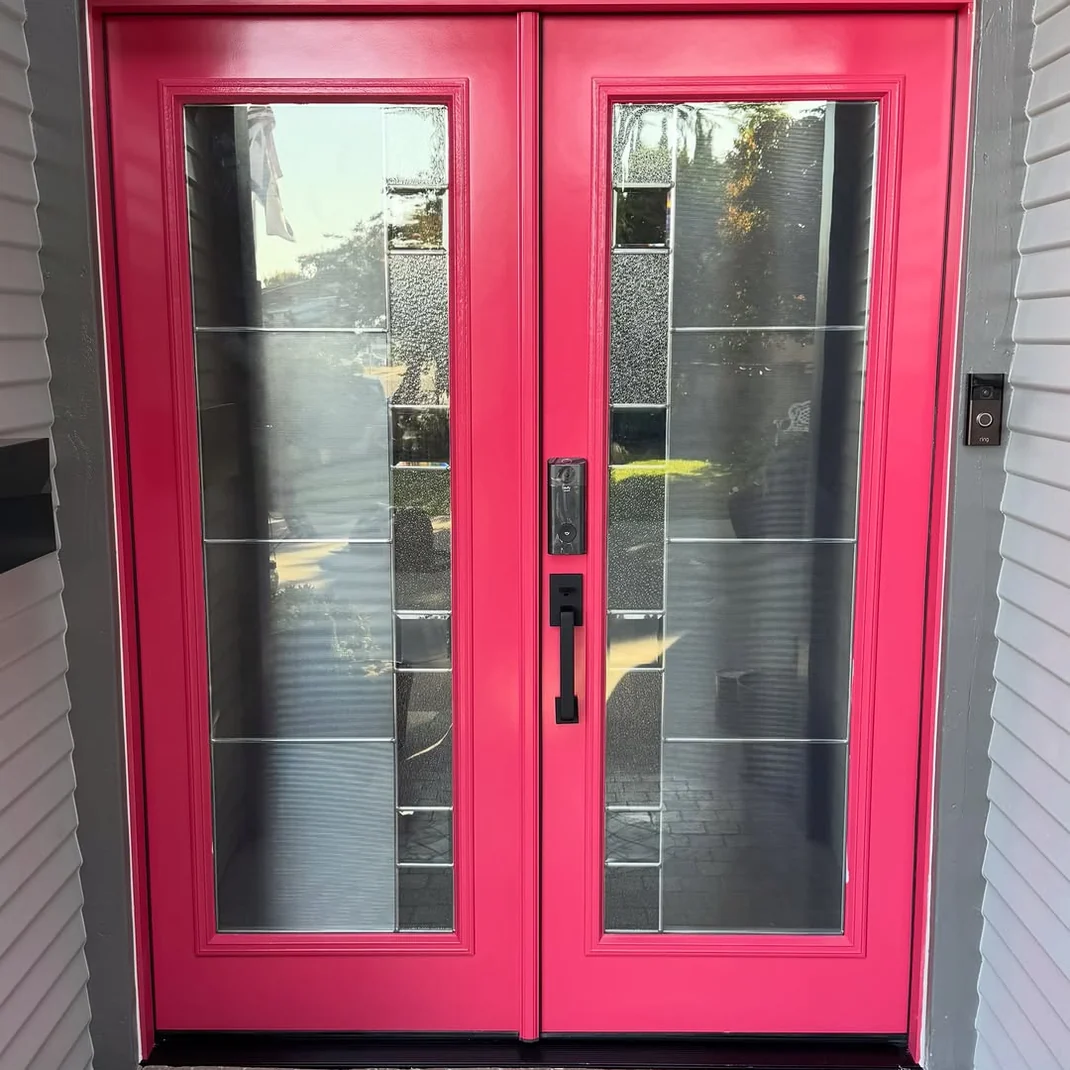
A glass door looks light and open, and a smart lock keeps it secure without a key. Most keypad and smart deadbolts fit doors from 1 3/8 to 2 inches thick, so check your door before buying. Fit it with strike plates and long screws into the frame, which matters more than the lock brand. Change the default code on day one and replace batteries each year. Mount the lock away from the glass so the hardware does not rub it. Keep a physical key in a safe place in case the battery fails.
Glass Type Comparison
This table helps compare privacy, daylight and the best spot for common decorative glass in an entry door.
| Glass Type | Privacy | Daylight | Best Spot |
|---|---|---|---|
| Clear | Low | High | Doors facing a private yard |
| Frosted | High | Medium to high | Doors facing the street |
| Reeded | Medium | High | Modern entries |
| Rain | Medium | High | Entries near neighbors |
| Stained | Medium to high | Medium | Accent panels |
Whichever type you choose, ask for tempered or laminated glass and a tested energy label.