25 Laundry Room Ideas & Organization Tips You’ll Wish You Tried Sooner
The laundry room is the one room in the house we spend hours in without ever really looking at. Yet after styling dozens of them for clients over the years, I can tell you this: the difference between laundry day as a chore and laundry day as a rhythm comes down to one thing — whether the room is organized around the way you actually work. Machines get tucked between storage walls, hampers live exactly where clothes come off, and every bottle, basket, and drying rack has a place the size and shape of its job. When that happens, the room stops fighting you and starts doing half the work.
None of the ideas below require a gut renovation. Most borrow from clever corners of the room people never think to use — the back of a door, the underside of a shelf, the dead air above the washer. A few are simple habit shifts, the kind of tips that cost nothing but keep paying back every single load. Here are 25 laundry room ideas and organization tips that transform the room you’ll wish you’d fixed years ago.
Stacked Sorting Hamper System
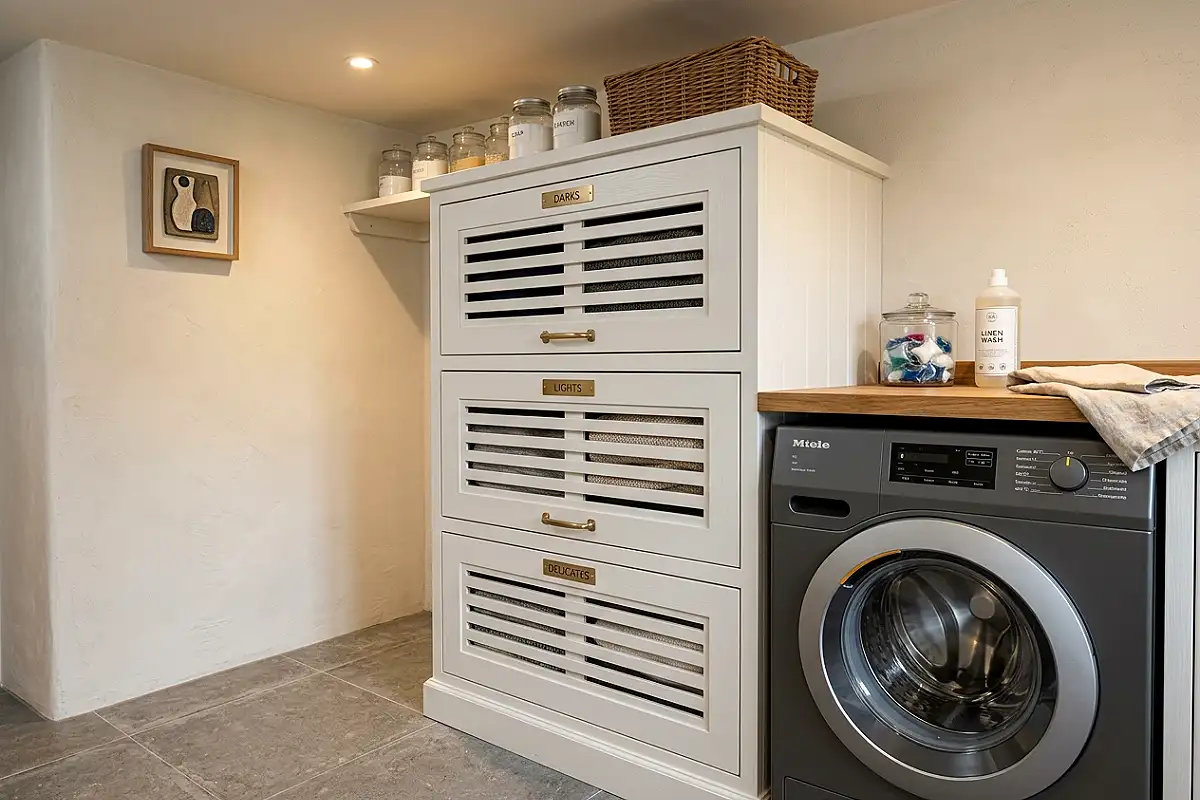
The single biggest laundry-day time saver is a sorting system that never leaves your side. Replace the plastic bin graveyard with a stacked tilt-out hamper unit — three slim pull-out drawers in a vertical tower, labeled “Lights,” “Darks,” and “Delicates” — mounted beside your washer. Clothes drop into the right drawer the moment they come off, which means sorting happens at the moment of maximum convenience instead of in a pile on the floor at the moment of maximum dread. Choose a unit with a ventilated front so damp gym clothes can breathe, and in a small room, a three-drawer tower takes up less floor space than a single oversized basket ever could.
Pro Tip
Skip the “Delicates” drawer if nobody in your household actually hand-washes — instead label it “Towels & Bedding” and sort by load weight, which is what truly dictates wash cycles.
Ceiling-Mounted Drying Rack
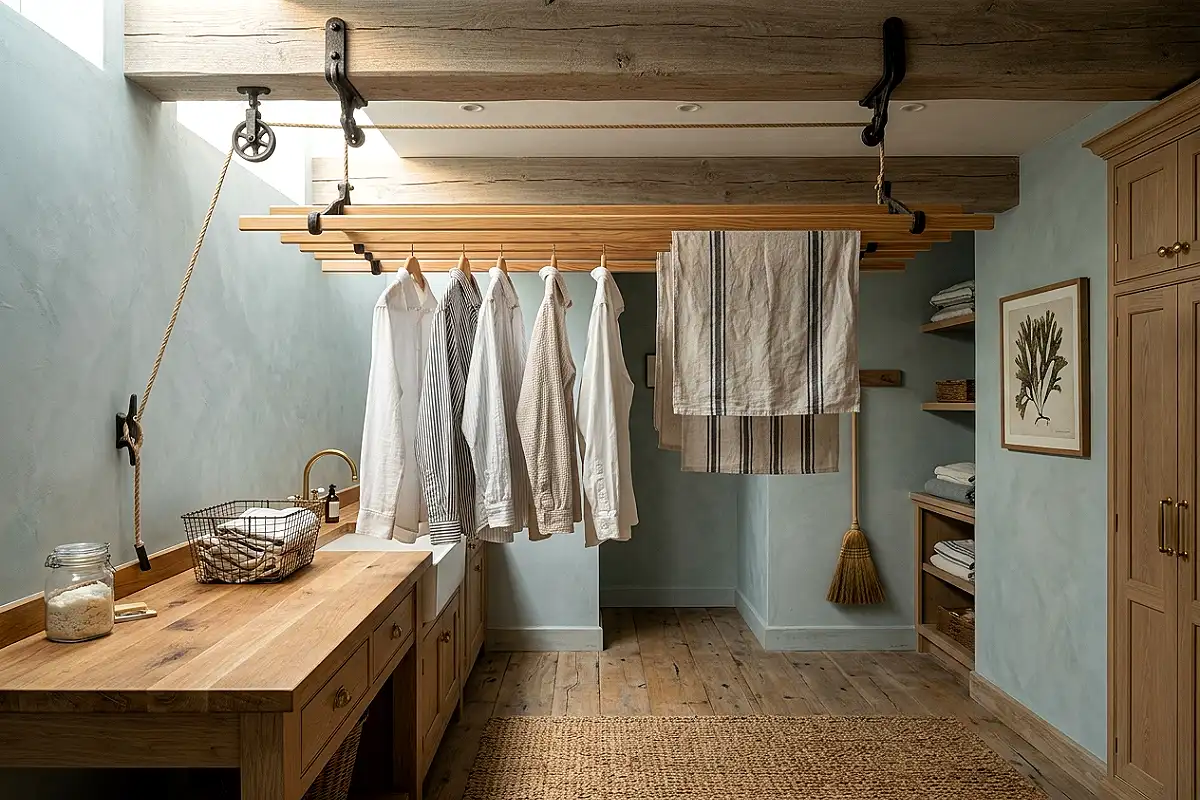
Above the washer sits a stretch of air that does nothing all day — until you hang a pulley-operated drying rack from the ceiling. When a load needs air-drying, lower the wooden-slatted rack with a cord, drape shirts and towels over the slats, and raise it back toward the ceiling, where warm air rises and clothes dry faster than on any floor rack. Folded away, it’s barely visible; deployed, it dries a full load flat in the same footprint as a coat. It’s the classic European laundry solution, and in a windowless room it’s nothing short of transformative — especially paired with a small ceiling fan to move the air.
Pro Tip
Anchor the rack to a ceiling joist, not drywall — a wet load of towels can weigh fifteen pounds or more, and you want those anchors holding for years, not seasons.
Ironing Board Built Into the Cabinetry
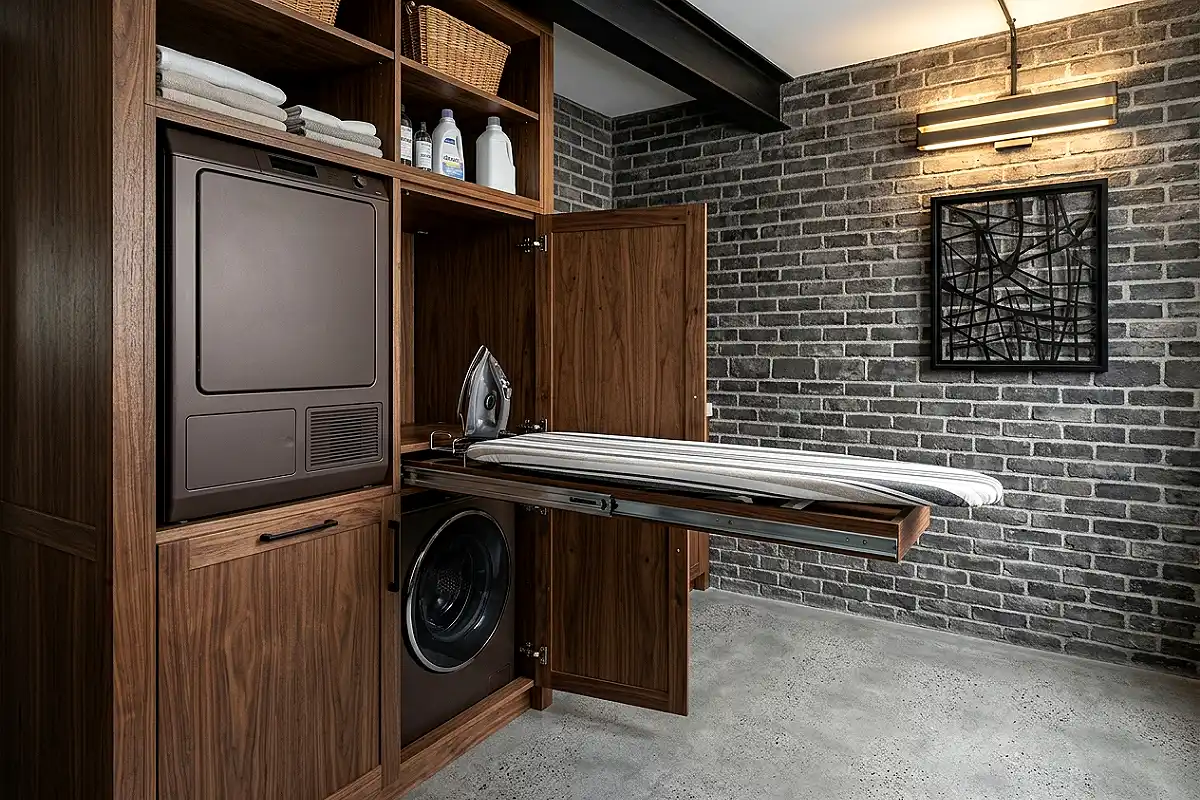
A freestanding ironing board that leans in the corner is a permanent invitation to tripping. The fix: a pull-out ironing board recessed inside a tall cabinet, on full-extension slides, at waist height. The moment you finish folding, the board slides out, the iron comes off its shelf above, and you press while clothes are still warm from the dryer — which takes half the effort of pressing cold ones. When you’re done, everything slides back into the cabinet’s shadows. This is the idea that makes people genuinely gasp on laundry room tours, and it eliminates the single most awkward object in the room.
Pro Tip
Install a small heat-resistant liner inside the cabinet behind the board and add a cord-wrapping hook on the cabinet door — it keeps the iron cord tidy and protects the wood from accidental heat marks.
Over-the-Door Hamper Pockets
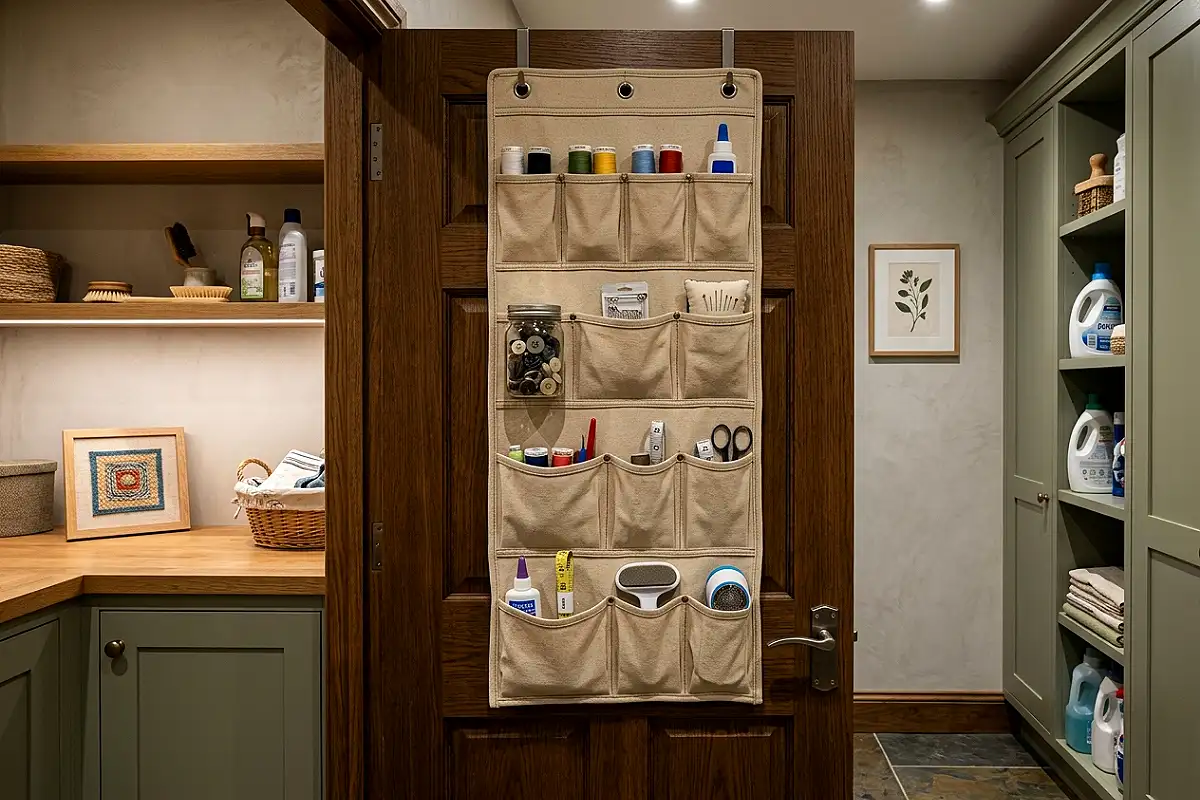
Every laundry room has a door, and every door has a back. Hang a clear-pocket organizer there with a purpose-built system: one pocket for outgrown clothes awaiting hand-me-downs, one for items with missing buttons waiting for mending, one for “check the pockets” finds like stray cash and school notes, and one deep enough for a folded stain-pre-treatment cloth. The transparency means nothing gets buried, and because the organizer costs almost nothing, you can swap it out seasonally. It’s a tiny idea that quietly handles every stray item laundry day generates.
Pro Tip
Label each pocket with a small chalkboard tag so the categories can evolve — what starts as “mending” in spring may become “holiday clothes” by December, and a tag swaps in seconds.
Tension-Rod Caddy for Spray Bottles
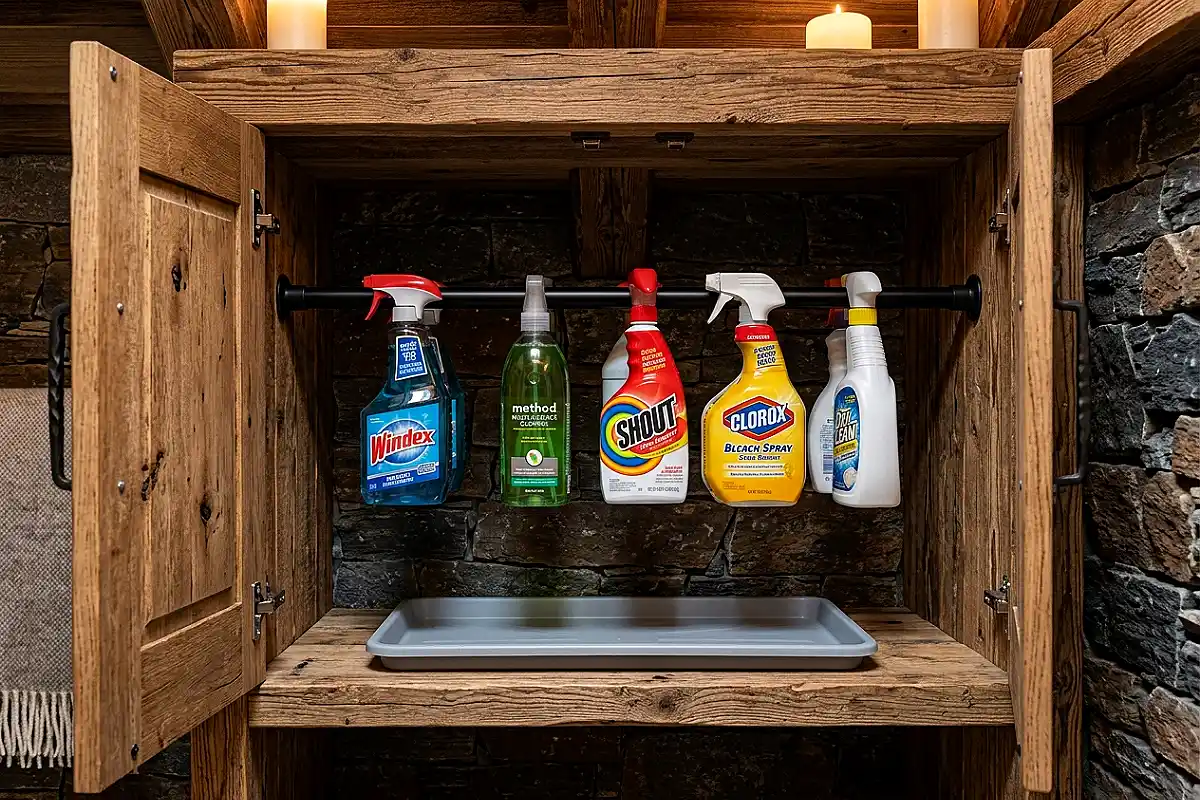
The space under the laundry sink is usually a leaning tower of spray bottles that topple every time you reach for the washer tabs. Solution: install a short tension rod horizontally between the cabinet’s side walls and hang the bottles from it by their trigger handles, nozzles down. Stain remover, fabric refresher, and ironing spray all hang in a tidy, instantly visible row, and because the rod is tension-fit, there’s zero drilling. Add a shallow drip tray beneath the nozzles and the cabinet goes from chaotic to organized in one afternoon. It’s the kind of dollar-store upgrade that looks custom-built.
Pro Tip
Choose bottles with trigger handles that have a locking switch and leave them locked while hanging — it prevents a bumped nozzle from spraying the inside of your cabinet over time.
Wall-Mounted Folding Station
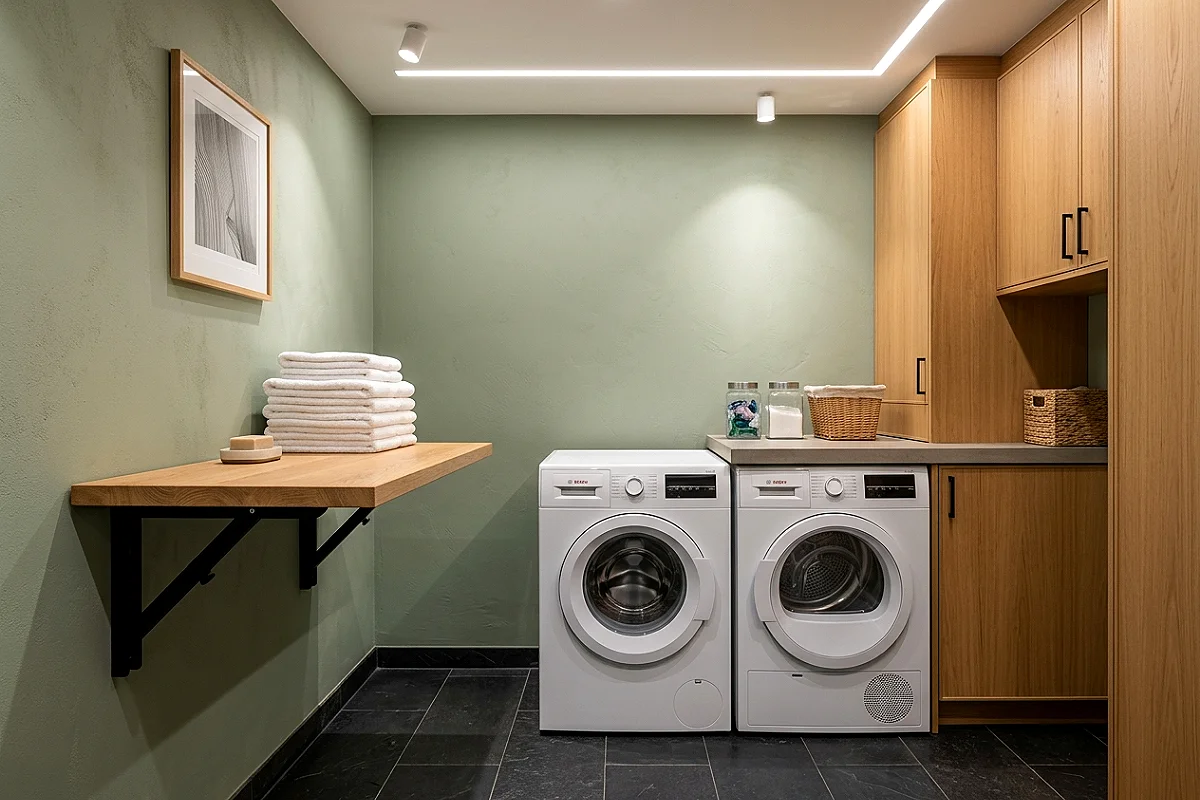
Where does your laundry go after it comes out of the dryer? If the answer is “the nearest flat surface,” you need a folding station. Mount a drop-leaf shelf above or beside the machines — a simple hinged board supported by fold-down brackets — sized just deep enough to hold a folded stack. It creates a dedicated folding zone at a comfortable working height, folds flat against the wall when guests visit, and keeps warm clothes from being dumped on beds and chairs around the house. Paint it the same tone as your trim and it reads as built-in millwork rather than an afterthought.
Pro Tip
Install the folding station directly across from or above the dryer so folded clothes can be stacked and carried to bedrooms in a single trip — the fewer transfers, the faster laundry day ends.
Color-Coded Linen System
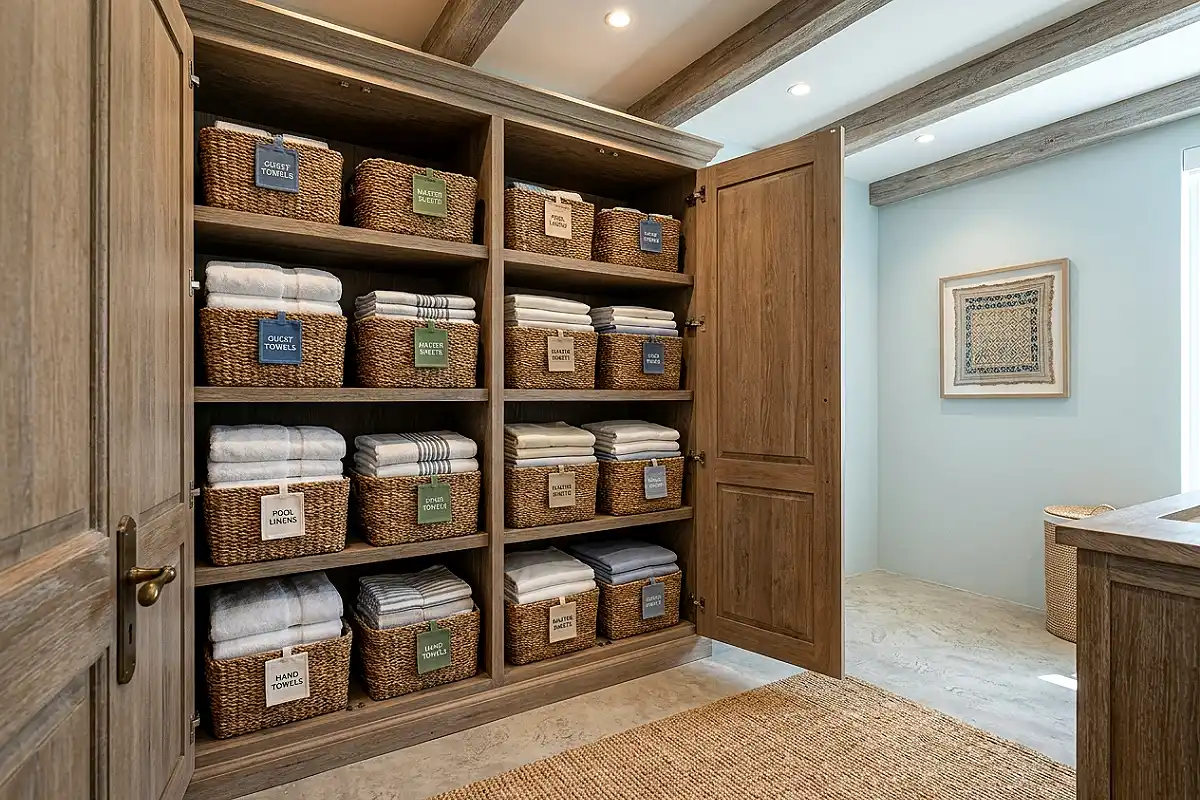
The linen closet usually lives in or near the laundry room, and it deserves the same treatment as the rest of the space. Assign each shelf a color-coded category — white towels, everyday sheets, guest bedding, table linens — and store each in matching woven baskets with a small fabric tag in its assigned color. A quick color glance tells any household member exactly where things belong and, more importantly, exactly where to return them. Rotate seasonal items to the top shelf and keep daily-use towels at eye level. It sounds simple, but a color system is the difference between a linen closet that stays organized and one that collapses within a month.
Pro Tip
Store sheet sets inside one of their own pillowcases — fitted sheet, flat sheet, and cases bundled together means no more hunting for the matching fitted sheet at the back of the shelf.
Under-Shelf Wire Baskets for Detergent
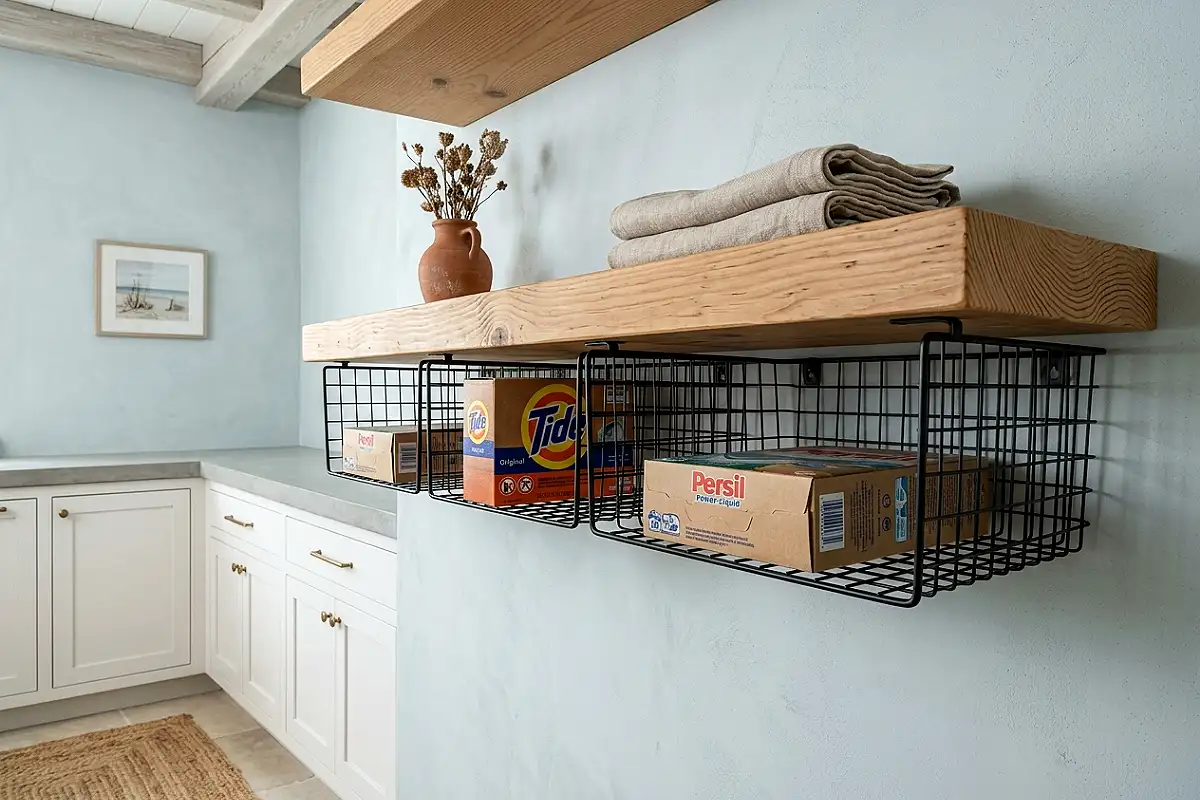
Detergent boxes are tall, awkward, and always leaning. Instead of giving them shelf space, give them ceiling space — mount shallow wire baskets to the underside of your laundry room shelves and slide detergent boxes, bleach bottles, and stain sticks into them horizontally. The full shelf above stays free for pretty things: a vase, a candle, your folding station. Because wire baskets wrap around the bottles, nothing tips, and the whole category stays within an arm’s length of the washer. It’s the visual trick that makes supply storage look intentional instead of industrial.
Pro Tip
Mount the basket with the open side facing the room and keep only one box per size in circulation — the basket physically limits how much detergent you can buy at once, which quietly kills the bulk-buy clutter cycle.
Drying-Rack Drawer for Delicates
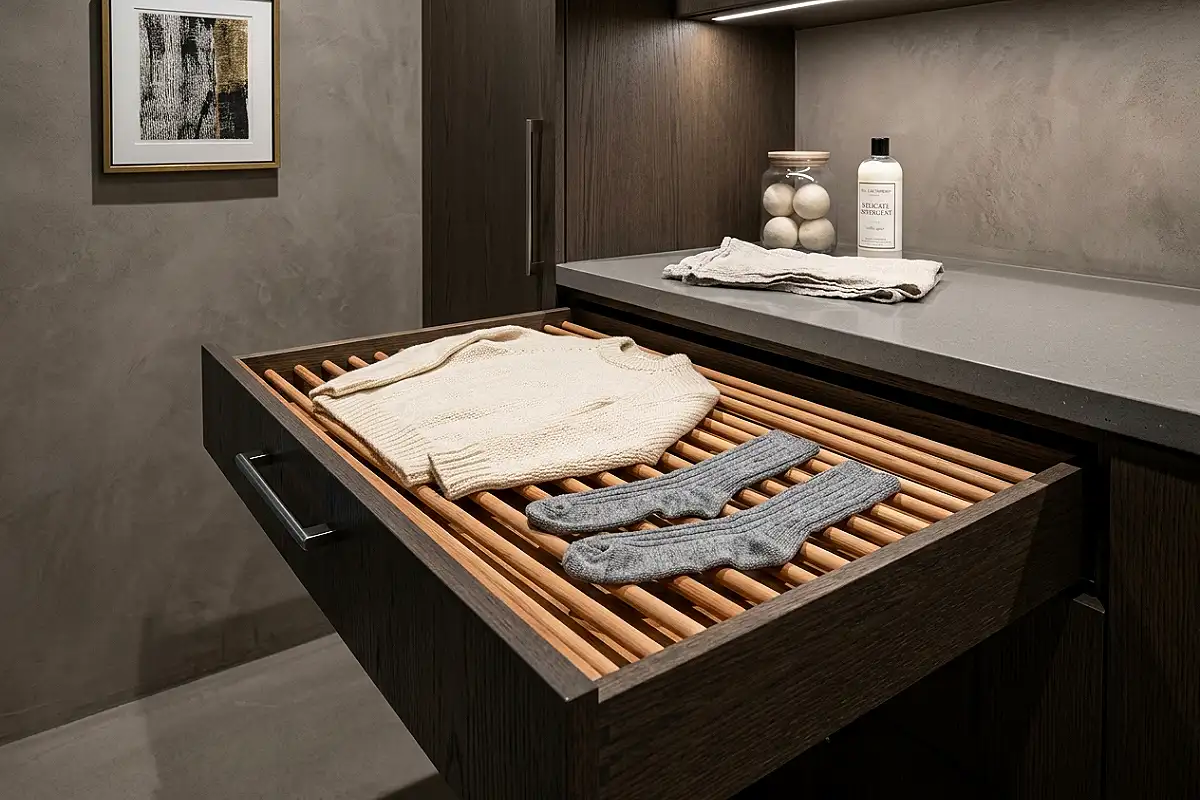
Delicates need to dry flat, and laying them across a bathroom radiator is a gamble with stretching and marks. Build — or commission a cabinetmaker to build — a shallow drawer about three inches deep, fitted with a row of slim wooden dowels spaced two inches apart, and it becomes a drawer-size drying rack. Knits, bras, and silk tops lay flat across the dowels, air circulates above and below, and the drawer slides away invisibly when empty. It fits beneath a counter, above a pull-out hamper, or inside a tall cabinet, and it’s the detail that makes a laundry room feel genuinely custom.
Pro Tip
Line the drawer bottom with cedar slats or a thin cedar panel — it speeds drying by wicking moisture, and the scent keeps the drawer smelling fresh between loads.
Magnetic Lint & Tool Strip
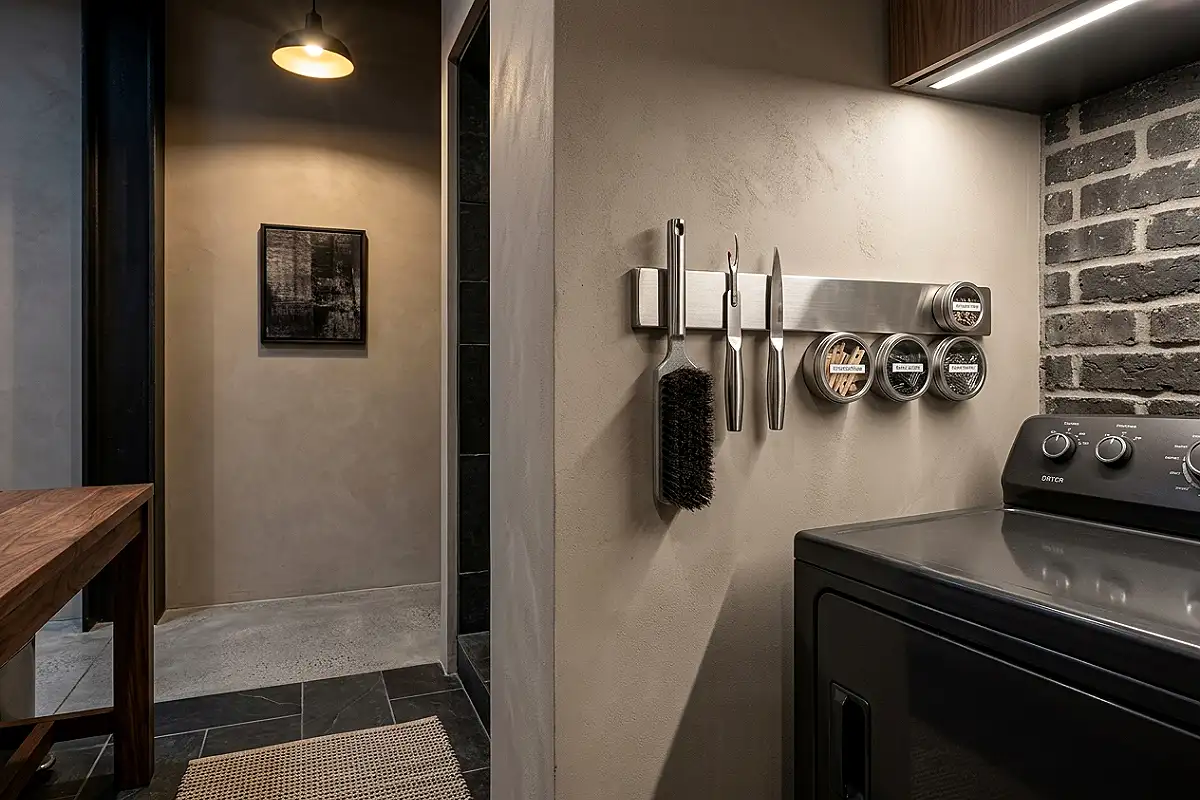
Lint brushes, pet hair rollers, spare buttons, and clothespins have a habit of migrating to the top of the dryer, where they gather dust. Give them a magnetic strip mounted on the wall beside the machines — the same style as a knife rack — and every metal-tipped tool snaps into a single tidy row. For the plastic items, screw a small jar of strong neodymium magnets to their backs first, and they hang right alongside. The strip clears every flat surface in the room at once, and the industrial little row of tools looks like a workshop detail, which suits a laundry room perfectly.
Pro Tip
Keep the lint brush from your dryer’s vent cleaning kit on the strip too — a visibly available brush means you’ll actually clean the lint trap more often, which is a genuine fire-safety habit.
Hanging Laundry Bag Rail
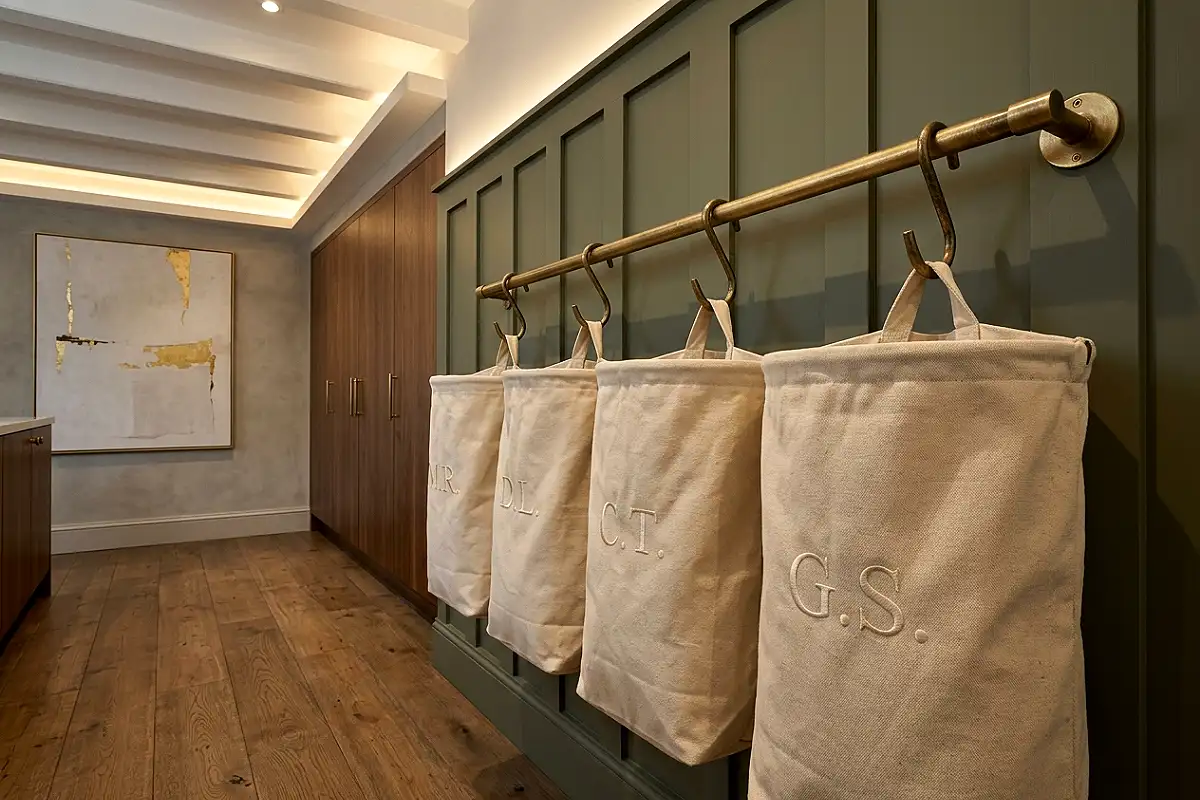
Instead of one communal hamper, give each member of the household a personal canvas laundry bag hung from a wall-mounted rail with heavy S-hooks. Labels — names, or better yet, embroidered initials — hang from each bag’s drawstring, and the rail of bags becomes a functional art installation along one wall. Everyone learns whose socks are whose, darks and lights can even be pre-sorted by person, and when a bag fills up, it unclips and travels straight to the washer. In a family laundry room this is the idea that ends the “who dumped their clothes on the floor” argument for good.
Pro Tip
Mount the rail at least five feet high so bags hang freely above any hampers below — and choose canvas bags with flat, reinforced bottoms so they don’t twist on the hook when full.
Built-In Laundry Chute
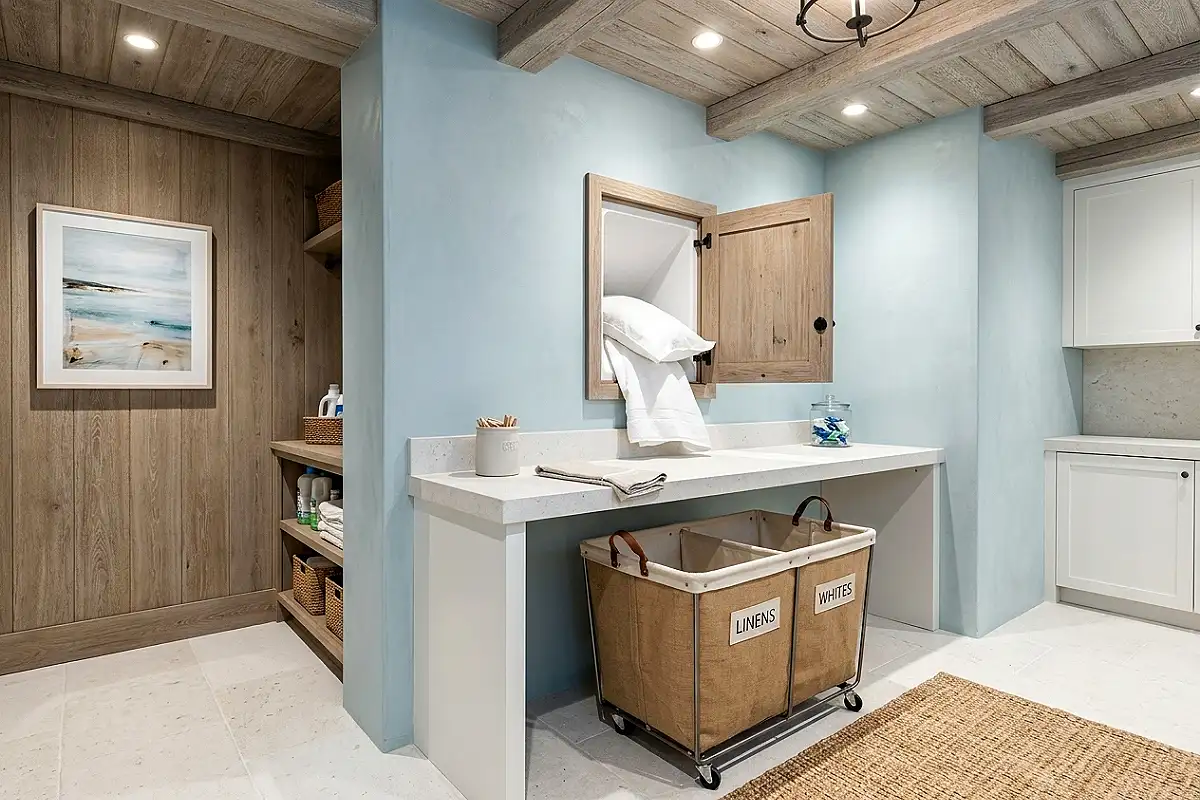
If your laundry room sits below the bedrooms, a laundry chute is the single most luxurious upgrade a house can have. A lined shaft running from a hallway or bathroom wall down to the laundry room means clothes drop directly into the sorting system with zero carrying. Even in a finished home, a compact corner chute can often be added during any remodel that opens the wall anyway, and prefabricated chute kits make it surprisingly straightforward. For renters and non-remodelers, the “portable chute” — a hanging fabric hamper with a zip-open bottom that hangs from an upper-floor hook — captures the same spirit at a fraction of the cost.
Pro Tip
Always fit a chute with a locking door at the top — households with small children should treat a laundry chute like a staircase, closed and secured when unsupervised.
Dedicated Stain Treatment Station
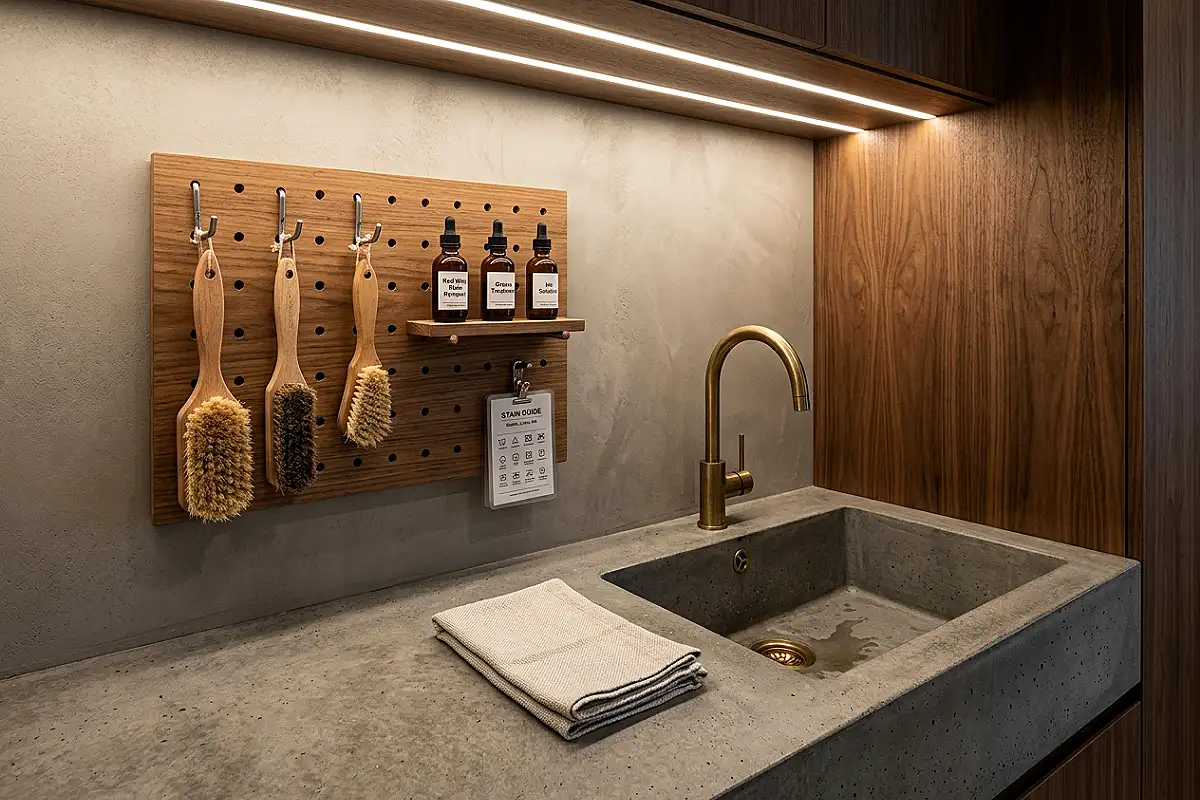
Stain treatment fails for one reason: the supplies aren’t where the stain is noticed. Build a stain station at the sorting hamper — a small pegboard or caddy holding an enzyme spray for protein stains, an oxygen bleach for colorfast fabrics, a soft-bristled brush, and a laminated stain-removal chart for the thirty most common offenders. When a shirt comes off with a fresh mark, the right product is within two seconds’ reach, and pretreating before the wash becomes automatic instead of aspirational. A small tray beneath keeps drips off the floor, and the whole station takes up less wall space than a single towel hook.
Pro Tip
Keep a small bottle of dish soap and hydrogen peroxide in the station — between the two, you can treat most fresh food and drink stains immediately, which is when they’re easiest to lift completely.
Rolling Cart with Divided Hamper
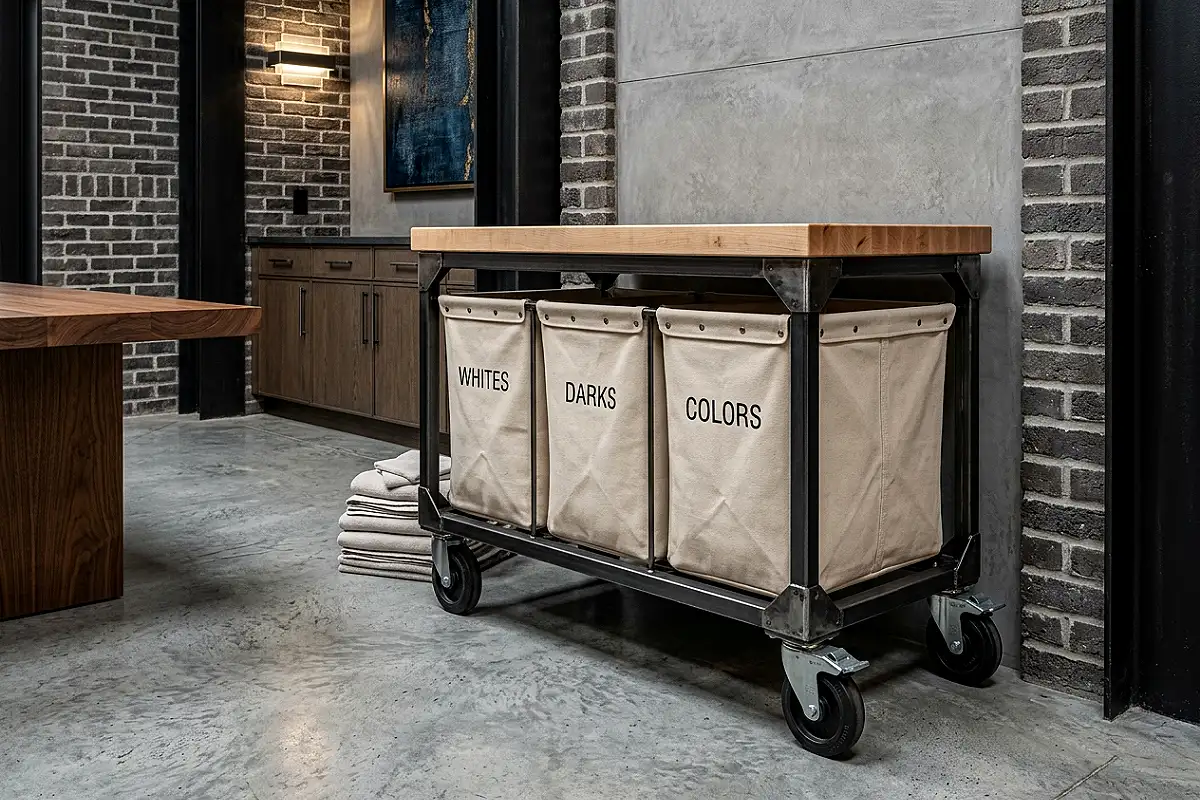
Laundry in a two-story house lives in two places at once — and the cart that shuttles between them should be designed for the job. A sturdy rolling cart with two or three divided canvas compartments (lights, darks, delicates) moves from room to room collecting, then rolls straight to the washer, where each compartment lifts out and dumps directly into the right cycle. Choose a cart with a wooden or bamboo top that doubles as a folding surface at the machines, and swivel casters so it pivots easily in tight hallways. It replaces a tangle of separate baskets with one object that has a clear, continuous workflow.
Pro Tip
Use removable liner bags inside each compartment — when a wet swimsuit or damp towel goes in, the liner lifts out to dry separately, and the canvas shell never develops that damp-closet smell.
Scent & Freshness Drawer

The small items that make laundry feel finished — dryer sheets, wool dryer balls, sachets, linen spray, clothespin bag — deserve a home of their own rather than a scatter across the washer top. Dedicate one shallow drawer to freshness, lined with cedar or lavender sachets, and divide it with a few small ceramic dishes so every item sits in its own little niche. Wool dryer balls get a ventilated dish, dryer sheets keep their box, and a small atomizer of linen spray stands upright in a corner. Opening this drawer before a load becomes a small ritual, and the room itself starts to smell like the laundry does.
Pro Tip
Toss three wool dryer balls into every load and add two drops of lavender oil to them — they cut drying time, soften fabrics naturally, and keep the drawer’s scent traveling through the whole house.
Freestanding Shelf Unit Over the Machines
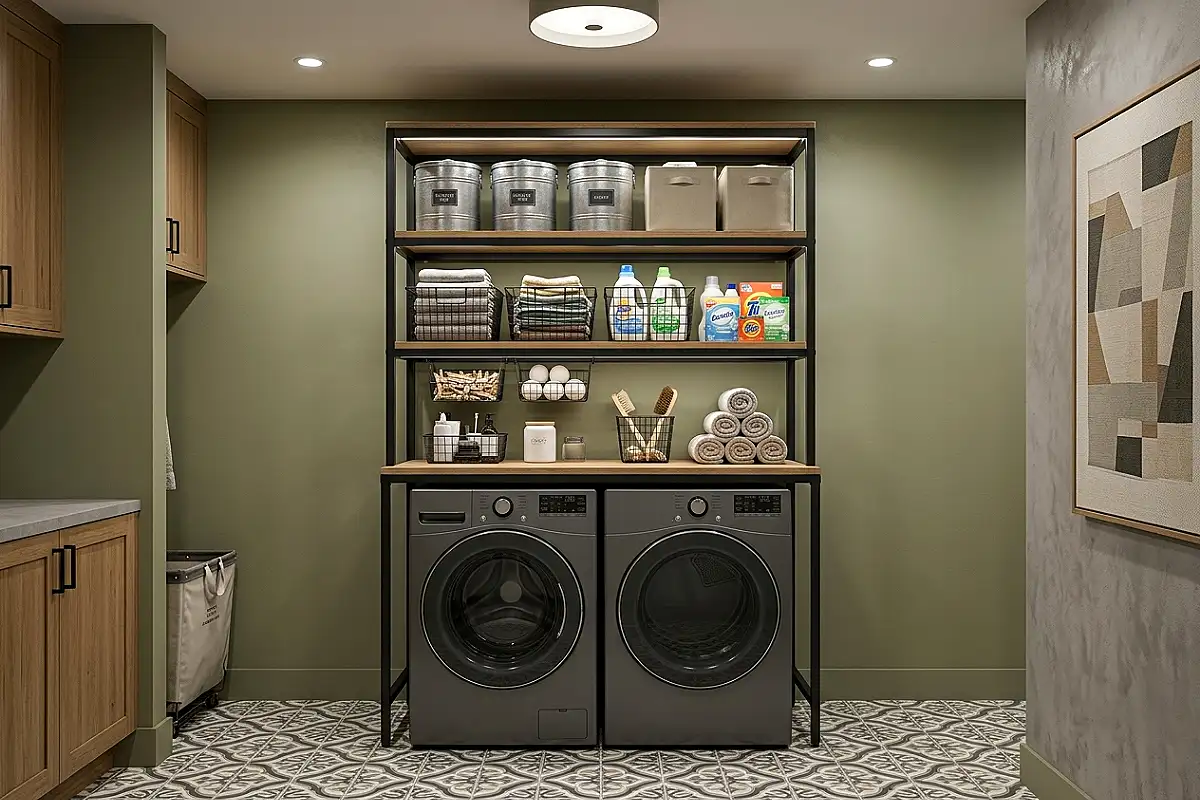
Not every laundry room has built-in cabinetry, and the awkward airspace above a top-load washer often goes wasted. A slim freestanding shelving unit sized to stand over the machines — open steel or wood, three to four tiers — instantly converts that dead zone into prime storage for detergent, baskets, and folded towels. Look for one with a cross-braced back for stability and adjustable shelves so tall bleach bottles fit, and choose a finish that matches your trim so it reads as a permanent part of the room. For a polished upgrade, a custom butcher-block bridge shelf spanning both machines creates a genuine work surface above them.
Pro Tip
Leave the lowest shelf clear of everything except lightweight items — machines vibrate, and a top-heavy shelf over a washer will walk itself across the floor over a year of spin cycles.
Retractable Wall Clothesline
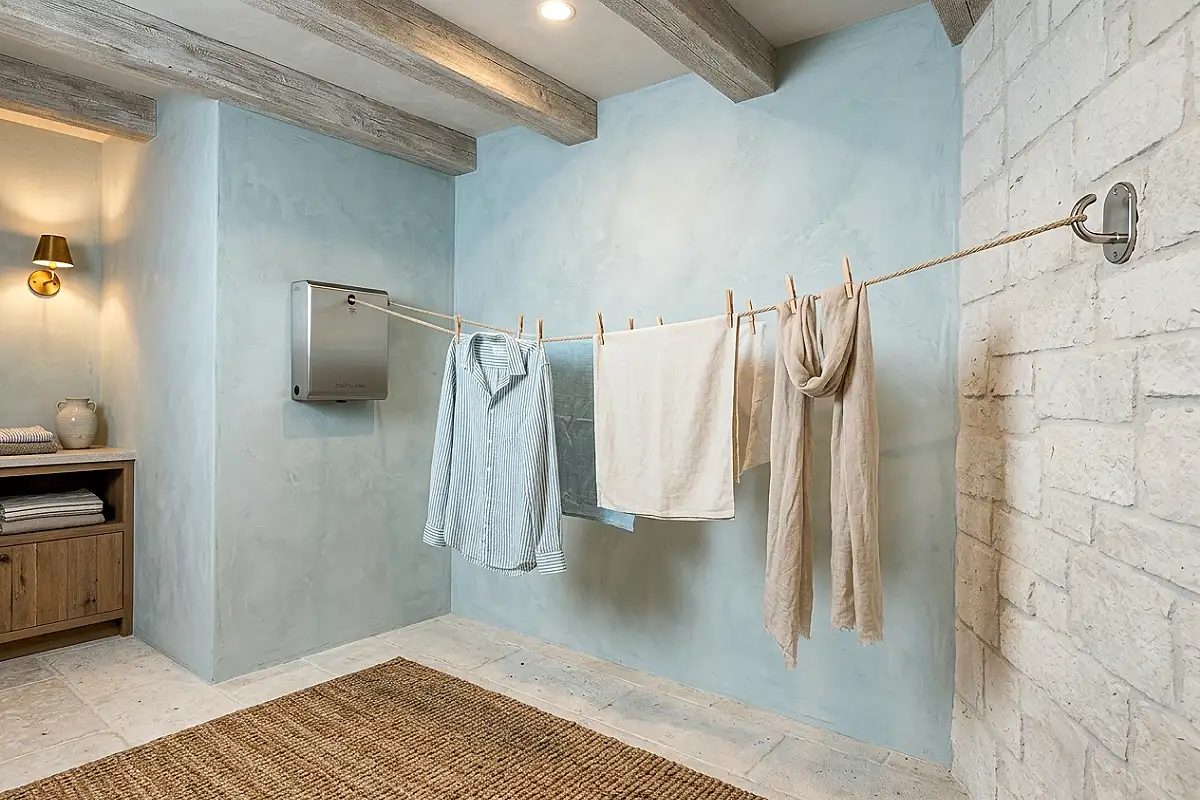
Air-drying saves fabric, saves money, and preserves colors — but only if the drying space is always available. A retractable clothesline mounted along one wall extends five to ten feet of drying space with a pull, and retracts into a sleek housing no bigger than a towel bar when done. It handles shirts, towels, and table linens with room to spare, keeps damp laundry off chairs and shower rods, and in a humid climate it’s the detail that saves a room from mildew season. Mount the housing beside — not above — your sorting station, so wet clothes travel the shortest possible distance.
Pro Tip
Hang heavy items like jeans and towels low on the line and lightweight shirts high — moisture drips downward as things dry, and top-heavy hanging prevents water spots on clothes below.
Vented Appliance Garage
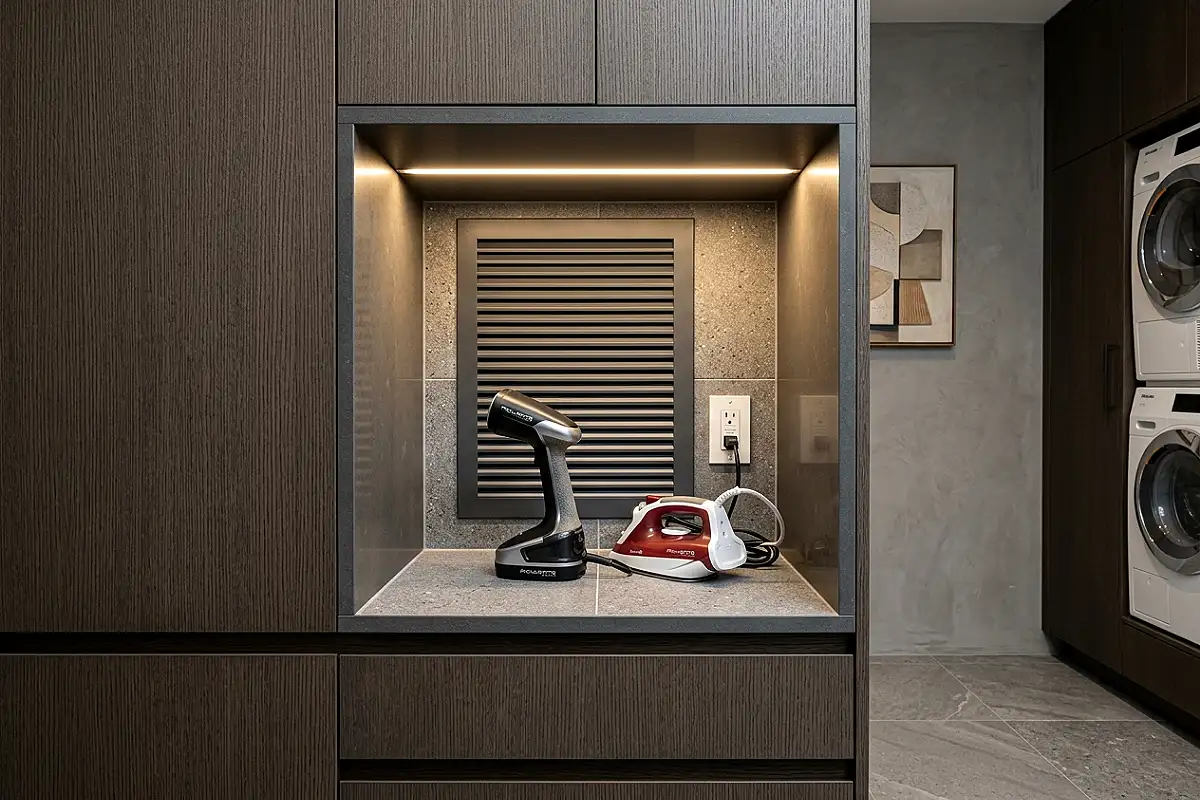
Handheld garment steamers, travel irons, and lint shavers are used weekly but look terrible left out — and terrible in a drawer. Build an “appliance garage”: a lower cabinet cubby with its door removed or fitted with a shallow sliding door, an electrical outlet mounted inside, and a small vent cut into the back panel. The steamer lives on the shelf, plugged in and ready, the cord wraps on an interior hook, and the unit’s heat dissipates safely through the vent. It brings the “toaster garage” logic of a great kitchen to the laundry room, and it’s the detail guests notice because everything awkward simply isn’t visible.
Pro Tip
Use a GFCI outlet inside the garage and let steamers cool fully before stowing them — the vent is for storage, not for running a hot appliance in a closed space.
Glass Dispenser System for Bulk Detergent
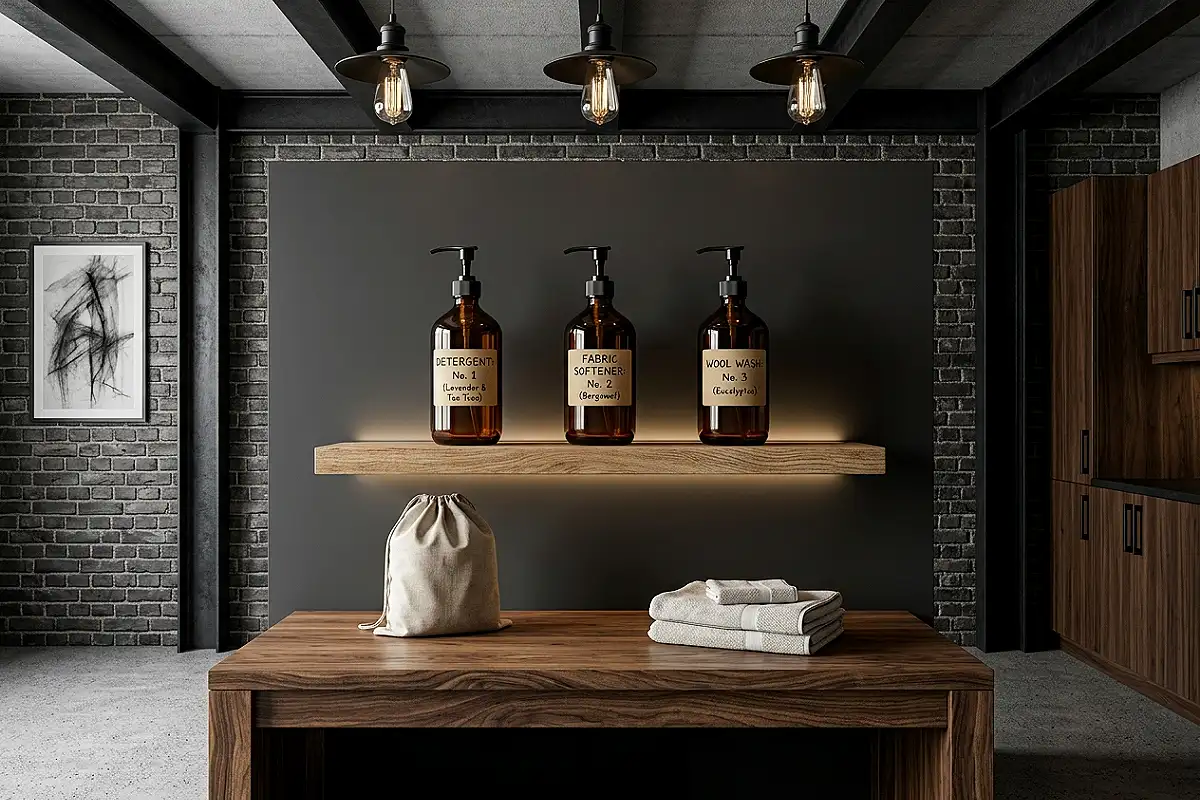
Pouring detergent from a heavy jug every single load is clumsy, wasteful, and ugly. Transfer bulk detergent into a set of labeled glass dispensers with pump tops or measured pour spouts — thick amber or clear glass with brushed-metal pumps — and line them on a shelf like a home apothecary. One dispenser for regular detergent, one for scent-free, one for white vinegar fabric softener, each with a handwritten label. It looks intentional, it measures cleanly, and it breaks the habit of overdosing detergent — which is the quiet culprit behind stiff towels and machine residue. For a premium finish, matching hand-soap style pump bottles in uniform glass elevate the whole shelf.
Pro Tip
Etch or label each dispenser with the dose line for your machine’s load size — “HE Regular: to the shoulder” — and detergent confusion between household members disappears completely.
Door-Back Ironing Board with Pressing Cloth Pocket
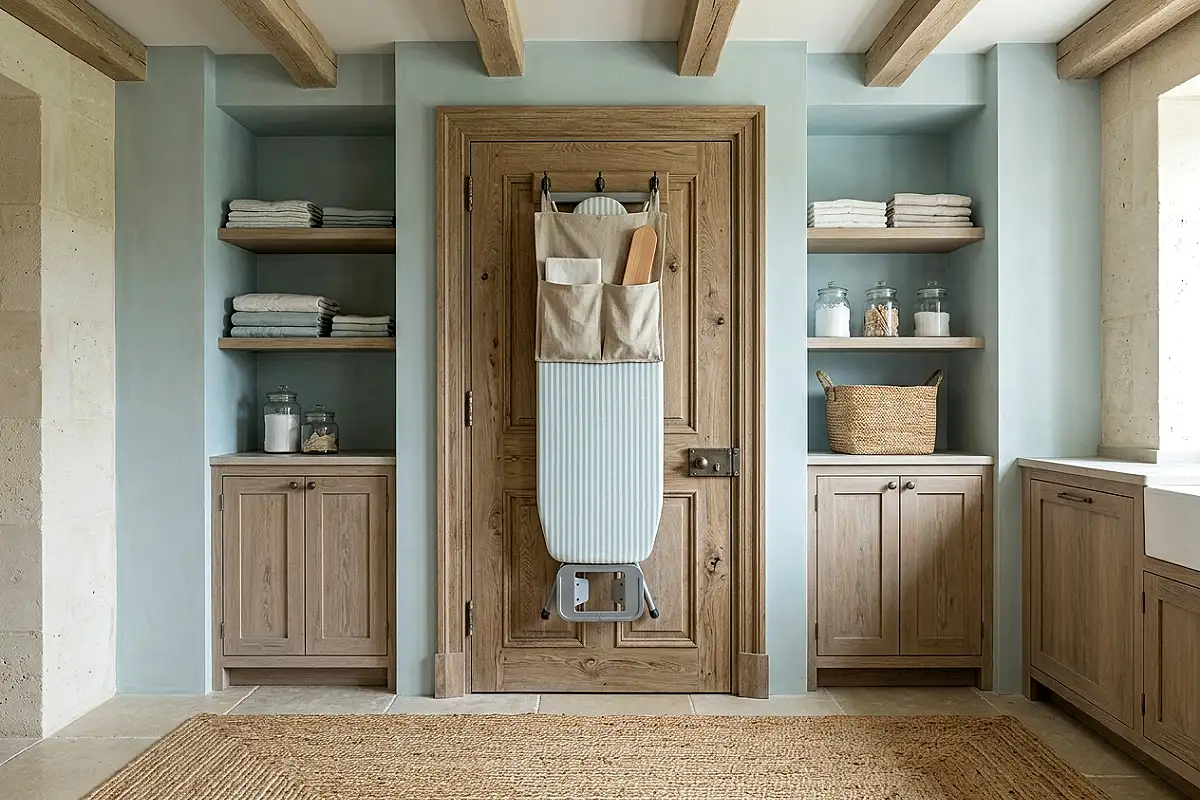
For rooms too tight for a built-in board, the next best thing is a hinged wall board on the back of the door — roughly the width of the door itself, so it disappears completely when closed. Mount a shallow fabric pocket beside it to hold a pressing cloth, a spray bottle of water, and a sleeve board, and the whole back of the door becomes a compact pressing studio. Because the door itself is the storage surface, zero floor space is used, and the pocket keeps the accessories that always wander off tethered to their station. Paint the board’s visible face the same color as the door and it vanishes entirely.
Pro Tip
Add a small hook inside the pocket for a tailor’s clapper — the wooden block that sets crisp shirt seams — and your door-mounted station can press a dress shirt better than most closets can.
Counter with Deep Utility Sink
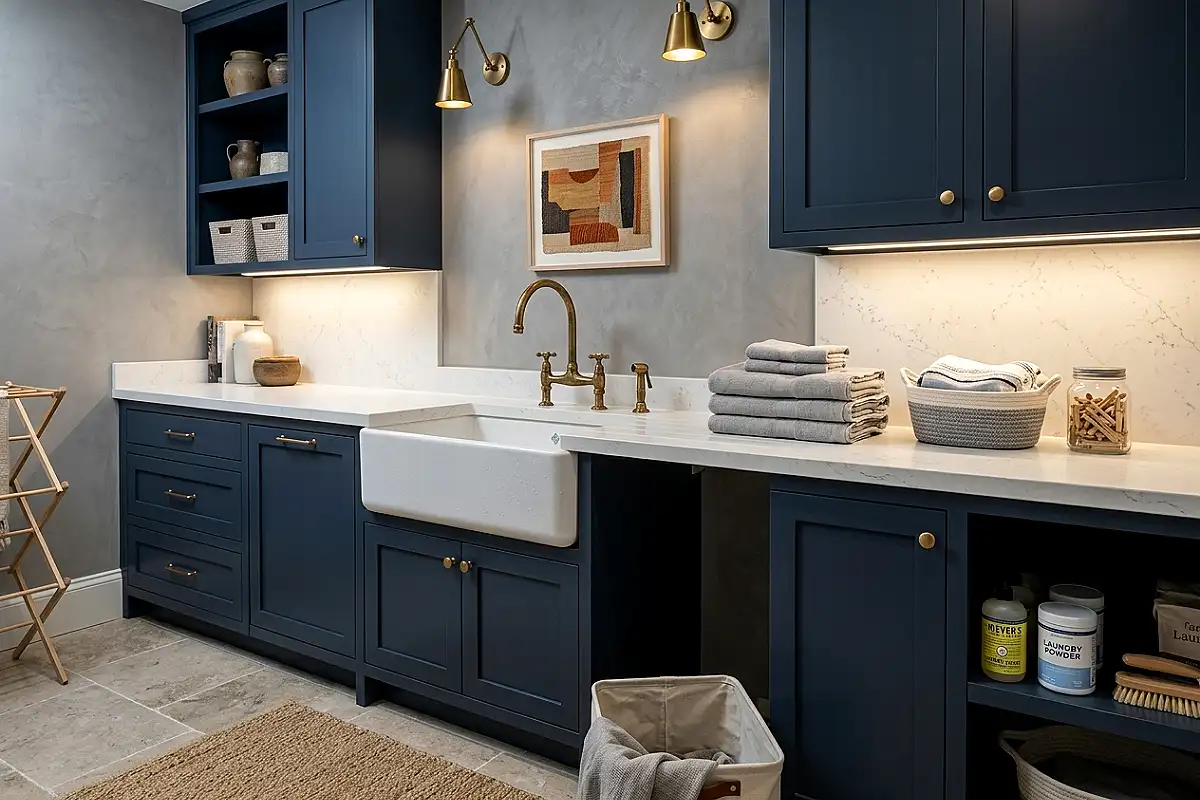
If you’re planning any renovation at all, make the deep utility sink the centerpiece. A 12-to-15-inch-deep basin set into a counter beside the washer handles hand-washing delicates, soaking stained linens, rinsing muddy kids’ clothes, filling buckets, and even bathing the dog — one fixture doing the jobs a dozen gadgets pretend to do. Surround it with a countertop wide enough to fold beside, and the laundry room graduates from utility closet to genuine working room. Quartz or concrete-look counters stand up to bleach splashes, and a wall-mounted faucet above the basin keeps the counter clear for folding.
Pro Tip
Install the sink within arm’s reach of the washer and choose a pull-down sprayer faucet — soaking, rinsing, and pretreating all happen at one station without ever crossing the room with a wet garment.
Repurposed Silverware Tray for Small Tools
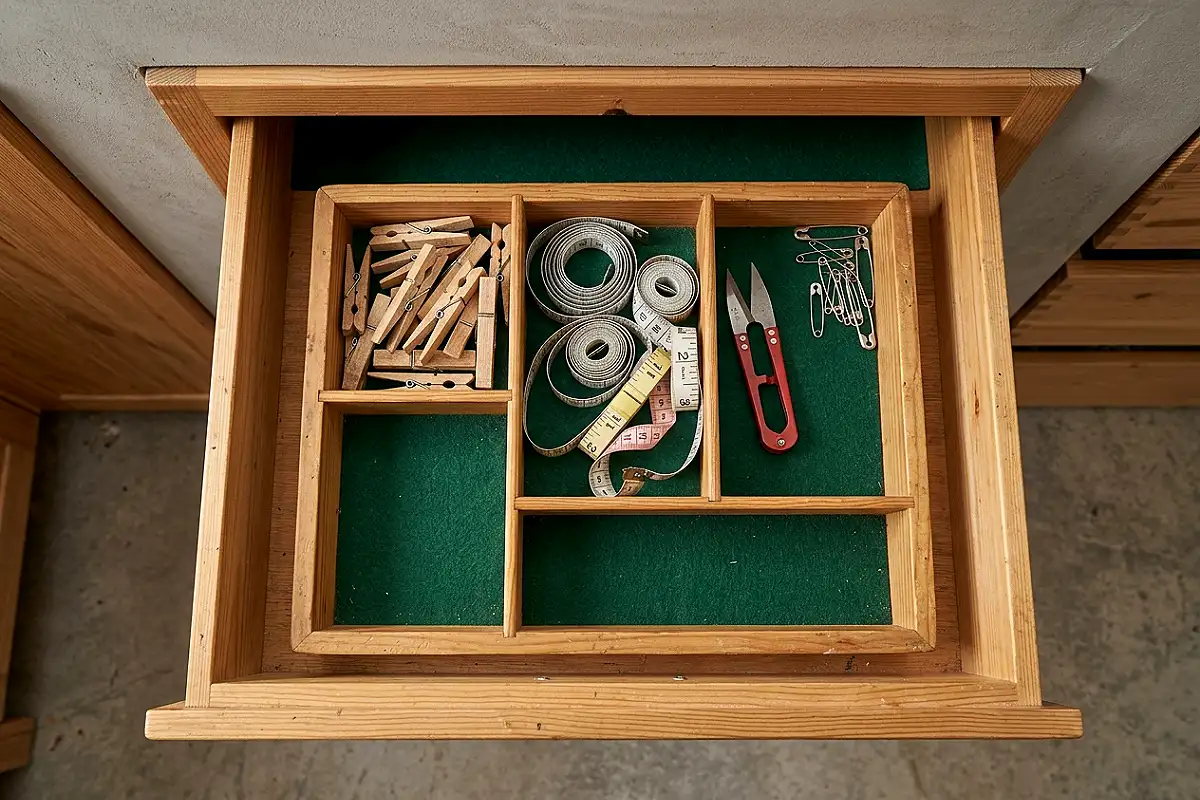
Clothespins, safety pins, thread snips, measuring tape, and sewing-machine bobbins are the lint of laundry organization — too small for baskets, too numerous for pockets. The fix is lying in a kitchen drawer: a repurposed silverware tray dropped into a wide shallow drawer, with each compartment dedicated to one category of small tool. A vintage wood tray adds warmth to the room; a modern white plastic one stays crisp and clean. Either turns a junk drawer into an indexed toolbox where every item is found by memory of its slot, not by digging. It’s also the cheapest idea on this list.
Pro Tip
Line each compartment with a scrap of non-slip shelf liner — clothespins stop clattering when the drawer opens, and tiny items like bobbins can’t slide between the tray and the drawer bottom.
Tiered Mesh Drying Shelves for Knits
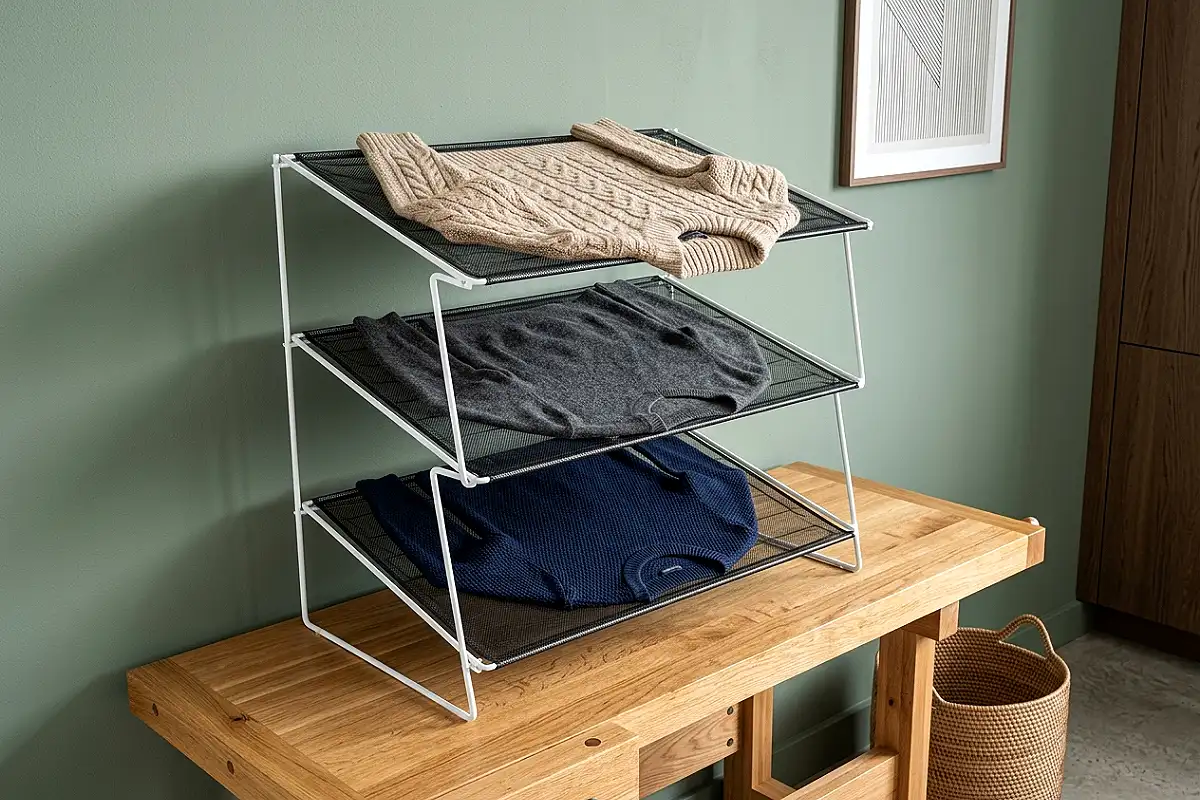
Sweaters stretched on hangers develop shoulder horns; knits dumped flat take over every surface. A tiered mesh drying shelf — three or four zip-together wire-mesh trays stacked vertically on folding legs — lets you dry four or five knits at once in a single two-foot footprint, with airflow reaching every layer. Hang it by a window, beside the retractable clothesline, or on the drying-rack drawer’s shelf, and wool season stops being a traffic jam. Folded flat, the unit slides behind a door, and the mesh dries quickly itself, so it never becomes the damp thing it’s meant to fix.
Pro Tip
Reshape each knit to its exact dimensions while laying it flat on the mesh — this is the moment to smooth seams and straighten hems, because the garment dries locked into that shape.
Under-Stair Laundry Closet
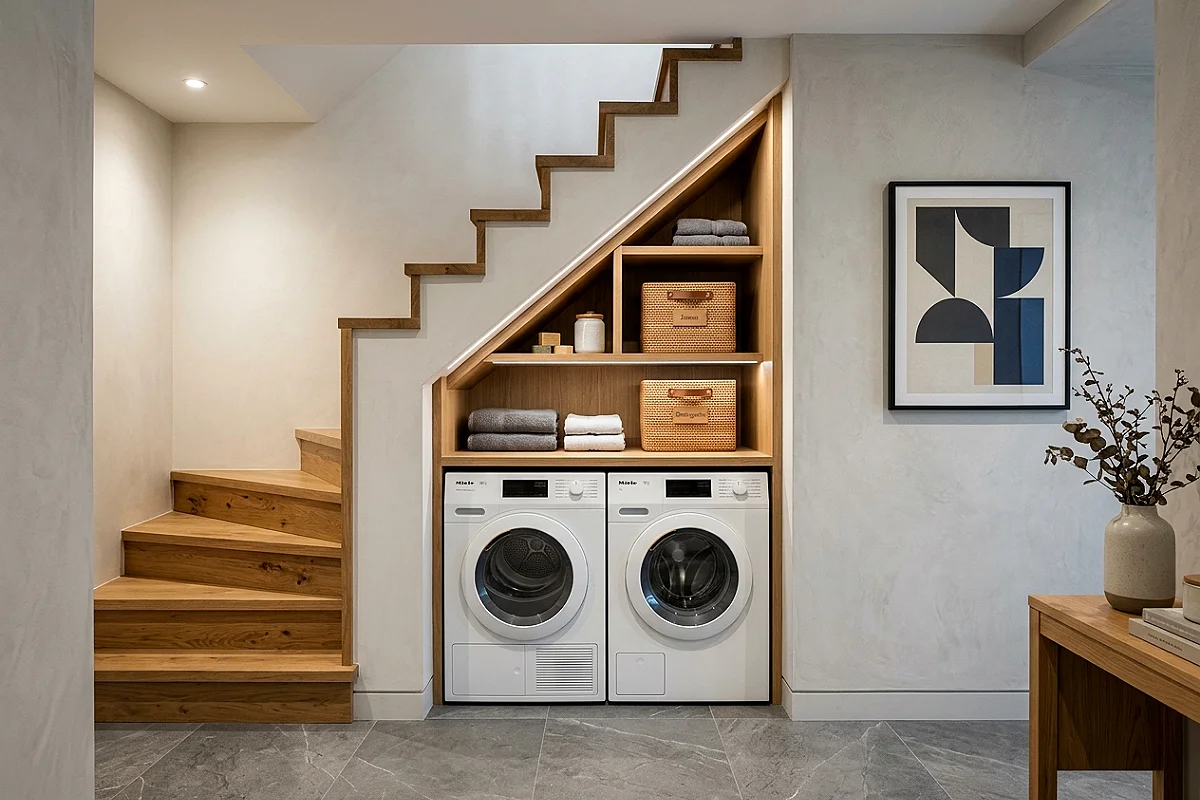
The space beneath a staircase is often dead square footage begging for purpose. With as little as four feet of width, the sloped cavity can house a stacked washer and dryer against the tall end, with the low side becoming open shelves for supplies or a pull-out hamper nook. Paint the interior the same color as the hallway, add a pocket door that disappears into the wall, and you’ve created a full laundry room where none existed — one of the highest-value conversions in home design. Even without machines, the space makes an ideal pull-out sorting closet for homes where laundry lives elsewhere.
Pro Tip
Confirm your stair stringer is solid before cutting into the cavity, and budget for a vent path — stacked units need either an exterior vent or a ventless heat-pump dryer, and heat-pump models save under-stair conversions from the ductwork problem entirely.
Laundry Command Board
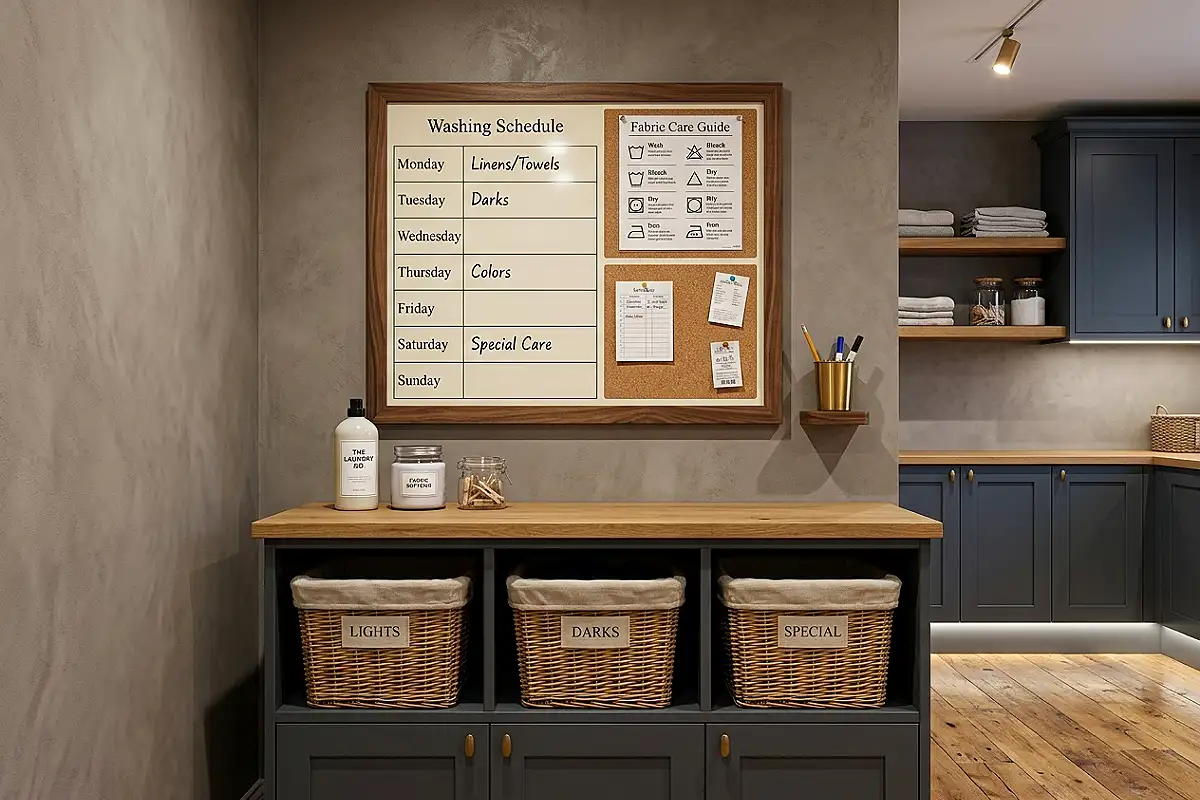
The final idea is a habit, made visible. Mount a small command board near the sorting station — cork or a matte enamel panel — and give it three jobs: a slot holding this week’s laundry schedule (wash days per load type), a small whiteboard area for cycle reminders (“sheets — warm, darks — cold”), and a supply checklist with a pencil on a cord so running low on detergent gets written down at the moment it’s noticed rather than discovered mid-load. Add a clip for the stain chart and a small basket shelf beneath, and the board becomes the room’s operating system. Laundry rooms fail from forgetfulness, not from lack of storage — this is the fix for that.
Pro Tip
Assign each household member a fixed wash day for their load type and pin the schedule in colored ink — when laundry becomes a calendar event instead of a pile of guilt, rooms (and towels) stay fresher all week.
A Laundry Room That Does the Work For You
Twenty-five ideas, one principle: the best laundry room organizes itself around your actual routine — sorting where clothes come off, drying where air moves, supplies within an arm’s reach of the machine. Pick the three ideas that match your room and your habits, and let laundry day shrink from a weekend project to a quiet rhythm you barely notice.
Frequently Asked Questions
How do I organize a small laundry room?
Go vertical and use the “dead” zones: wall-mounted drying lines, over-the-door organizers, under-shelf baskets, and stacked pull-out hampers all add storage without using floor space. Keep only the supplies for your current load visible, and store everything else in closed cabinets or under the machines.
How should I sort laundry efficiently?
Sort at the moment clothes come off, not when they pile up: dedicated hampers or drawer compartments for lights, darks, and delicates mean sorting happens automatically. Sort by fabric care needs and load weight — not just color — since those are what actually determine wash settings.
What’s the best way to air-dry clothes indoors?
Use airflow and elevation: a ceiling-mounted drying rack, a retractable wall line, or tiered mesh shelves keep clothes off flat surfaces where they dry slowly and can mildew. Hang heavy items low and lights high, reshape knits flat before drying, and run a fan or open a window to speed evaporation.
How do I keep the laundry room smelling fresh?
Keep damp items moving: ventilated hampers, quick transfer from washer to dryer, and a moisture-wicking drying drawer prevent the musty smell at its source. Wool dryer balls with a drop of essential oil in every load, plus cedar-lined drawers for freshness supplies, keep the whole room smelling clean.
How do I remove laundry room clutter?
Give every awkward category a dedicated home — stain supplies at the sorting station, small tools in a divided drawer, appliances in a vented garage, and spray bottles on under-cabinet rods. Clutter in a laundry room is usually just items without a clearly sized place; fix the places and the clutter fixes itself.
Where should detergent and laundry supplies be stored?
Within an arm’s reach of the washer, at or just below counter height, so supplies can be grabbed mid-load without crouching. Keep them on open shelves in labeled dispensers or under-shelf baskets, and store heavier bleach and stain chemicals on lower shelves where spills matter less.